Project Type

Location

Project Team Interview Case Study

Project Overview

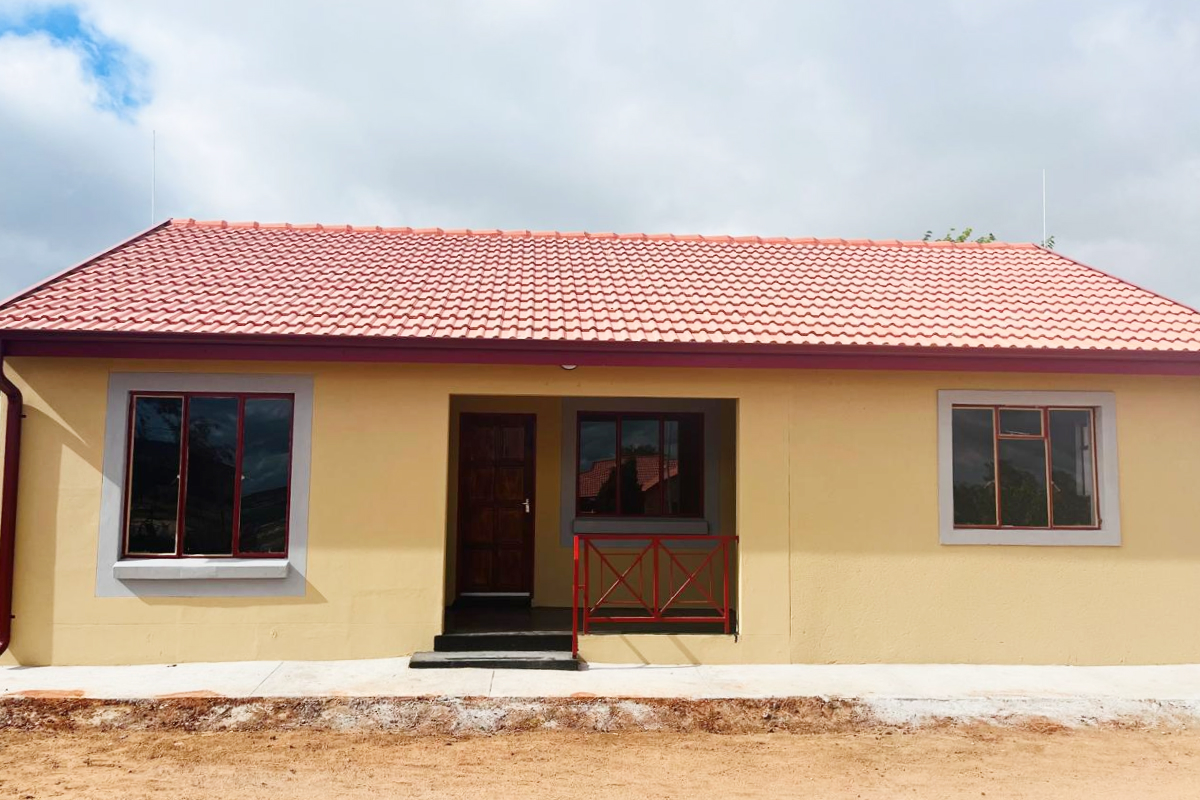
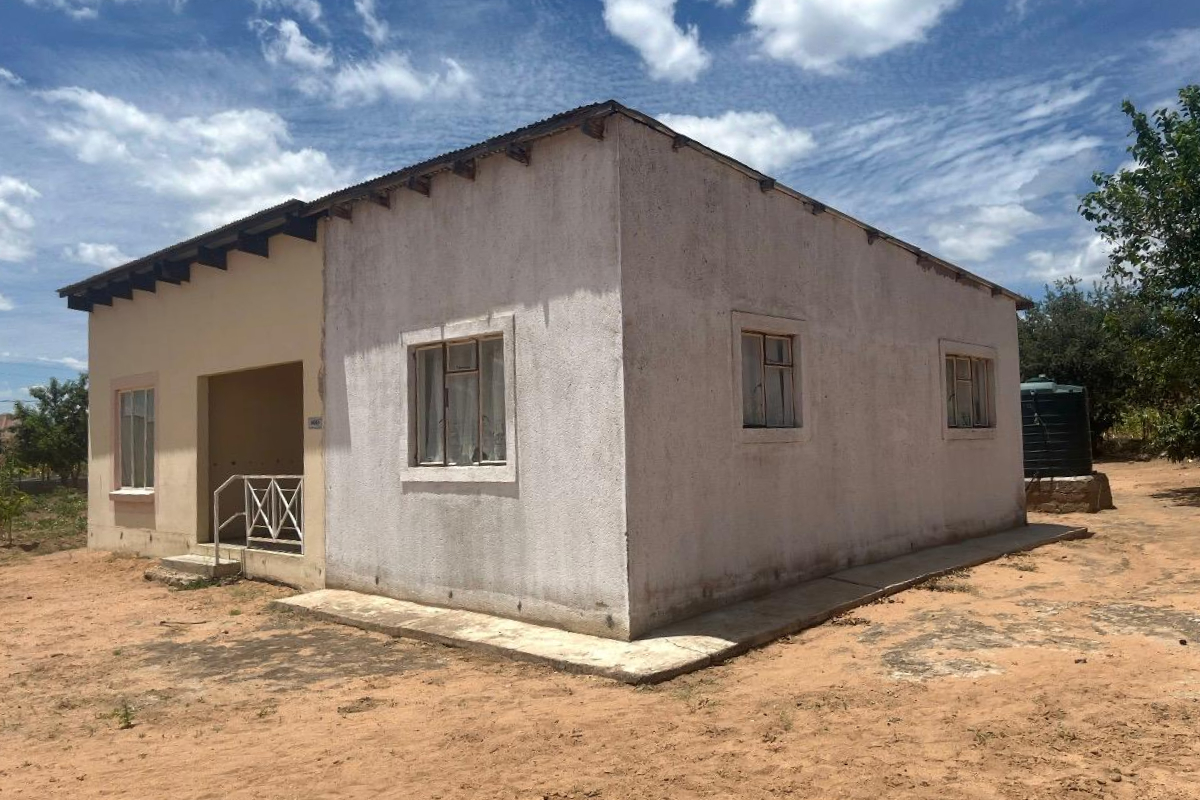
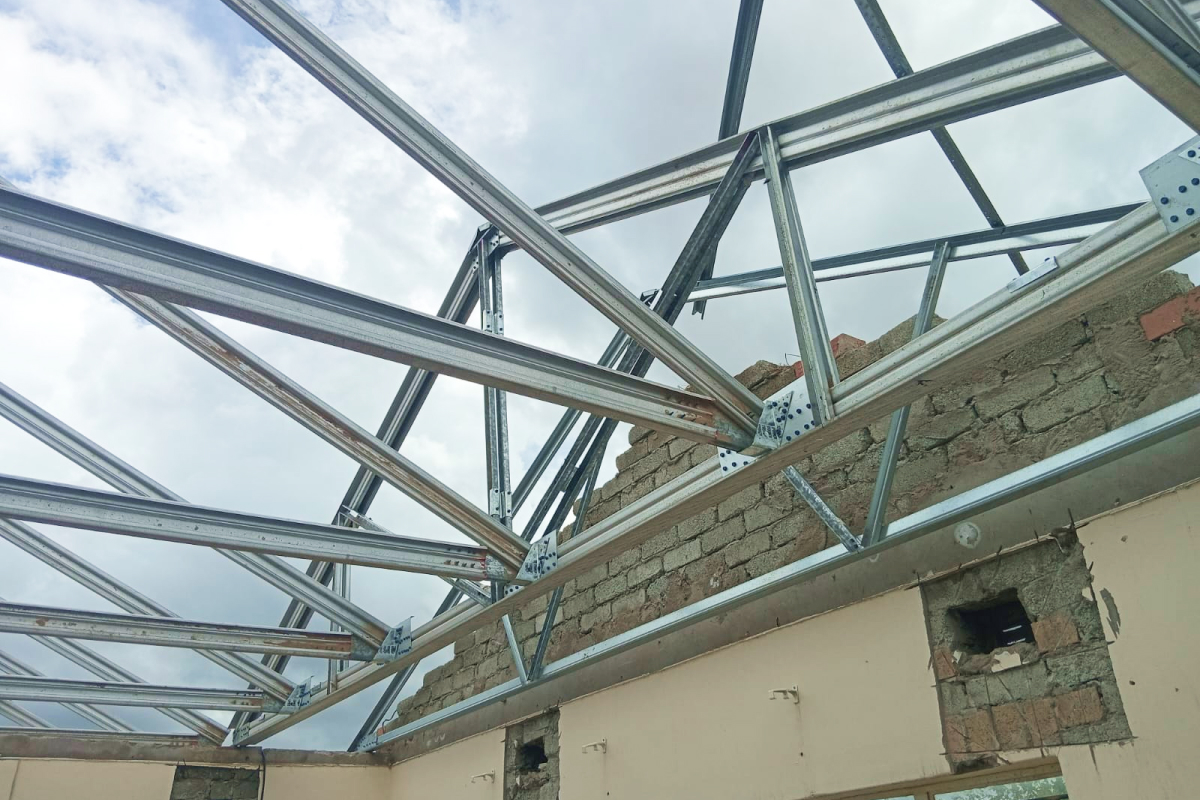
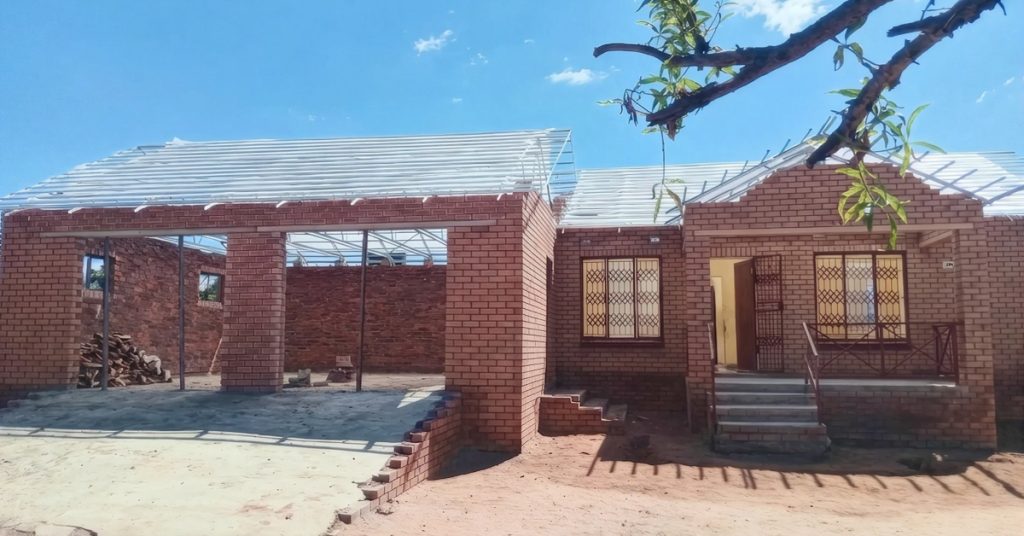
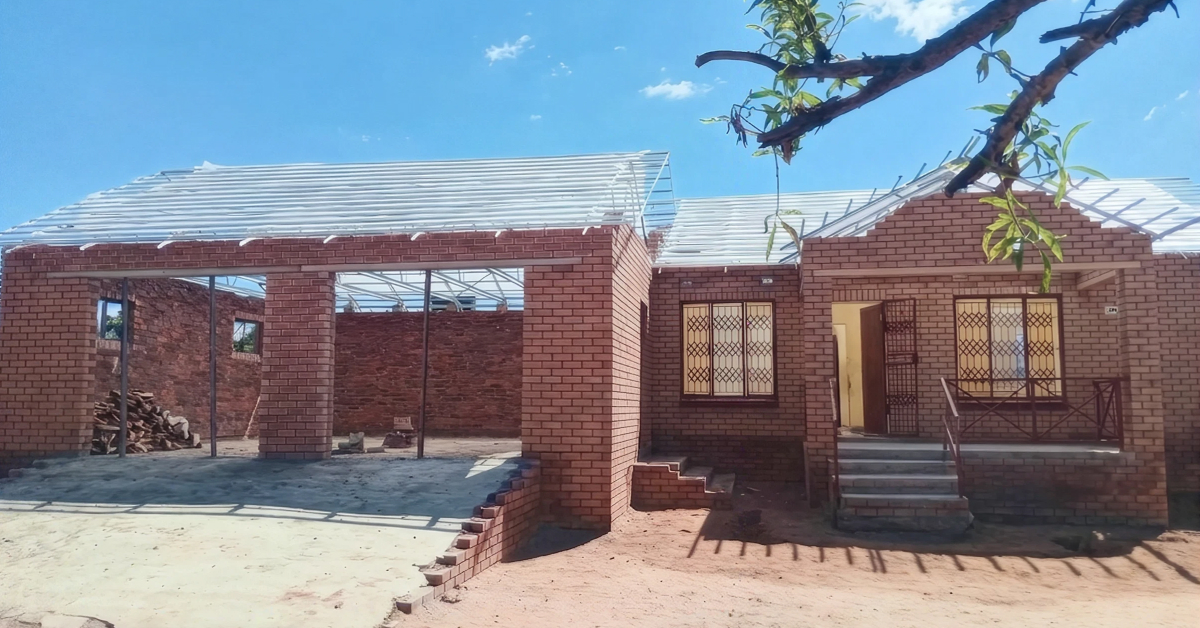
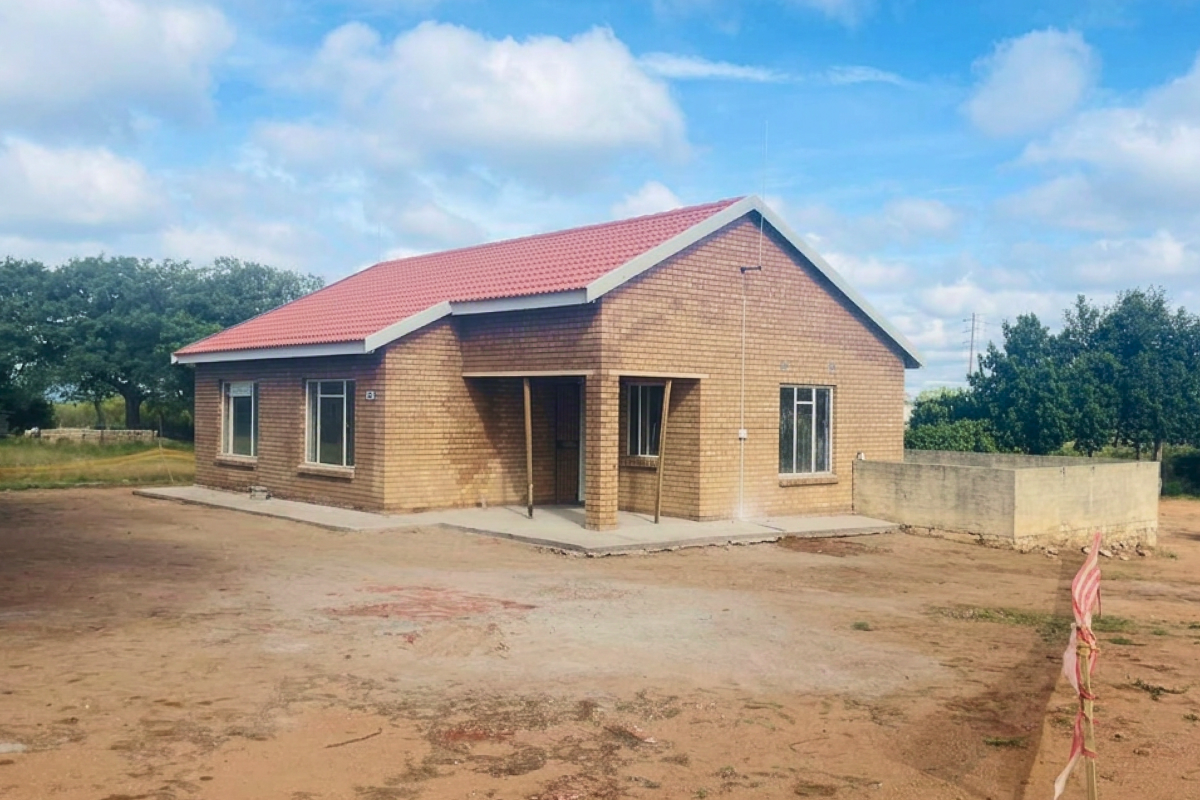
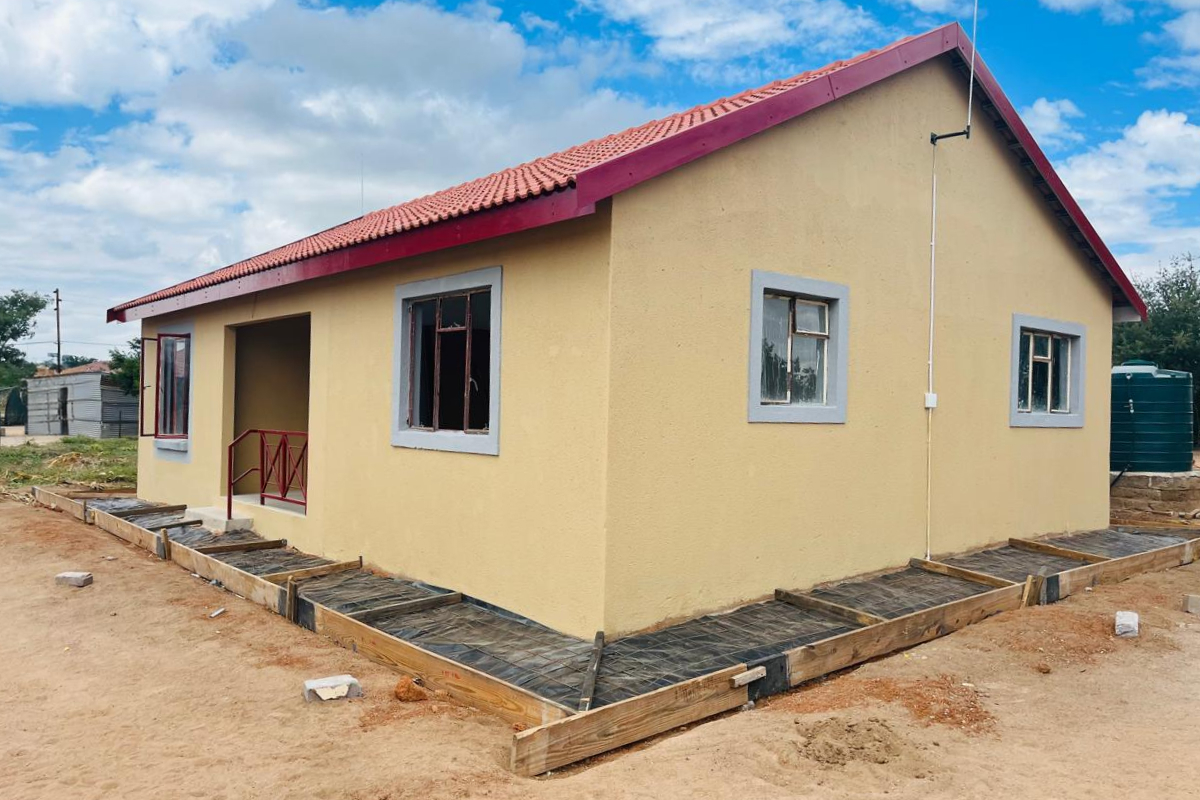
The Valterra Termite Infestation Project is a large-scale roof refurbishment programme serving residential housing associated with Valterra Platinum Mine, located along the N11 corridor in Limpopo. Over time, the mine’s existing timber roof structures were systematically destroyed by termite infestation, leaving residents in structurally compromised homes. The solution was the UltraSpan light gauge steel truss system, manufactured by MiTek and installed by Giant Engineering. Each roof was digitally engineered on MiTek’s Pamir platform, resolving all member sizing, bracing, and connection design upfront to ensure code compliance across hundreds of varying existing masonry houses. Trusses were pre-cut, pre-punched, and pre-labelled at MiTek’s Midrand facility, then assembled on site by trained community teams under Giant Engineering’s supervision. The system achieves structural upgrades without increasing load on existing walls and foundations, and concrete roof tiles preserve the visual character of the homes. The programme has run for four years and is projected to continue for a further three years.
Steel Profiles Used

  • Date of Steelwork Completion
    2025-12-31

Metal Cladding and Roofing Overview

  • Cladding Profile
    Concrete Roof Tiles
  • Cladding Tonnage
    489.8

Light Steel Frame Building Overview

  • Date of LSFB Completion
    2025-11-01
  • Materials Used
    UltraSpan Light Gauge Steel Framing System

Project Details

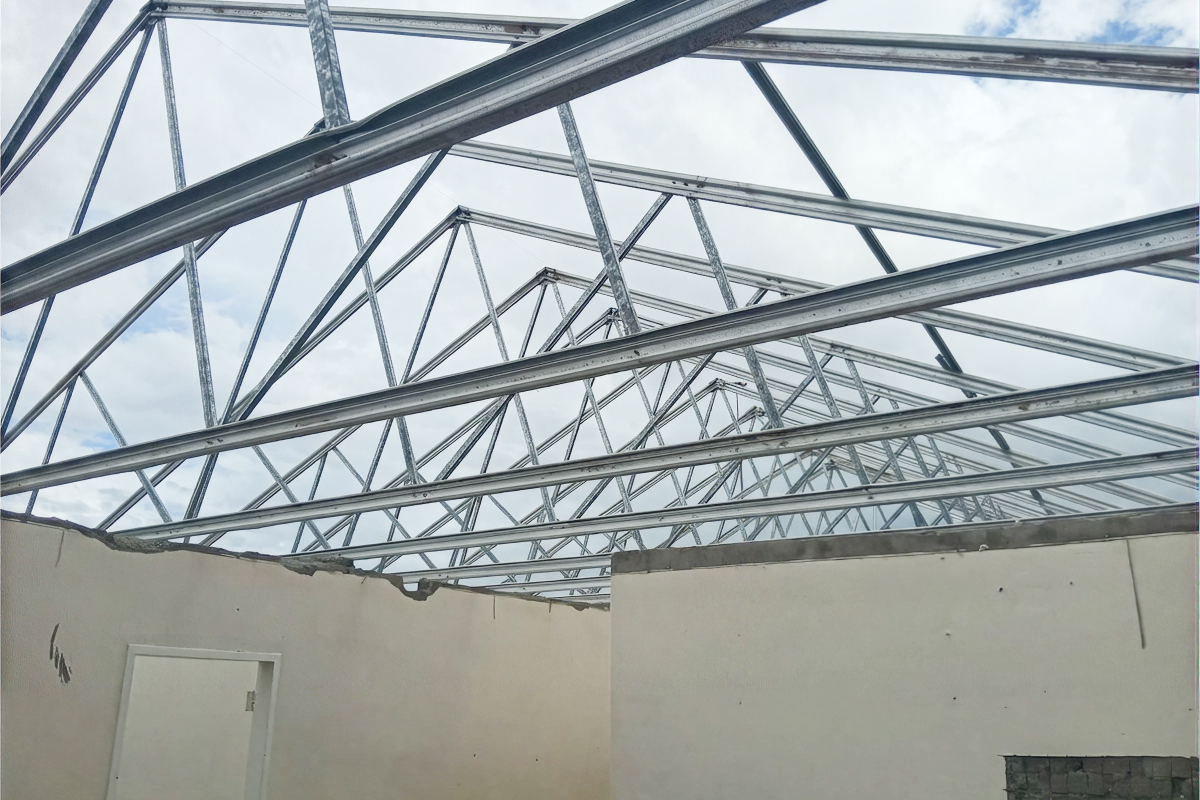
Fabrication was carried out by MiTek at their Midrand production facility. Each roof truss was manufactured using the UltraSpan light gauge galvanised steel system, with components pre-cut to length, pre-punched, and pre-labelled in accordance with MiTek’s Pamir engineering platform. The Pamir system resolved all structural design — member sizing, bracing, and connection detailing — digitally upfront, so fabrication outputs were fully predictable and installation-ready. Bundling was done per house, enabling efficient logistics sequencing to site. MiTek’s integrated management system is certified to ISO 9001, ISO 14001, and ISO 45001. The MiTek Tek screw, with its recognisable blue colour, provided immediate visual confirmation of correct fastener installation, simplifying site inspections. At approximately 6–7 kg/m², an 18-ton truck could deliver components equivalent to 25–30 houses per trip, reducing delivery logistics into remote communities. The precision of pre-cut, pre-labelled components extended the fabrication logic directly onto site, supporting consistent truss assembly by community teams without workshop-level skills.
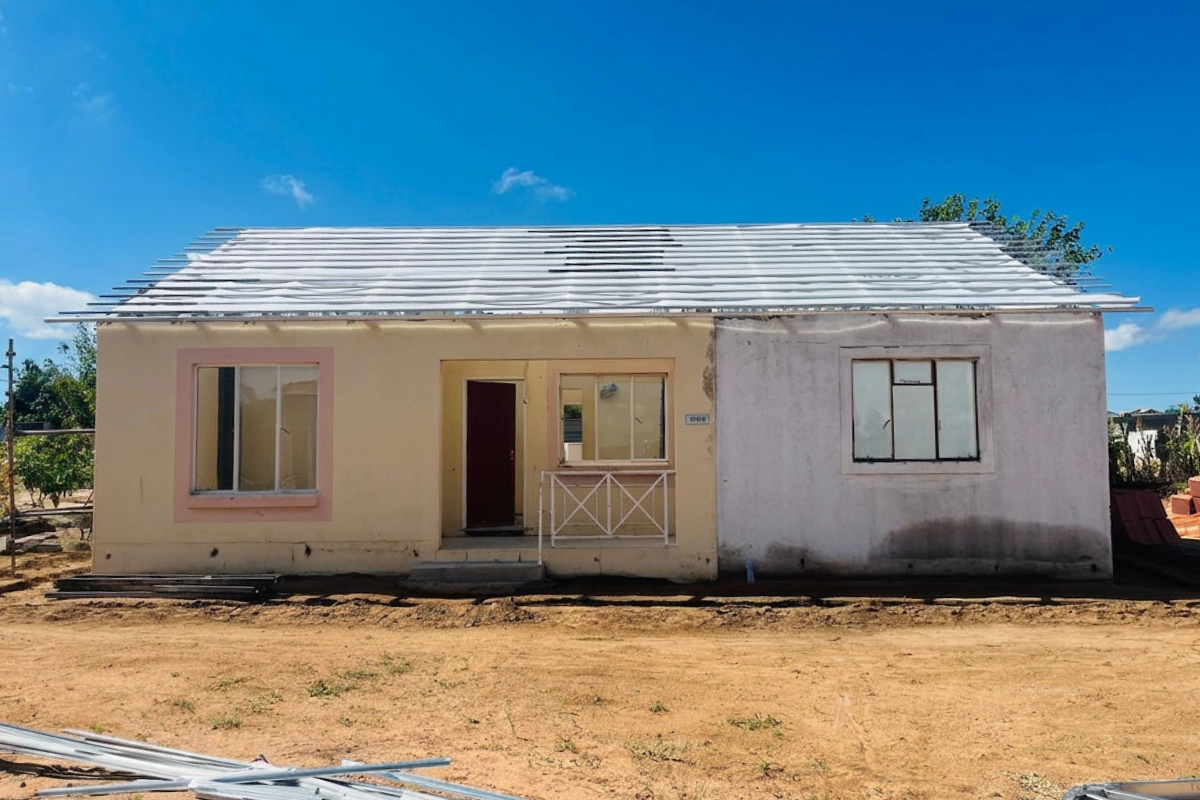
Onsite truss assembly and erection was carried out by trained community teams under the continuous professional supervision of Giant Engineering. Giant Engineering ensured correct interpretation of engineered layouts, proper sequencing, and full compliance throughout. The lightweight UltraSpan system enabled crane-free installation with safer manual handling and fewer deliveries into the remote community. A fixed two-week rehousing window governed each house: families were temporarily relocated, the termite-damaged timber roof demolished, the new steel truss system erected, and the family rehoused — all within the window. Pre-cut, pre-labelled components eliminated the need for on-site adjustment or interpretation of complex drawings. Maximum truss spans on site were 10 metres, with truss heights up to 2 metres. The use of the UltraSpan system meant the construction process was teachable: over four years, community team members with no prior roofing experience were trained in layout reading, delivery sorting, and erection, and progressively took on more complex installations as capability developed.
The primary challenge was delivering a technically compliant roof replacement programme under conditions where conventional construction controls were unavailable. Houses varied in age and condition, many never designed to support replacement roof structures. The solution had to restore structural safety and code compliance without increasing loads on existing walls and foundations. Community-based labour teams had no prior roofing experience. A fixed two-week rehousing window per house imposed strict sequencing discipline. Remote site access and limited logistics infrastructure added further constraints. These challenges were resolved through the system-based approach: all engineering complexity was resolved digitally upfront using the Pamir platform, removing the need for on-site interpretation or adjustment. Pre-cut, pre-labelled, bundled components enabled fast, repeatable assembly. Giant Engineering provided continuous supervision, ensuring compliance was maintained from the first house to the last. Over four years, community teams were progressively trained, with capability growing alongside the programme, ultimately enabling consistent delivery at scale without compromising structural integrity or quality.

Benefits of Steel in this Application

Steel was the only material capable of meeting Valterra’s brief: a permanent, termite-proof roof system that could be installed at scale on existing masonry houses without specialist contractors or heavy equipment. Timber had failed systemically due to biological decay; steel is inherently immune to termite infestation, rot, and biological deterioration. The high strength-to-weight ratio of the UltraSpan light gauge system — approximately 6–7 kg/m² — allowed structural performance to be upgraded without adding load to foundations not designed for heavier systems. Crane-free, manual erection was possible precisely because of this reduced self-weight. Steel’s engineering precision and repeatability enabled consistent, code-compliant delivery across hundreds of houses using community-based labour teams with no prior roofing experience. Factory-controlled fabrication to ISO 9001, 14001, and 45001 standards ensured quality traceability from production through to site. Reduced lifecycle maintenance costs and elimination of future replacement cycles deliver long-term value for the mine’s housing stock. Steel also enabled a socially responsible outcome: the engineered system was teachable, creating a skills development pathway for local community members over the four-year programme.