



The Steel Awards celebrates what can be achieved with steel. As sponsor of the Architectural Category at the SAISC Steel Awards 2026, the Material Quality Certification Programme (MQCP) is focusing attention on something that happens much earlier — establishing confidence in the material from which those structures are made.
Great steel architecture is easy to recognise.
We see the sweeping spans, exposed structural elements, intricate connections and ambitious forms. We see how architects, engineers, fabricators and erectors have worked together to turn an idea into a finished structure.
What we do not see as readily is the chain of assurance behind the material itself.
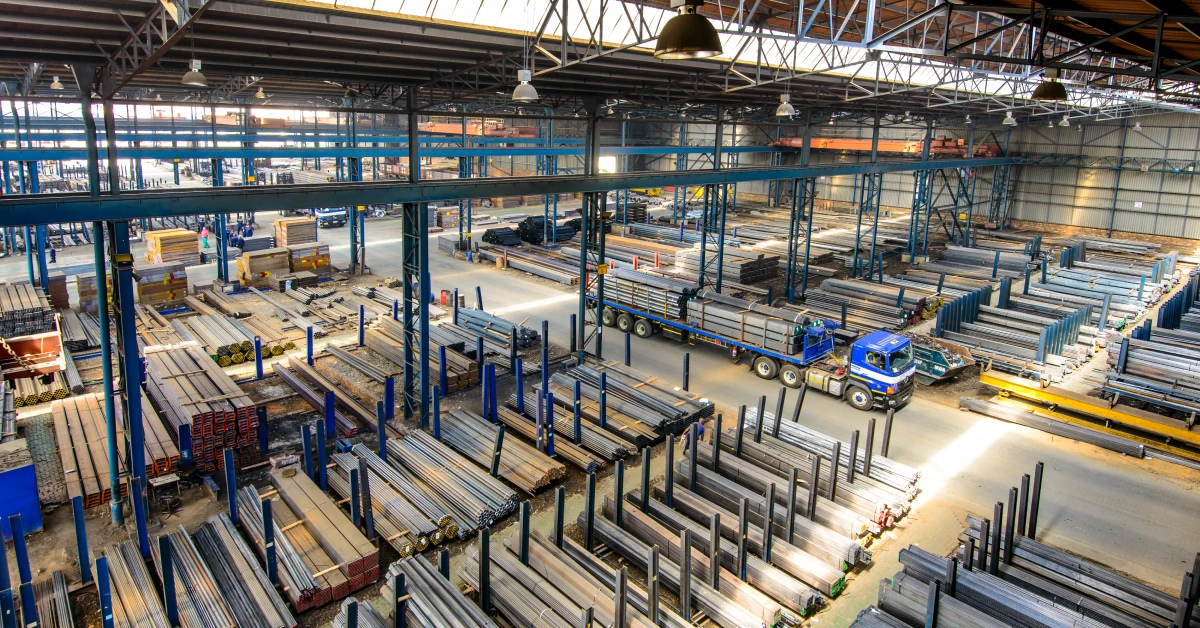
Before steel becomes architecture, it has already travelled through a supply chain. It may pass through mills, merchants, stockists, processors and fabricators before finally becoming part of a structure.
At every stage, one question remains fundamental:
Can we verify the steel behind the structure?
Confidence cannot simply be assumed
Structural steel is specified against defined requirements for a reason.
Engineers, fabricators and clients need confidence that the material supplied for a project corresponds with what has been specified, and that the documentation and traceability supporting it can withstand scrutiny.
Material test certificates, identification and traceability, chemical and mechanical properties, dimensional requirements and quality-control processes all form part of that picture, regardless of its origin
This is the environment in which the Material Quality Certification Programme (MQCP) has been developed.
MQCP introduces an independent certification framework designed to strengthen material quality, traceability and accountability across the structural steel supply chain.
Participating organisations are assessed against defined programme requirements and the systems they use to manage and verify the structural steel they supply.
Importantly, firstly this moves the conversation beyond simply having documentation available.
And secondly is the material available in the correct quality.
The question becomes whether appropriate systems exist to support the integrity, traceability and verification of that information throughout the supply process.
A stronger framework for better decisions
The value of greater material assurance and availability extends across the steel construction value chain.
For engineers and specifiers, it supports greater confidence when making specification and material decisions
For fabricators and buyers, it provides a clearer means of identifying suppliers that have subjected their quality and traceability systems to independent assessment.
For mills, merchants and suppliers, it provides an opportunity to demonstrate their commitment to material quality through a recognised framework rather than assertion alone.
And for clients and project teams, stronger traceability contributes to a more accountable supply chain.
MQCP does not replace engineering judgement, project specifications, contractual requirements or the responsibilities of the professionals involved in a project.
It strengthens the quality framework supporting those decisions.
Why this belongs at the Steel Awards
There is a natural connection between MQCP and the projects celebrated through the Steel Awards.
The Awards recognise excellence in what the industry ultimately creates.
MQCP focuses attention on excellence much earlier in that process.
The Architectural Category in particular demonstrates what becomes possible when steel is used not simply as a structural necessity, but as an integral part of architectural expression.
Long spans become open spaces. Structural grid spacing (or grid configuration) results in the optimal layout choices for creating open, cost-effective spaces with long-span steel. Structural elements become defining visual features. Complex geometry becomes buildable. Connections between architecture, engineering and fabrication become visible in the finished structure.
Achieving that level of excellence requires confidence at every stage.
That includes confidence in design.
Confidence in engineering.
Confidence in fabrication.
And confidence that the right material, meeting the required quality standards, will be available when needed.
Raising the standard from the beginning
As the Southern African steel construction industry considers its future, quality cannot only be assessed when a structure is complete.
It has to begin much earlier.
Greater transparency, stronger traceability and independent verification can help create a supply chain in which quality is demonstrated rather than simply assumed.
Equally important is the availability of appropriately specified steel to support project delivery and industry growth. Together, these priorities can help strengthen the reliability, resilience and competitiveness of the Southern African steel construction industry.
That is the broader industry ambition MQCP seeks to support.
The Steel Awards gives us an opportunity to celebrate the extraordinary things our industry can create with steel.
MQCP asks us to apply the same expectation of excellence to where every one of those structures begins.
The material.
CONFIDENCE MUST BE VERIFIED.
MQCP | Material Quality Certification Programme
An industry quality initiative from the Southern African Institute of Steel Construction.