


At SAISC, we believe that a resilient steel industry is built not only through technical excellence, but also through informed decision-making. As part of our ongoing commitment to delivering value to members, we regularly collaborate with leading industry organisations to provide practical insights into the issues shaping the structural steel sector.
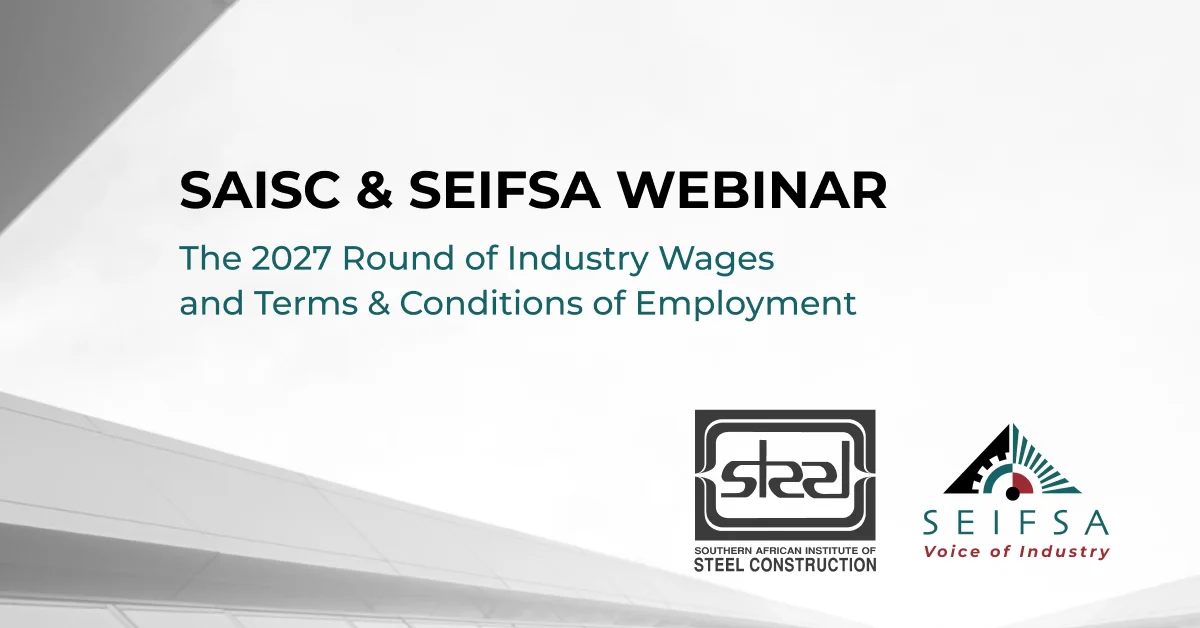
In partnership with SEIFSA, SAISC recently hosted a webinar exploring the current labour relations landscape and the broader economic factors influencing South Africa’s metals and engineering industry. The session brought together industry experts to provide valuable context ahead of the 2027 collective bargaining process and to help businesses better understand the challenges and opportunities facing the sector.
The discussion examined the current state of the metals and engineering industry, highlighting subdued economic growth, declining production, underutilised manufacturing capacity, global trade uncertainty and the importance of creating a sustainable environment that supports investment, competitiveness and long-term job retention. The webinar also unpacked the collective bargaining framework, emerging labour relations trends and the key factors expected to influence future wage negotiations.
For SAISC, partnerships such as these are an important part of ensuring our members remain informed on developments that extend beyond technical steel construction. Labour relations, economic policy and industry sustainability all have a direct impact on businesses across the steel value chain, making access to credible, industry-specific information more important than ever.
We extend our sincere appreciation to the SEIFSA team, particularly Tafadzwa (Taffie) Chibanguza, Chief Executive Officer of SEIFSA, and Lucio Trentini, for sharing their expertise and valuable perspectives with our members.
If you were unable to attend the live session – or would like to revisit the discussion – you can watch the full webinar recording below. We encourage members to share it with colleagues responsible for human resources, operations and business leadership, as the insights are relevant across the broader metals and engineering sector.