



The steel industry is often viewed through the lens of tradition, heavy machinery, large structures, and time-tested methods. However, as the global landscape shifts toward smarter infrastructure and sustainable design, the Southern African Institute of Steel Construction (SAISC) is turning its focus toward the future.
In this month’s blog, we sit down with Amanuel Gebremeskel to discuss the true engine of industry growth: innovation. In a sector where “new” isn’t always “better” unless it’s also practical, Amanuel provides a grounded perspective on what it really takes to move the needle in the South African steel market.
Defining innovation in the South African context
To understand where the industry is going, we first have to define what “innovation” actually means. It is a word often thrown around in boardrooms, but at the SAISC, the definition is far more rigorous than just having a clever thought.
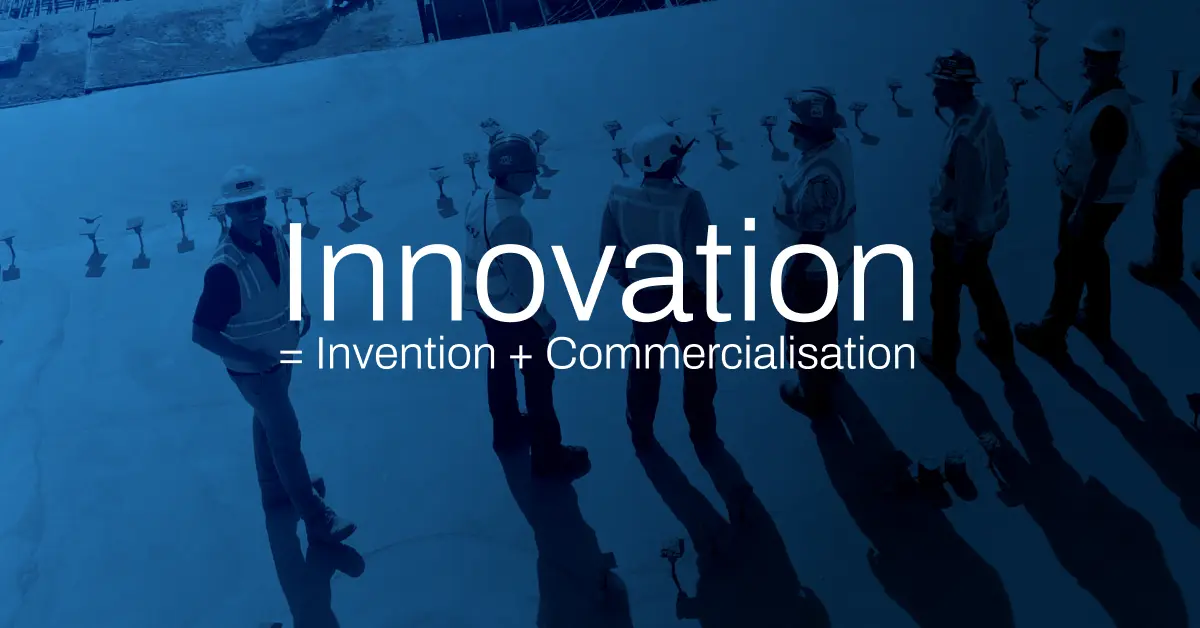
According to Amanuel, true innovation is a two-part equation:
Innovation = Invention (Novelty) + Commercialisation (Value)
The Inventive Process (Novelty)
The first step is the inventive process. This involves coming up with something novel, such as technology or a construction method that hasn’t been applied in this specific way before. It doesn’t necessarily require a brand-new invention from scratch, it’s about finding a unique application for technology that solves a problem in a way that has never been seen.
Commercialisation (The Value Test)
This is where many “bright ideas” fall short. For an invention to become an innovation, it must be commercialised.
“It’s not enough for you to just sit there and come up with something new or a new use,” Amanuel explains. “Someone has to pay you money for it… if these two things are not there, there’s no innovation.”
At the Institute, the focus is on this intersection of brilliance and business. Innovation is only achieved when the industry sees a new construction method or technology and decides it is valuable enough to invest in. Fortunately, as Amanuel notes, the South African steel industry is currently seeing a wealth of this activity, proving that the sector is not just surviving, but evolving.
From global followers to global leaders
For years, the South African steel industry operated in a “catch-up” mode, observing global trends and adapting them for local use. However, that dynamic has flipped. South Africa is now a leader in several key areas of advanced fabrication and construction.
Amanuel points to several breakthrough moments where South African ingenuity has preceded or surpassed international efforts:
Light steel decking: As far back as 2012, South Africa developed technology for unpropped, long-span light steel decks. Similar research projects are only now being initiated in the United States.
On-site manufacturing: Macsteel achieved a world-first by manufacturing roof sheets on-site that exceeded 250 meters in length. This feat of engineering earned a spot in the Guinness World Records.
Modular mining innovations: At the most recent Steel Awards, the Lycopodium Modular Project by Betterect was recognised as the first of its kind globally.
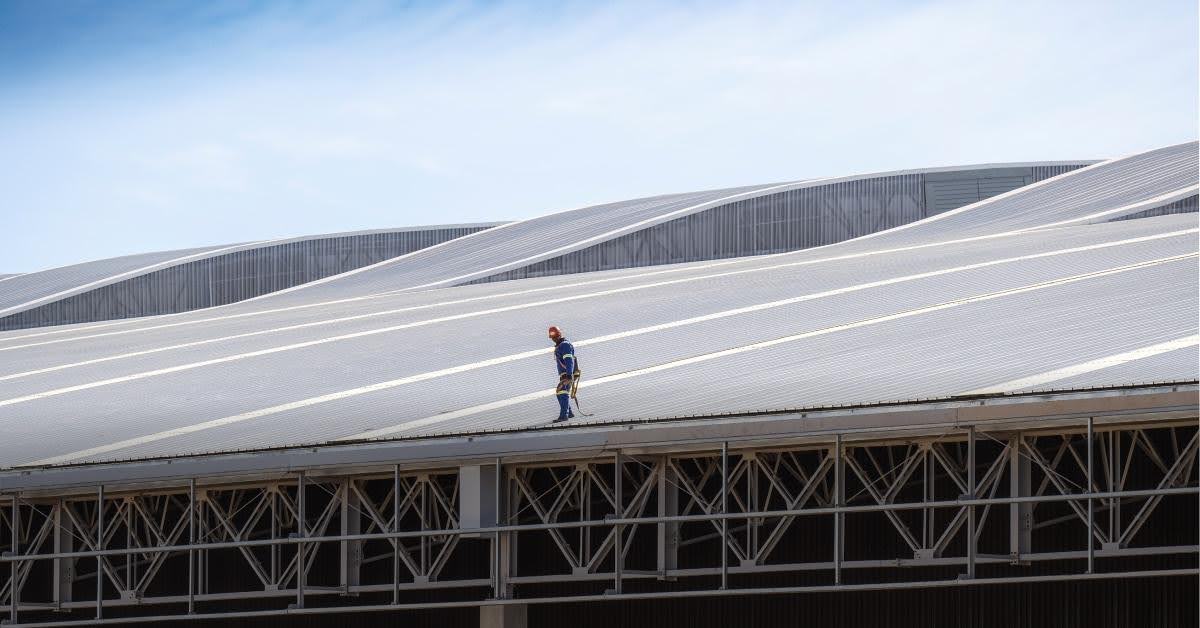
The Pick ‘n Pay Distribution Centre East Port project, joint winner of the 2023 Steel Awards Factory and Warehouse category, the Innovation and Sustainability category and recipient of the Best Project Gauteng award, and a place in the Guinness World Records for the longest continuous roof sheet using Macsteel’s innovative ‘sky-forming’ method to roll and shape roofing sheets accurately and cost effectively.
The infrastructure of innovation
This leadership is backed by a growing ecosystem of research and academic partnerships, such as the establishment of a dedicated Fire Research Centre at Stellenbosch University. By bolstering its technical capabilities through these specialised research hubs and collaborative efforts with a network of universities, South Africa continues to advance the frontier of steel construction.
While these academic and research milestones provide the “how” behind South Africa’s leadership, the “why” is rooted in a much more practical reality. This technical expertise is a necessary evolution triggered by a rapidly shifting landscape. As Amanuel points out, the drive to innovate is rarely a choice made in a vacuum, it is an essential response to a world that looks very different than it did a decade ago.
Innovation as a response to environmental change
In a static environment, there is little need to evolve; one can simply apply “yesterday’s technologies” with minor modifications. However, the reality of the South African and global landscape is one of constant flux, where new constraints demand new solutions.
Amanuel identified several critical “environmental changes” driving the steel industry today:
Resource scarcity: While water usage in construction was rarely a concern in the past, the lack of potable water has made it a serious modern constraint. Despite South Africa’s vast coastline, salty seawater is unfit for construction, forcing the industry to find more efficient ways to build.
Energy and emissions: Diminishing access to easy electricity and growing global concerns over pollution and carbon footprints have shifted the industry’s priorities.
Urbanisation and housing: Rapid urbanisation across Africa and a growing middle class have created an urgent need for affordable, high-volume housing.
Economic pressures: Fluctuating affordability means that construction methods must become more cost-effective to meet the needs of a shifting demographic.
Resource demand: The global interest in rare and critical minerals, such as gold and silver, creates new industrial requirements that steel must support.
Ultimately, every time these types of environmental variables shift, the industry is presented with a choice: remain stagnant or innovate to meet the new reality. For South Africa, the choice has clearly been the latter, and innovation in the South African steel sector isn’t confined to a single niche, it is a cross-industry phenomenon. Amanuel points out that whether it is commercial buildings or heavy industrial facilities, the push for efficiency is yielding tangible, local results.
This proactive choice to innovate across sectors has led the industry to rethink the very nature of how we build. Rather than fighting environmental constraints on-site, the solution lies in changing where the most critical work happens. By leveraging the unique properties of steel, engineers and other built environment professionals are finding that they can solve these modern challenges by shifting the heart of the construction process from the field to the factory.
Shifting complexity: The factory advantage
Moving complexity from the unpredictability of a construction site into a controlled factory environment allows steel to act as a primary enabler for modern, high-efficiency building methods. The true power of steel lies in its ability to be packaged into sophisticated components within a shop and then shipped to a site for rapid assembly. This approach effectively pushes the most complicated parts of construction into a space where high-skilled labour can operate without the interference of rain, sun, or extreme weather.
In a factory setting, there is more leeway to prototype new ideas, use specialised equipment, and fix mistakes easily compared to the constraints of a live site. By simplifying what actually needs to be done on-site, this design philosophy reduces costs, improves project safety, and increases overall quality through strictly controlled material processes.
This shift toward offsite precision leads directly into one of the most transformative trends in the modern industry: the rise of truly mobile and circular infrastructure. By moving the complexity of the build into the shop, steel fundamentally changes the lifecycle of the structure itself.
South Africa has already demonstrated the immense value of steel in creating adaptable, reusable assets. Amanuel highlights a standout project of this innovation, the de-mountable parking structure at Granger Bay, located in the V&A Waterfront by Union Steel. Categorised as a major achievement in infrastructure and multi-storey construction, this project was designed with a fully de-mountable structural system.
This concept introduces a radical shift in how we view property. Instead of a permanent fixture that must be demolished when land is sold, the structure becomes a “mobile” asset that can be transported to a new location as needs change.
This level of adaptability offers a new frontier for sustainability that goes far beyond traditional recycling. Typically, when a property is sold, the existing structure is demolished, leading to massive material loss, even if the steel is eventually melted down for reuse. By designing for deconstruction, the industry is moving toward a model of direct reuse.
Digital evolution: BIM and beyond
The shift from manual drawings to sophisticated digital platforms is what Amanuel describes as a “double-edged sword” that has evolved in two critical directions: design and manufacturing. At the heart of this transformation is Building Information Modelling (BIM), which acts as a bridge between these two areas by taking complex design data and presenting it in a way that is directly usable for detailing and manufacturing.
By consolidating all the data that used to sit in fragmented spreadsheets into a single, visual “big model,” these digital tools empower the industry to handle the complexity of modern steel design with unprecedented accuracy.
Maintaining these sophisticated digital tools requires more than just high-level software; it requires a bridge between the virtual model and the physical construction site. For Amanuel, addressing this gap is one of the most critical challenges facing the industry today.
The disconnect between what is modeled on a screen and what is actually delivered and installed on-site is a global issue, but one where South Africa is particularly proactive. This gap is often wider in international projects than it is locally, where South African engineers tend to be more grounded in the practical realities of construction. However, as digitisation accelerates, the role of the Institute in bridging this divide has become paramount.
To ensure that digital precision translates into physical accuracy, the industry must align software development with engineering reality, for example, the SAISC collaborates closely with local software developers, such as Prokon, to ensure their tools are deeply linked to how steel is actually built and how it functions in the real world.
Ultimately, the goal is to move beyond isolated spreadsheets and “flat” data. By bringing software developers into the fold and treating construction as an emerging digital frontier, the SAISC is helping to ensure that the “magic” in the middle of the bridge, the point where a digital plan becomes a solid, high-quality structure, is never lost.
In the second half of this interview, to be published in the March edition of our newsletter, we shift from the “what” to the “how”. We’ll explore how South Africa is moving complexity from the site to the factory to lead the global stage.