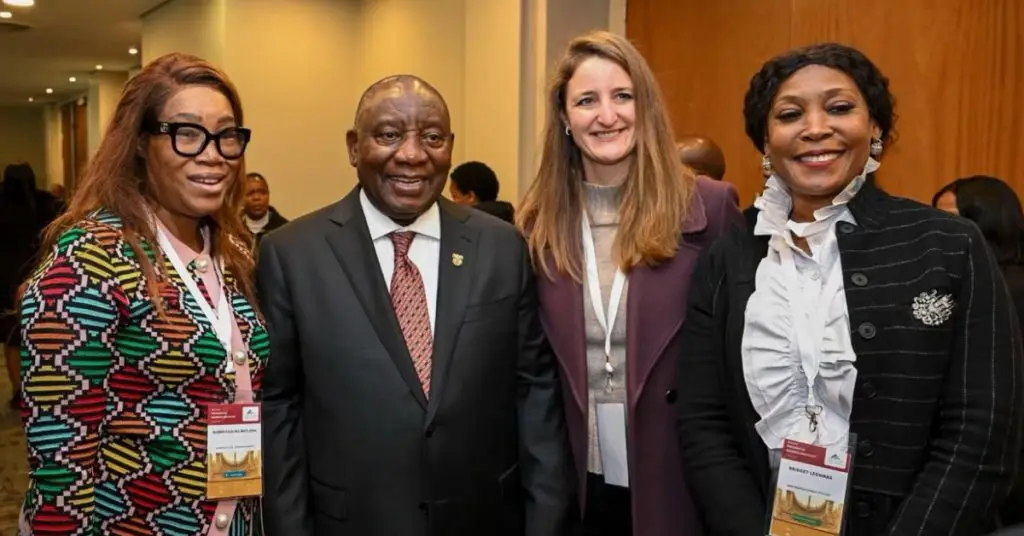



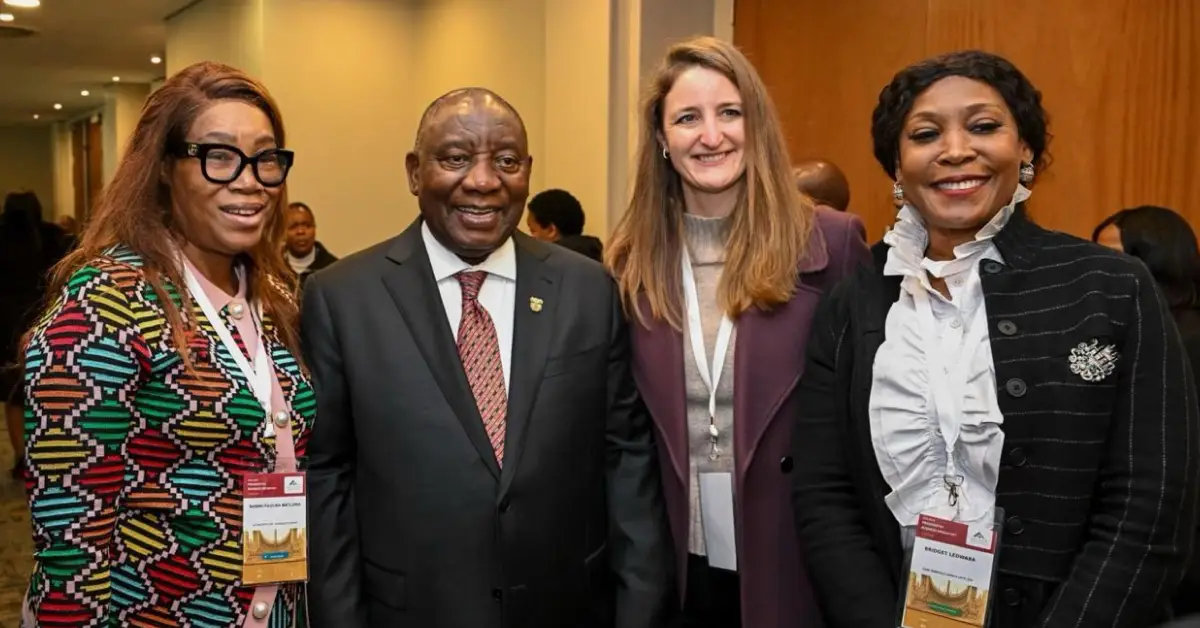
SAISC Chairwoman Nicolette Skjoldhammer reflects on what the Presidential Breakfast means for South Africa’s steel construction sector.
South Africa’s planned infrastructure investment presents a significant opportunity for the local steel construction industry. But turning that opportunity into industrial growth will depend on something far more tangible than policy commitments and project pipelines: actual orders being placed with capable South African companies.
That was one of the strongest messages SAISC Chairwoman Nicolette Skjoldhammer took from the Presidential Breakfast hosted by the Steel and Engineering Industries Federation of Southern Africa (SEIFSA), where she represented the Southern African Institute of Steel Construction.
The high-level engagement brought President Cyril Ramaphosa together with leaders from across South Africa’s metals and engineering sector to discuss the role of the industry in the country’s economic and industrial recovery.
For SAISC and its members, the significance of the engagement extends beyond primary steel production. Steel construction forms part of a much broader downstream value chain incorporating engineers, detailers, fabricators, contractors, suppliers and skilled artisans.
“What stood out for me was the very clear recognition that infrastructure investment needs to do more than simply deliver infrastructure. It needs to rebuild South African industrial capacity,” says Skjoldhammer.
“We have spoken about localisation and industrialisation for a long time. The real opportunity now is to translate those intentions into actual projects and orders for South African companies.”

Steel as a strategic industry
President Ramaphosa used the engagement to emphasise the strategic importance of the metals and engineering sector to South Africa’s economy, describing steel as a strategic industry and supporting a competitive and sustainable steel industry as a national priority.
For Skjoldhammer, that recognition is important, but it needs to extend throughout the value chain.
“Steel construction sits downstream of primary steel production and supports an enormous value chain of fabricators, engineers, detailers, contractors, suppliers and skilled artisans.
“Recognising steel as strategic is important, but we need to ensure that this recognition extends through the entire value chain, from producing steel locally to converting that steel into infrastructure locally.”
The opportunity is significant
The scale of South Africa’s planned infrastructure investment provides grounds for optimism.
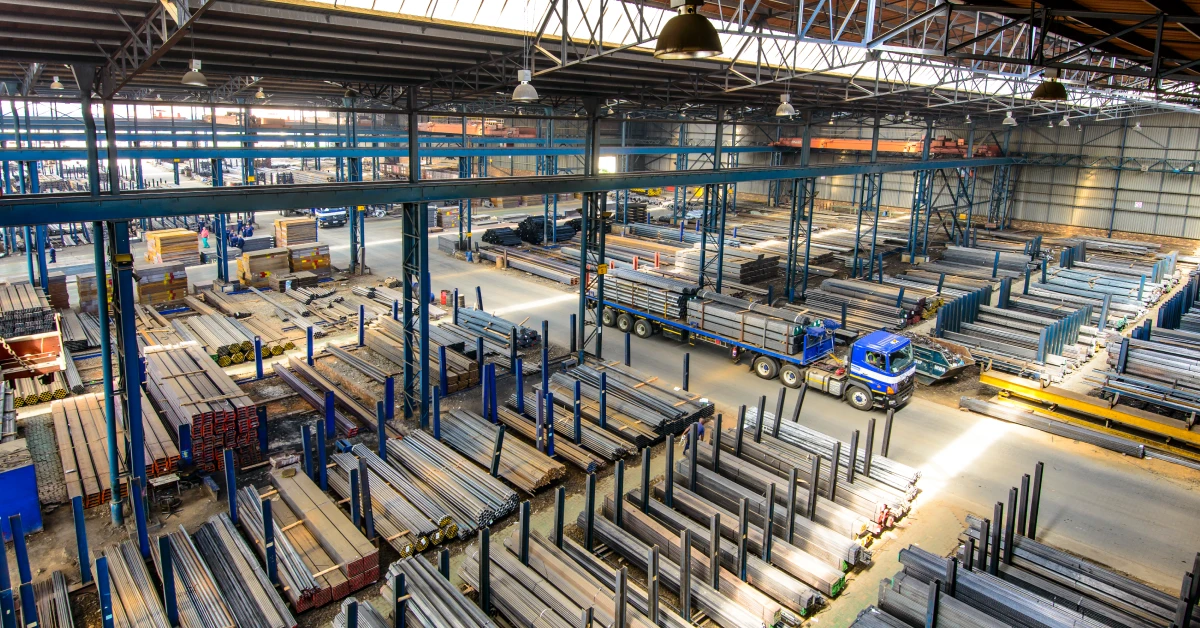
Transmission infrastructure, water, rail, ports and energy all require significant engineering and steel construction capability, with the transmission programme in particular representing a substantial potential opportunity for local fabrication.
But Skjoldhammer cautions that an infrastructure pipeline and an industry order book are not the same thing.
“What will ultimately build confidence is seeing these programmes move from announcements and pipelines into procurement and actual orders placed with capable South African companies.”
This makes procurement one of the critical links between South Africa’s industrial policy ambitions and their impact on domestic industry.
“We need visible and credible project pipelines, appropriately packaged tenders and procurement models that recognise capable and competitive local manufacturers.
“Local content cannot simply be an aspiration written into policy. Where South African companies have the capacity, quality and competitiveness to deliver, that needs to translate into meaningful participation in the actual order book.”
Competitiveness must remain part of the conversation
Local participation, however, cannot come at the expense of performance.
Skjoldhammer believes quality, recognised standards, responsible procurement and good engineering practice must remain central to the localisation conversation.
“Localisation should never mean compromising on quality, safety or competitiveness. Responsible procurement should consider lifecycle value, technical compliance and quality, not price in isolation.”
Industry also has responsibilities of its own.
“We also have to look inward. We need to invest in technology, automation, productivity and skills, while consistently delivering quality and meeting programme commitments.”
That competitiveness should extend beyond South Africa’s borders.
“Our engineering and fabrication capability gives us an opportunity to compete throughout Africa, but we have to earn that work through competitiveness and performance.”
Removing the barriers to growth
Electricity, logistics, water and municipal service delivery were among the areas identified during the Presidential engagement as requiring accelerated reform.
Each has a direct impact on the competitiveness of the steel value chain.
“Reliable electricity is important, but so is the cost of electricity. Efficient ports and rail affect both our input costs and our ability to export competitively, while failing municipal infrastructure increasingly places additional costs on businesses.”
There are also areas Skjoldhammer believes warrant further attention, particularly the practical implementation of localisation.
South Africa retains significant fabrication capability, yet domestic businesses can still find themselves competing against imported fabricated products on projects developed within the South African economy.
“We need to understand where that disconnect occurs, whether in project specifications, procurement strategy, commercial evaluation or enforcement, and address it practically.”
Skills are another important part of the equation.
“I would also like continued focus on developing artisans and retaining manufacturing skills. Once industrial capacity and skills disappear, they are extremely difficult to rebuild.”
Keeping industry at the table
The Presidential Breakfast also reinforced the importance of continued engagement between Government and industry.
For Skjoldhammer, organisations such as SAISC and SEIFSA have an important role to play in ensuring that policymakers understand the practical realities businesses experience.
“Government cannot develop effective industrial policy without understanding what businesses are experiencing on the ground.
“Organisations such as SAISC and SEIFSA give industry a collective voice, but industry leaders also need to participate directly and constructively. These conversations are most valuable when they move beyond identifying problems and focus on practical solutions.”
Her message to SAISC members following the engagement is ultimately one of opportunity coupled with responsibility.
“There is a significant opportunity ahead of us, but opportunity is not the same as an order book.
“The planned investment in transmission, water, rail, ports, energy and other infrastructure could provide a meaningful pipeline for South African steel construction.
“Our task as an industry is to make sure we are competitive, capable and ready to deliver. At the same time, we need to keep engaging Government and clients so that, where that capability exists locally, South Africa’s infrastructure investment also builds South African industry.”
Watch the Presidential Breakfast
SAISC members can watch the full Presidential Breakfast and President Cyril Ramaphosa’s engagement with the metals and engineering sector on YouTube.
The full discussion provides additional context to the issues raised by Nicolette, including industrialisation, infrastructure investment, competitiveness, localisation and the role of the metals and engineering sector in South Africa’s economic reform programme.
To read SEIFSA’s coverage of the Presidential engagement CLICK HERE.