



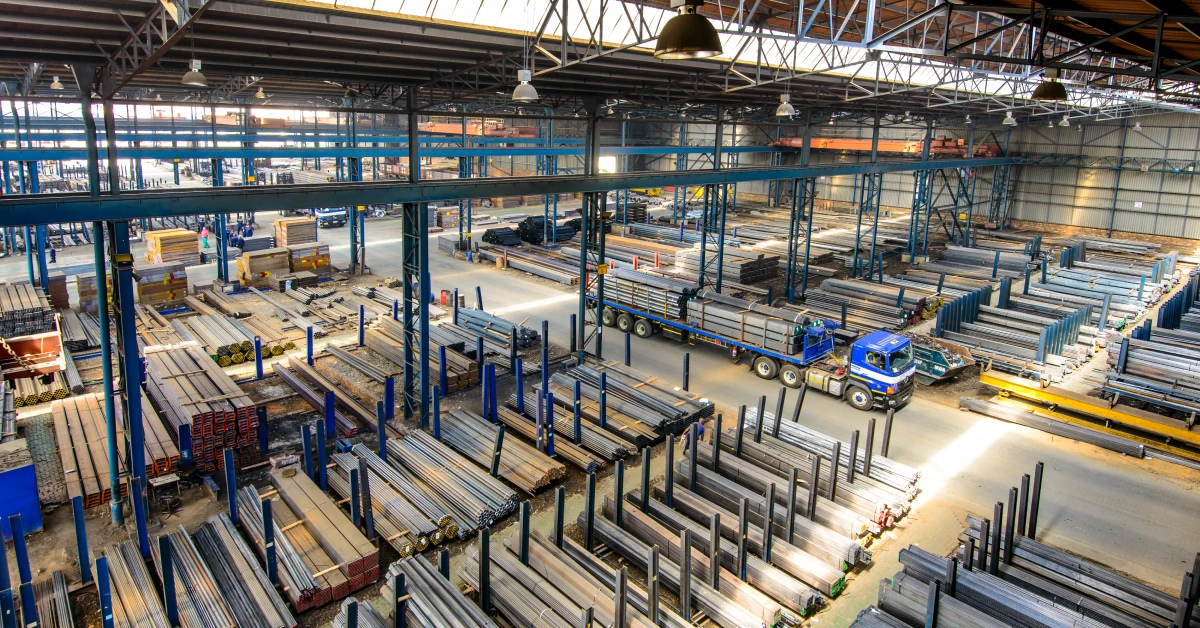
South Africa’s steel value chain continues to face significant challenges following the closure of the Newcastle long-products facility in late 2025. While industry stakeholders are working to address supply gaps, the shortage of lighter long steel products remains a concern for infrastructure development, project delivery and downstream steel businesses.
According to SAISC CEO Amanuel Gebremeskel, the timing of these disruptions is particularly challenging as infrastructure activity and project demand begin to show encouraging signs of recovery.
“The disruption of our supply chain is coming at an unfortunate time, coinciding with a meaningful uptick in project demand. As an industry, we need to work together to find practical solutions and maintain momentum on critical projects.”
Projects Feeling the Impact
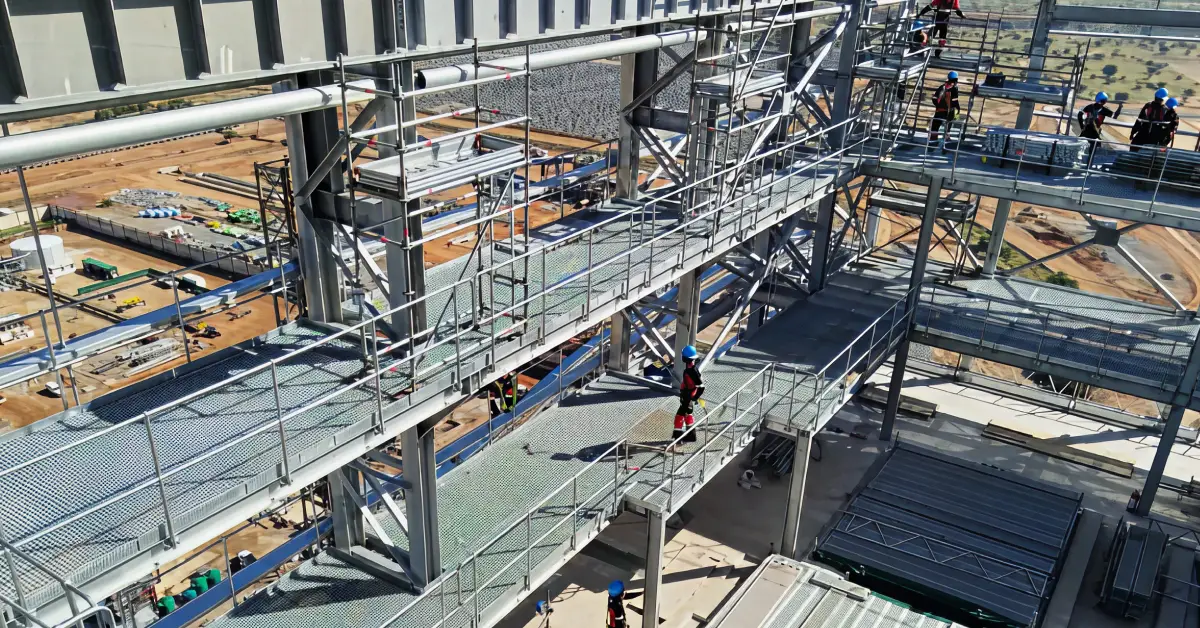
Several infrastructure project categories have been affected by the shortage of lighter long steel products, including transmission lines, renewable energy installations, logistics infrastructure, municipal services and commercial developments.
The impact is also being felt in mining and export-oriented projects, where South African fabricators are increasingly competing for work across the African continent. As project activity increases both locally and regionally, reliable access to steel products remains critical to maintaining delivery schedules, cost competitiveness and confidence in South African fabrication capability.
The shortage has emerged during a period when demand for infrastructure and industrial development is showing positive signs of growth, placing additional pressure on the supply chain.
Tariffs Add Further Pressure
The supply constraints have been compounded by anti-dumping measures and import tariffs applied to certain long steel products.
Although the intention of tariffs is to support local industry, SAISC has raised concerns that some products subject to tariff protection are no longer available in sufficient quantities from local sources. The result has been increased costs, longer lead times and additional pressure on project budgets.
“It is important that policy decisions keep pace with the realities of the market. The steel industry is dynamic, and availability must be assessed in a way that reflects current supply conditions.”
While new suppliers, including a scrap-based producer, are expected to begin supplying long products during 2026, the industry faces an interim period where demand continues to outpace locally available supply.
A Call for Practical Solutions
SAISC has been working alongside other industry associations to engage with policymakers and seek temporary measures that can support the market until additional local production capacity comes online.
One proposal has been the implementation of temporary tariff waivers and emergency rebate mechanisms on specific products where supply shortages are evident. The objective is not to undermine local production but rather to ensure that projects can continue while the market transitions.
A key area of engagement has been the definition of availability.
According to Gebremeskel, availability should be assessed against three criteria:
- Is the product available?
- Can it be delivered within the required timeframe?
- Does it meet the required quality standards?
While progress has been made in recognising the first two considerations, SAISC continues to advocate for quality to be formally included as a critical measure of availability.
Supporting the Downstream Industry
The downstream steel sector — including fabricators, processors, detailers, engineers and related businesses — represents the overwhelming majority of employment within the steel value chain.
As infrastructure investment accelerates, ensuring access to quality steel products remains essential for project delivery, job creation and economic growth.
Imports will continue to play an important role in bridging supply gaps over the short to medium term, particularly for specialised profiles and product ranges that are not currently manufactured locally.
Even as new local mills expand production capacity, certain products previously supplied by Newcastle are likely to remain dependent on imports. The diversity of products historically available from Newcastle cannot be easily or quickly replicated, meaning some level of import dependency will remain necessary for the foreseeable future.
Looking Ahead
The South African steel industry has demonstrated resilience through numerous market disruptions over the years. As new production capacity enters the market, collaboration between industry, government and policymakers will be critical to ensuring that infrastructure, mining and industrial projects can proceed without unnecessary delays or cost escalation.
For SAISC, the focus remains on supporting a competitive, quality-driven and sustainable steel value chain that enables growth across the broader construction, manufacturing and infrastructure sectors.
About the author
This article is adapted from an interview originally published by Engineering News.
Read the original article on Engineering News.