



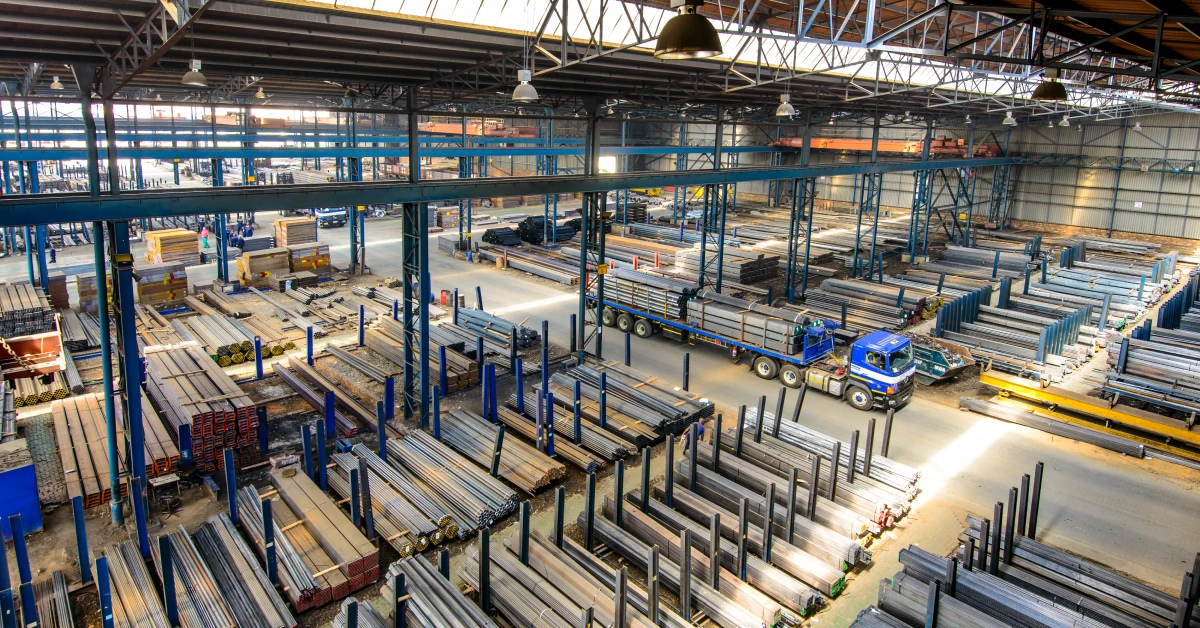
SAISC is supporting industry applications to the International Trade Administration Commission of South Africa (ITAC) for import tariff waivers, assessed one case at a time, to help ease the current structural steel shortage.
SAISC first proposed a six-month blanket waiver to bridge the gap until new mills come online. It could not go ahead. The legislative and administrative requirements, both locally and internationally, were too heavy. We have changed course and are now backing individual waiver applications.
Three dimensions of the structural steel shortage
SAISC CEO Amanuel Gebremeskel says the shortage has three parts.
“Shortage of structural steel in South Africa has three dimensions. Firstly, there are profiles that are no longer rolled in South Africa. Secondly, there are profiles that are manufactured in South Africa but are not available in reasonable lead times. Finally, there are structural profiles that may be available locally but where compliance with the quality and traceability requirements recognised by SAISC needs to be demonstrated.”
SAISC is working to speed up waiver decisions where sections are temporarily in short supply under these three criteria. The major associations representing the steel manufacturing industry are supporting the effort. Affected companies are approaching SAISC to assess the market and provide credible, independent summaries of the materials in short supply.
“We hope this effort will yield a more practical approach to address the problem of structural steel shortages,” says Gebremeskel.
Demand outlook
Structural steel is needed in almost every facet of infrastructure development, which keeps the sector well placed. SAISC expects strong demand for light steel frame (LSF) construction, which suits the fast delivery of housing, schools and healthcare facilities. Structural steel framed bridges are another area where we expect growth.
To prepare the market, the SAISC LSF committee is developing courses for engineers and contractors.
SAISC also expects infrastructure activity to strengthen in 2027. Three factors are behind this:
- growing pressure to improve municipal service delivery
- rising private-sector interest in infrastructure investment
- continued development of public-private partnership frameworks
Gebremeskel notes that 2027 is also when many of the Government of National Unity’s public-private partnership policies should become more established in parastatals.
Protecting quality through the MQCP
Alongside the LSF courses, SAISC is rolling out the Material Quality Certification Programme (MQCP). Its purpose is to make sure market growth and innovation do not come at the expense of quality in material supply.
The programme responds to a shift in local steel production. The structural steel market was once dominated by one large mill producing steel from iron ore. South Africa now has several mills that make structural steel from recycled scrap. With the closure of ArcelorMittal’s Newcastle facilities, many steel members are also being imported from around the world.
“This fundamental diversification of steel supply reinforces the need for an independent industry body such as SAISC to establish clear quality criteria and support consistent verification across the structural steel supply chain,” says Gebremeskel.
Participating suppliers will be audited regularly against the MQCP’s quality and traceability requirements.
“Ultimately the programme is meant to give confidence to engineers and investors that South Africa continues to provide high-quality steel even while undergoing such a thorough industry transformation,” Gebremeskel concludes.
Adapted from an interview with SAISC CEO Amanuel Gebremeskel, originally published by Engineering News.