Project Type

Submitting Company (Non-SAISC Member)

Trotech (Pty) Ltd
Location

Project Team Interview Case Study

Project Overview

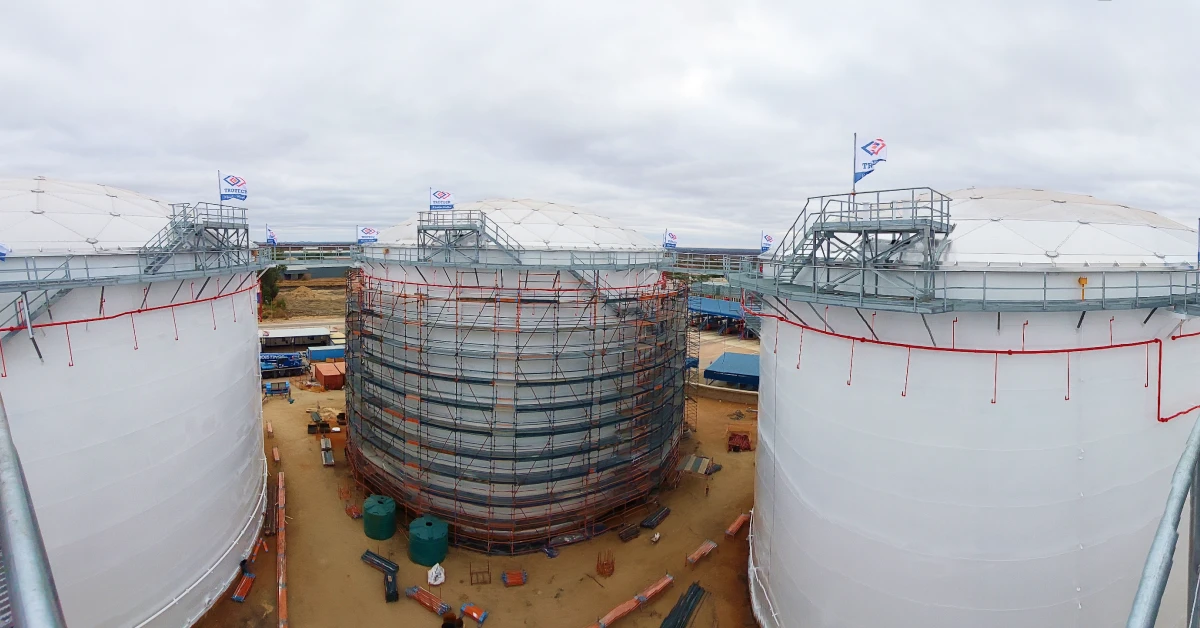
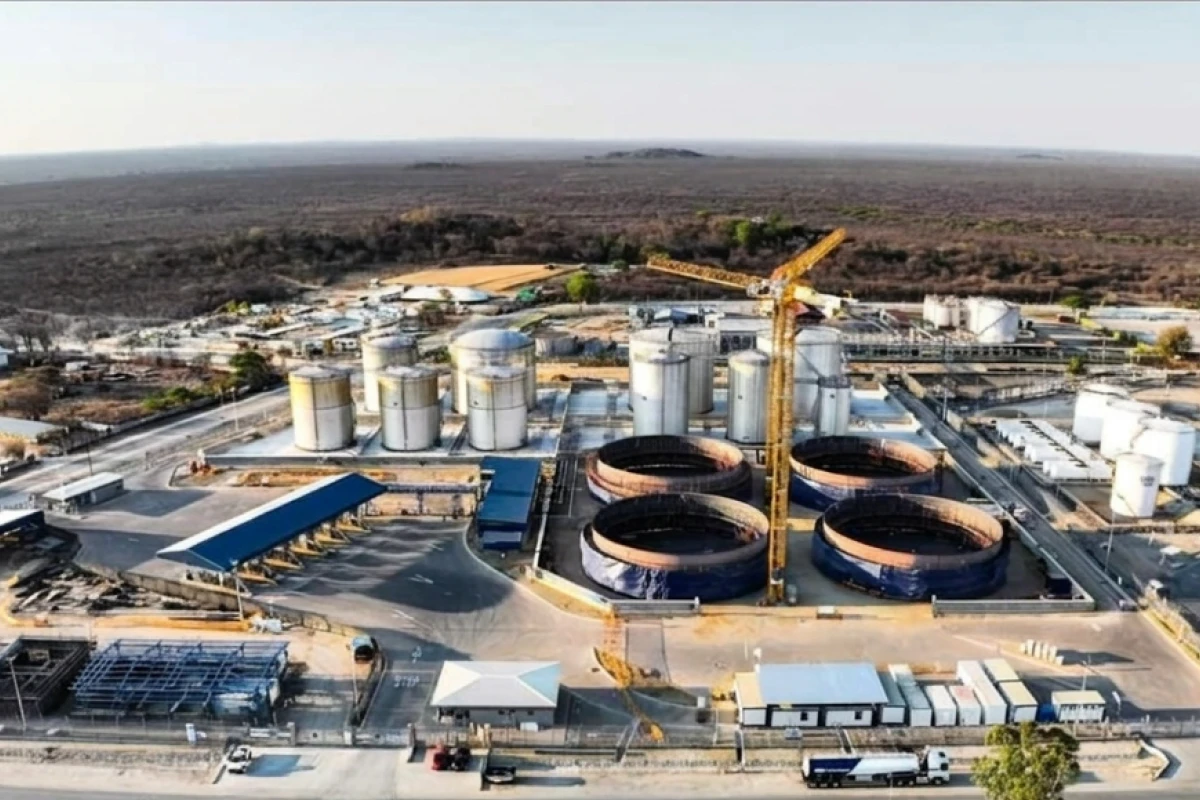
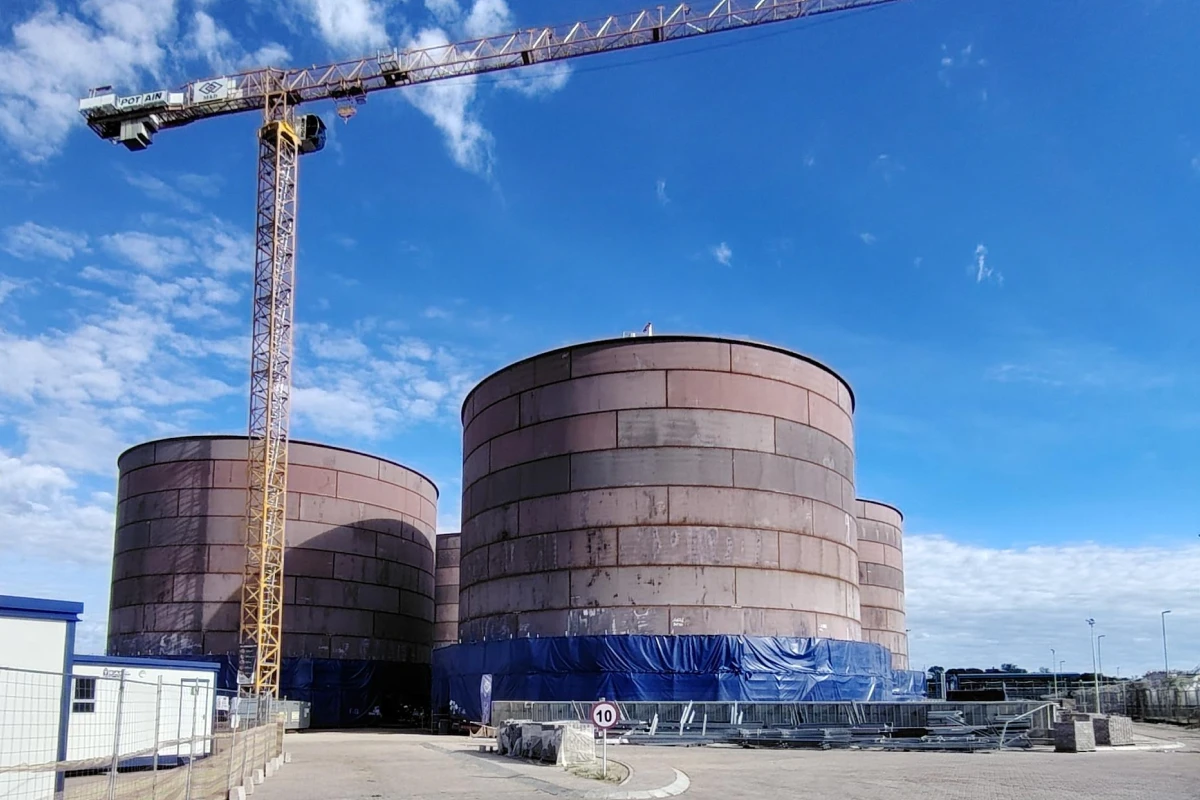
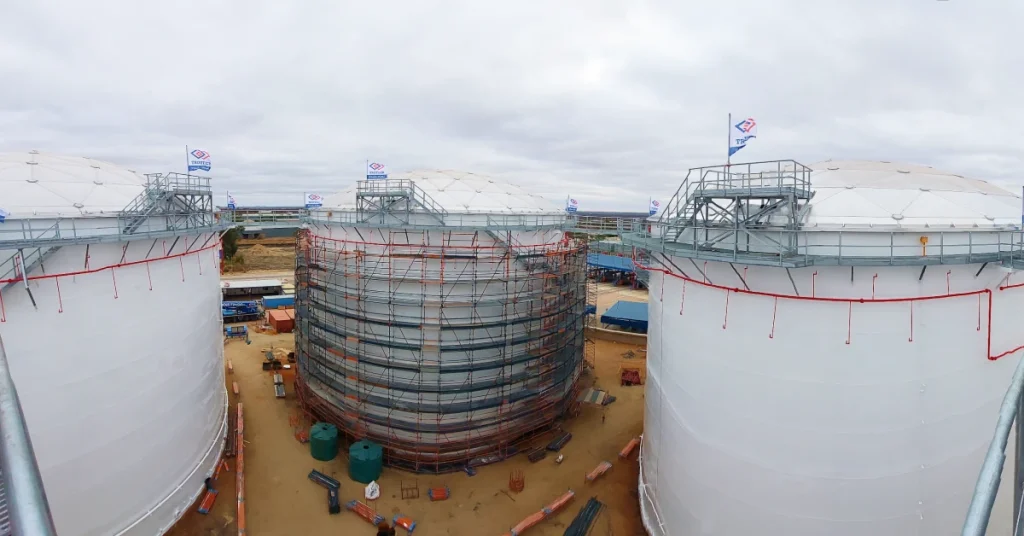
The Francistown Bulk Fuel Storage Expansion Project, executed at the Dumela Industrial site in Francistown, Botswana, involved the design, supply, manufacture, and erection of four large-scale above-ground petroleum storage tanks (ASTs) for Botswana Oil. Each tank holds 15,000 m³ of petroleum product, with a diameter of 30 metres and a height of 23.5 metres, providing a total depot capacity of 60,000 m³. The project forms part of Botswana Oil’s strategic initiative to secure up to 60 days of national fuel reserves, strengthening energy security in a landlocked country. Each tank comprises 10 welded steel shell courses of varying thickness (8–20 mm), a steel floor, a top wind girder, spiral stairs, an aluminium geodesic dome roof, and two of the four tanks feature aluminium internal floating roofs. The total cost of the project was R305.5 million (excl. VAT), with steelwork valued at R28 million. Carbon steel tonnage ranged from 1,200 to 1,500 tons, plus approximately 35 tons of aluminium. The project was completed on time within a 14-month programme, achieved over 329,000 man-hours with zero lost-time incidents, and incorporated a local workforce training initiative.

Steel Profiles Used

  • Date of Steelwork Completion
    2025-10-01
  • Tonnage
    1500
  • Hot Rolled Structural Sections
    Channels, Angle Irons
  • Plates
    Carbon Steel Plates, Steel Floor Plates, Annular Plates
  • Tubes and Pipes
    Various-sized piping for firefighting and cooling ring systems, Nozzle Pipe Sections
  • Grating Hand Railing and Expanded Metal
    Gratings, Hand Railings, Walkways on Wind Girders

Metal Cladding and Roofing Overview

  • Material Used
    Aluminium Geodesic Dome Roofs, Aluminium Internal Floating Roofs
  • Cladding Tonnage
    35

Project Details

All fabrication was carried out at Trotech’s workshop under ISO 9001 and ISO 3834 accreditation. Approximately 1,500 tons of carbon steel plate of varying thickness were procured, sorted, and fabricated into shell courses, floor plates, annular plates, nozzle insert plates, structural channels, angle irons, wind girder components, grating, stairs, and pipework. Shell plates were rolled to achieve the required 30-metre diameter. A critical innovation was the redesign of the wind girder connections from welded to bolted cleats with slotted holes, identified during workshop pre-assembly as impractical to weld on site. Trial assembly of grating and structural steel elements in the workshop prior to dispatch ensured accurate fit-up on site, significantly reducing rework. Nozzle insert plates required precise machining to match shell curvature and underwent post-weld heat treatment. All components were inspected by Trotech QC and workshop QC prior to dispatch. Aluminium geodesic dome roof panels were prefabricated in modular sections by HMT for rapid on-site assembly. Material delivery to site was managed to maintain a minimum two-week buffer stock, ensuring no fabrication stoppages. Radiographic testing of weld joints was carried out in accordance with API 650 and ASME 9 standards.
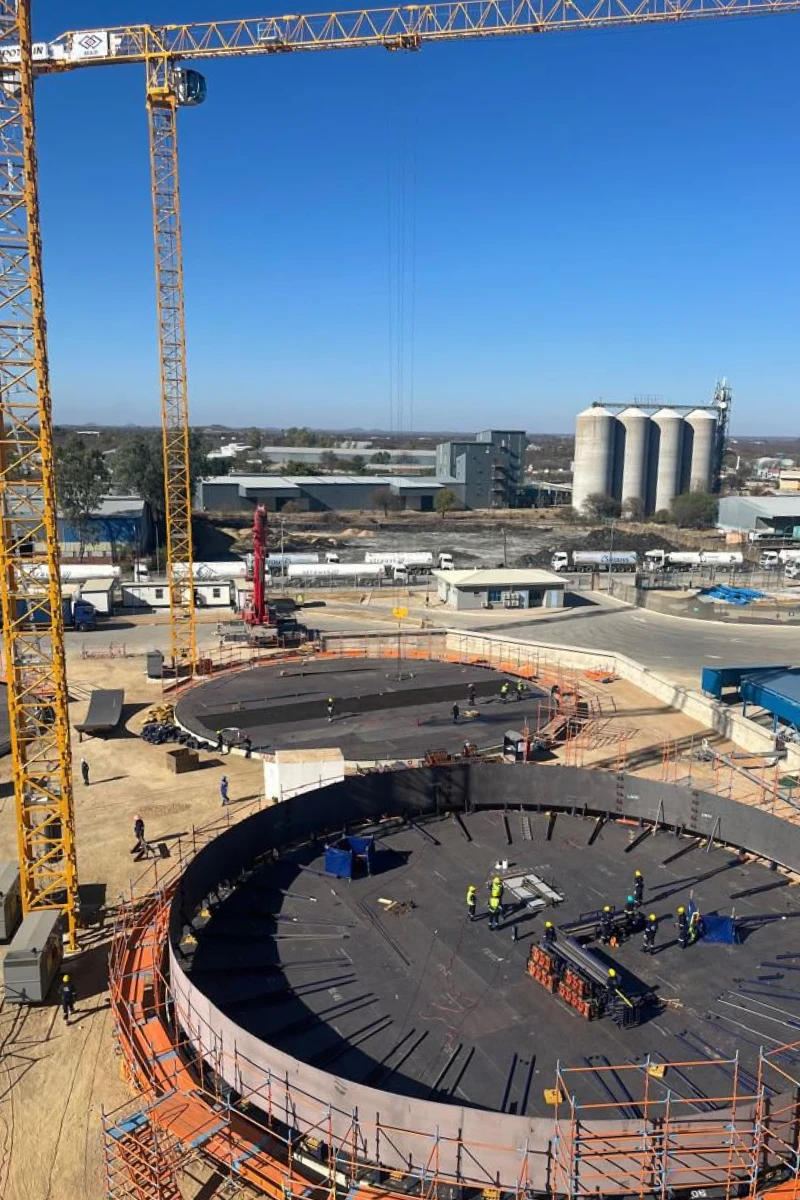
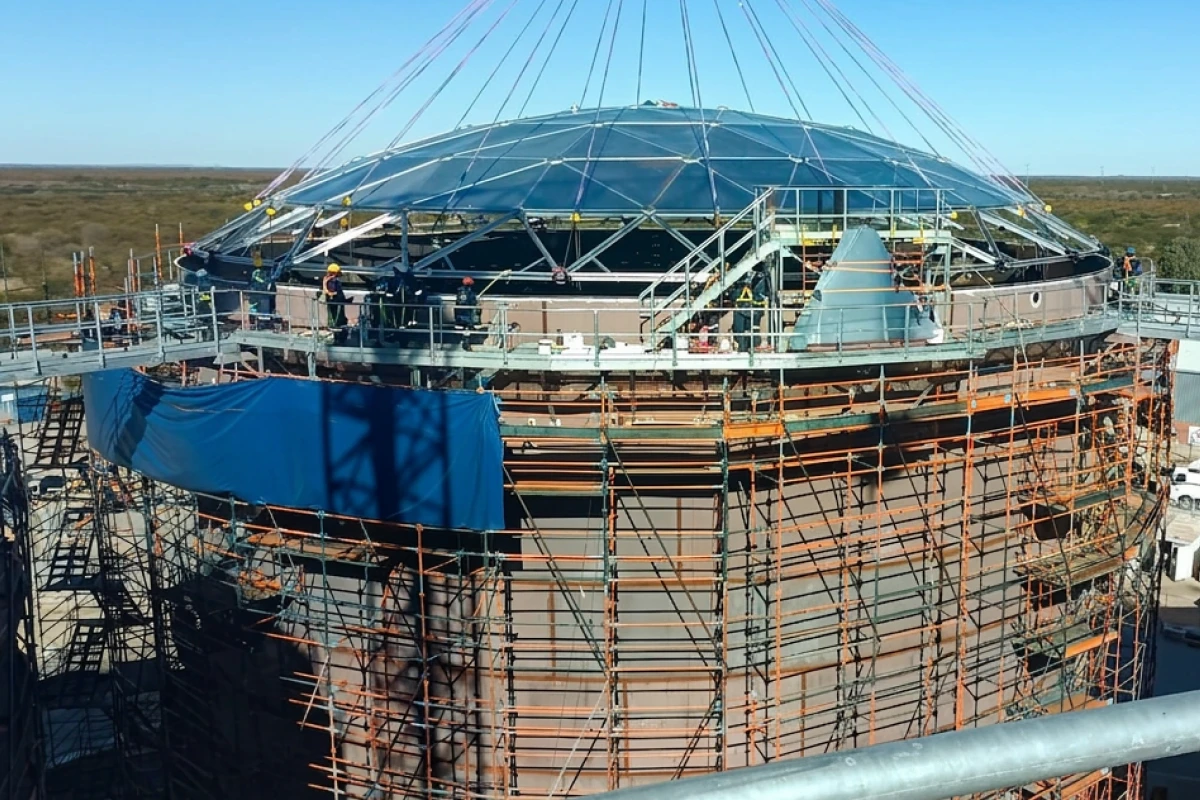
Tank erection employed a top-down jacking methodology, allowing all shell plate assembly and welding to take place at ground level. Each tank was built upward by progressively lifting completed courses using a jacking system and fitting subsequent courses underneath. This approach enhanced safety by reducing work at height and improved quality through ground-level welding. A temporary stiffener ring was installed at the top of the shell during erection to prevent wind-induced collapse before the permanent wind girder was fitted. The redesigned bolted wind girders, with slotted cleats, were assembled on-site without cutting or welding, simplifying installation and reducing erection time. Aluminium geodesic dome roofs were lifted into position using tower cranes rather than conventional turfing methods, reducing manual labour from approximately 30 to a significantly smaller crew, improving placement accuracy and safety. Two tanks also received aluminium internal floating roofs installed after dome placement. The site flooded due to heavy rainfall; scaffolding elevated platforms allowed work to continue safely. Cross-border logistics were managed with a two-week material buffer on site. Painting contractor MTL Triad Engineering applied multi-coat Sigma coating systems following abrasive blasting. Hydrotesting was completed at 15 million litres of water per tank upon erection completion.
The project presented multiple significant challenges. Cross-border logistics, including material transport, labour mobilisation, and site establishment in Botswana, required detailed coordination. Visa and work permit delays prevented the planned expatriate workforce from mobilising fully; ultimately 75% of the workforce was sourced locally in Botswana. This necessitated an on-site training school providing practical skills in welding, grinding, and flame cutting, resulting in 8 enrolments and 6 graduations. Initial productivity and quality challenges with newly trained workers were managed through dedicated supervision and mentoring. Heavy rainfall caused site flooding; elevated scaffolding platforms allowed work to continue. Insufficient water supply for hydrotesting required schedule revisions and contractual claim management. Local subcontractor painting performance required intensive daily management to maintain quality and schedule. Wind loading risk during erection was mitigated through a temporary double curb-angle stiffener ring at the top of the shell. The redesign of wind girders from welded to bolted arrangements resolved on-site assembly complexity identified during workshop pre-assembly. Continuous 4D schedule monitoring using Synchro software, daily diaries, and fortnightly client progress meetings maintained programme transparency. Despite these challenges, the project was delivered within the 14-month programme, on budget, to the highest quality standards, and with zero lost-time incidents across over 329,000 man-hours.

Benefits of Steel in this Application

Steel was the optimal material for this large-scale fuel storage application due to its unique combination of structural performance, fabrication flexibility, and lifecycle durability. The welded steel shell design allowed variable plate thicknesses – from 20 mm at the base to 8 mm at the top – matching material precisely to hydrostatic and wind load demands, maximising structural efficiency and minimising waste. Steel’s high tensile strength and ductility enabled the tanks to safely contain substantial petroleum volumes while resisting environmental wind loads without requiring columns, relying entirely on the inherent rigidity of the cylindrical form. Fabrication flexibility allowed shell and wind girder designs to be refined during the project, improving constructability and reducing on-site welding requirements. Prefabricated and modular components enabled faster erection compared to alternative materials such as concrete, supporting fast-track programme delivery. Integration of nozzles, firefighting pipework, access systems, and coating schemes was straightforward due to steel’s weldability and machinability. Advanced corrosion protection systems – abrasive blasting to SA2.5 externally and SA3 internally, with multi-coat Sigma coating systems – ensure long service life and low maintenance. Both the steel shell and aluminium dome components are fully recyclable, contributing to end-of-life sustainability.

Testimonials

“Trotec’s success underscores the value of collaboration, innovation, and disciplined execution in shaping the region’s energy future.” – Botswana Parliamentary Guest, Project Completion Ceremony.

The principal engineer provided a formal reference letter acknowledging the high level of quality performance and project delivery achieved by the Trotech team throughout the contract, noting that the client and engineer held the team fully accountable to the highest standards – accountability which the team met and exceeded.

Botswana Oil and the wider Botswana community recognised Trotech’s contribution to local workforce development through the establishment and handover of an on-site training school. The programme was covered positively in the Botswana press, commending the lasting legacy left behind for local skills capacity. Internally, project leadership expressed pride in the team’s exceptional safety record – 329,000+ man-hours with zero lost-time incidents – achieved with a predominantly newly trained local workforce, and in the successful delivery of a project completed virtually to the hour against the programme deadline.