
Project Overview
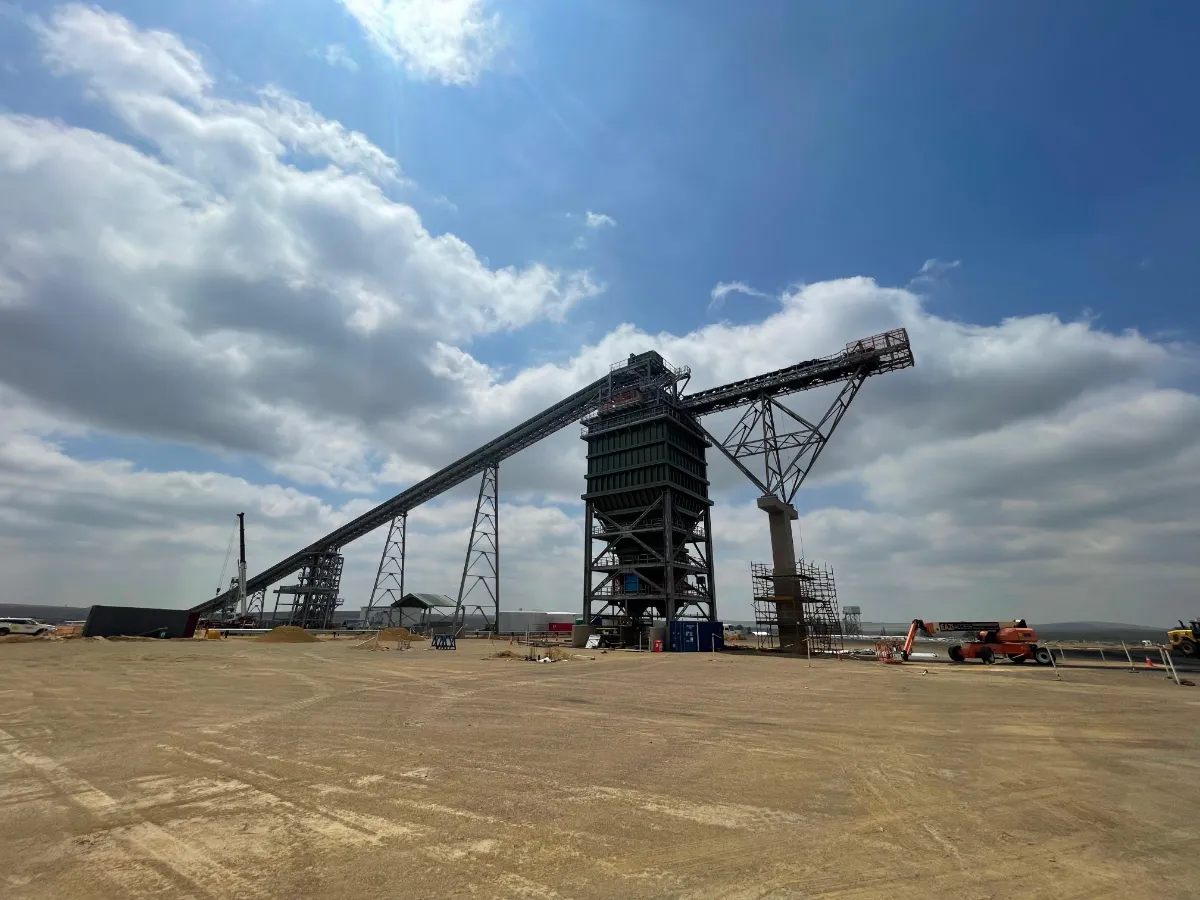
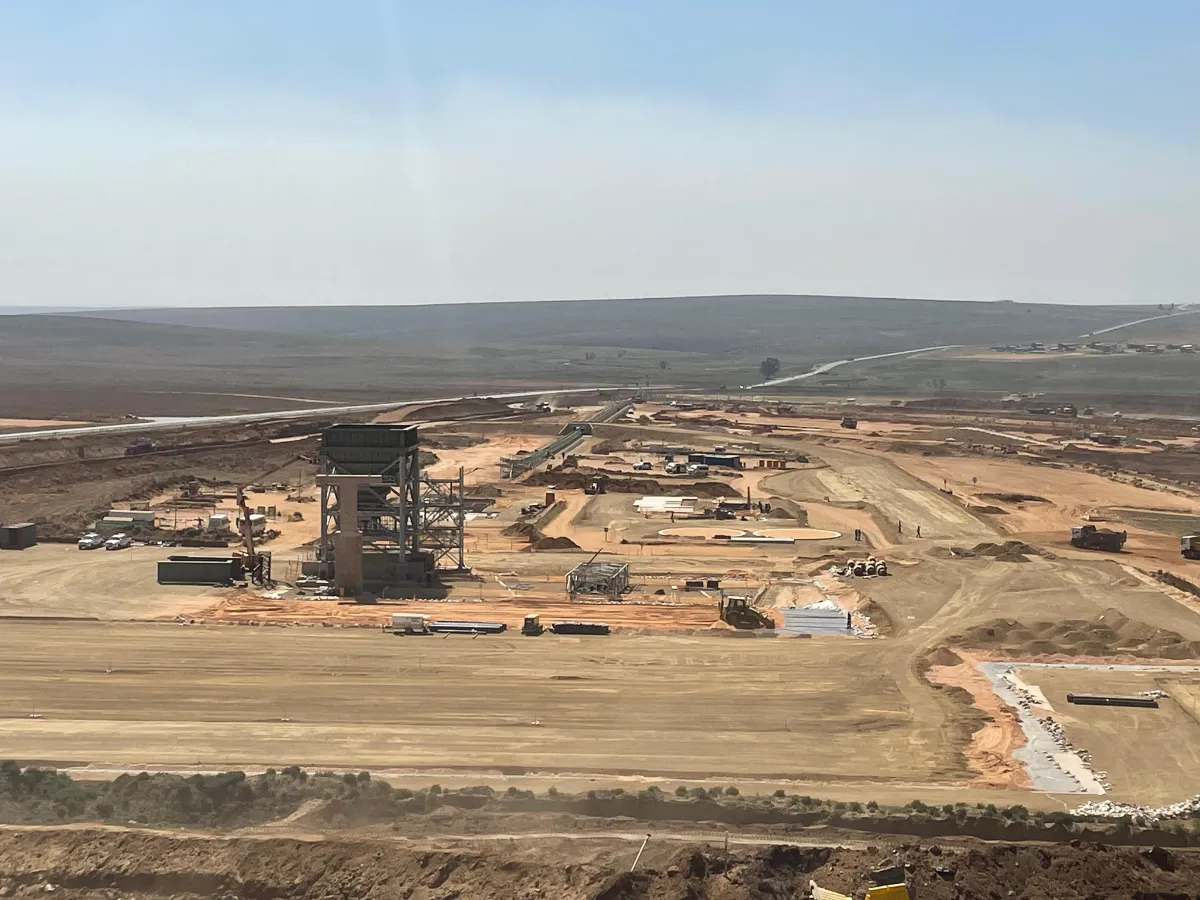
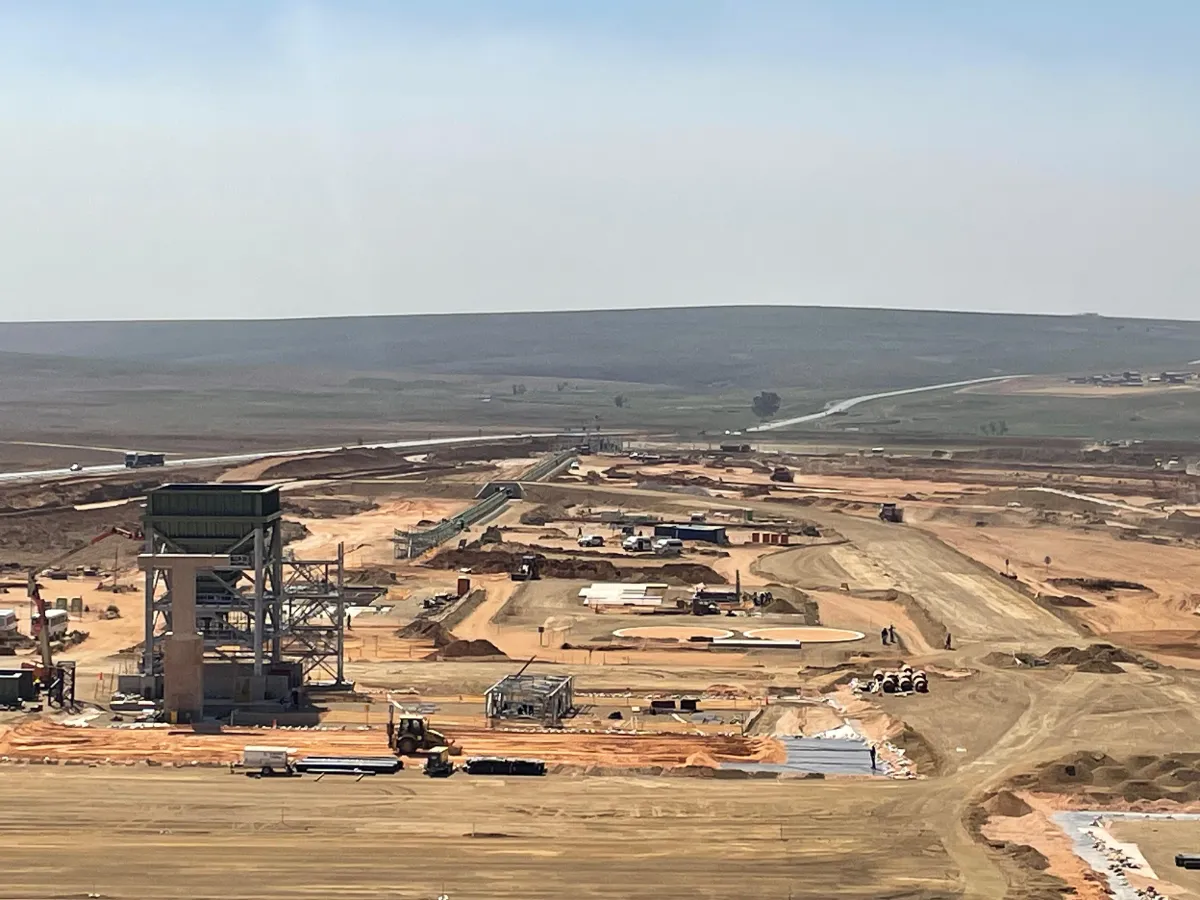
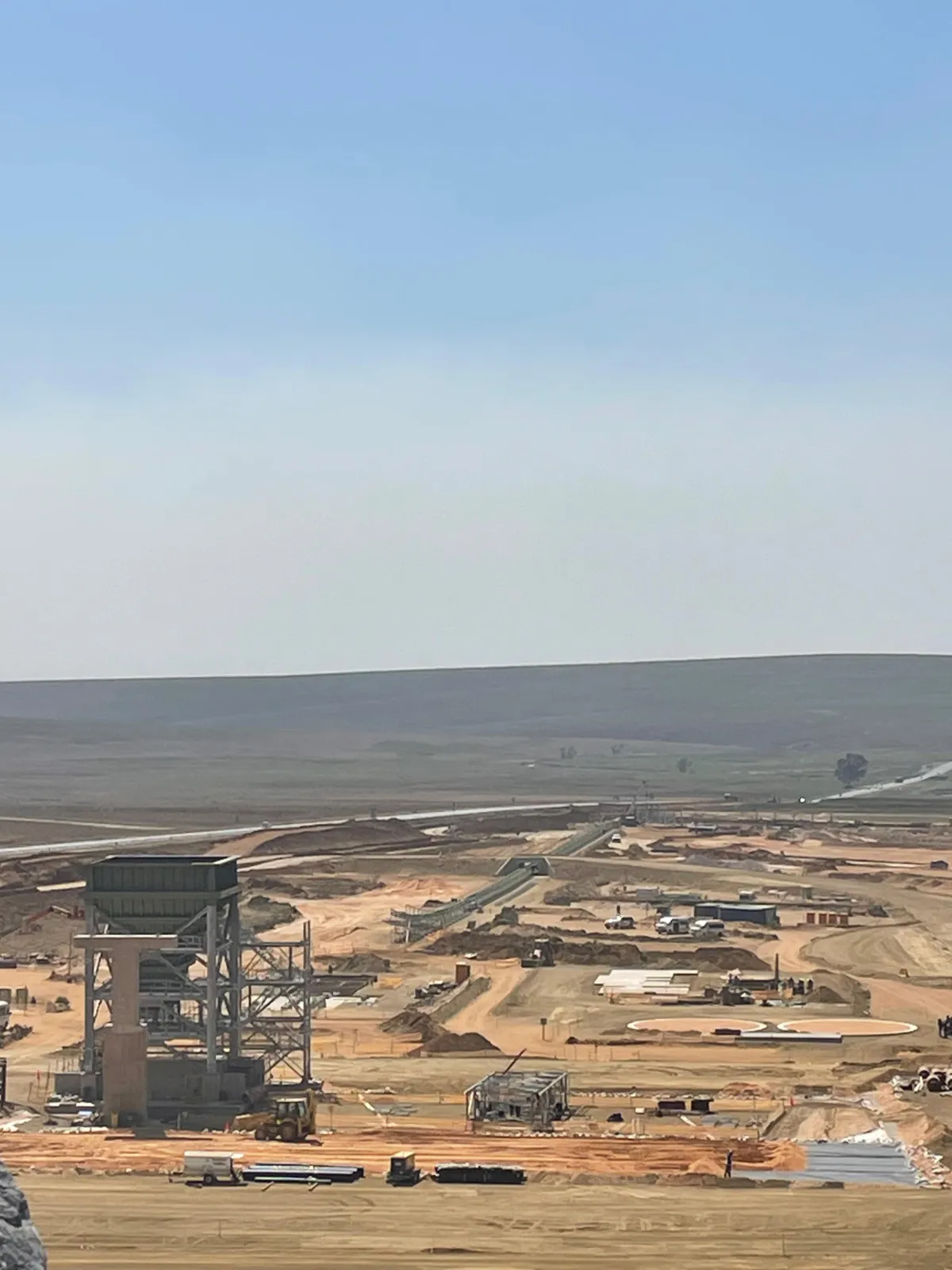
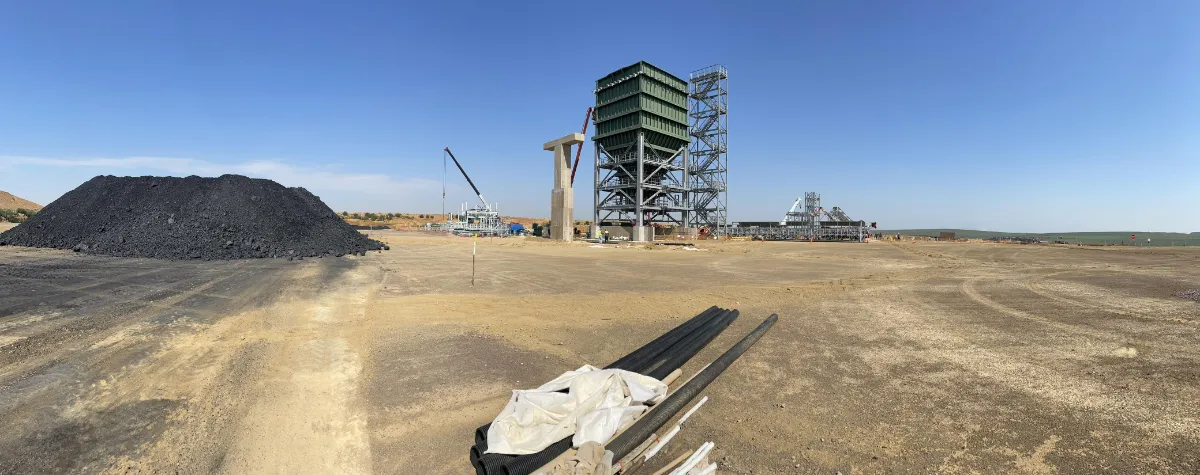
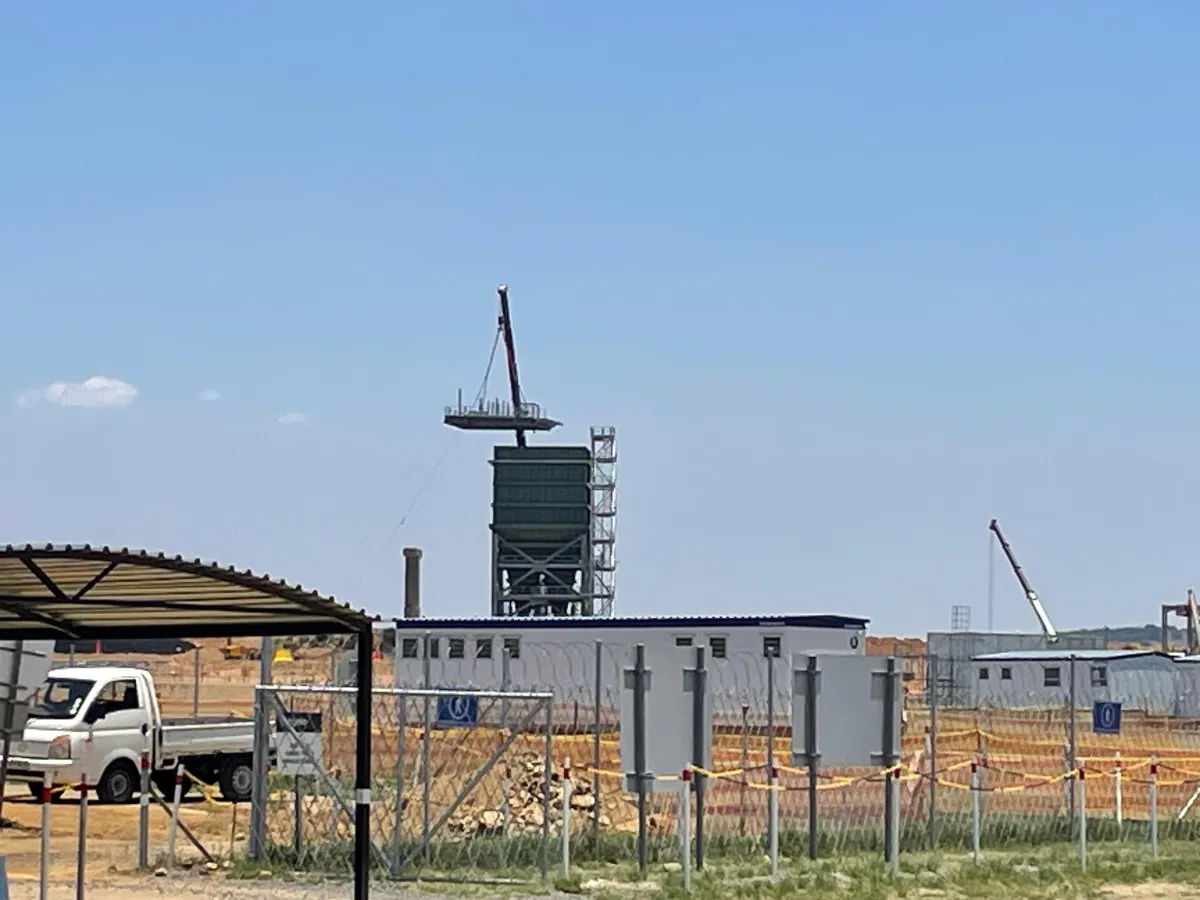
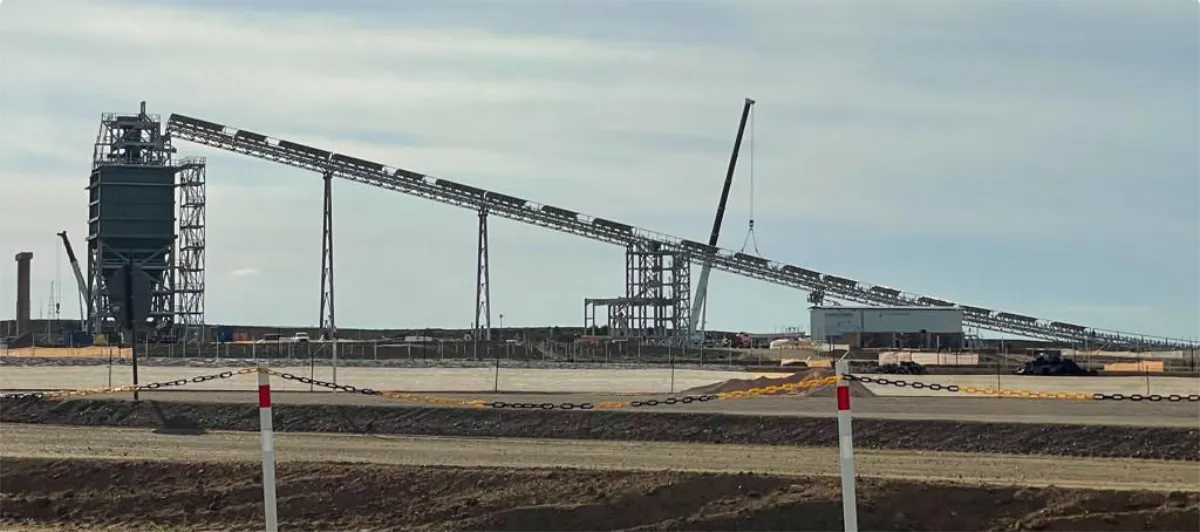
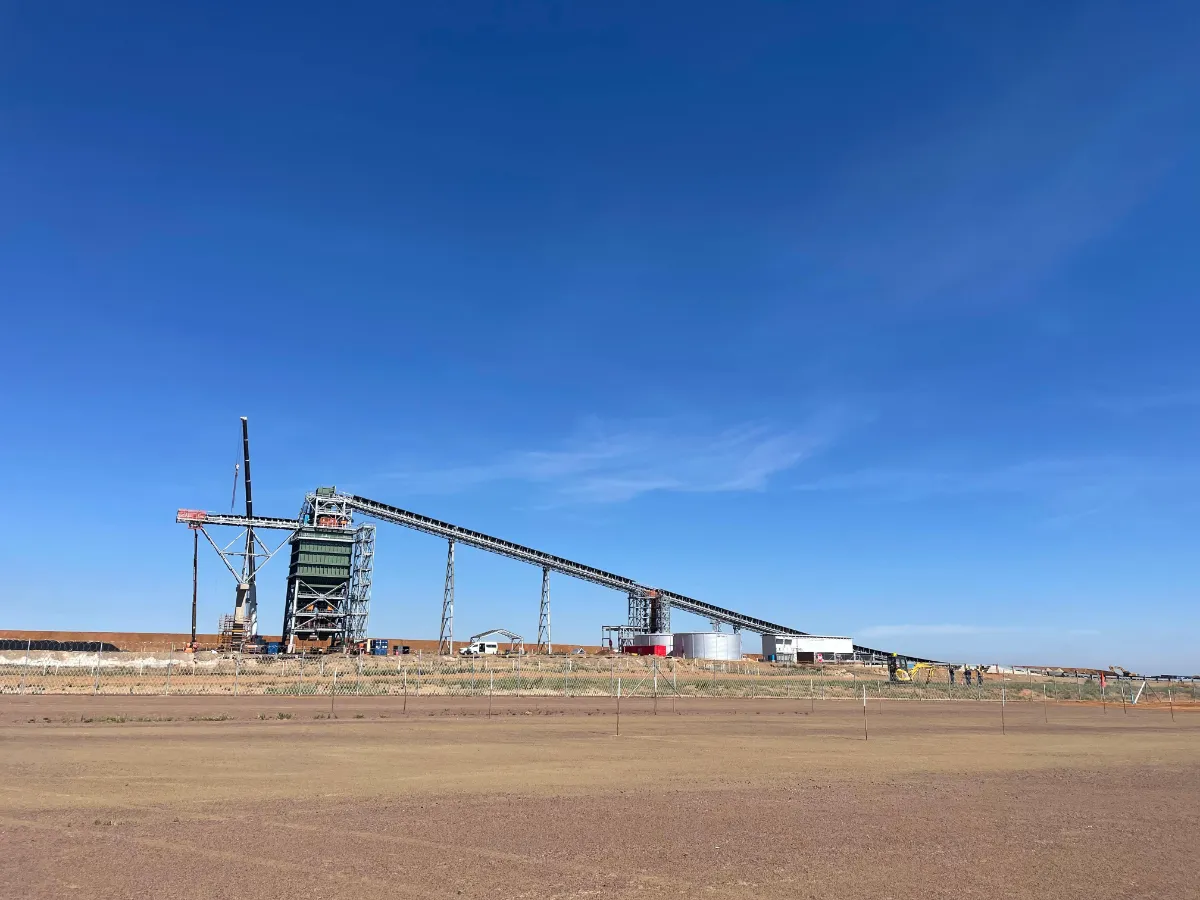
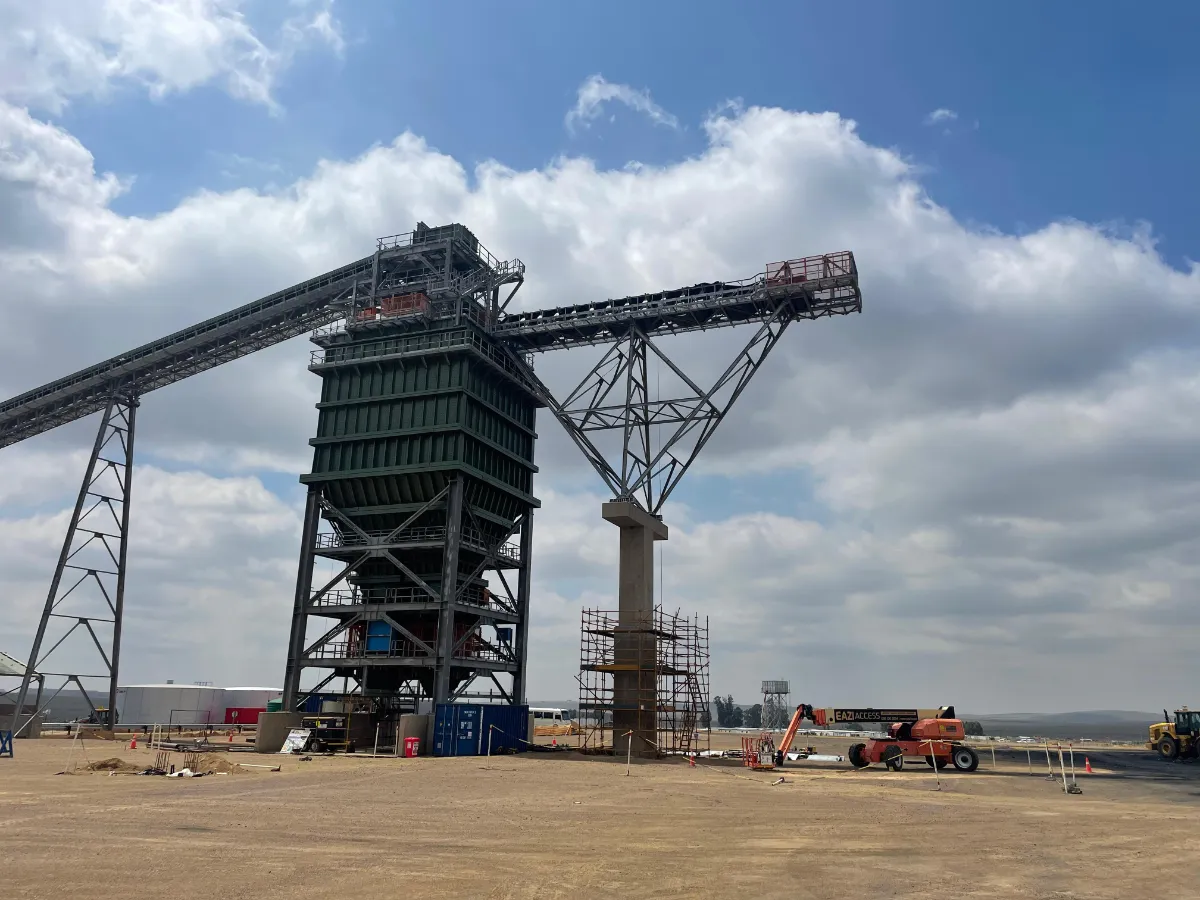
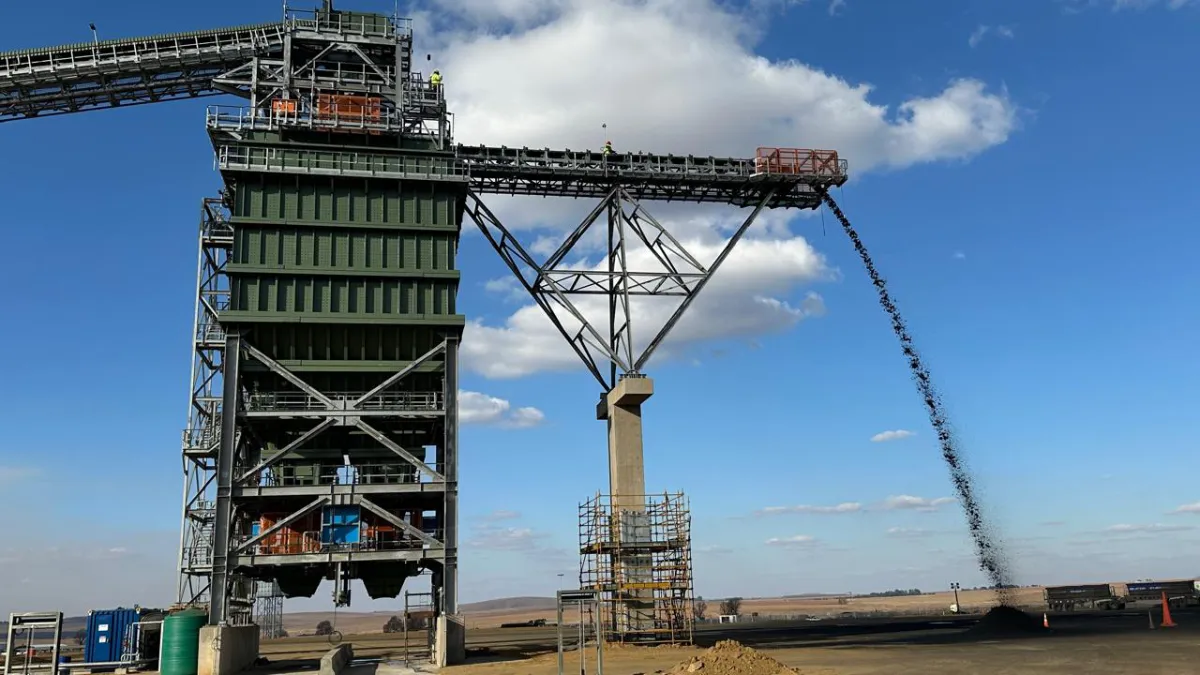
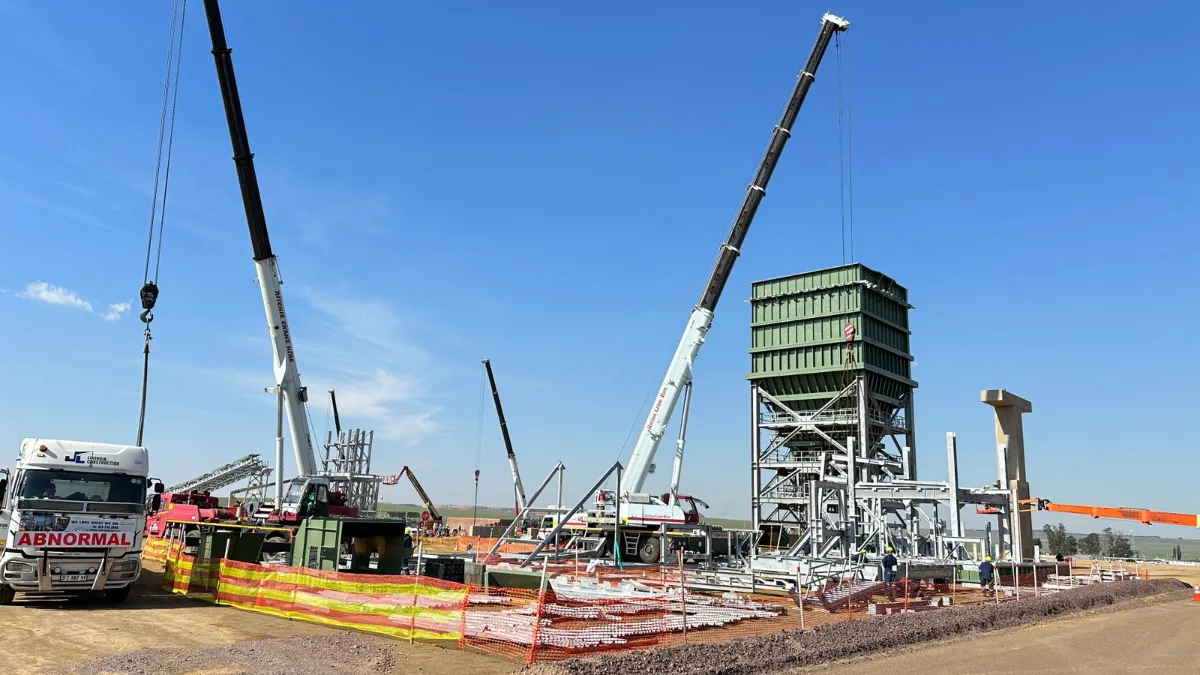
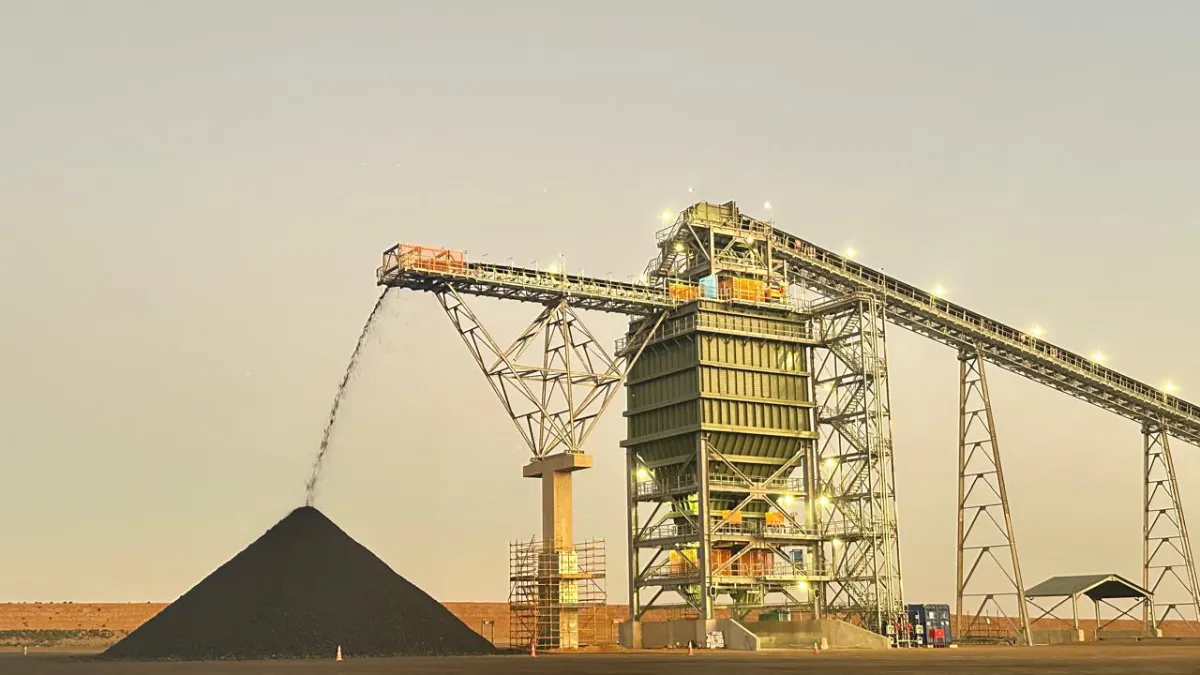
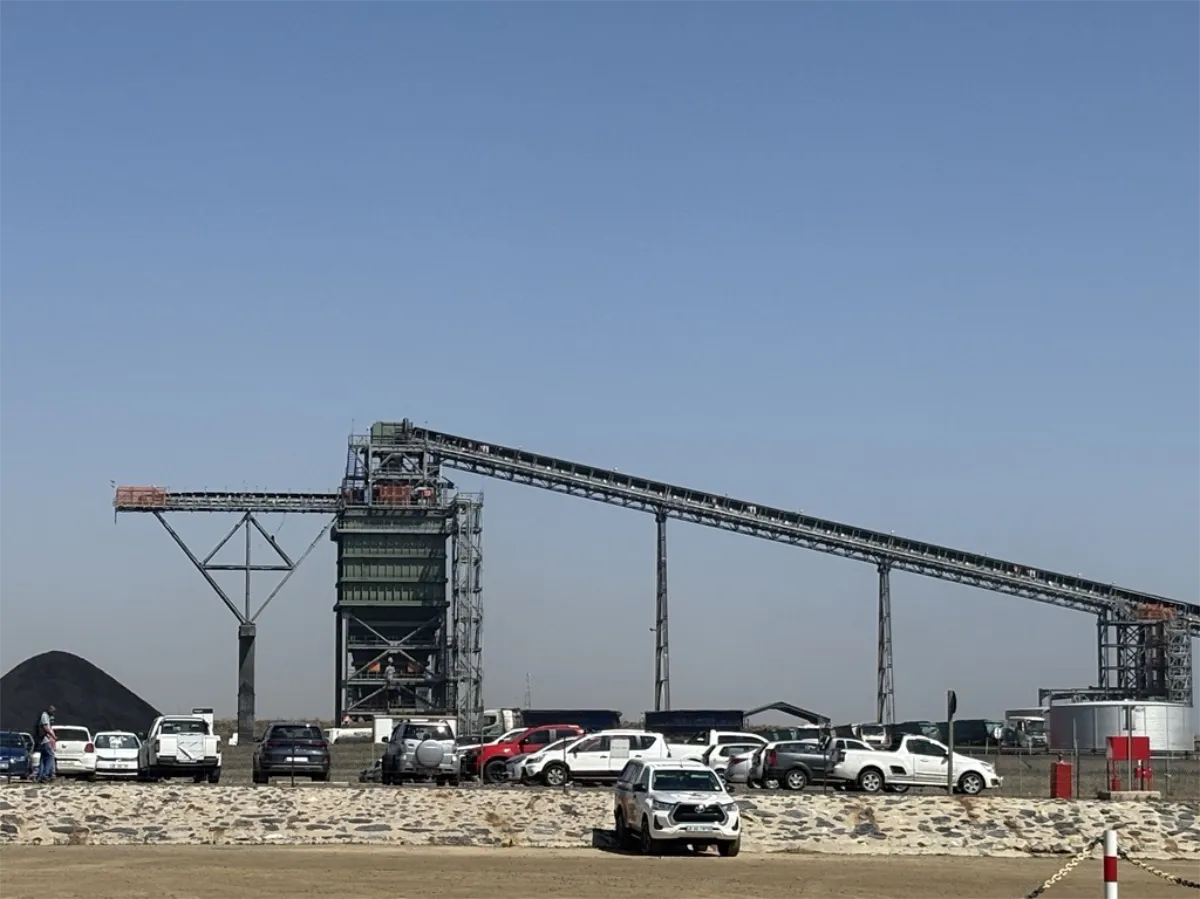
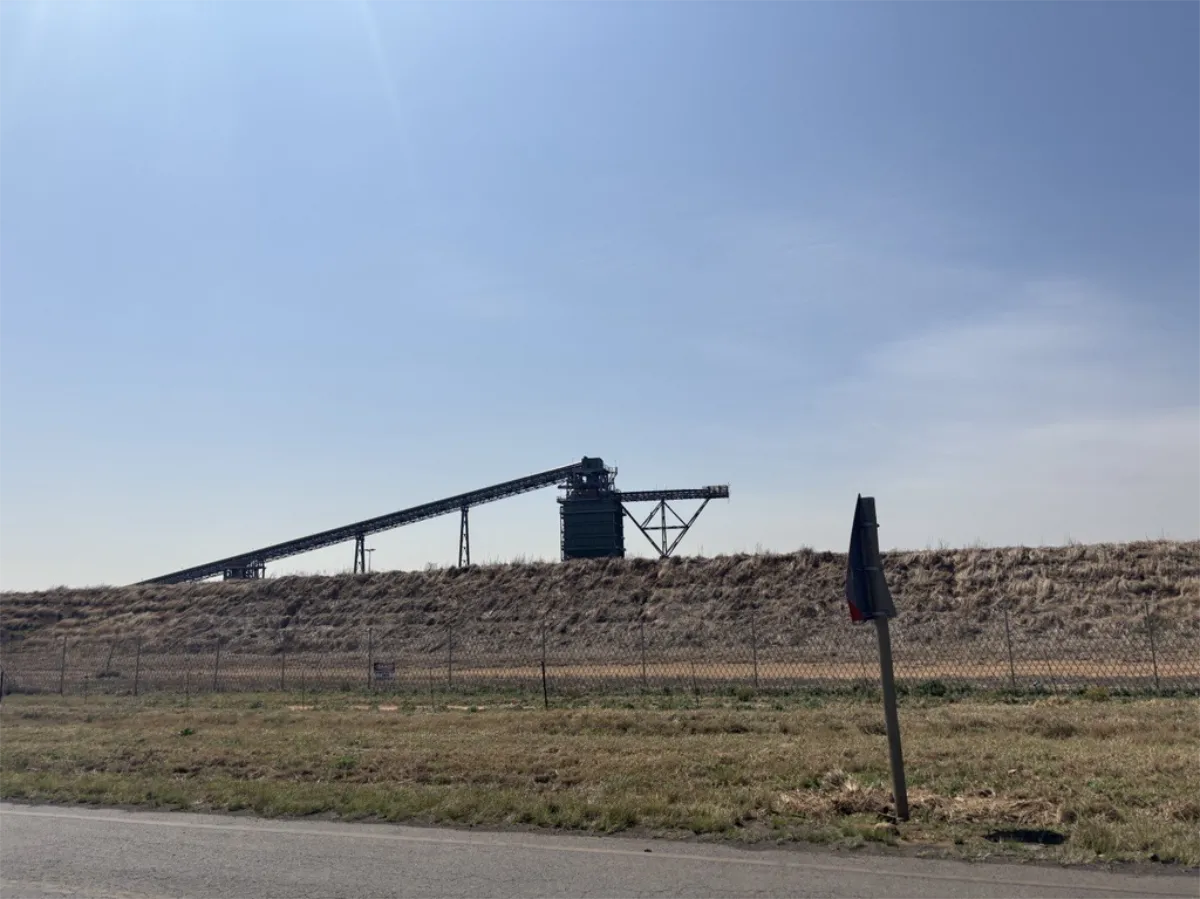
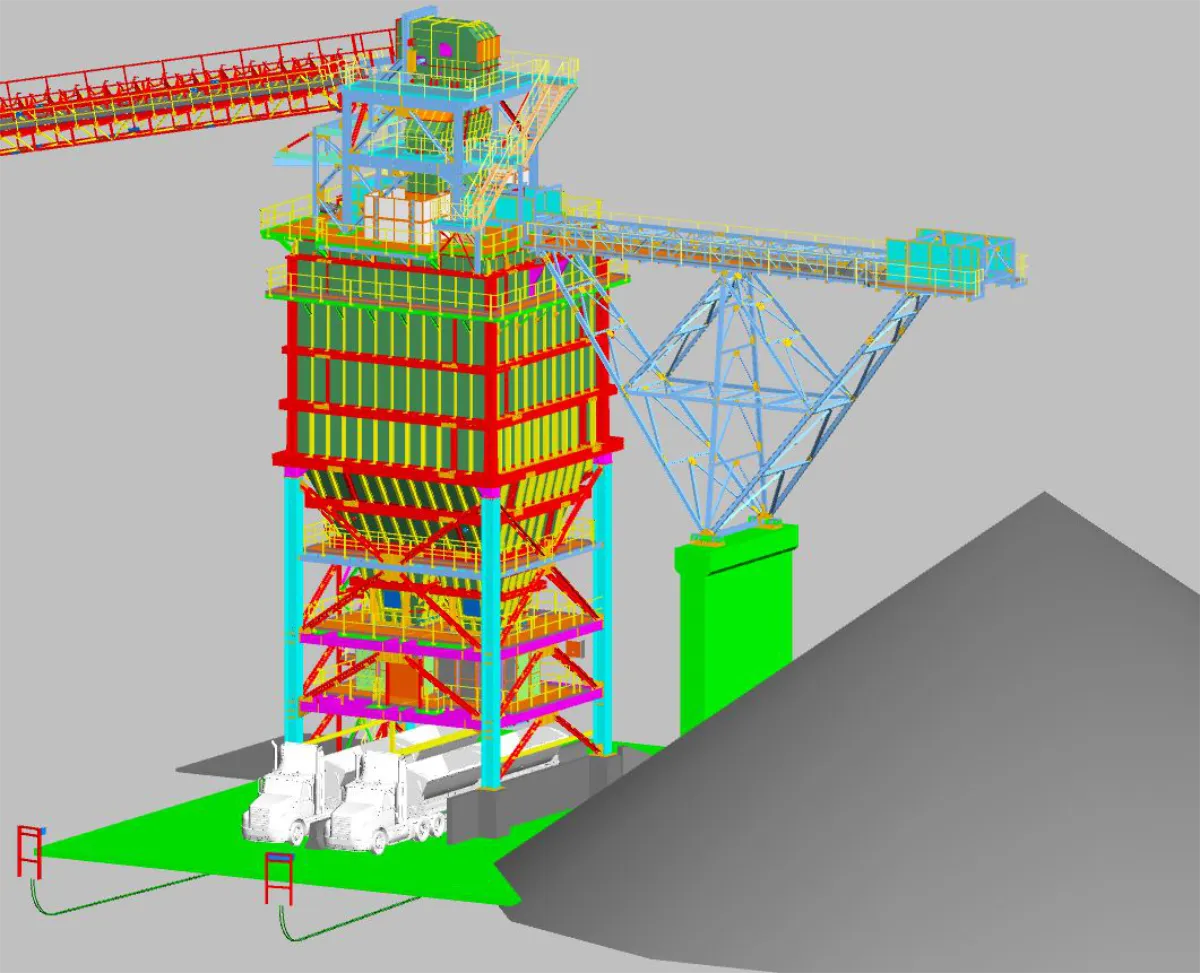
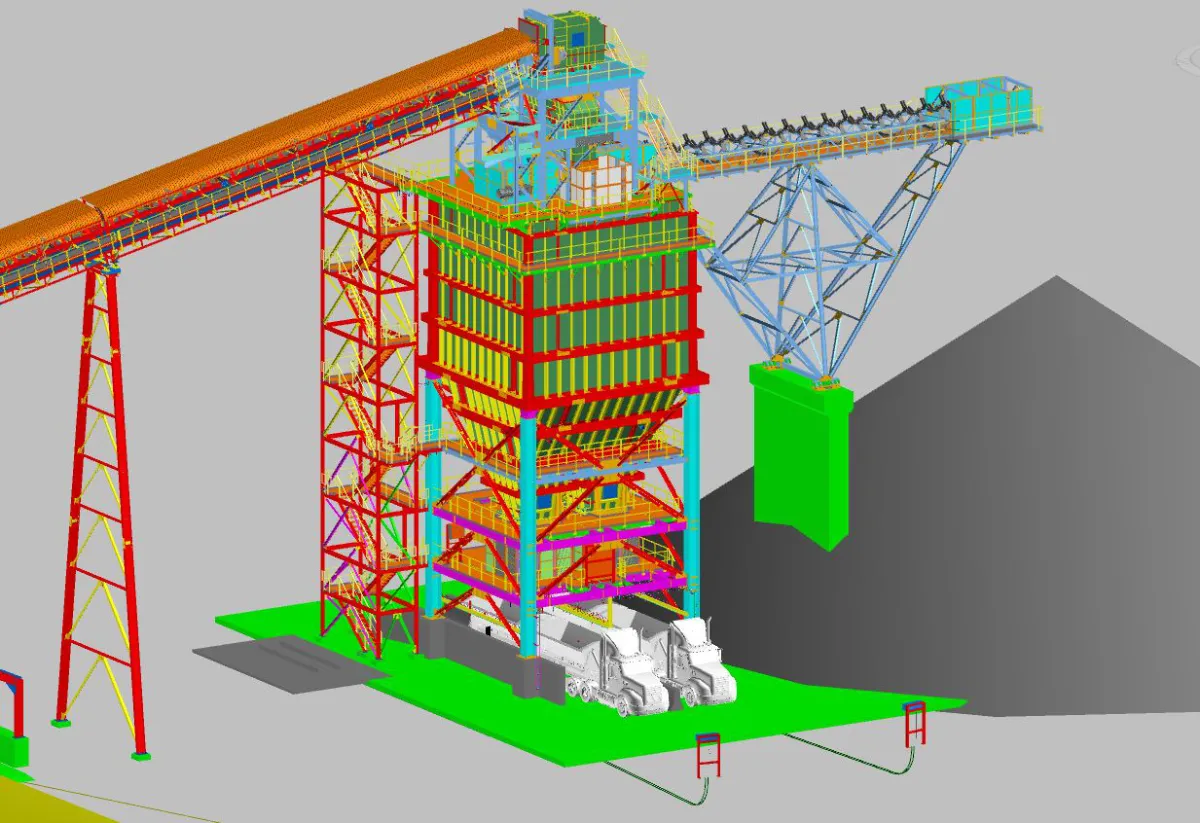
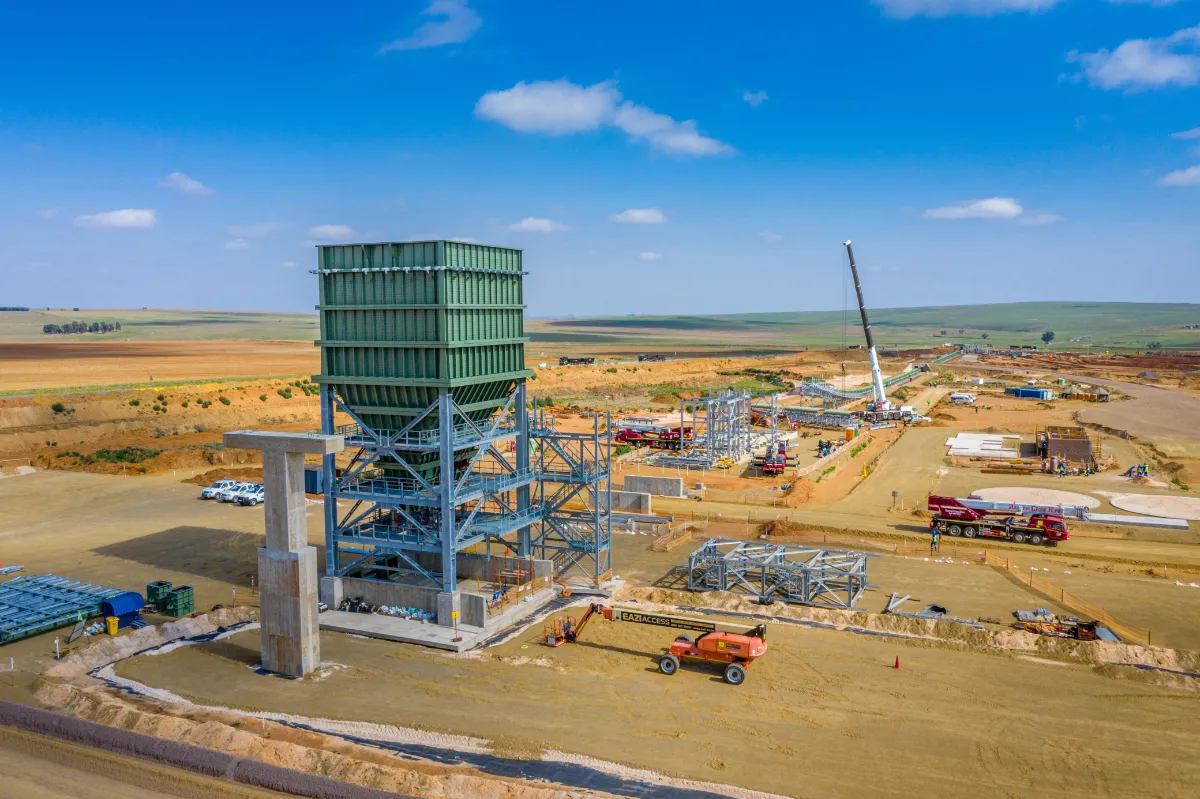
The Elders truck loading station is designed to profile load -250mm ROM coal into either 40 ton or 50 ton payload side tipping tandem interlink trucks via two parallel truck loading bays. Trucks can be loaded and dispatched at a rate of 34trucks/hour. Truck payloads are verified at road weigh bridges prior to despatch from Elders. A Throw-Out Conveyor installed on top of the truck loading station allows excess product to be diverted to a conical stockpile when the truck loading station surge bin is full.
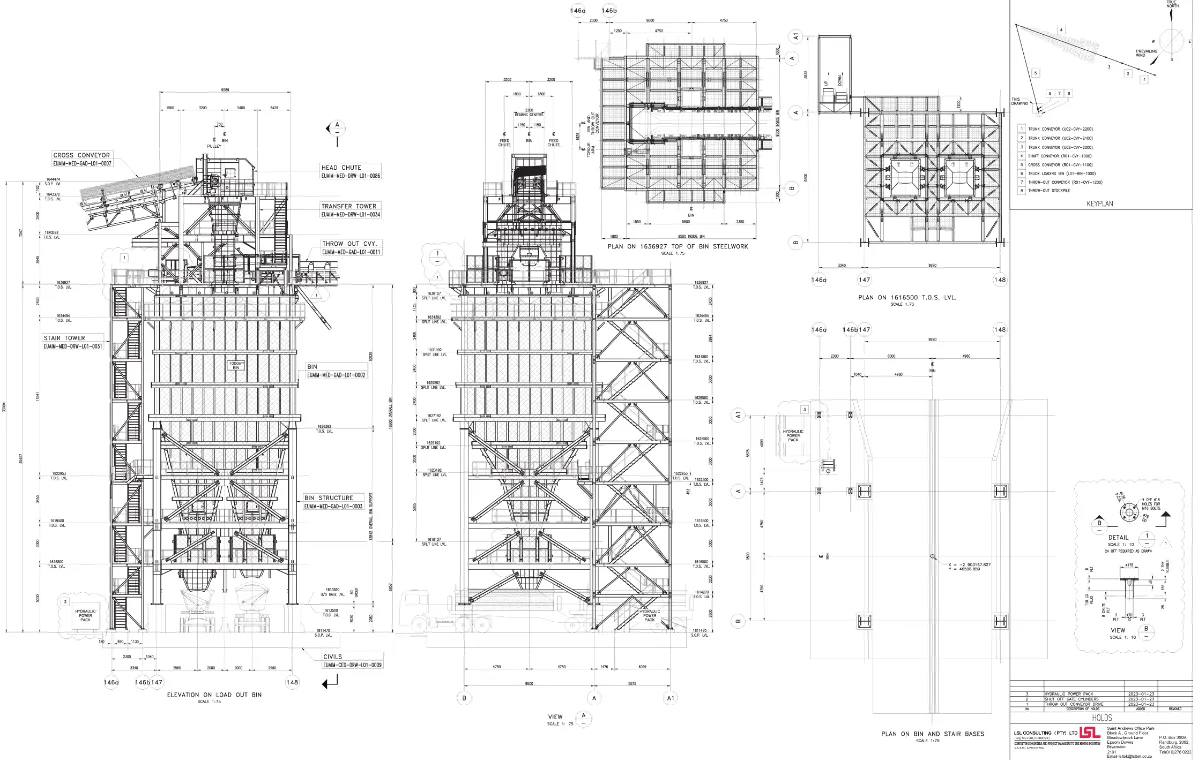
To prevent any interruption to the underground mining operation caused by a high LOS bin level, the LOS feed conveyor discharge chute is equipped with an automatic overflow mechanism. This overflow mechanism automatically diverts excess material to the throw-out stockpile when the LOSsurge bin is full and returns feed to the LOS as soon as truck loading operations reduce the bin level. The LOS surge bin is designed for expanded flow operation and is equipped with twin axi-symmetric mass flow outlet allowing for loading of 2 tandem interlink trucks in parallel. Each of the bin outlets is equipped with a hydraulically operated radial gate and vertically adjustable profile chute. Vertical adjustment of the profile chute allows the load-outstation to accommodate different truck heights and capacities.The LOS surge bin has a live capacity of 1000 tons coal. The combined volume of the surge bin and the 10 000 ton throw-out stockpile is sufficient to buffer the continuous mine operations from the discontinuous trucking operations.
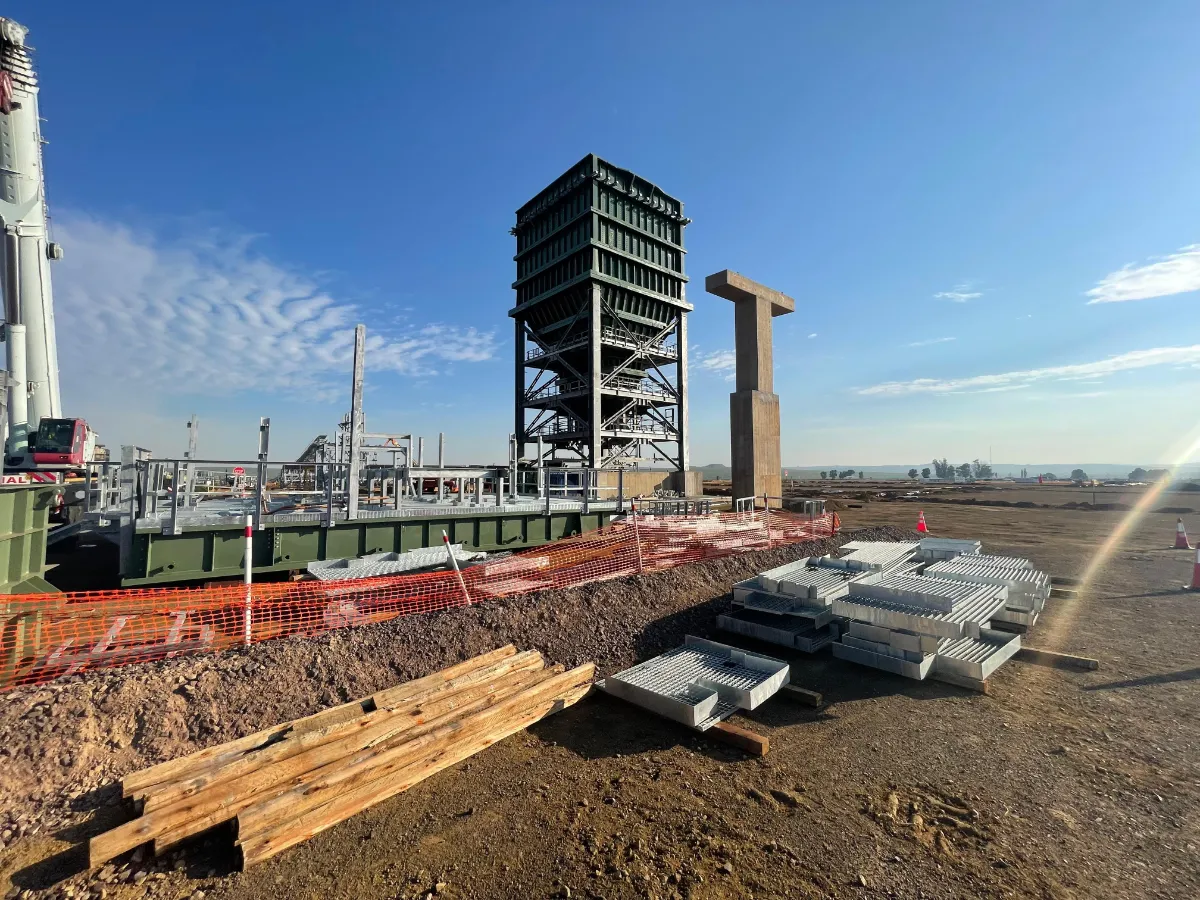
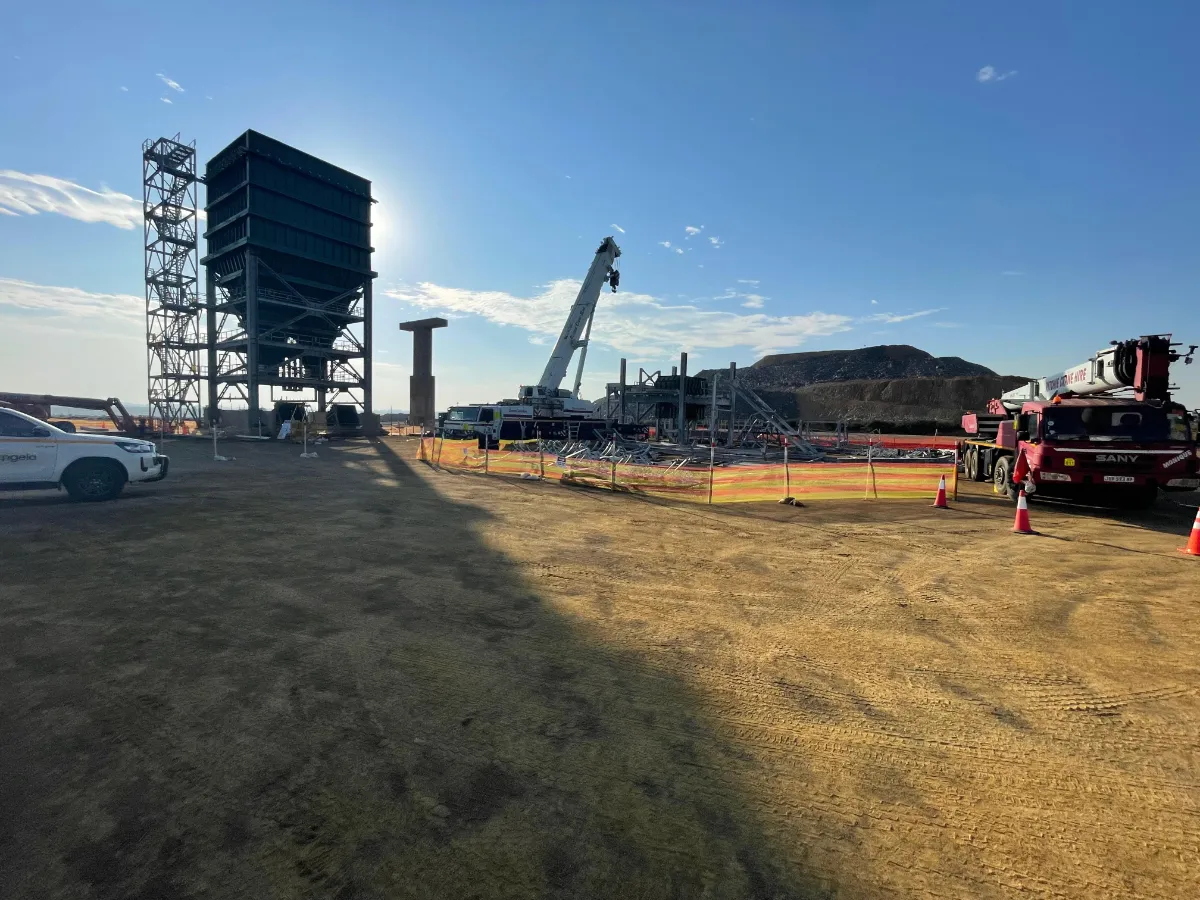
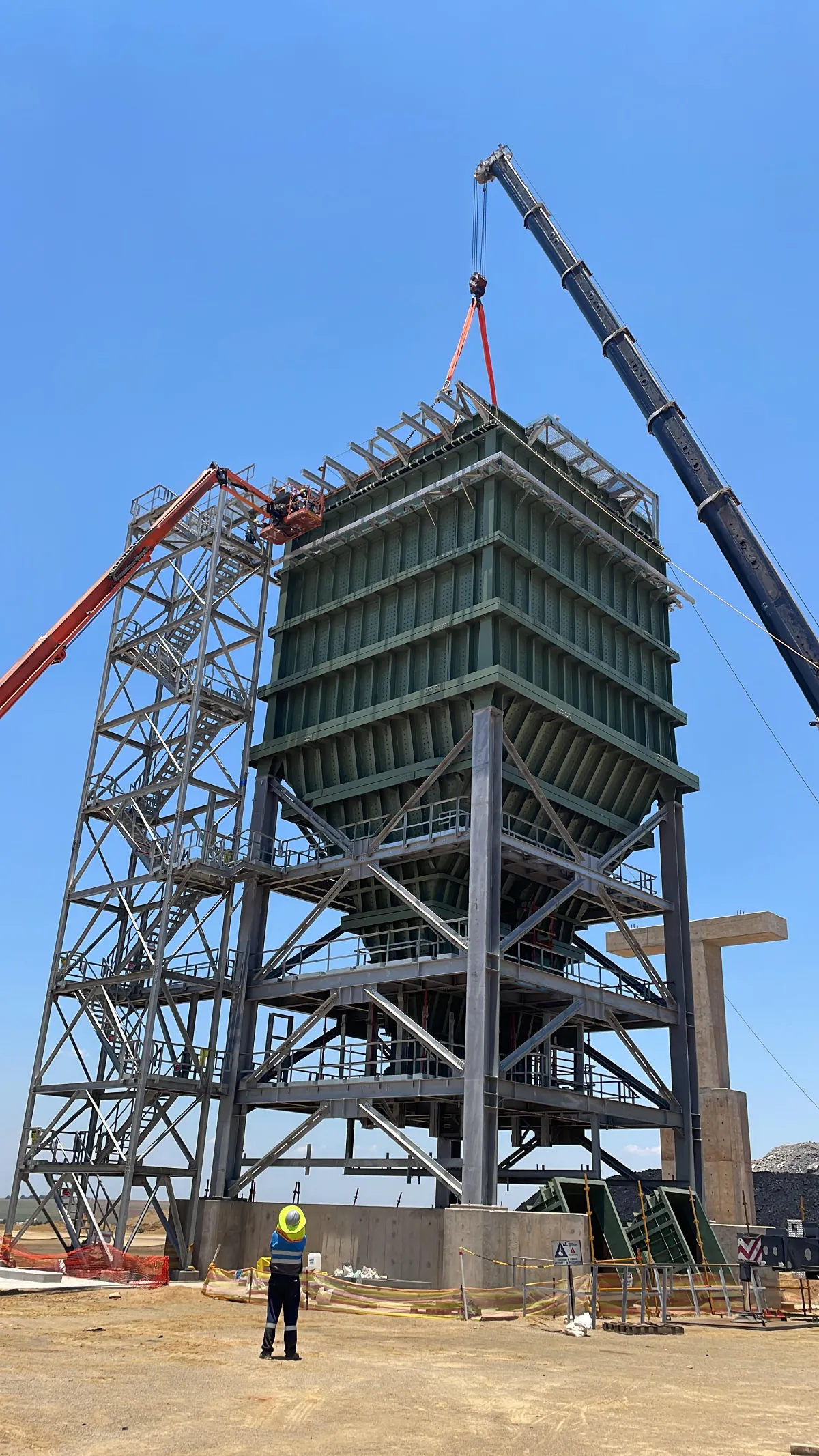
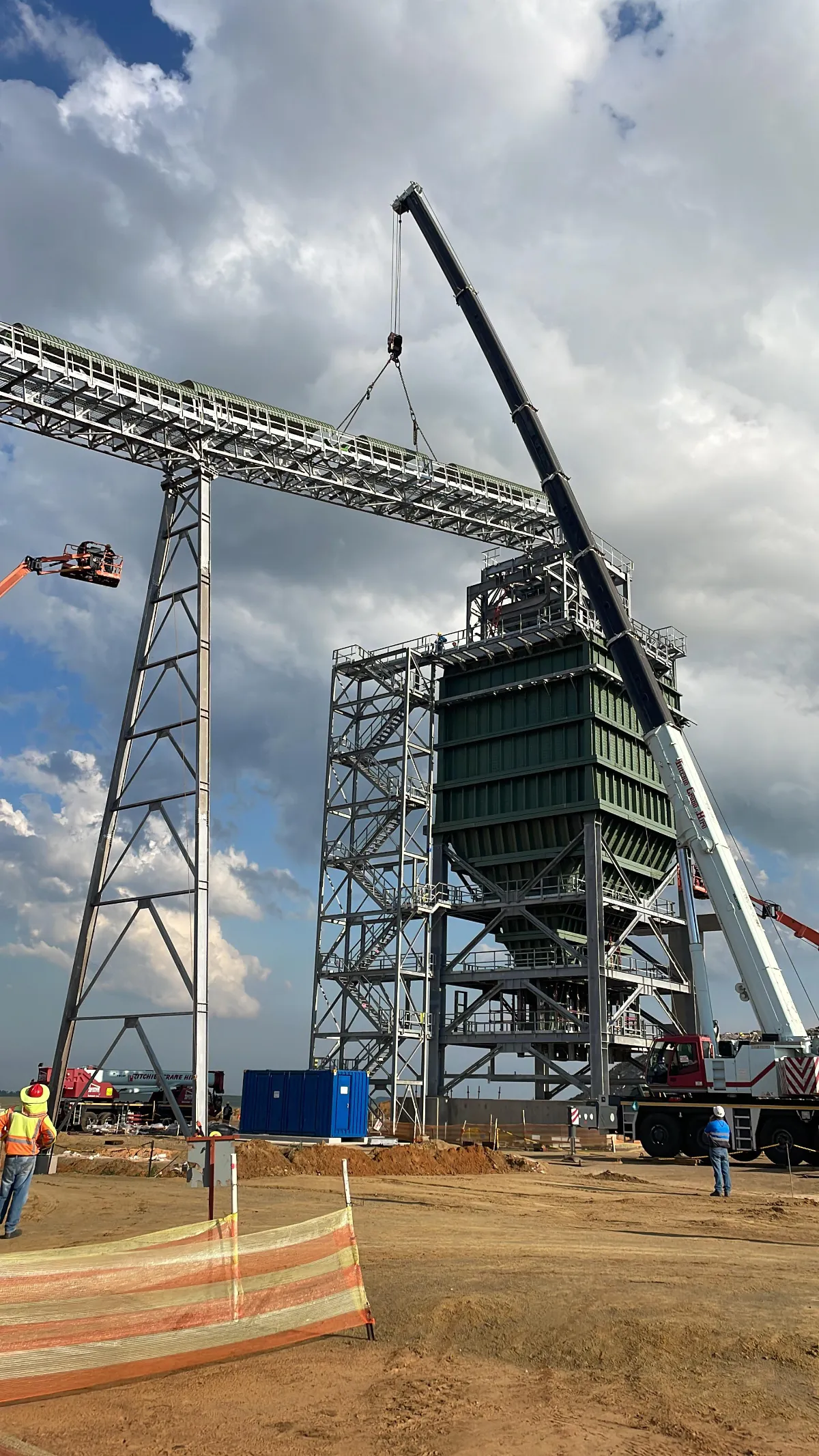
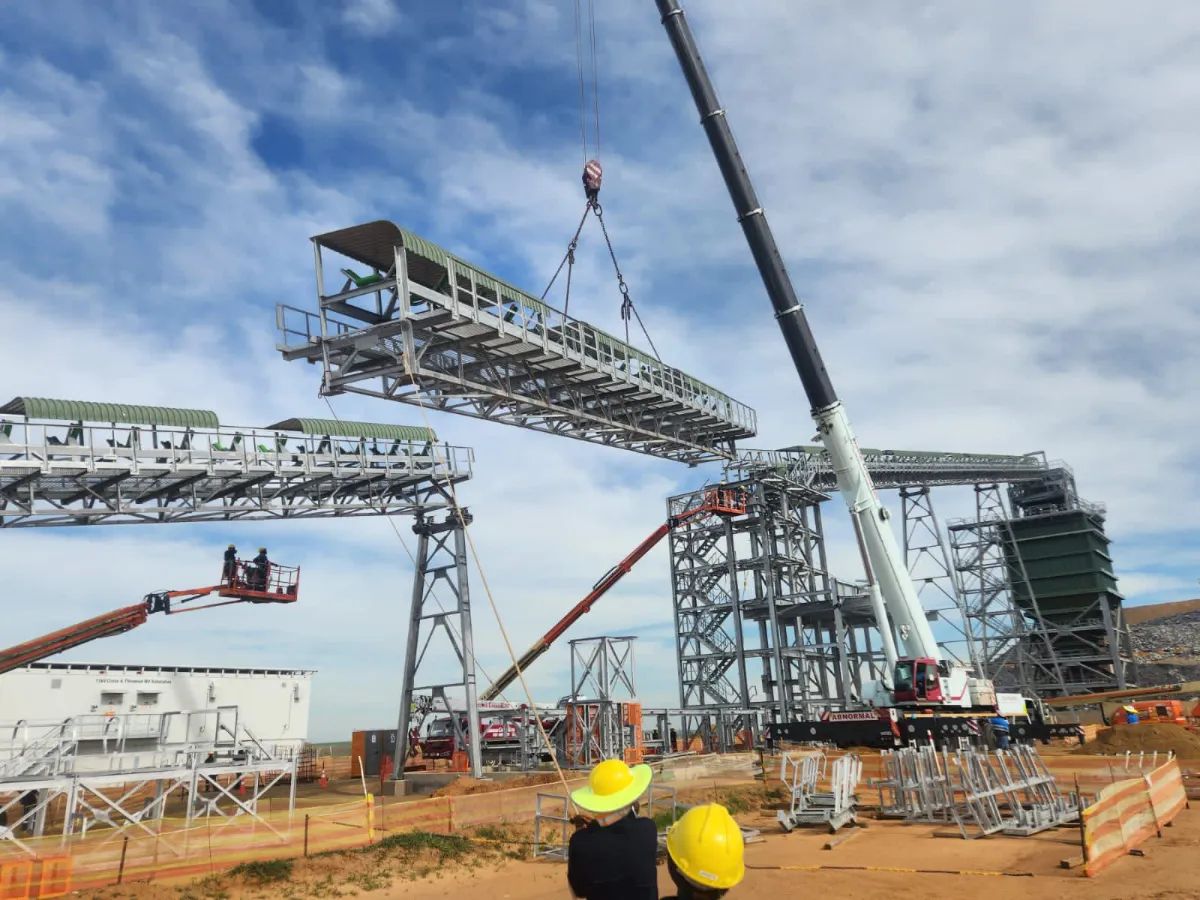
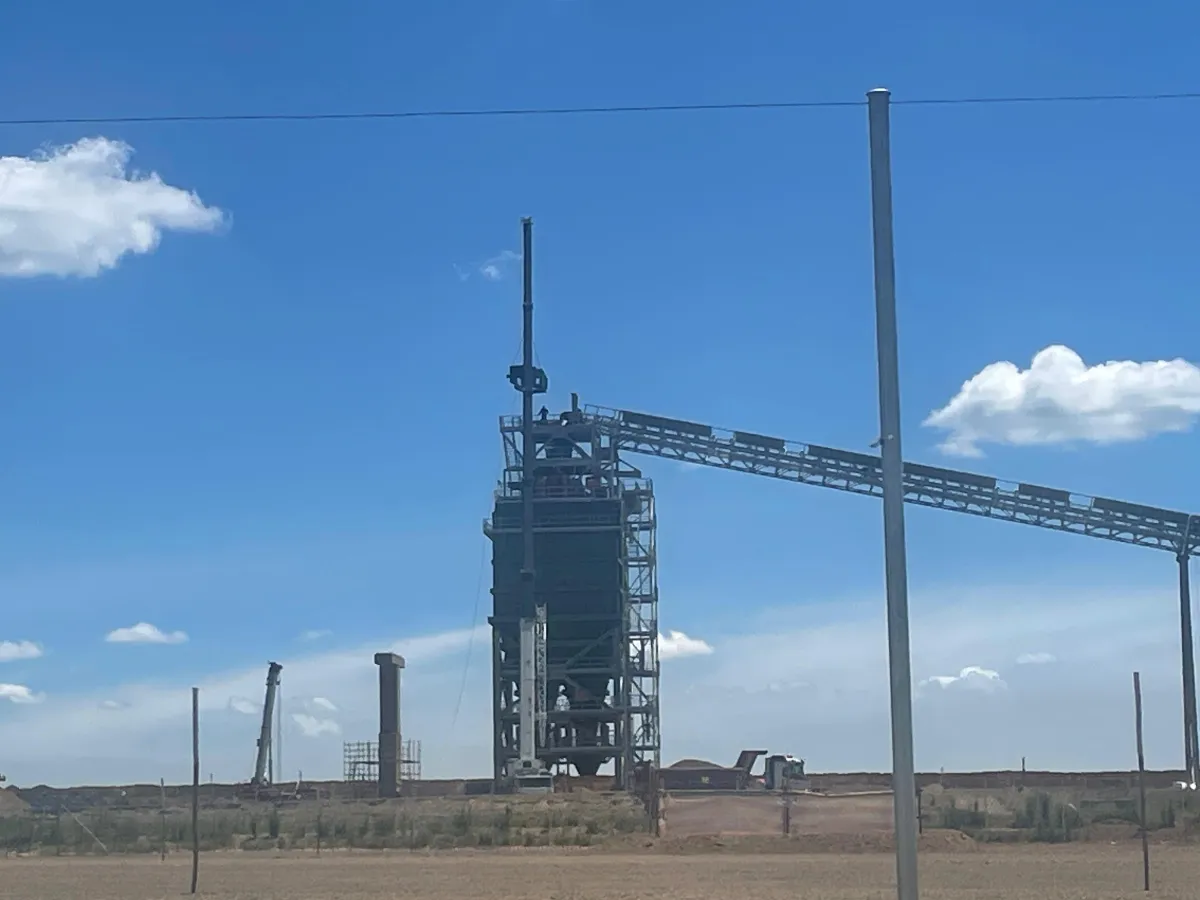
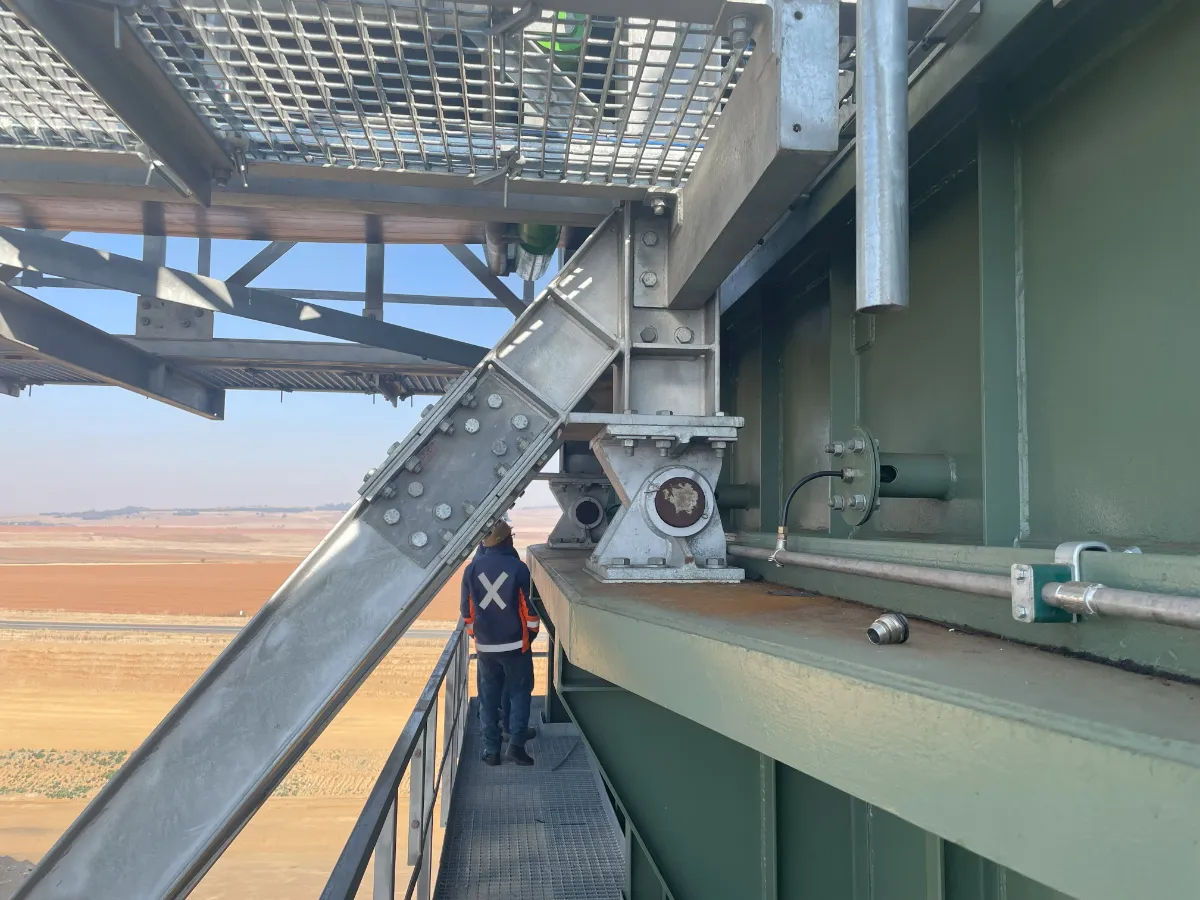
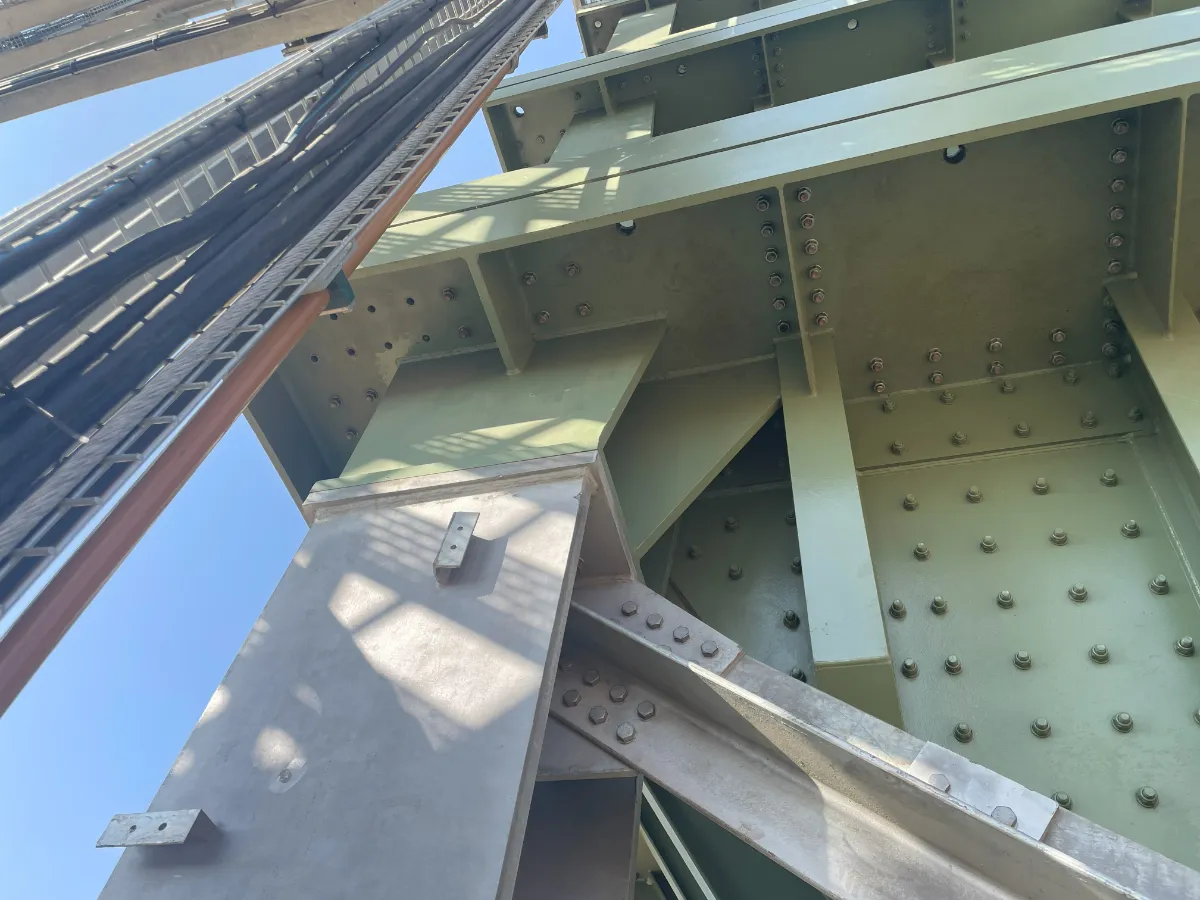
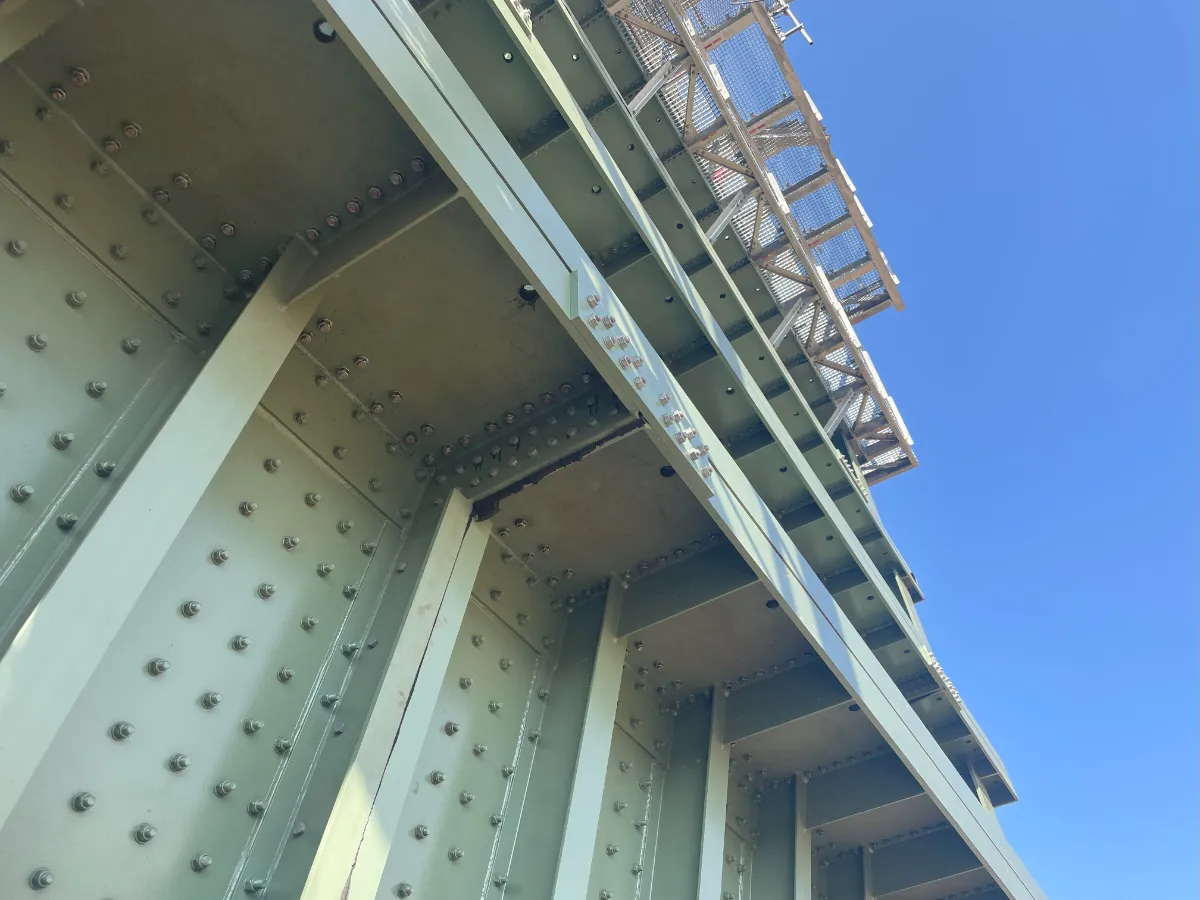
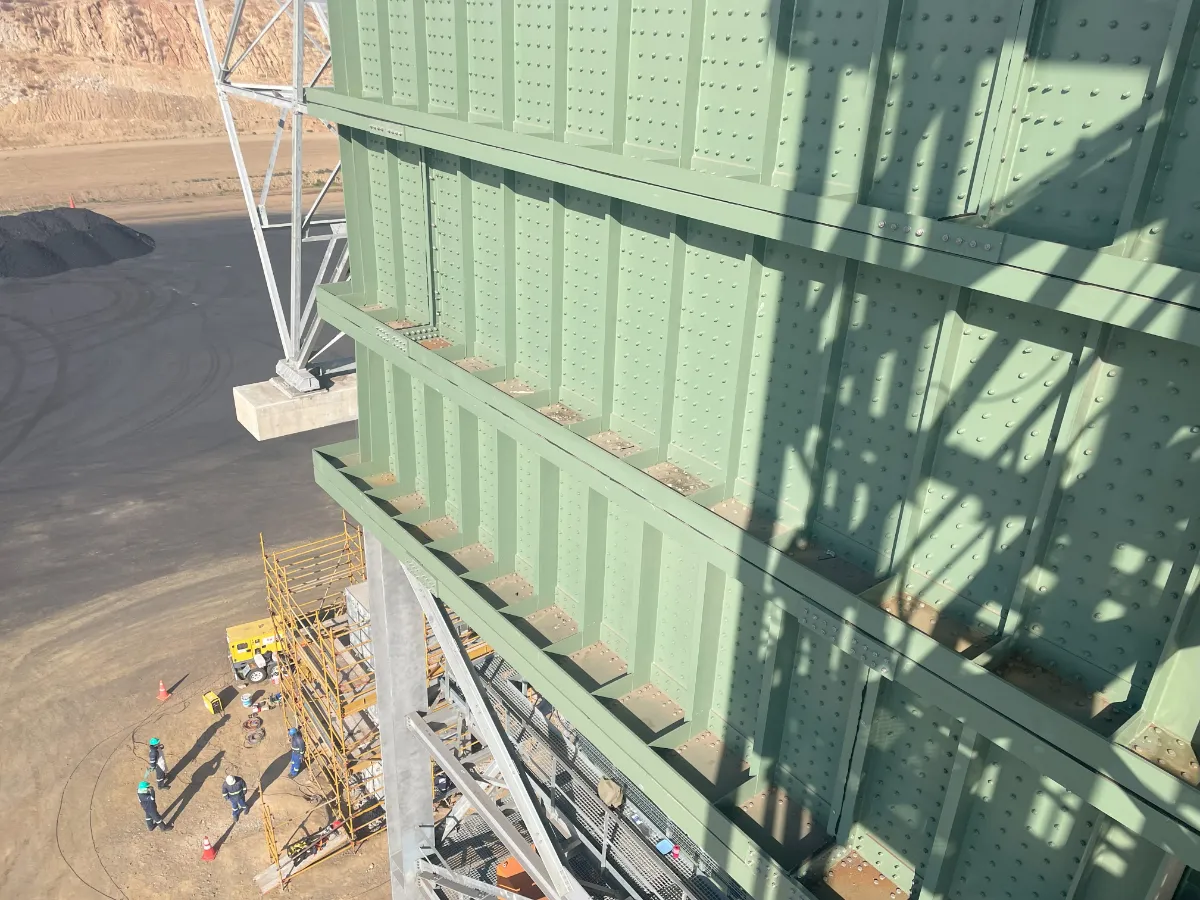
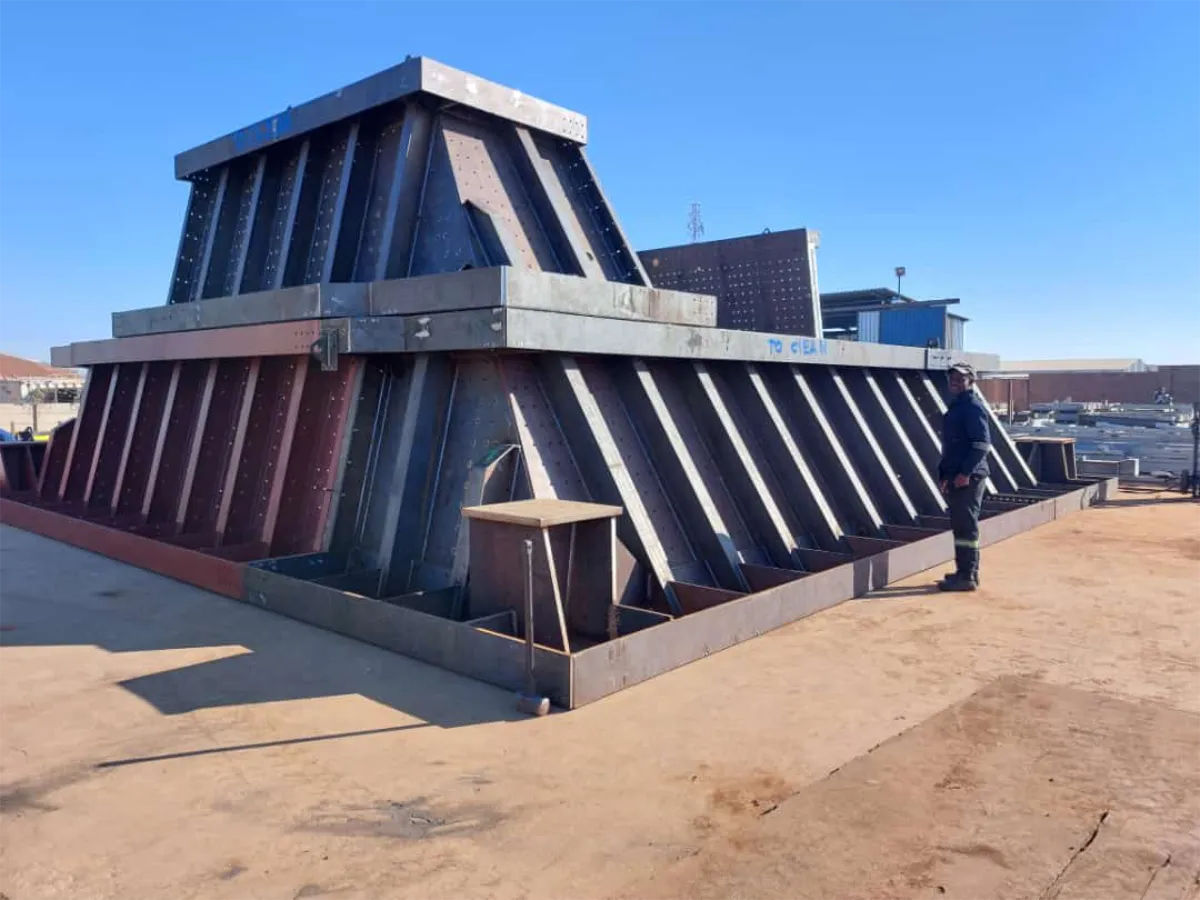
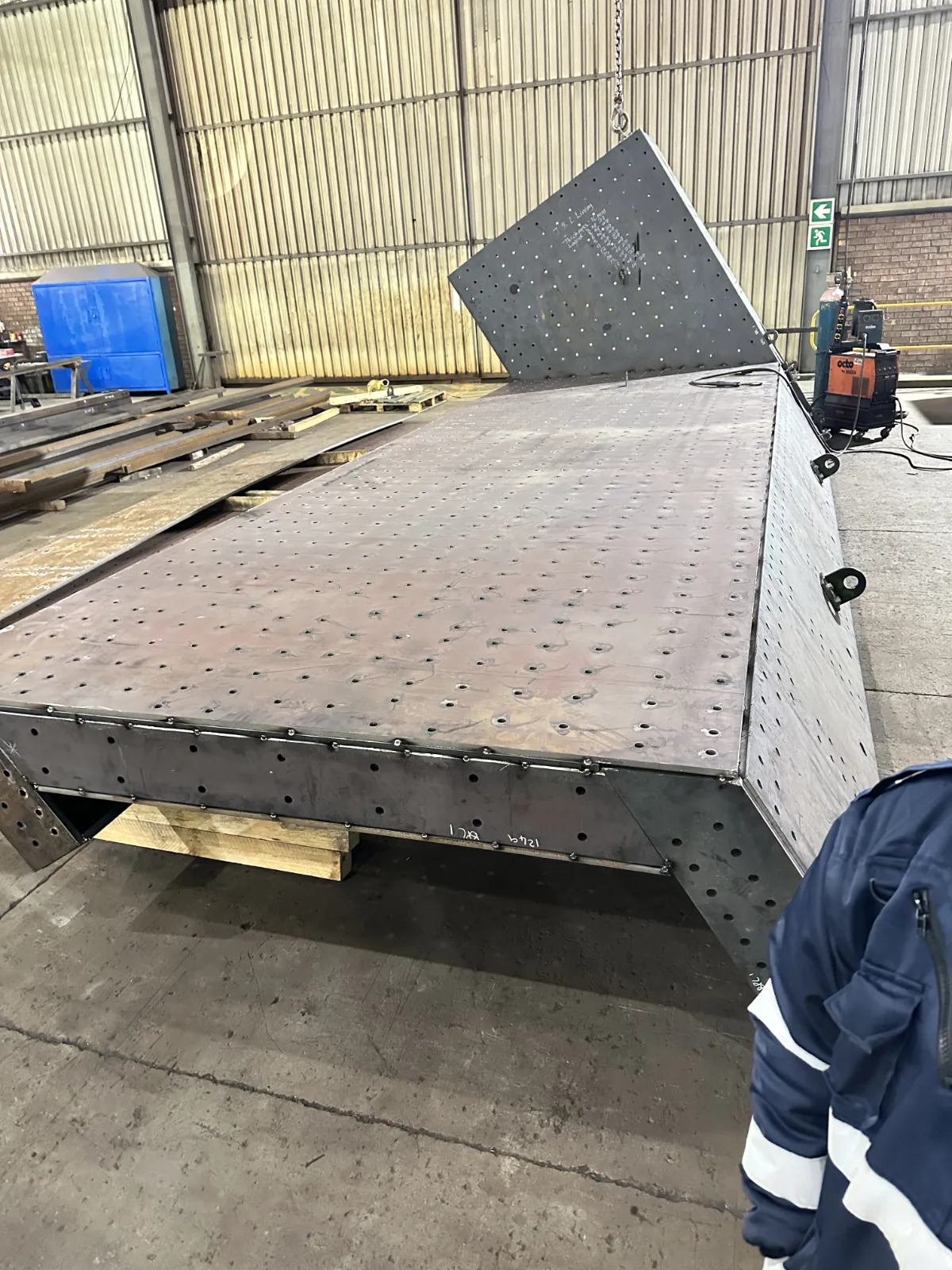
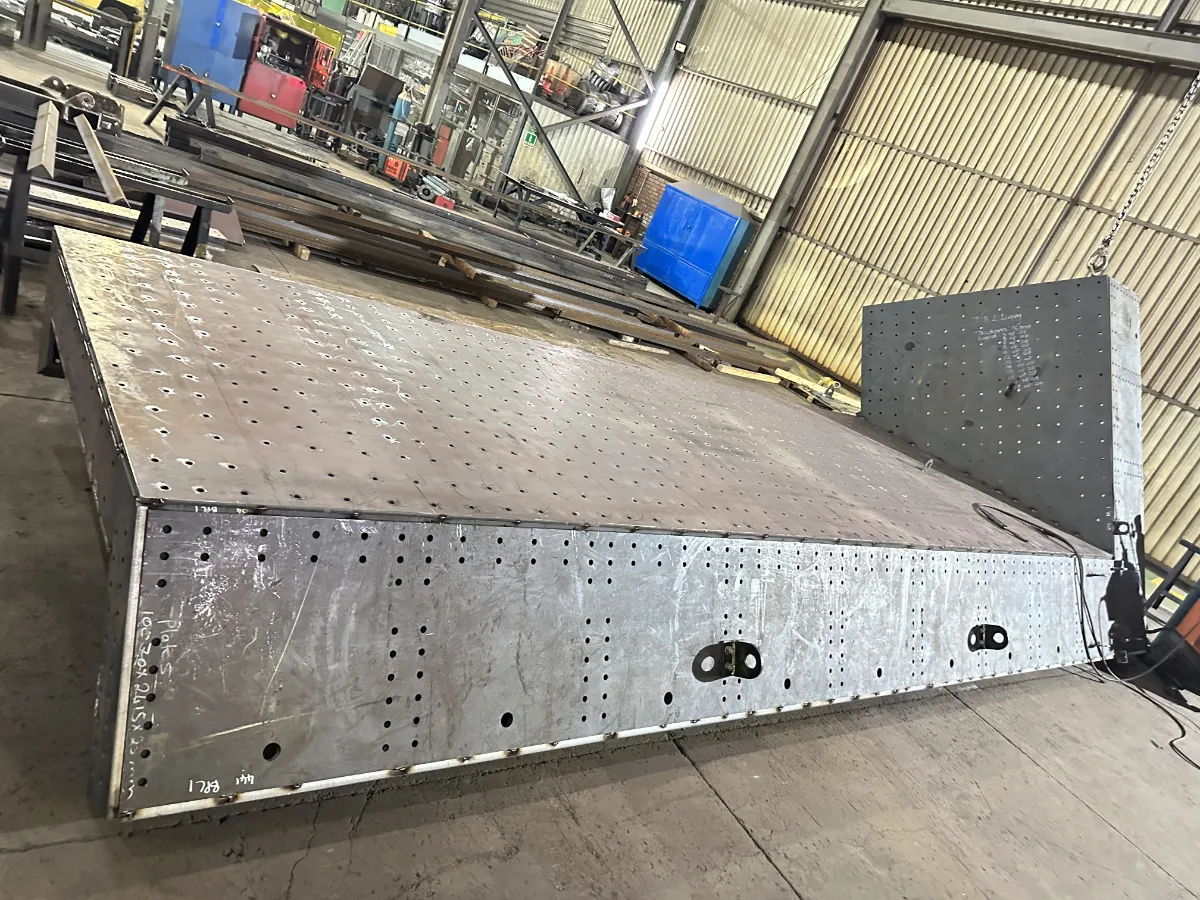
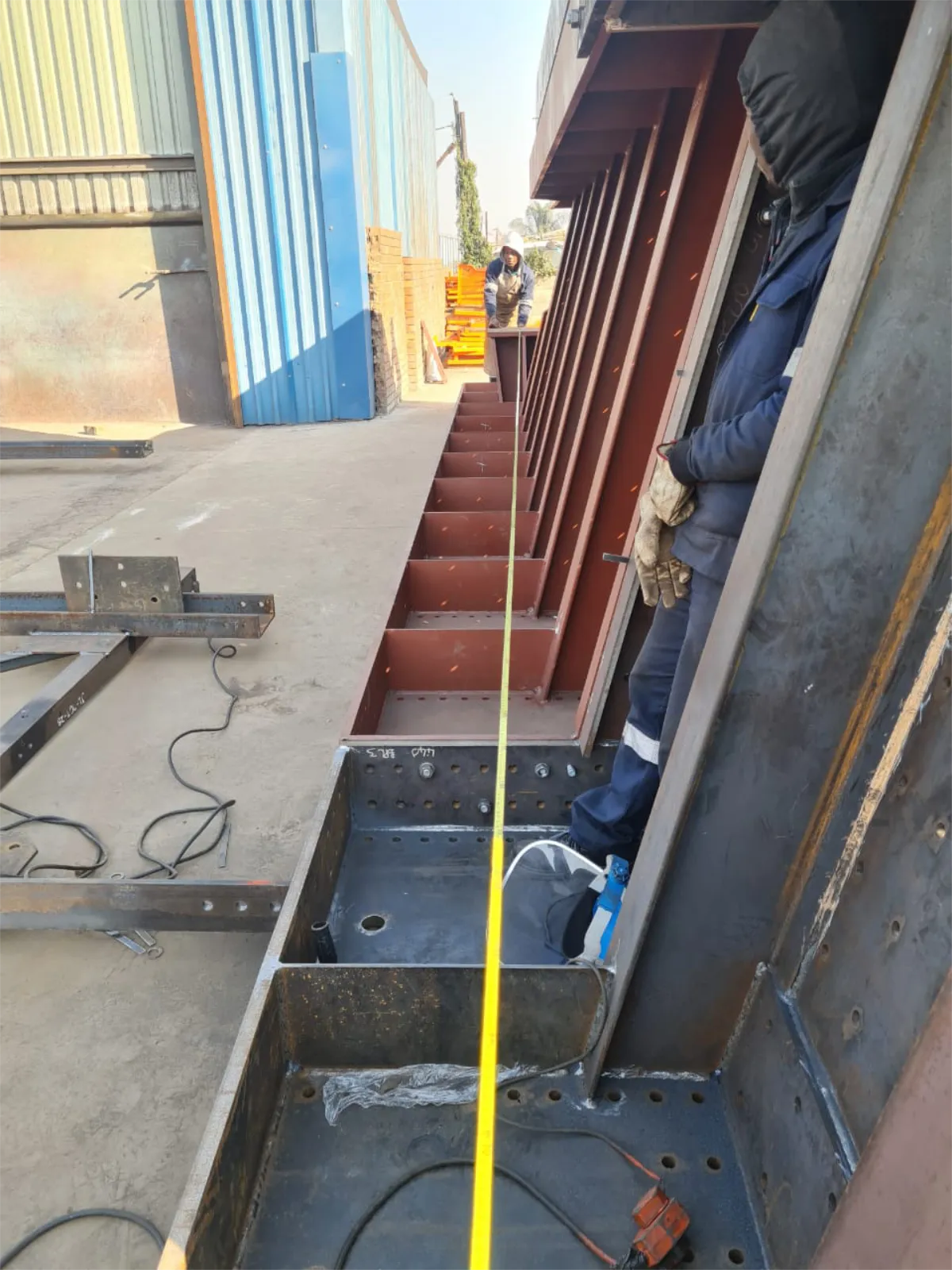
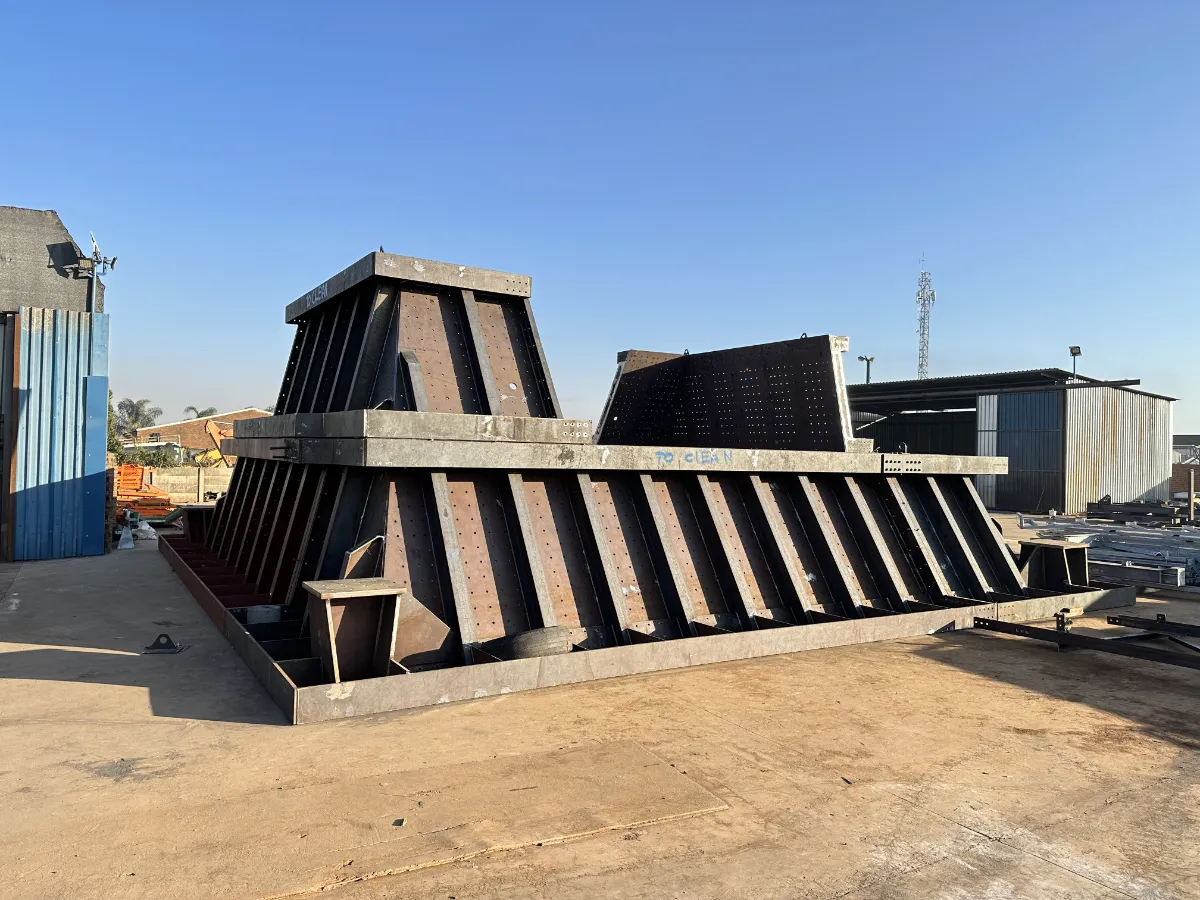
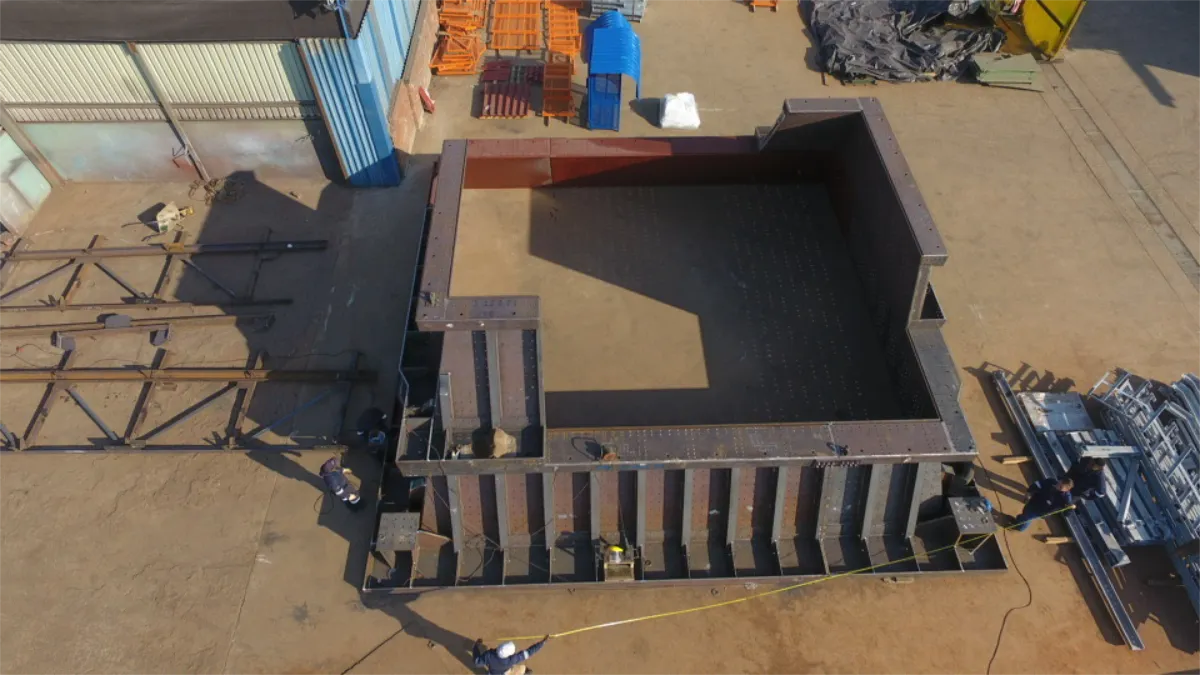
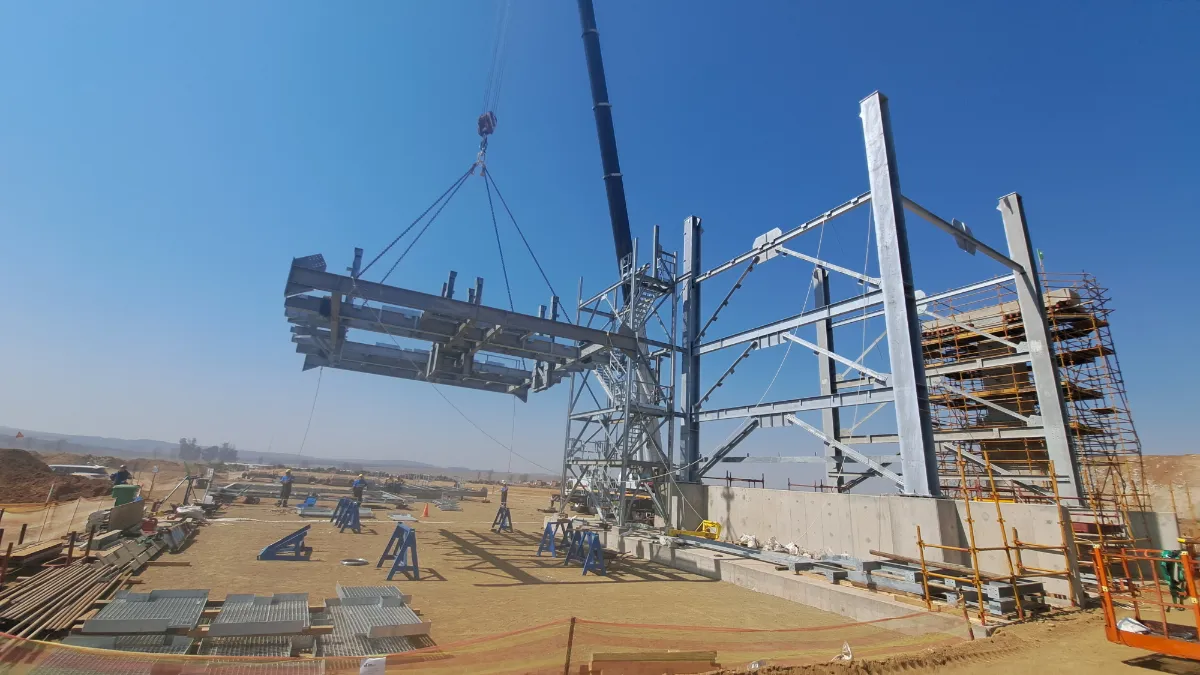
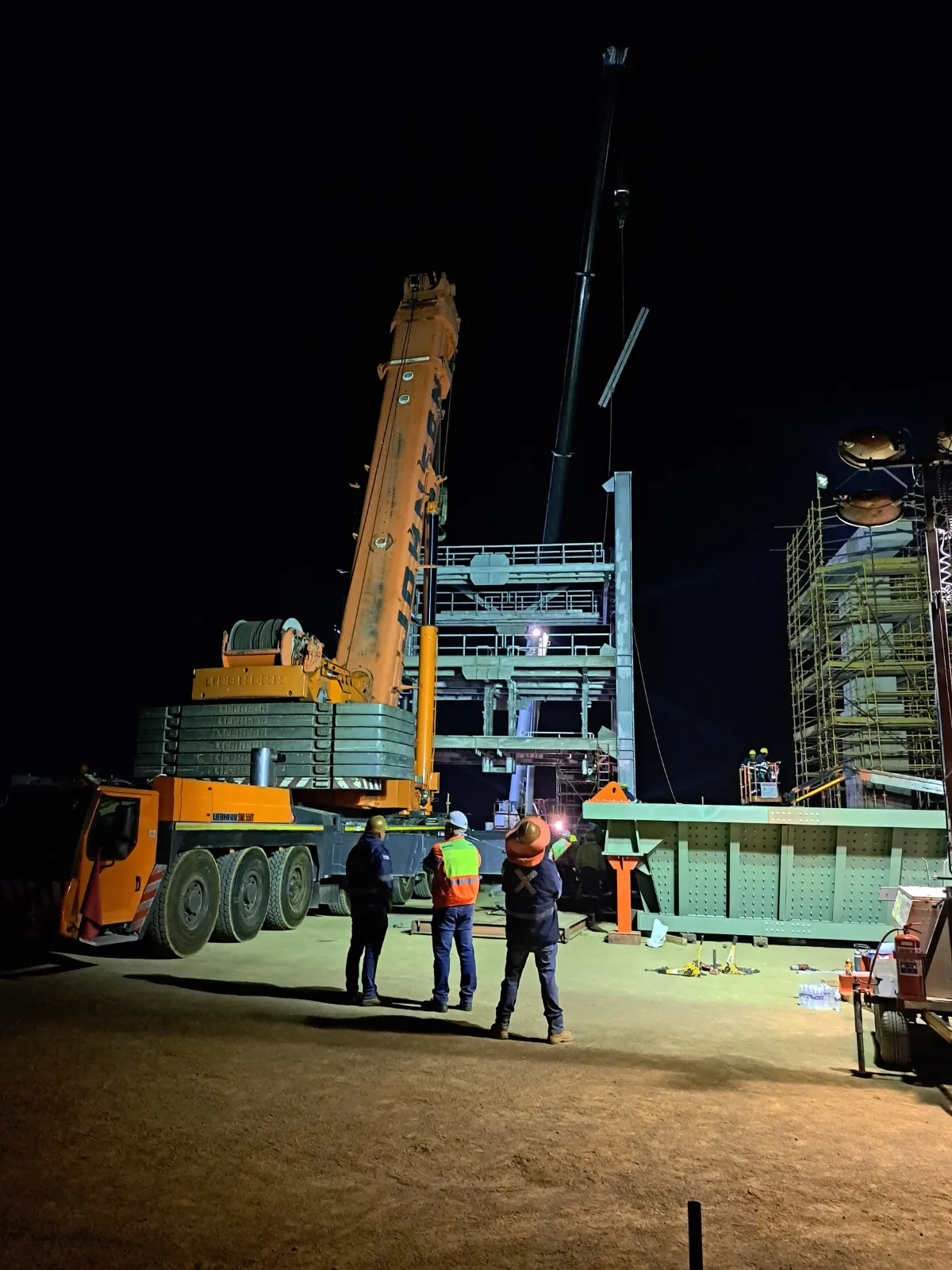
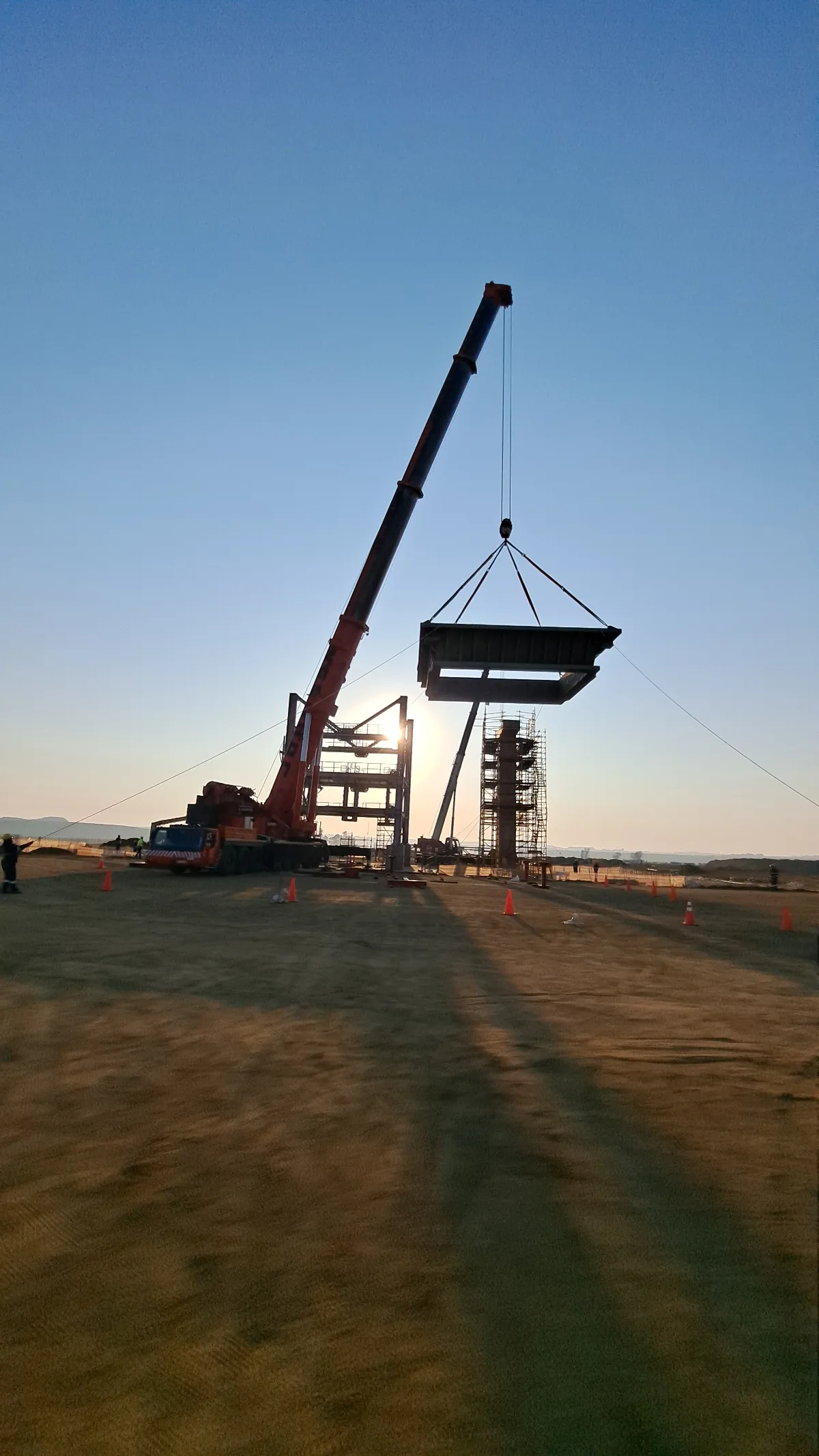
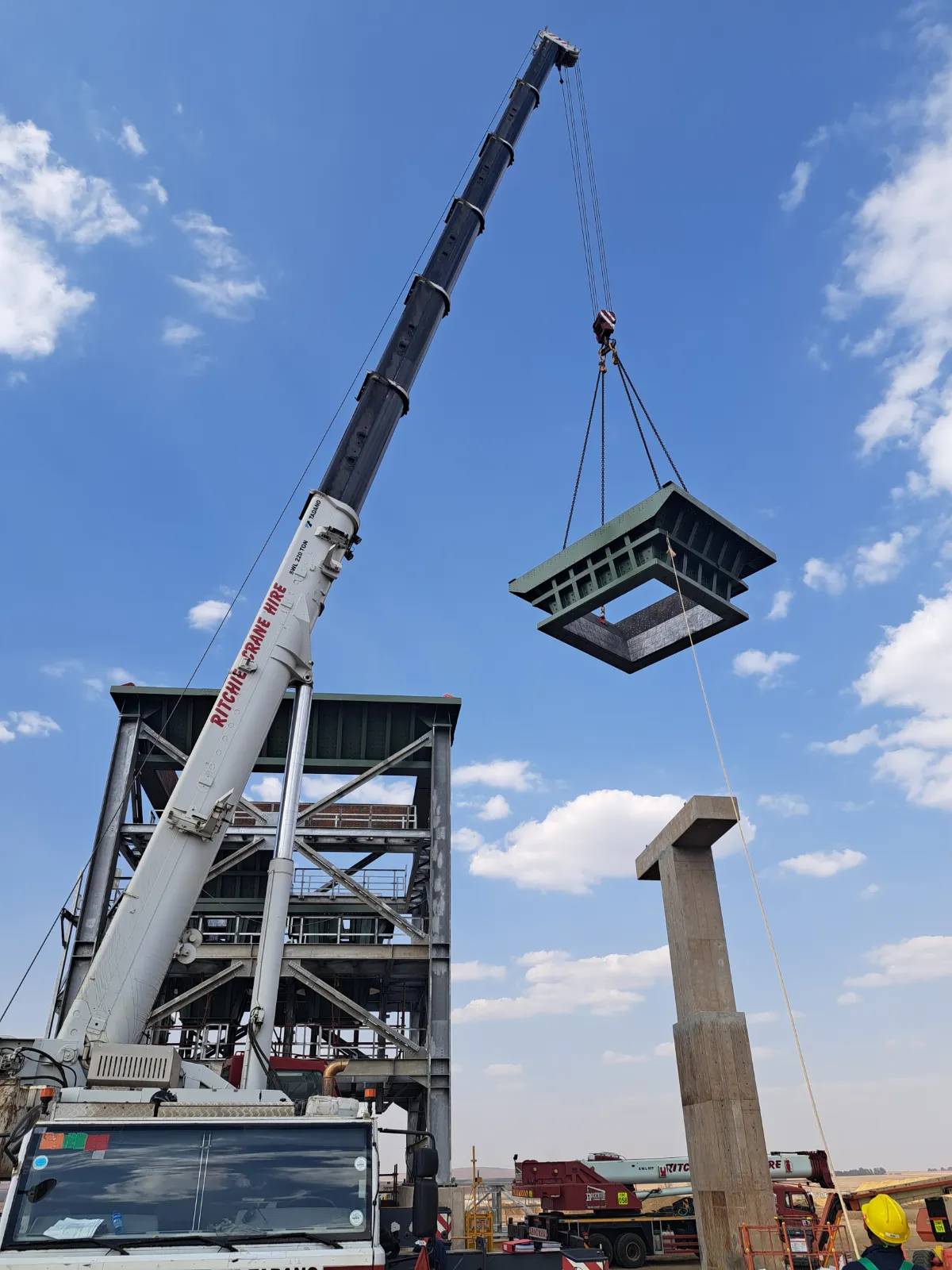
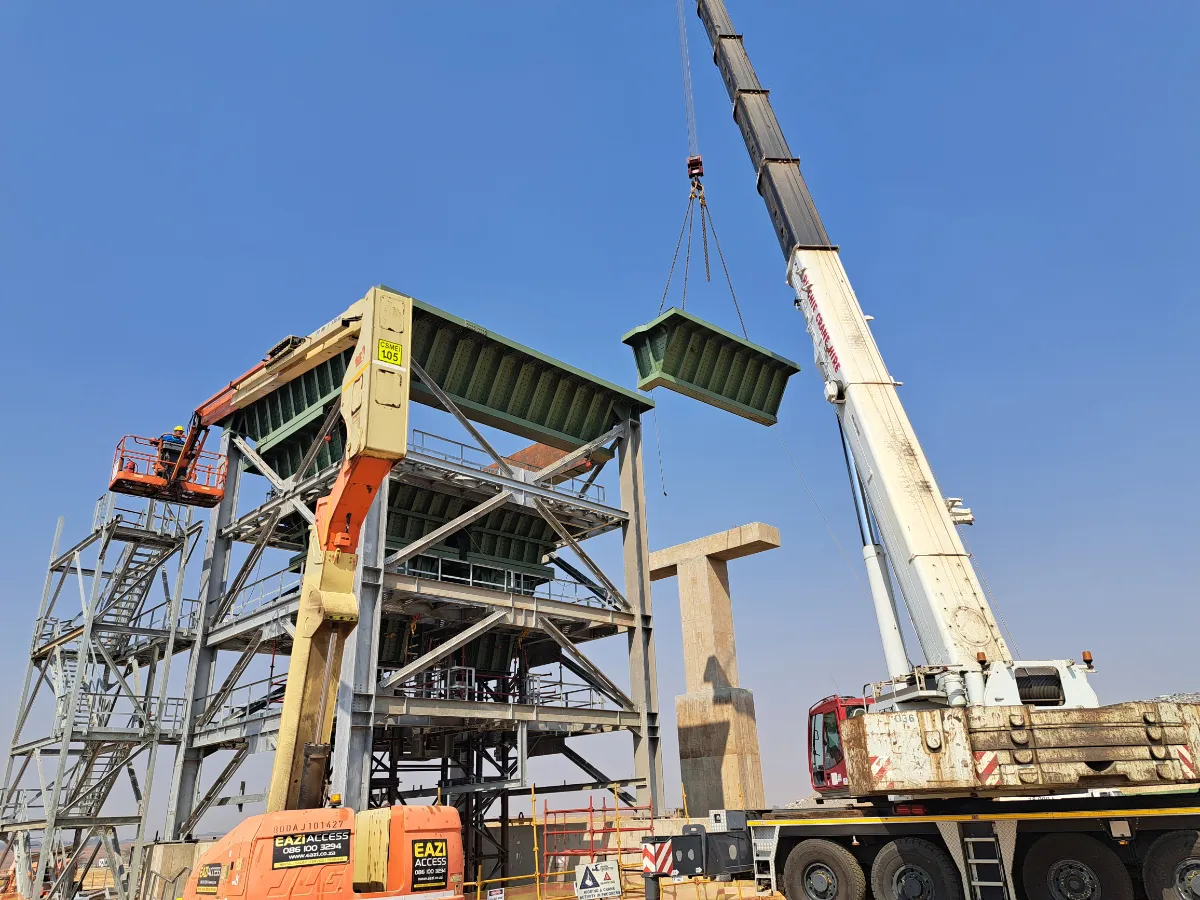
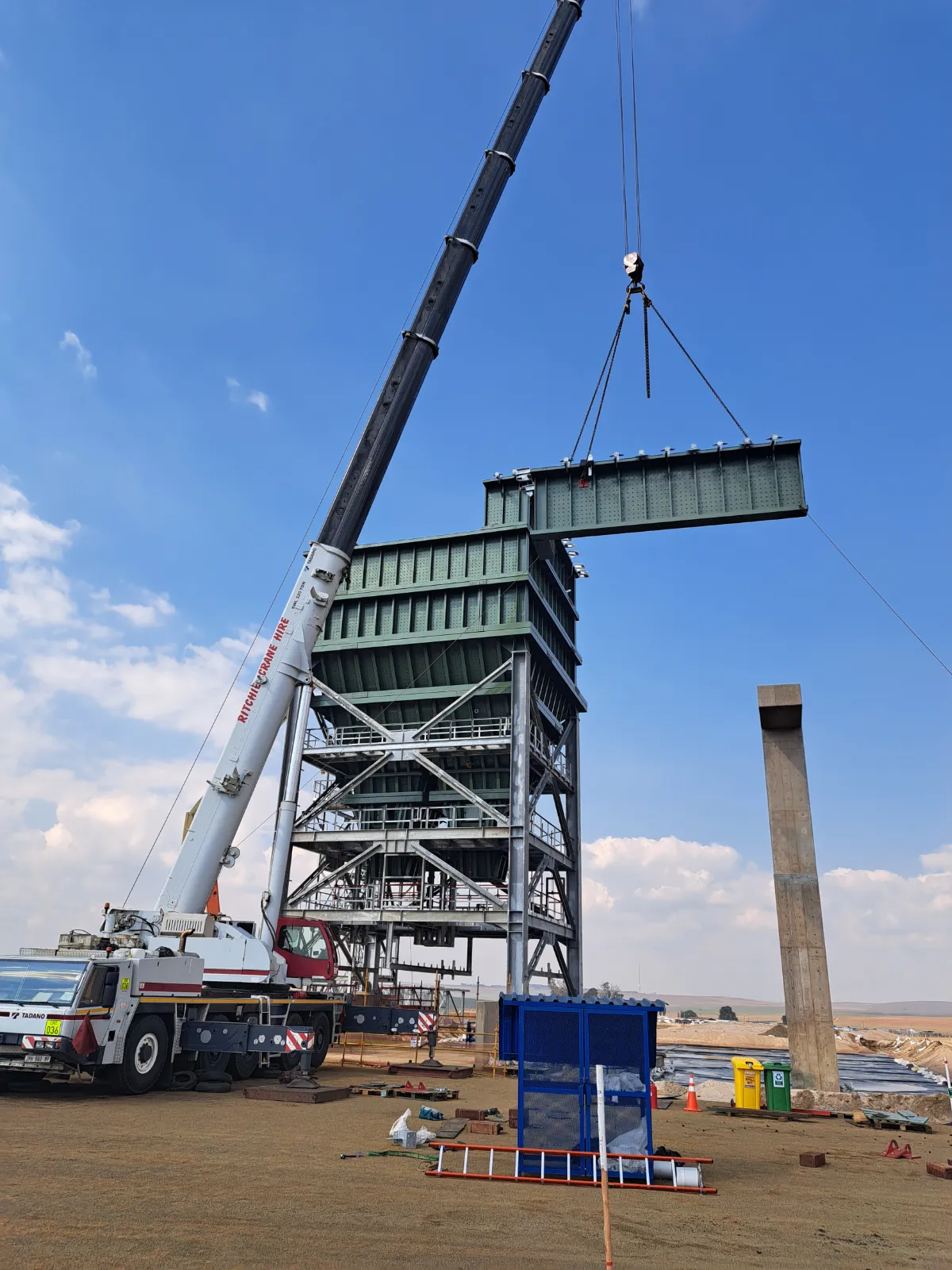
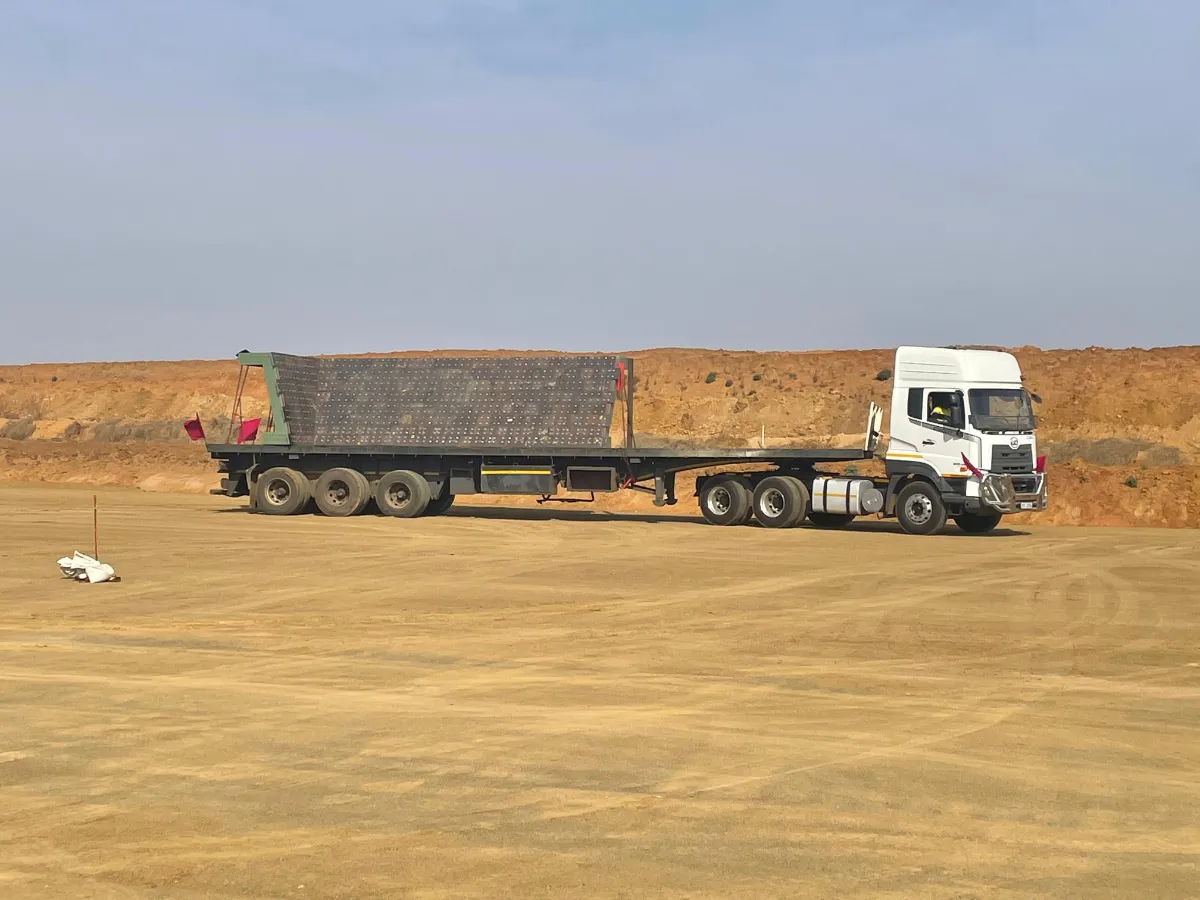
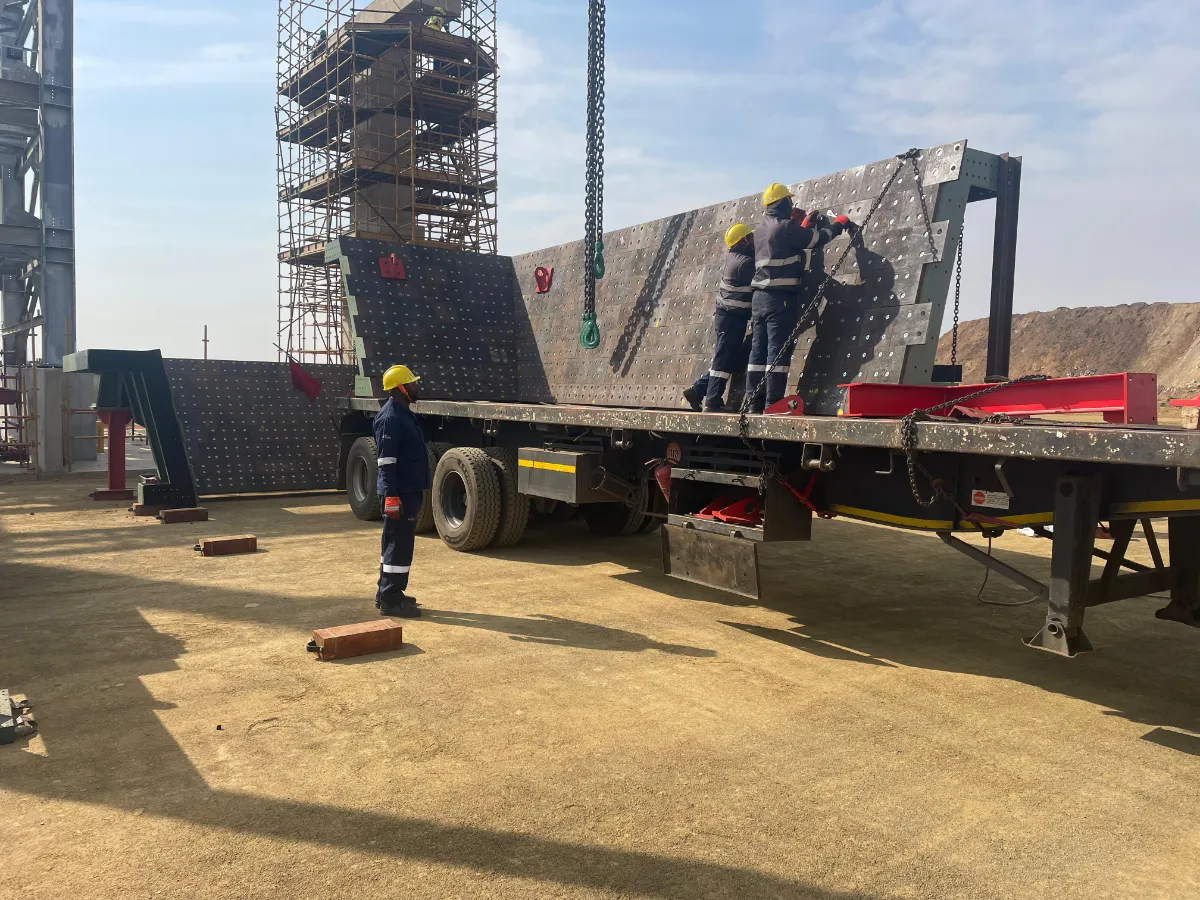
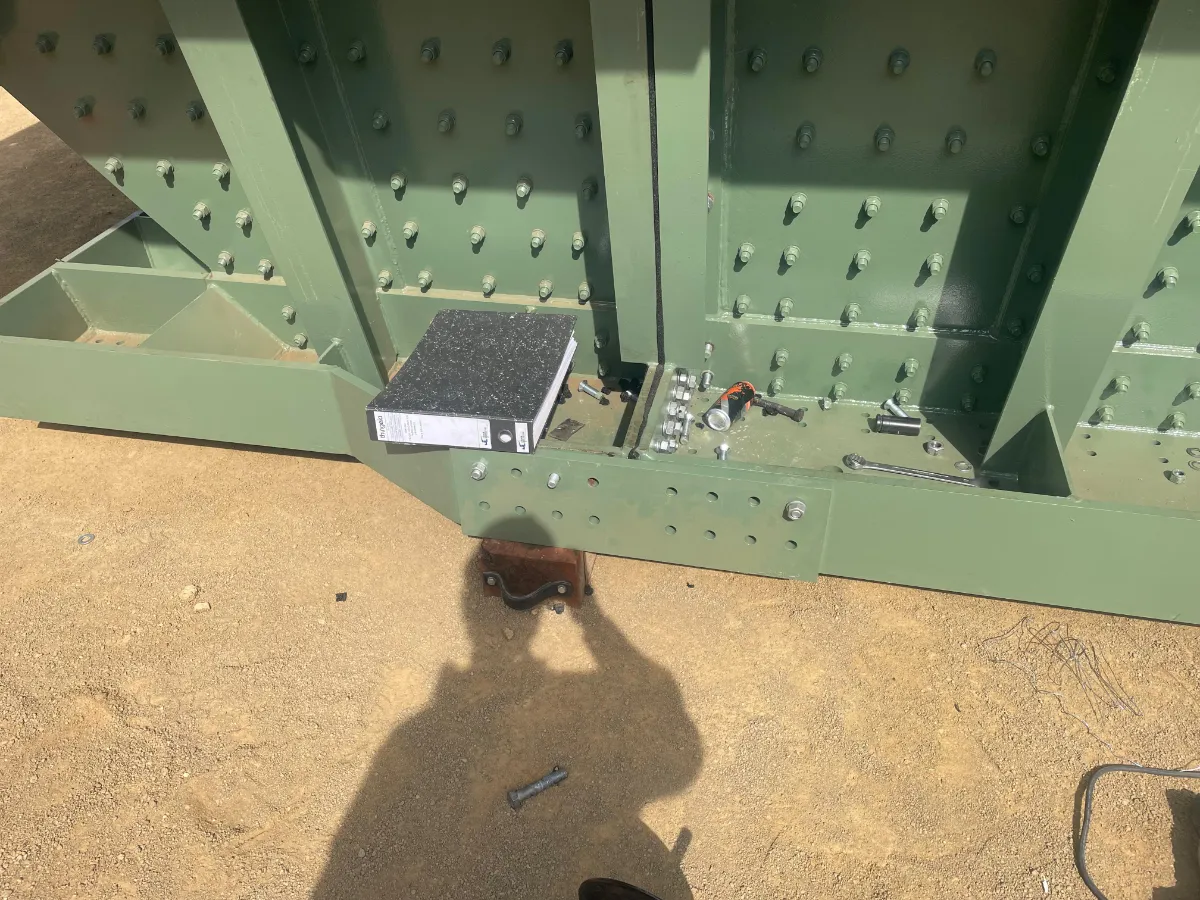
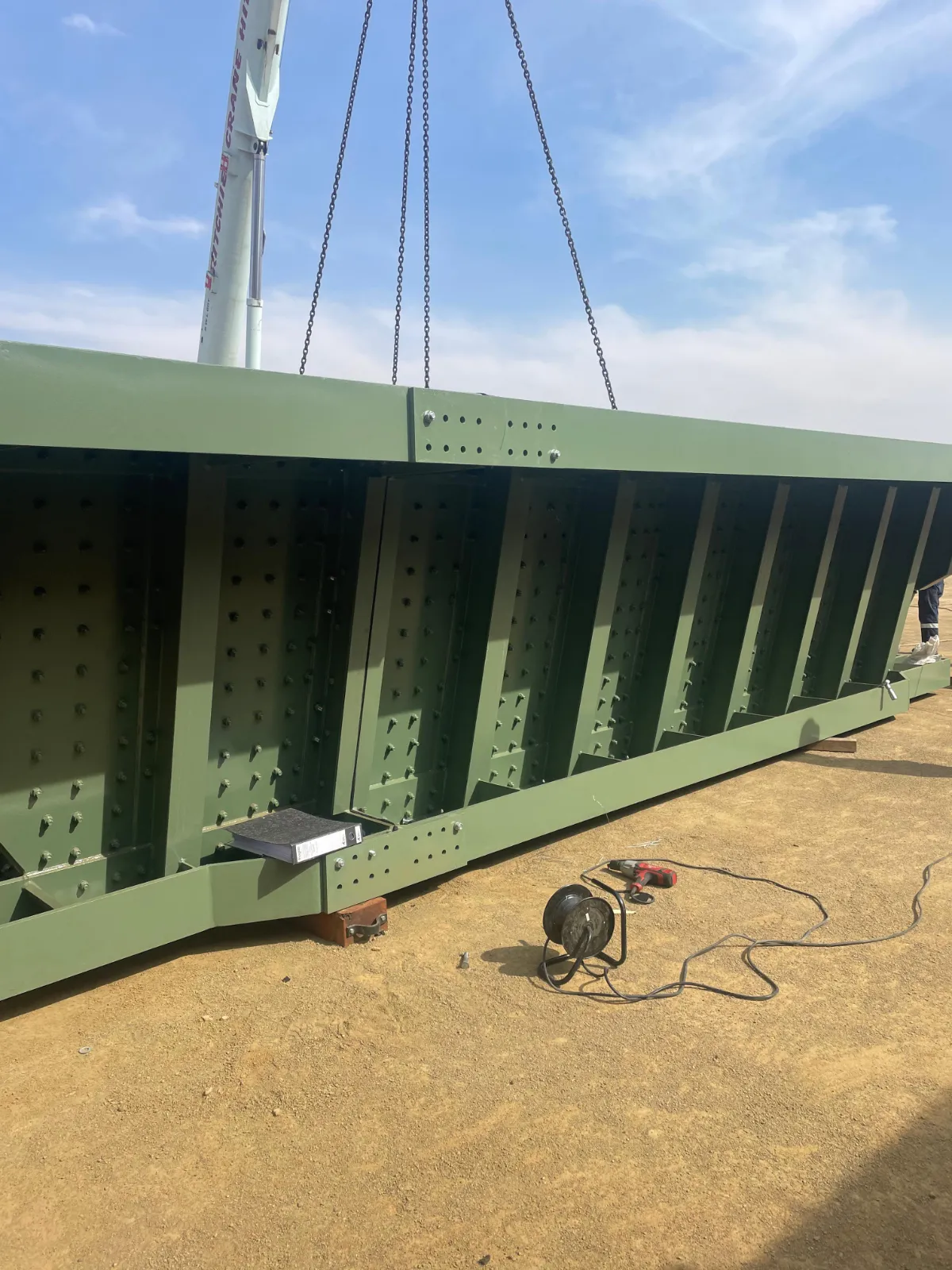
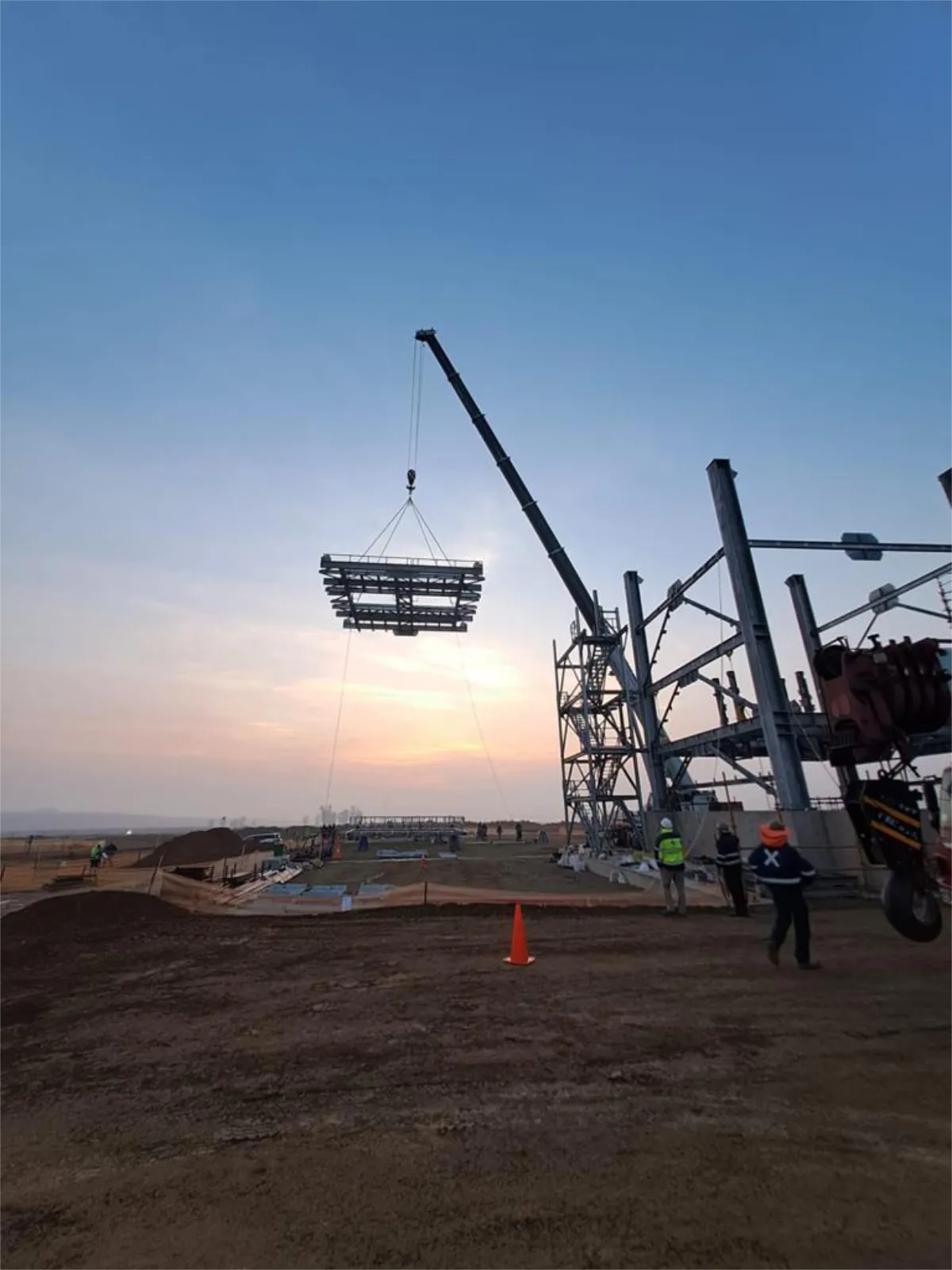
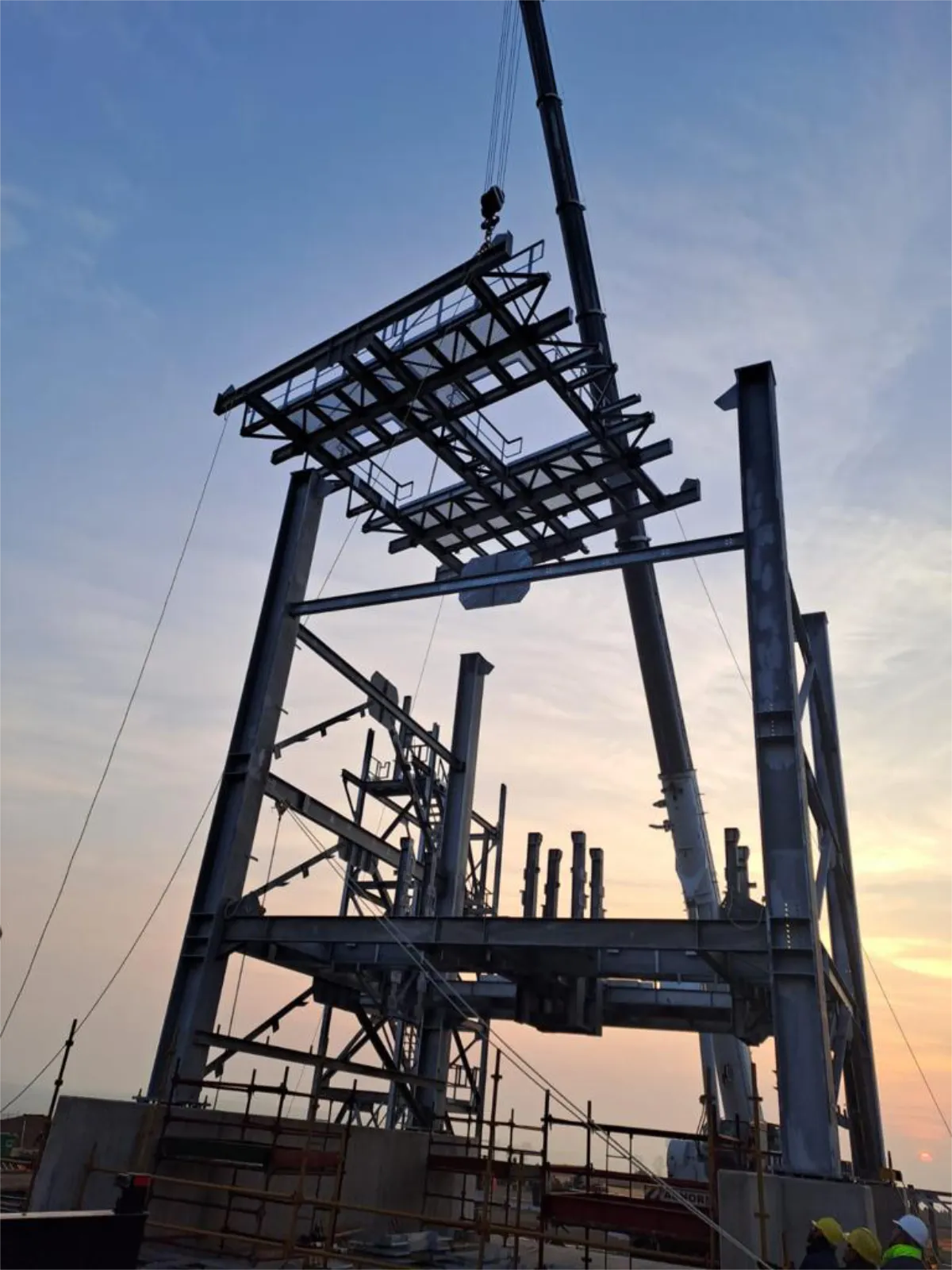
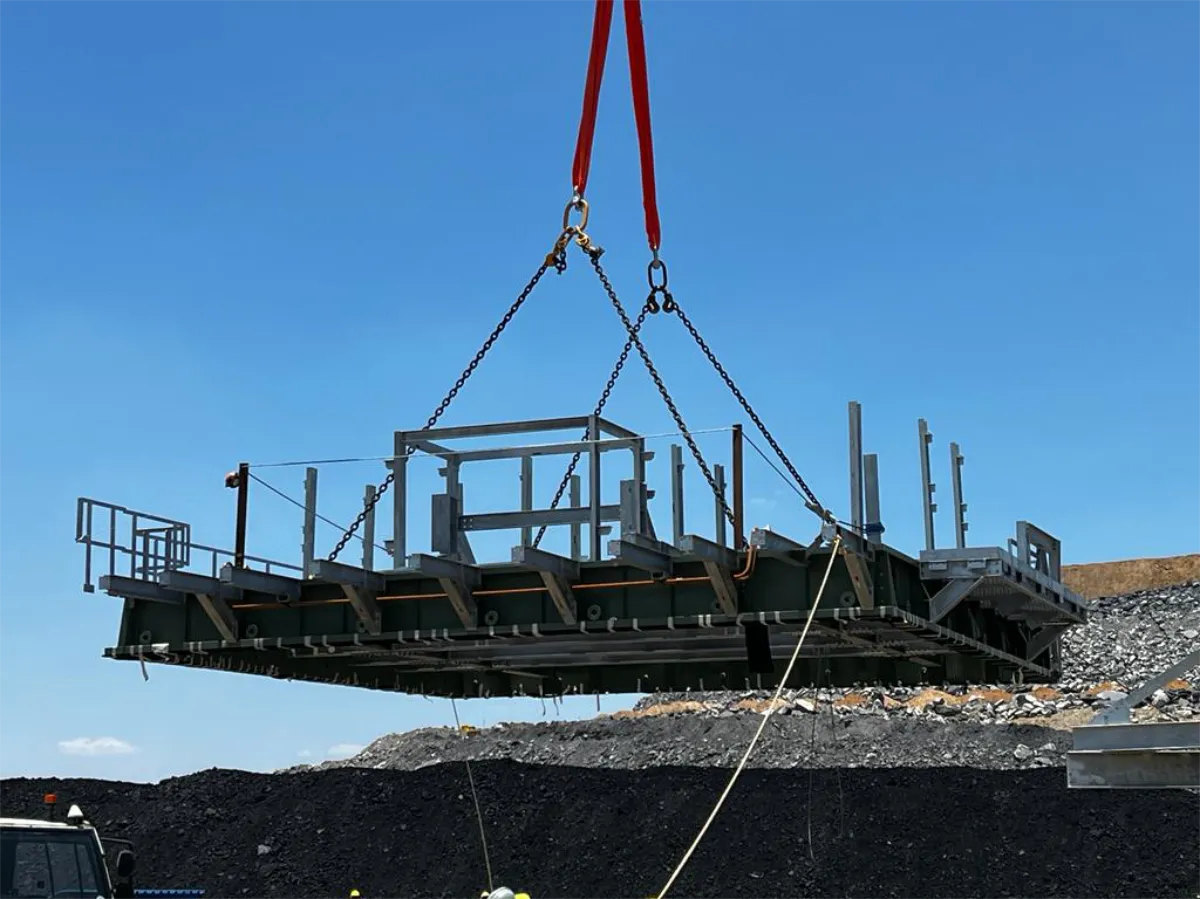
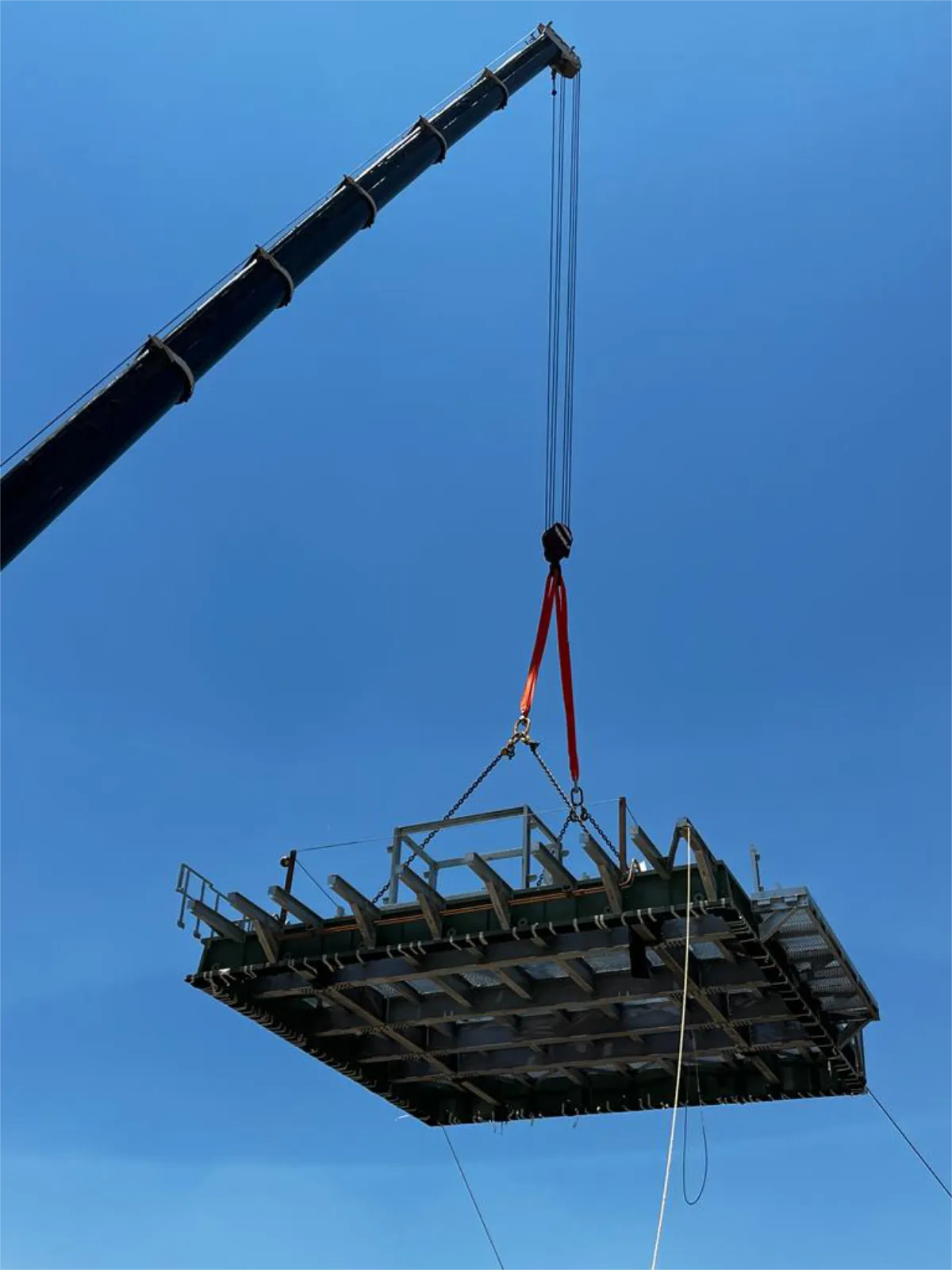
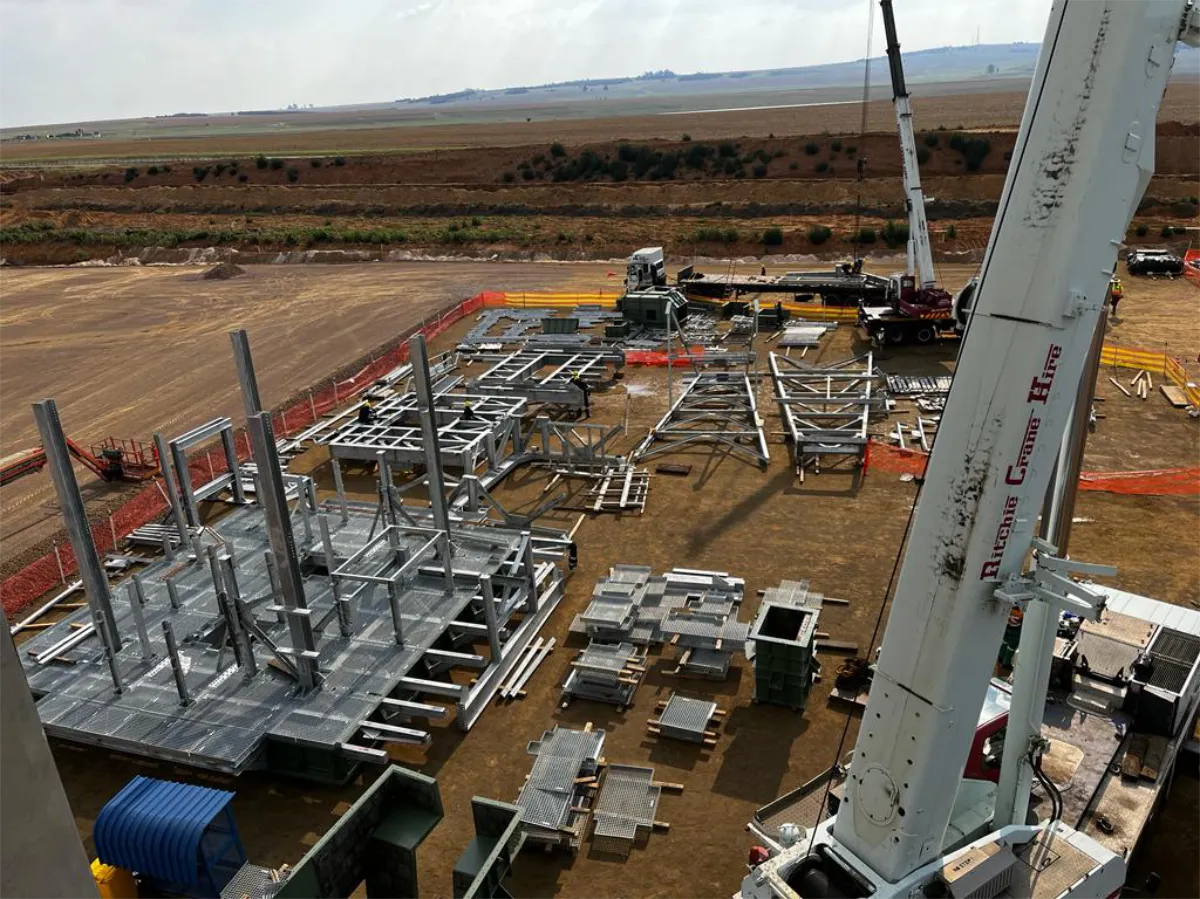
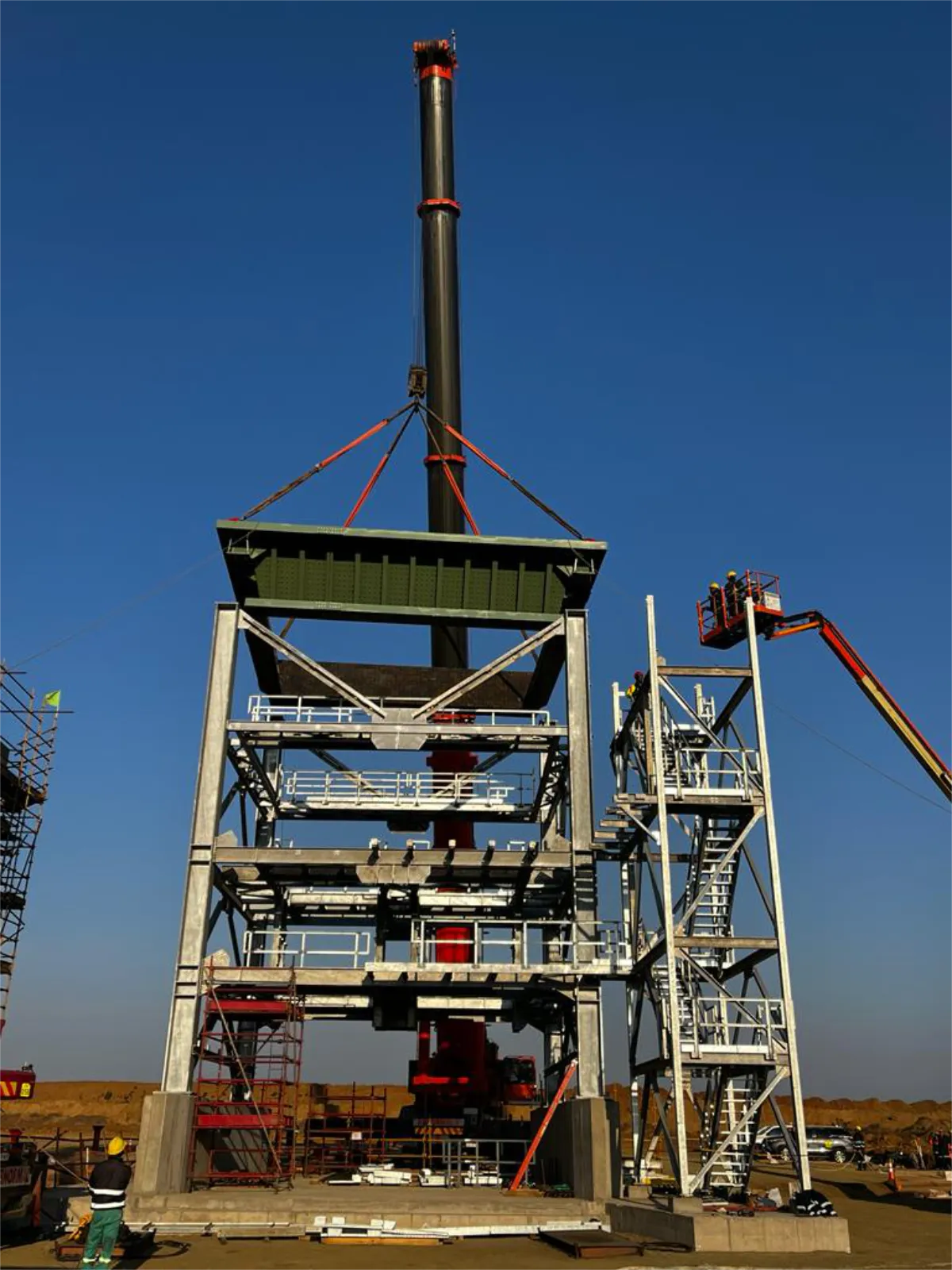
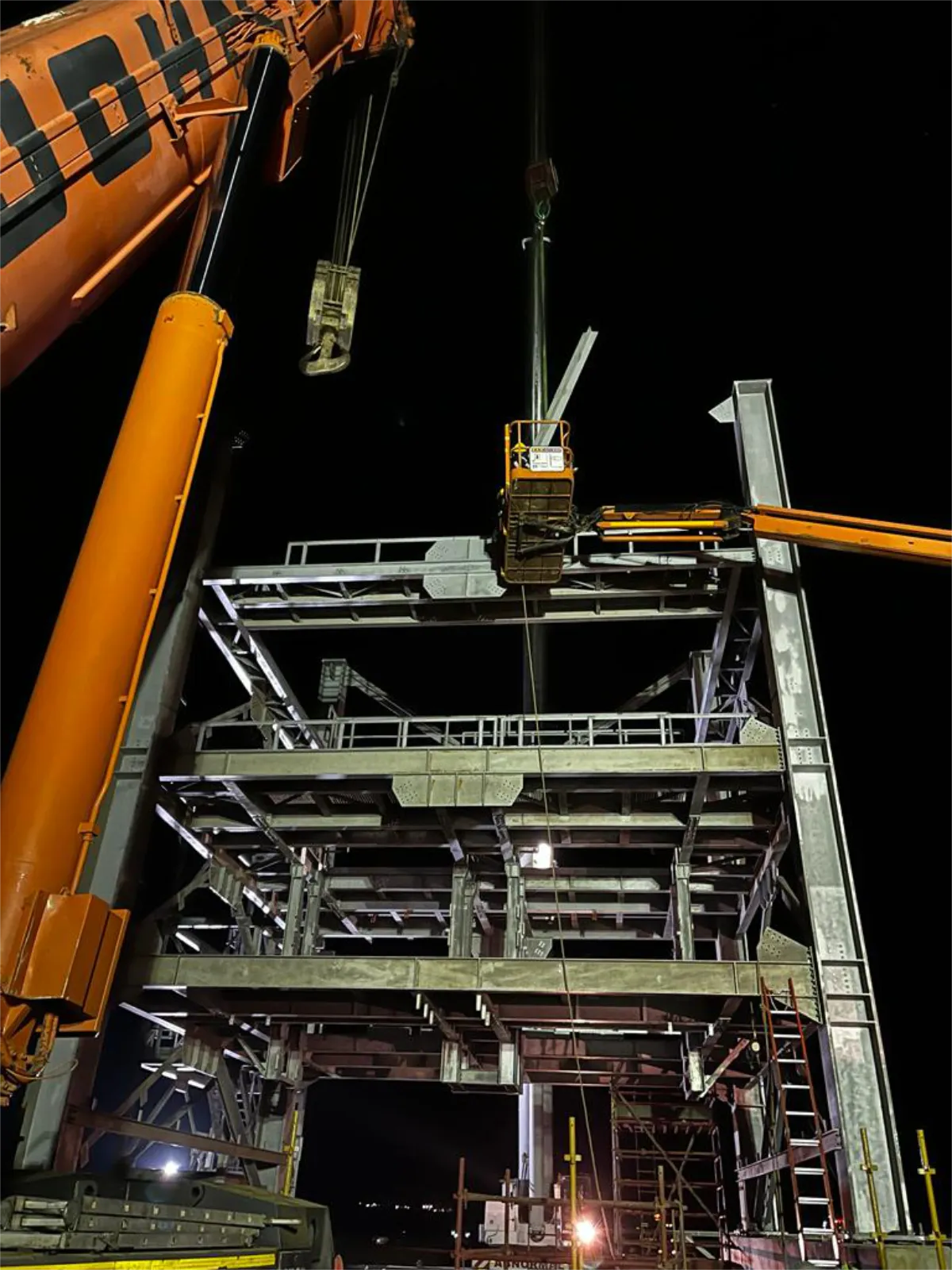
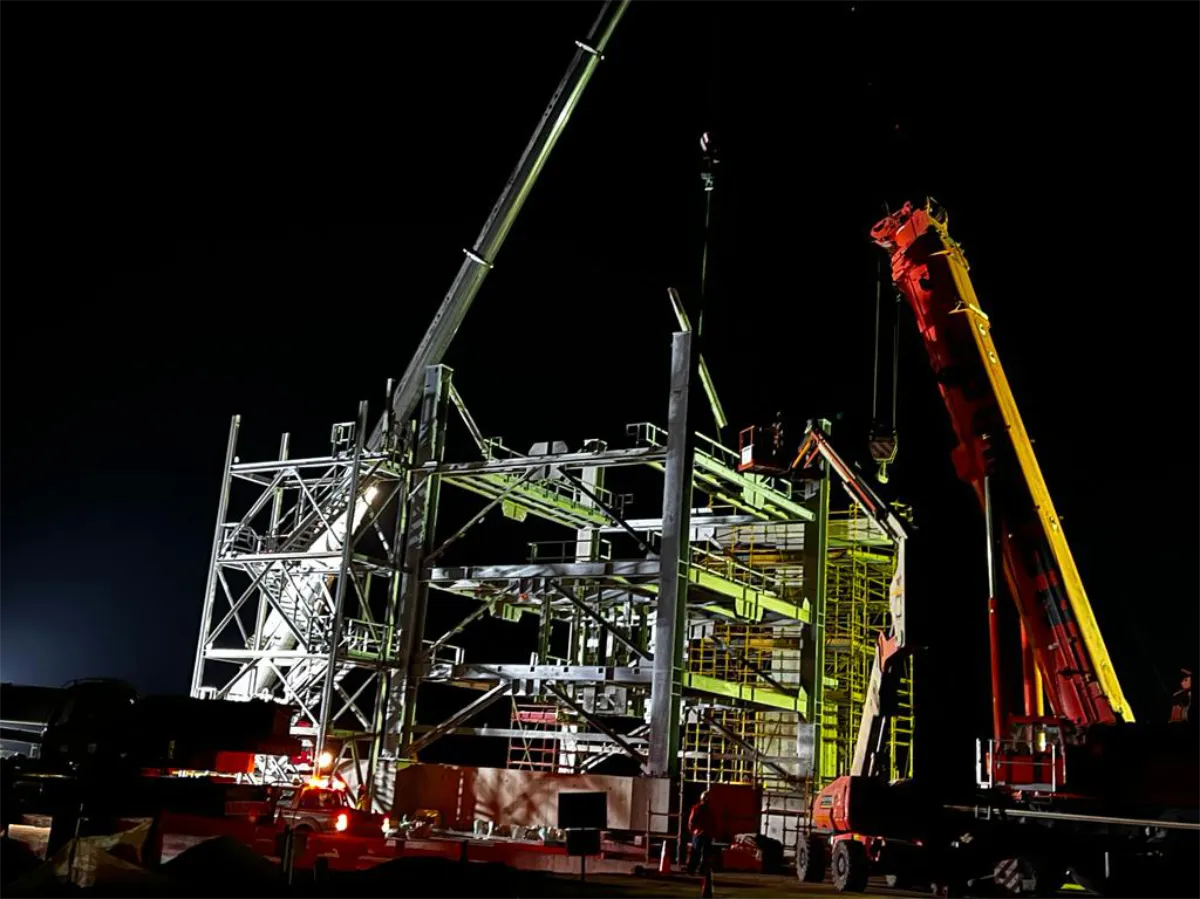
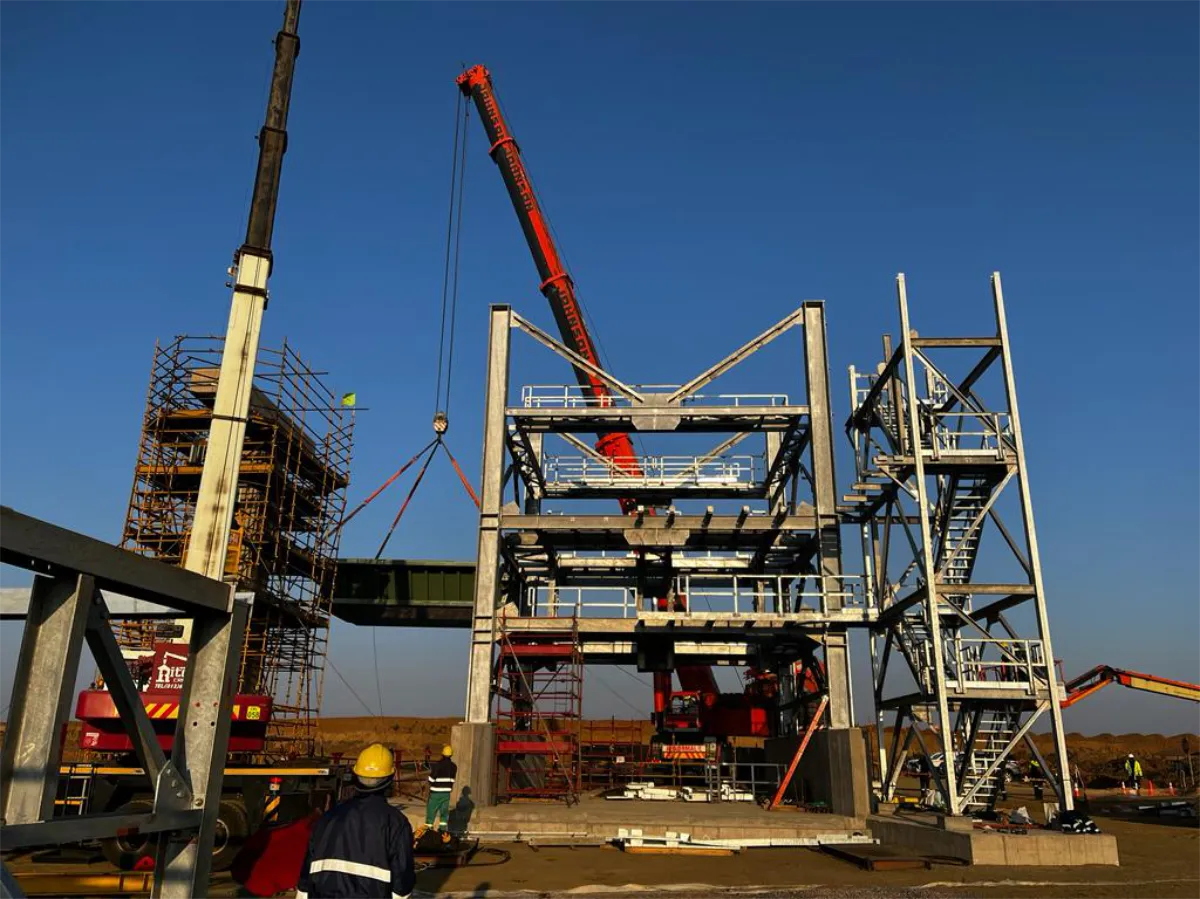
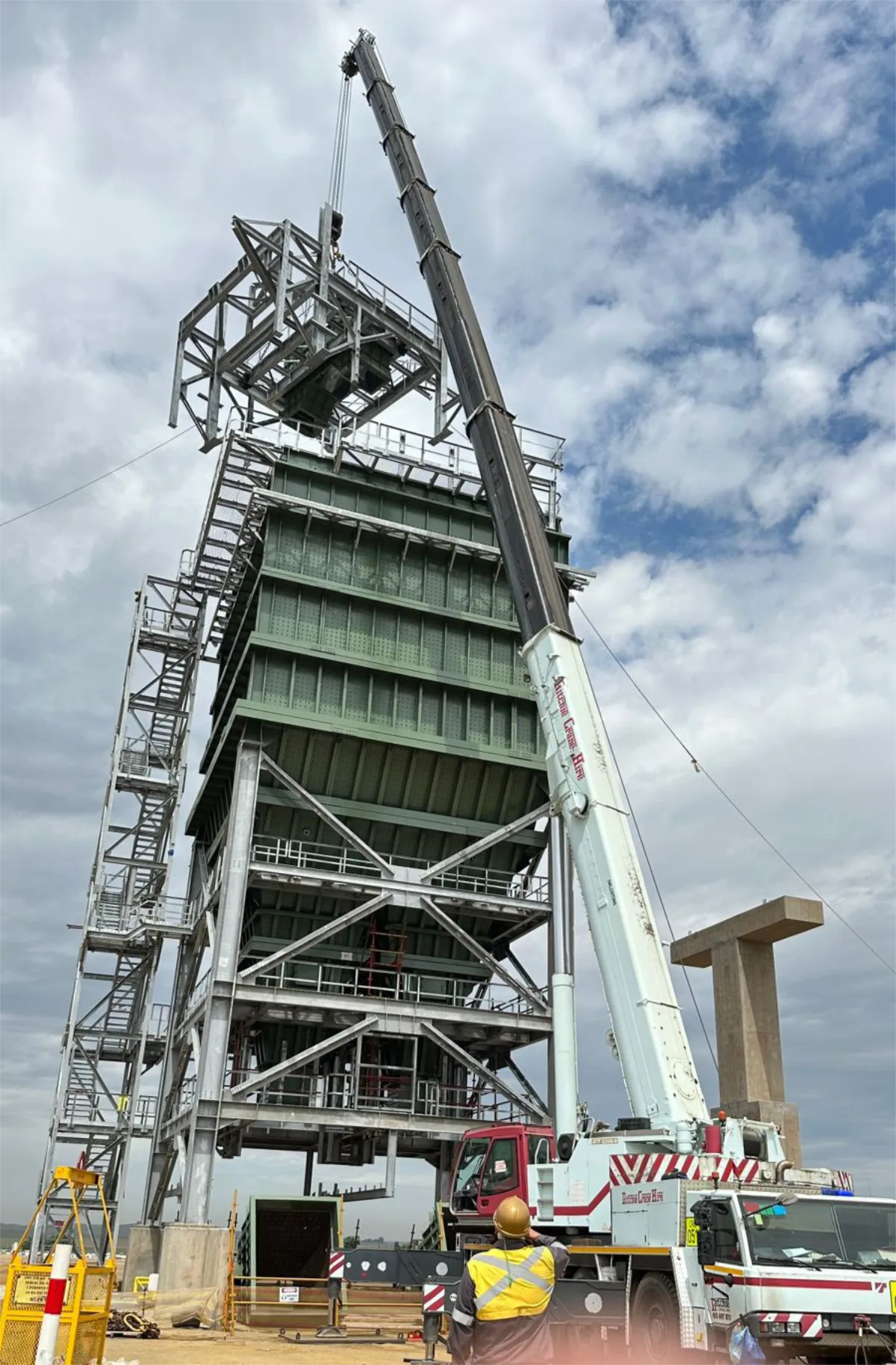
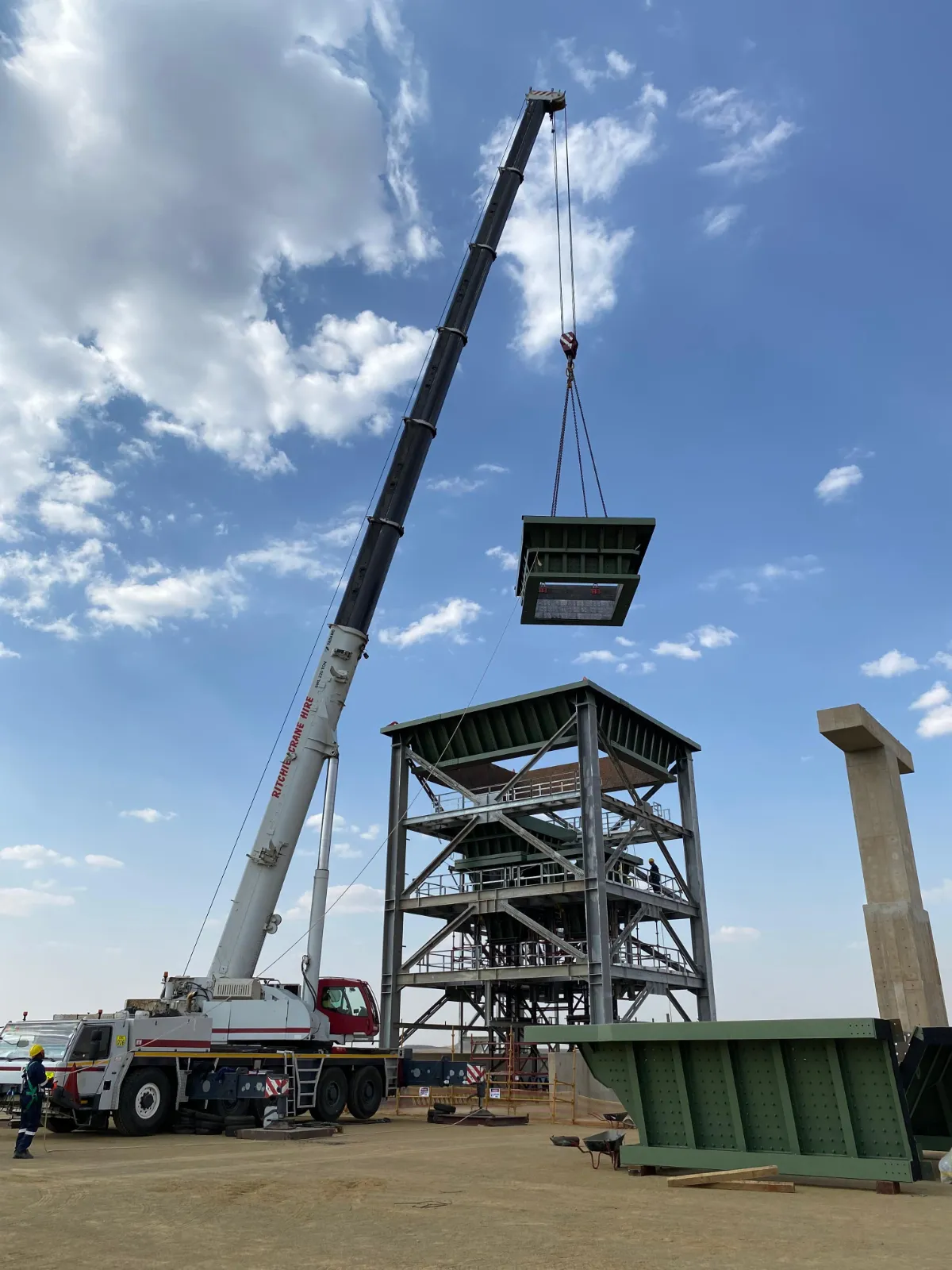
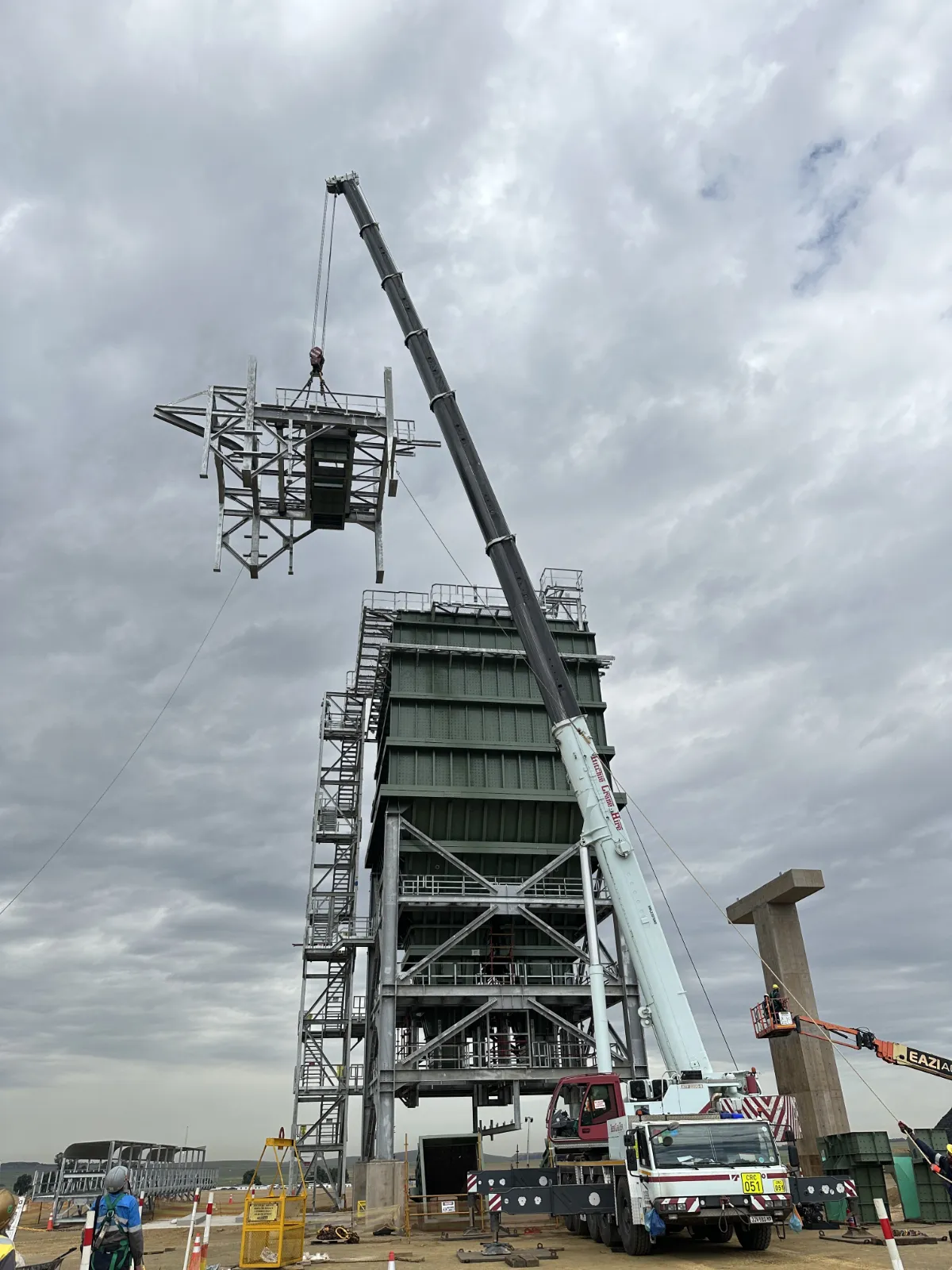
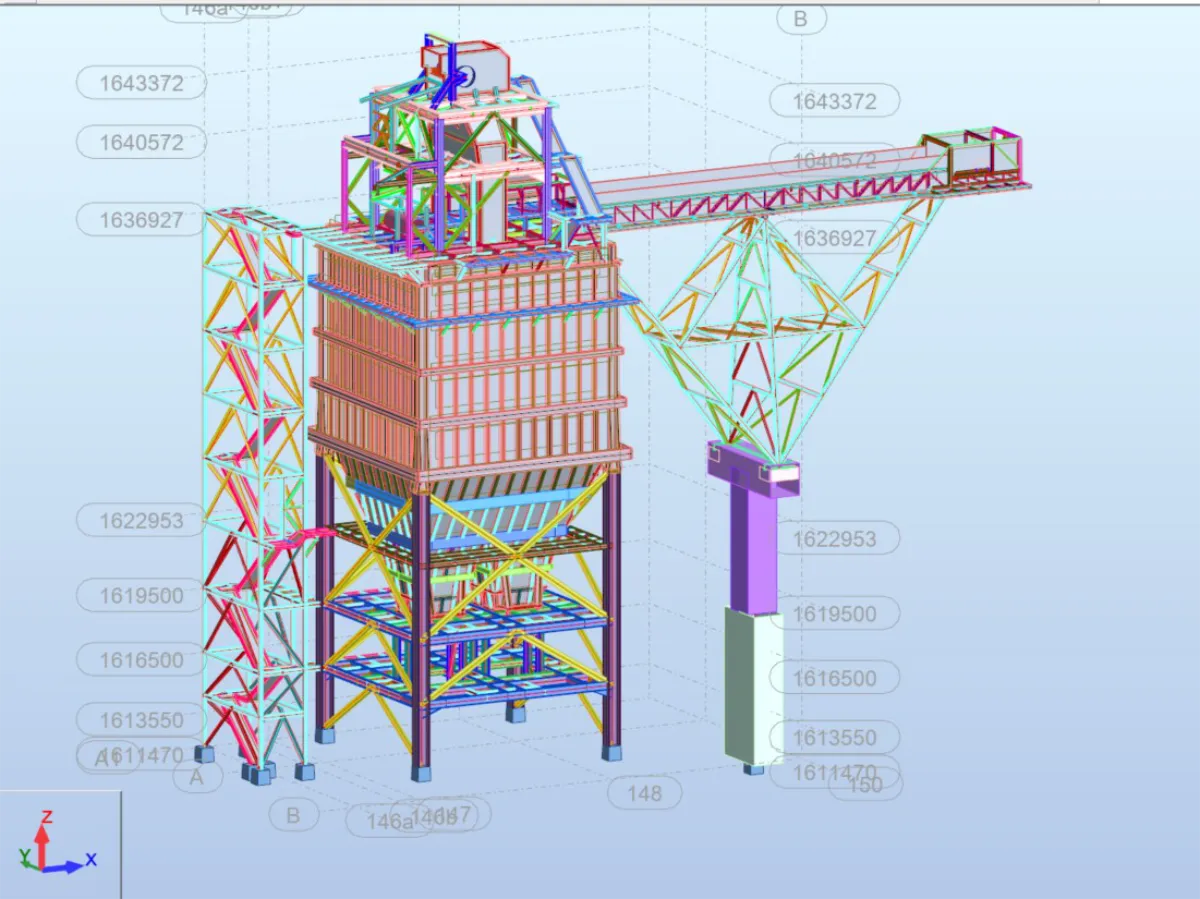
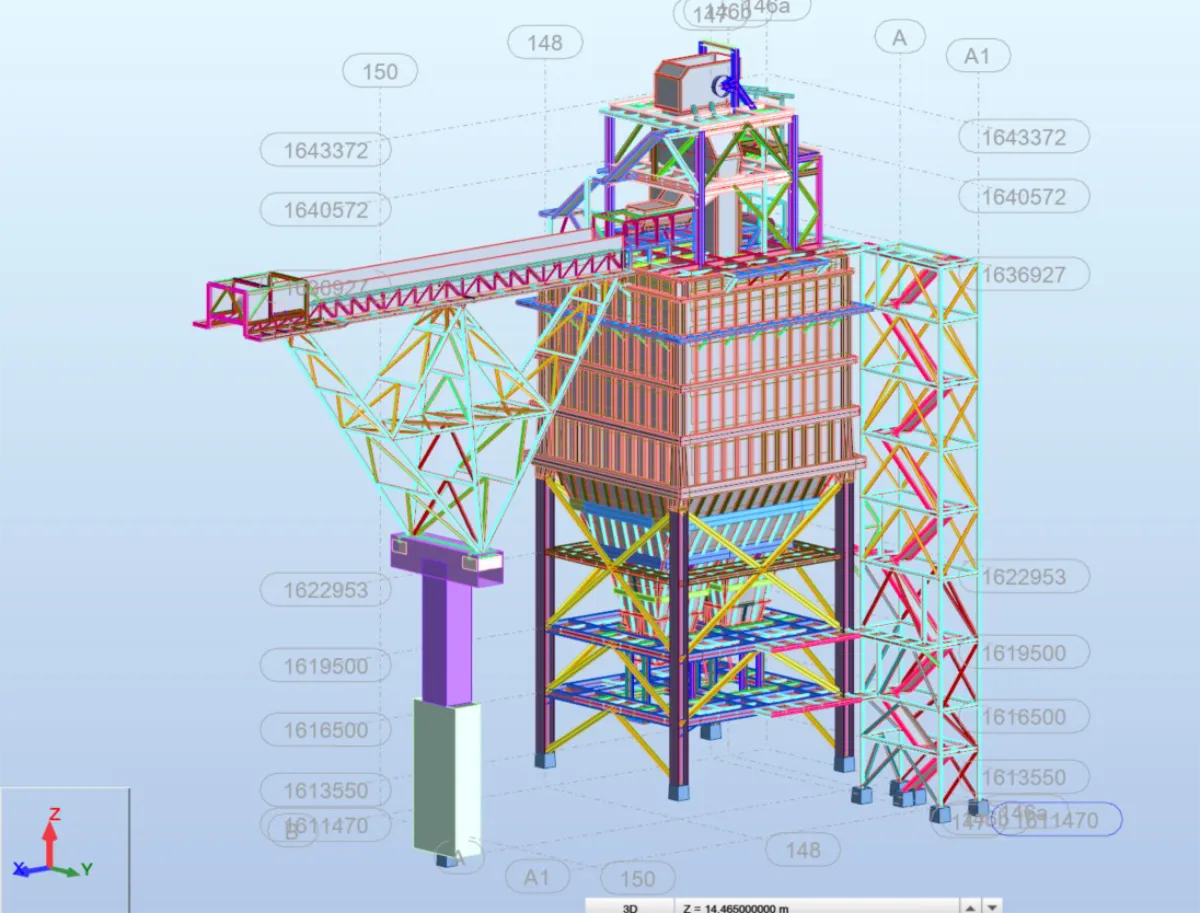
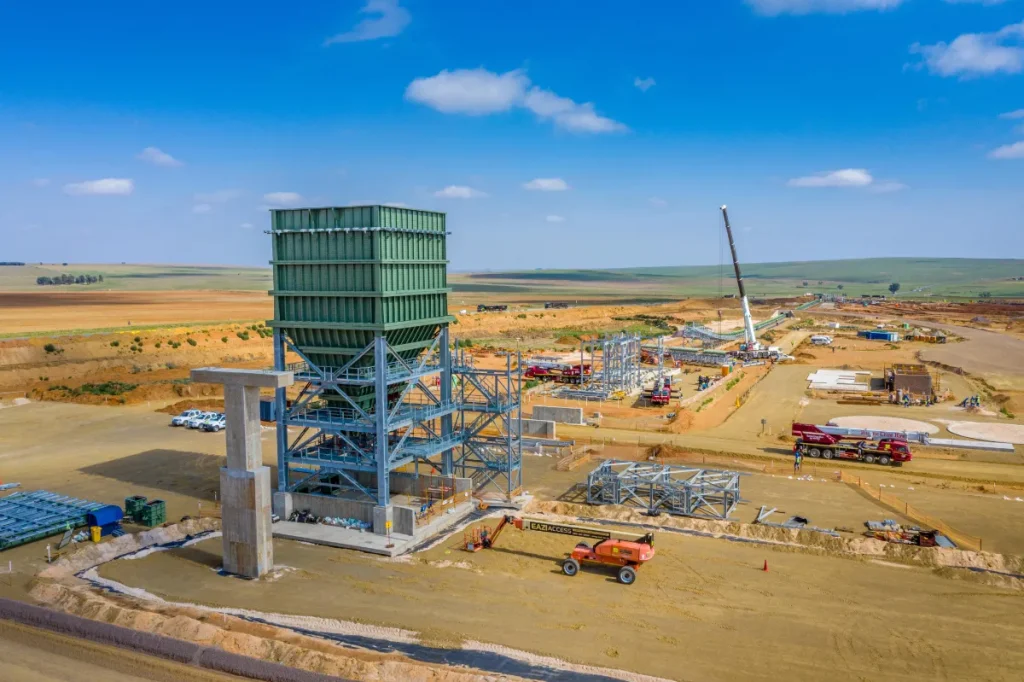
The radial gates and profile chutes of both truck loading bays are controlled by a single containerised hydraulic powerpack, located at ground level next to the LOS structure. The hydraulic powerpack is designed to ensure that the two loading bays can operate independently from each other. The speed of the actuators remains consistent regardless of any overlap in the duty cycle between the two loading bays - this is essential to ensure a consistent loading performance. The powerpack is equipped with accumulators that provide for the automatic closure of the radial gates and lifting of the profile chutes in the event of a power failure or hydraulic system failure. The truck loadout station consists of a reinforced concrete foundation with reinforced concrete stub columns linked with a R.C. Wall in the directions of truck travel below the bin. Above the truck occupied zone the bin consists of a structural steel frame up to the underside of the bin. The bin consists of structural steel platework stiffened with H-columns in the corners.
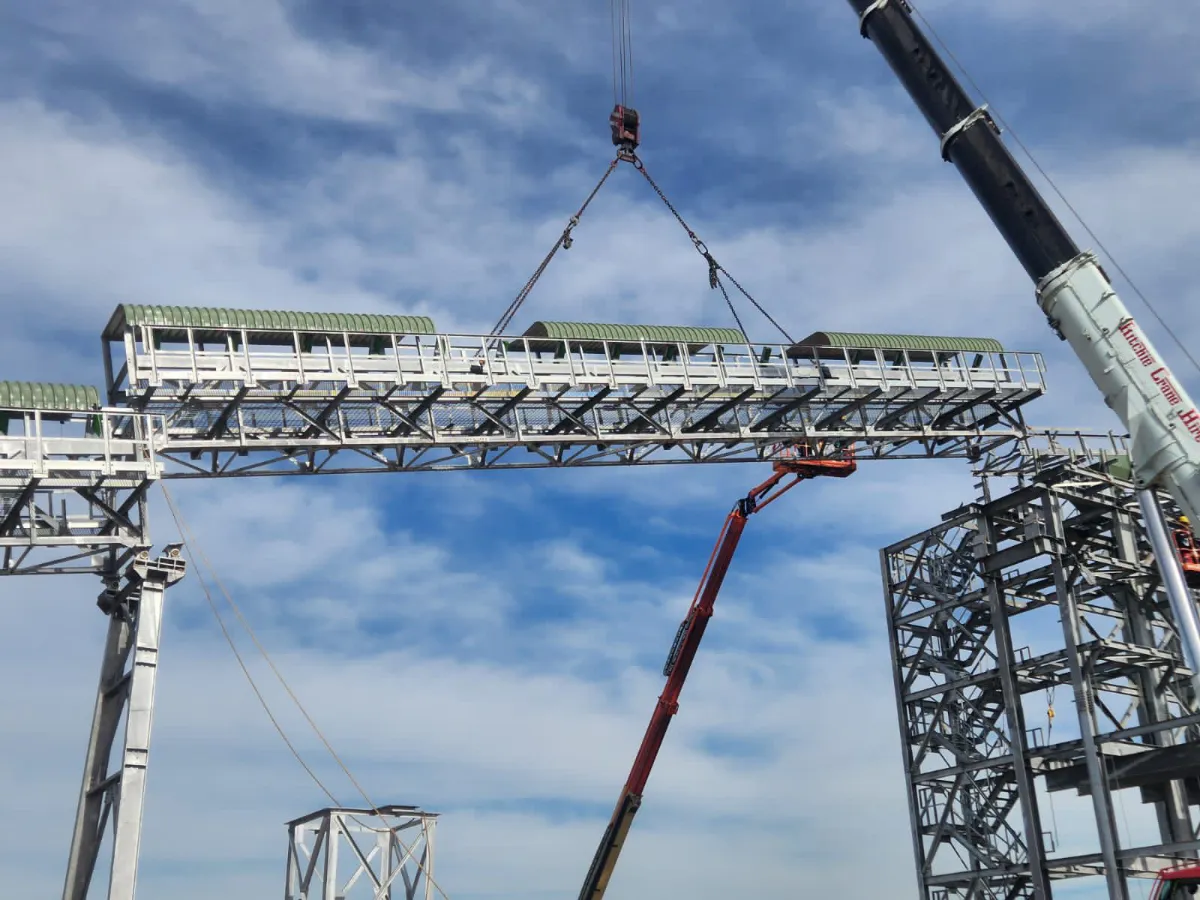
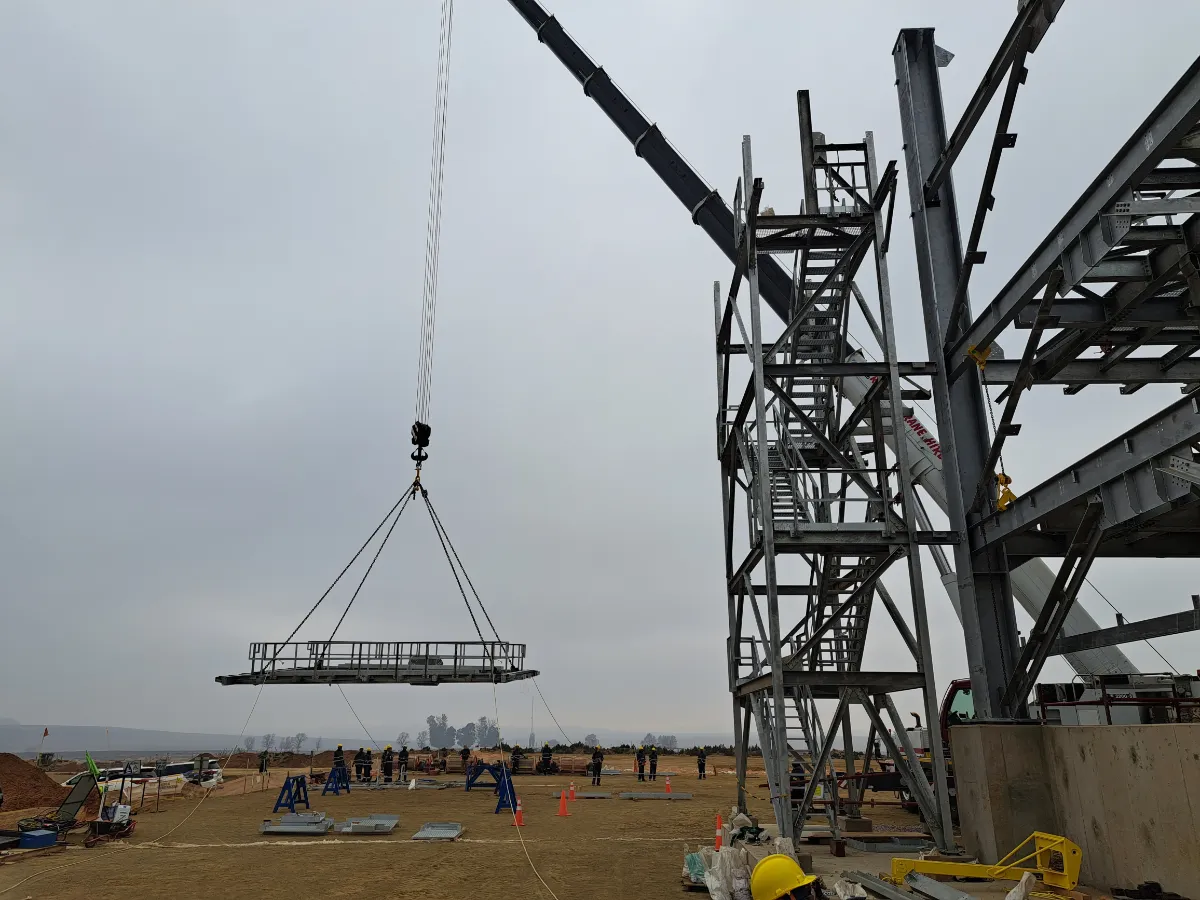
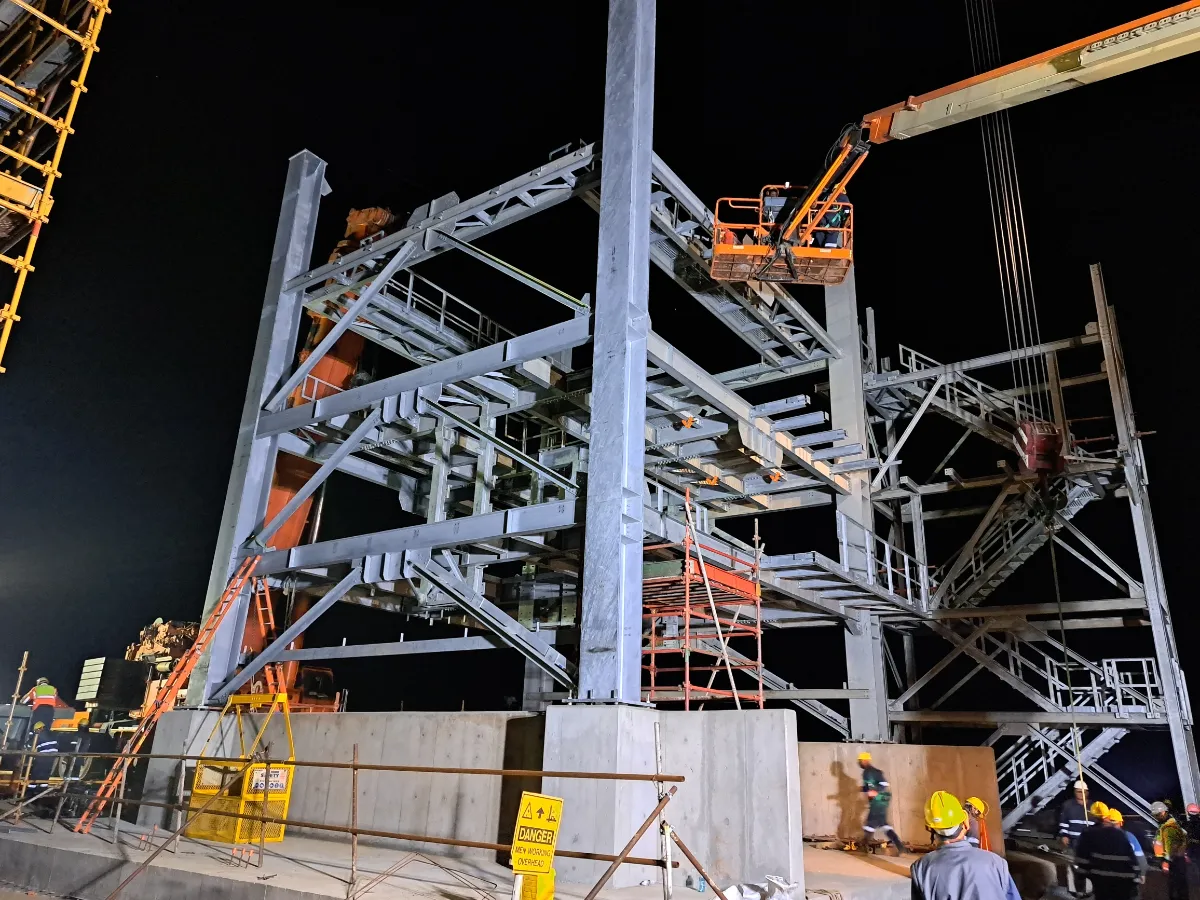
Suspended below the bin are two hydraulically operated flow control radial gates and two vertically adjustable profile loading chutes. As the trucks pass below the bin in the one direction bracing could not be provided in that direction for the lower level. At this location a portal frame was provided. Apart from this portal frame all levels are braced in all directions. On top of the bin there is a structure that supports the head and diverter chutes. This structure has a portal frame in the direction of the conveyor at the top of bin level, apart from this the structure is braced in all directions. The bin supports in incoming conveyor as well as the stockpile conveyor.