
Project Overview
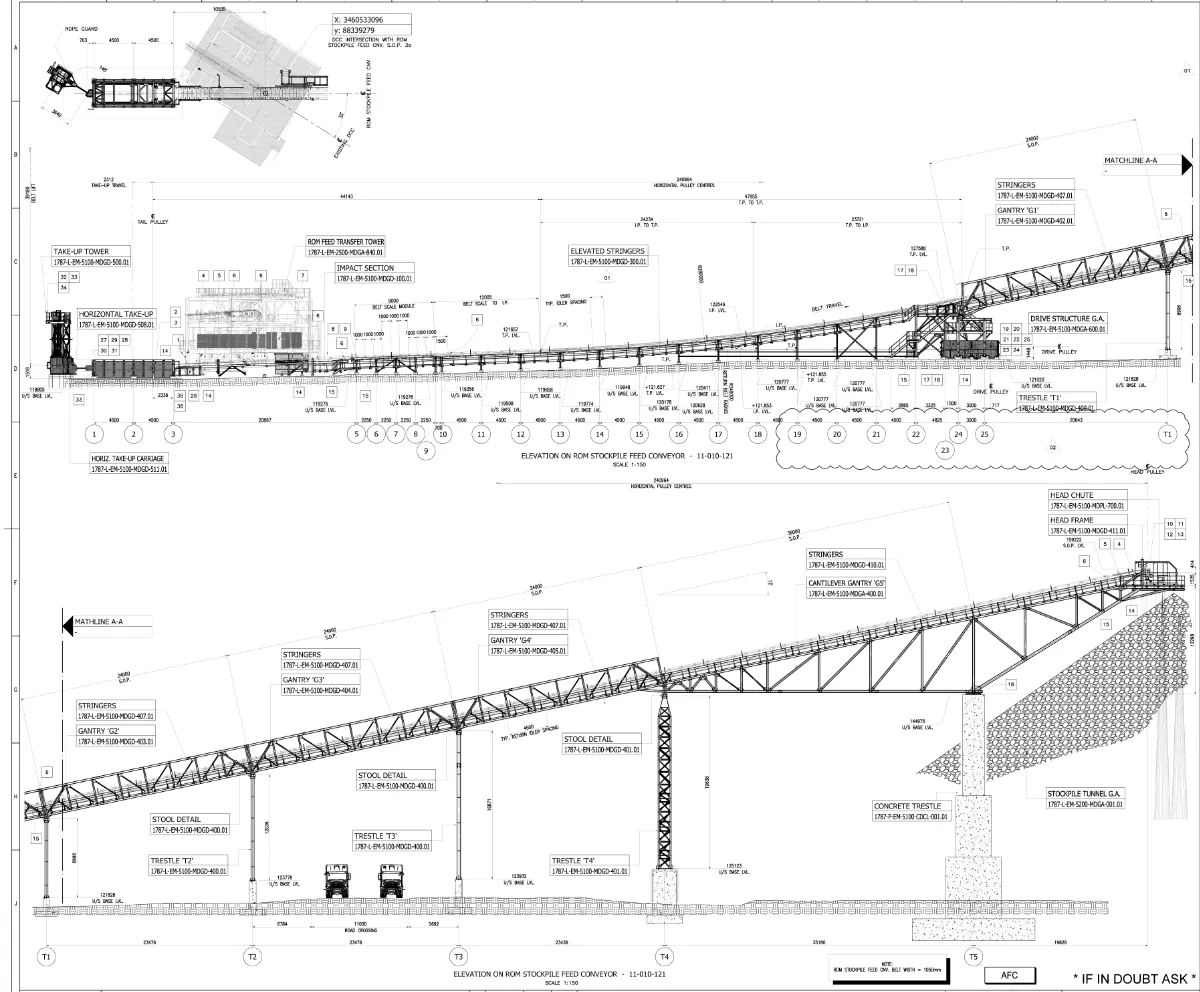
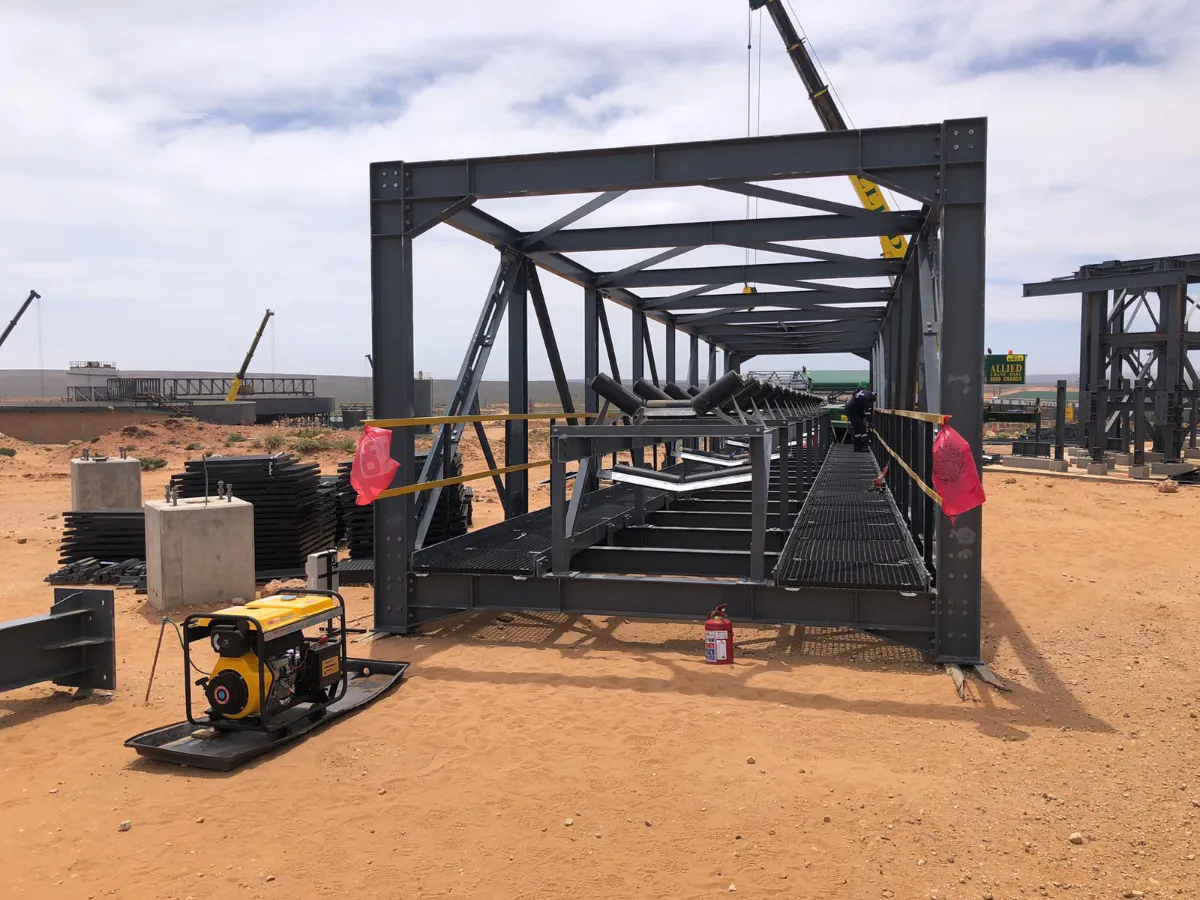
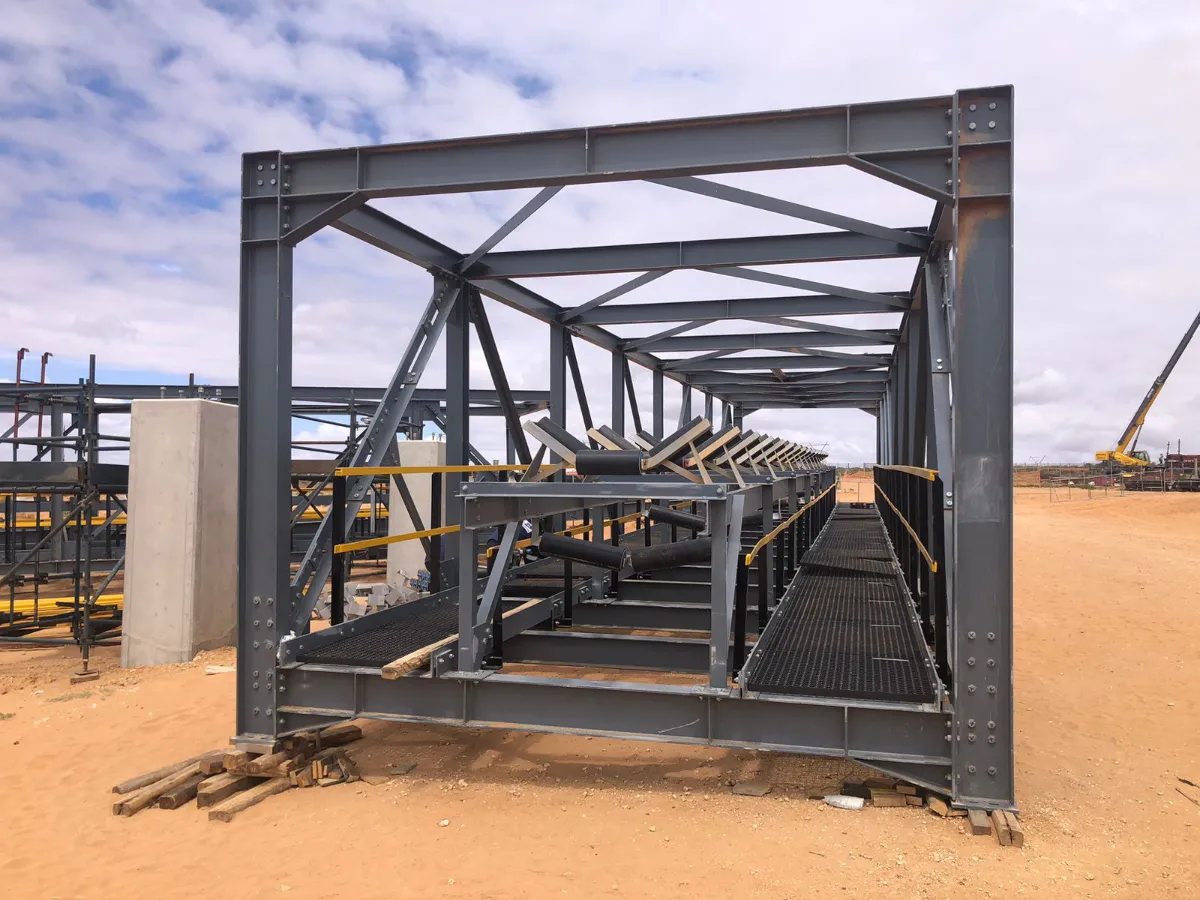
At Namakwa sands mine operated by Tronox the dune and natural sands are mined for heavy minerals. The sands are transported to a processing plant where the heavy minerals are extracted from the sand after which the sand is returned back to the mined area and the area is rehabilitated. The process of transporting the material from the mined area and returning it to the mined area is designed and specified by the mechanical engineer. In this case the mechanical engineer will design the material handling that defines the beltline, belt tensions and material flow through chutes. The Structural engineer will then design the structures to support the conveyor belt, chutes and mechanical equipment. In this conveyor it includes overland conveyor modules, elevated conveyor sections, belt tensioning structures (Horizontal and vertical take-ups), drive station, conveyor gantries, trestles, columns.
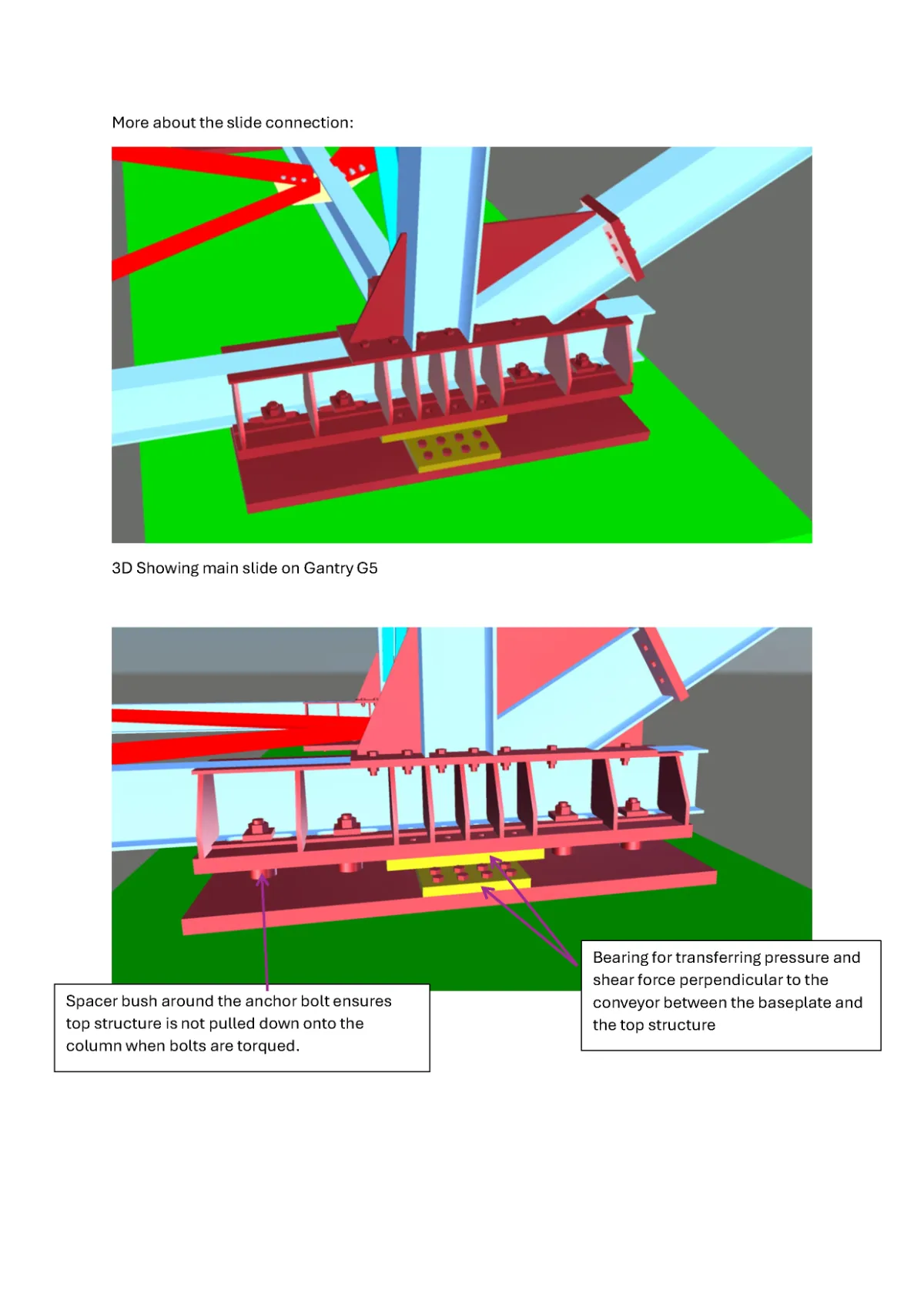
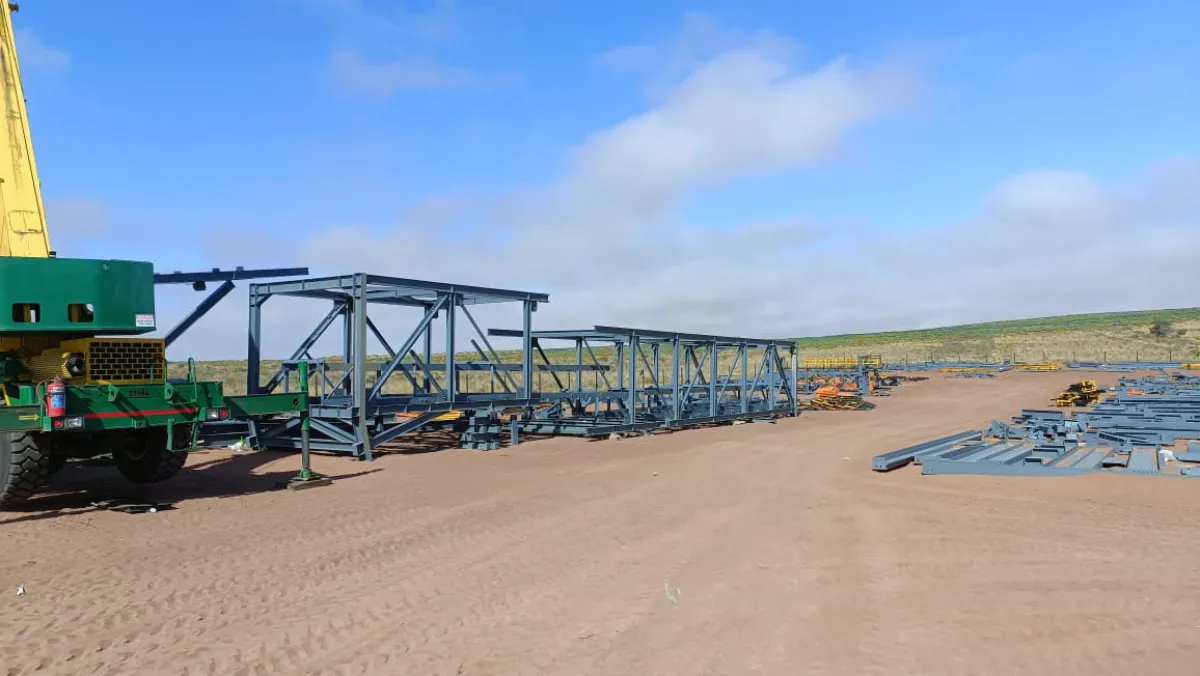
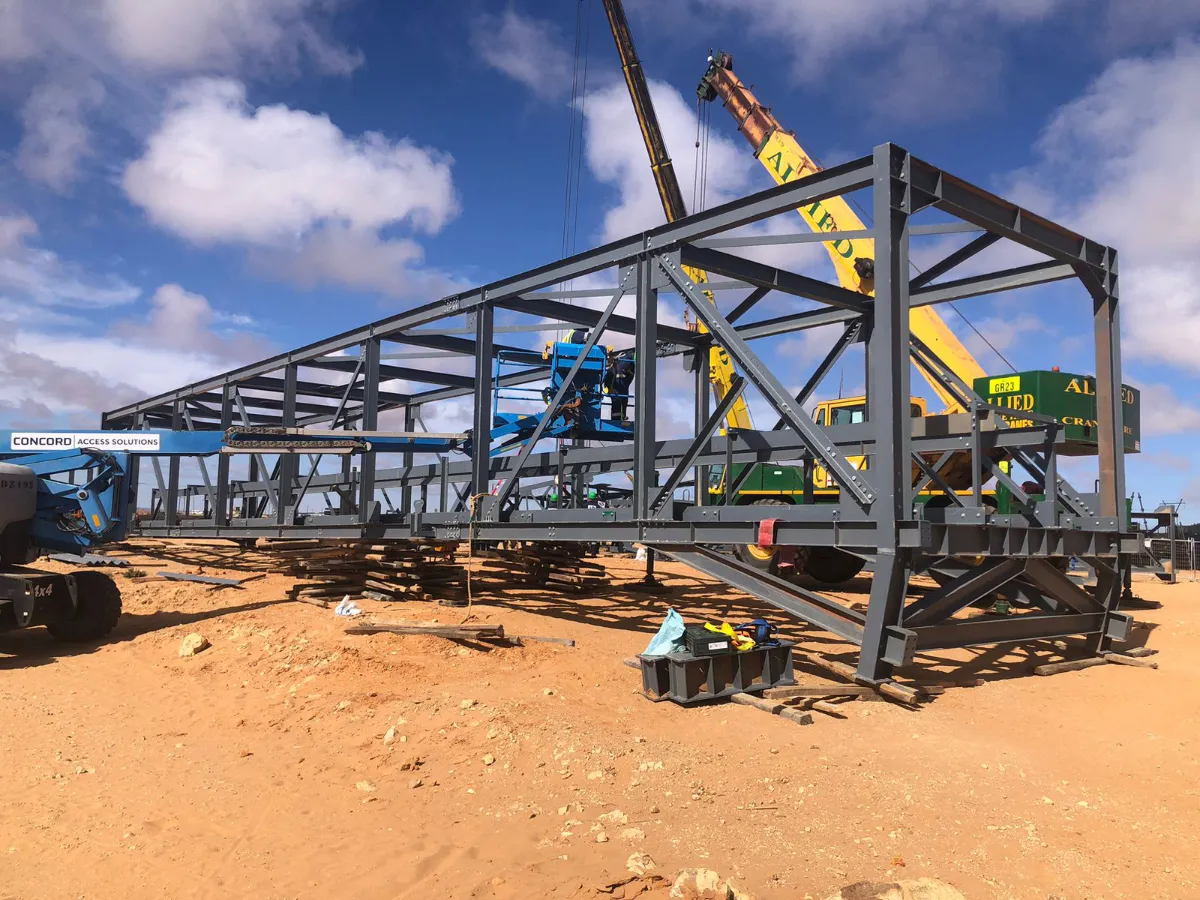
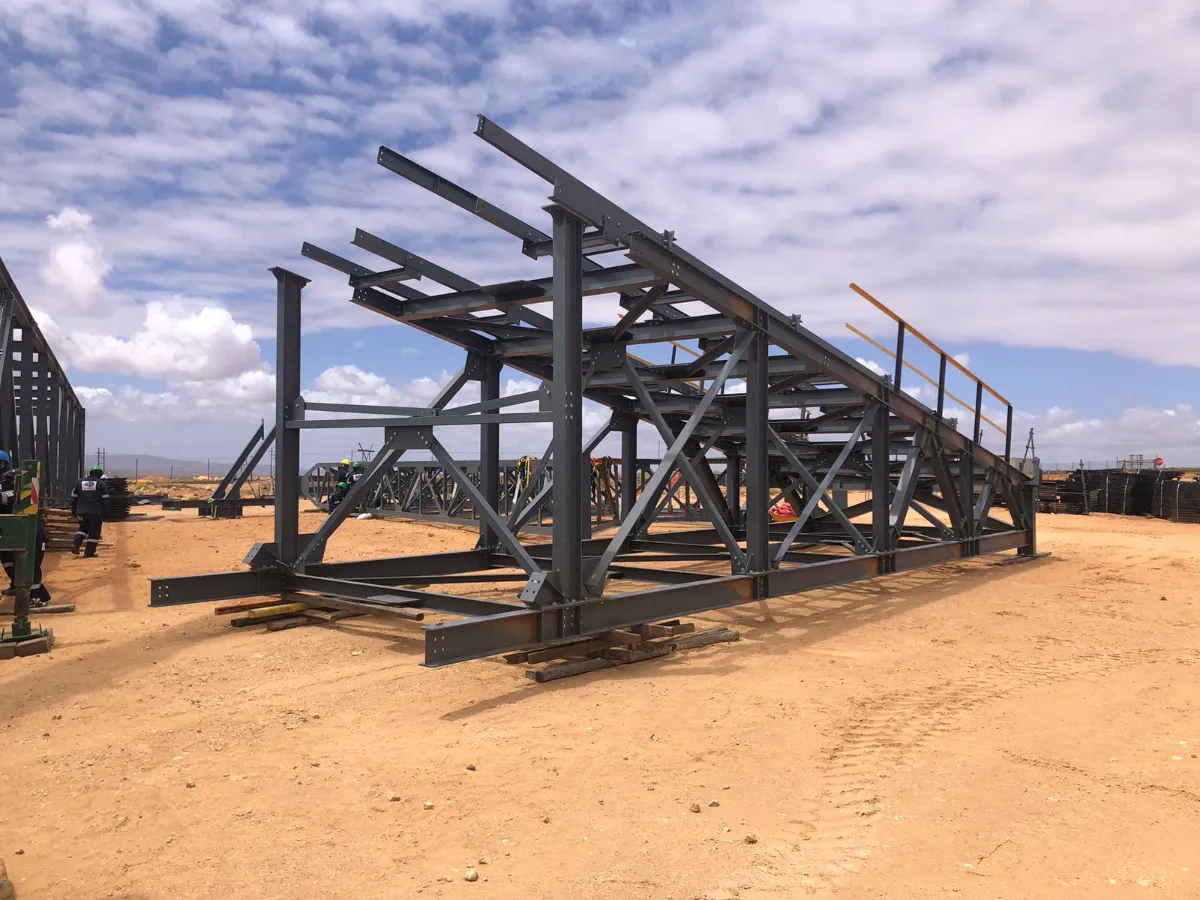
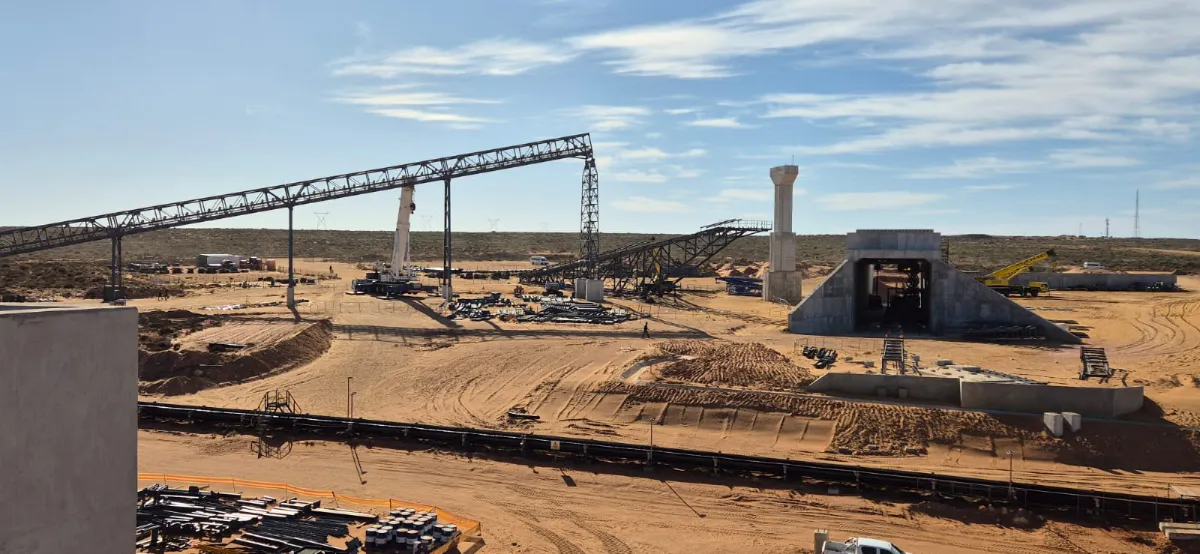
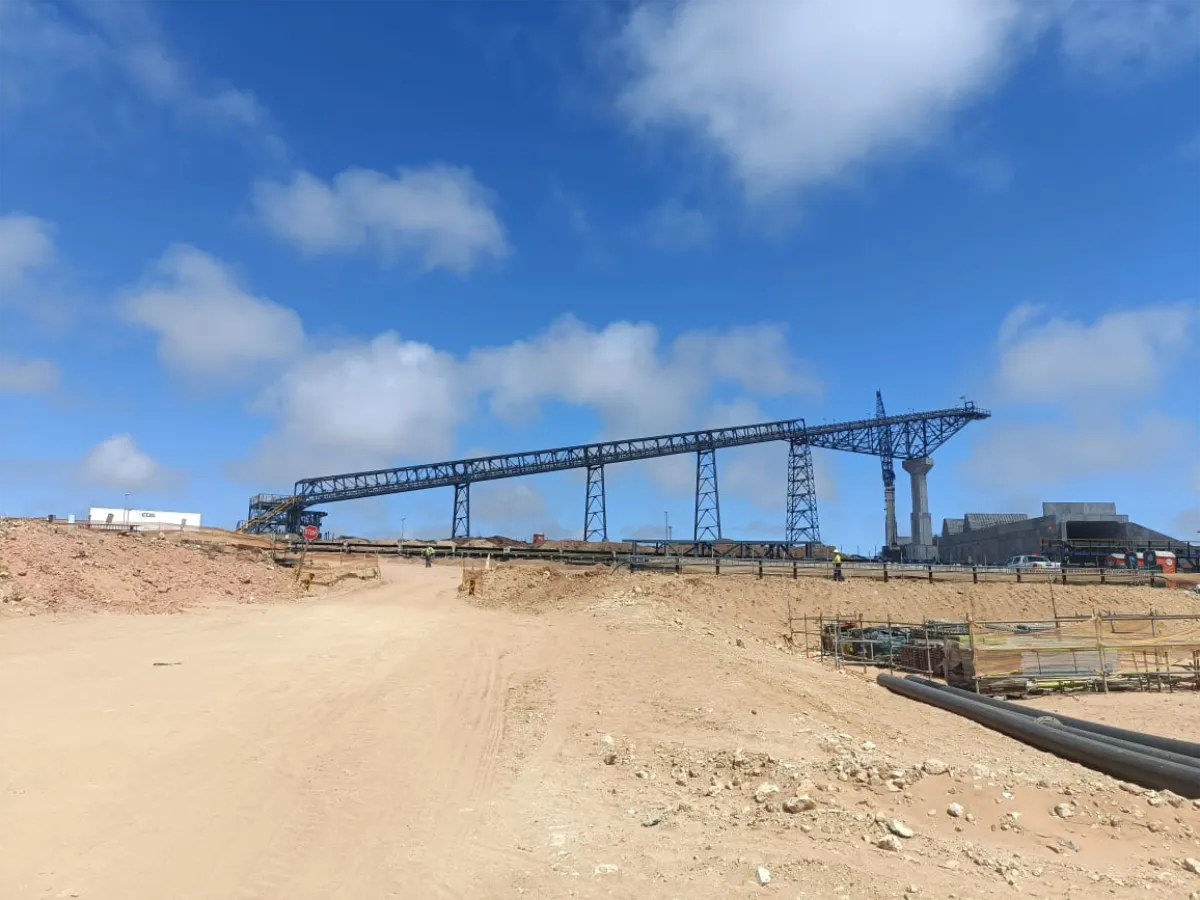
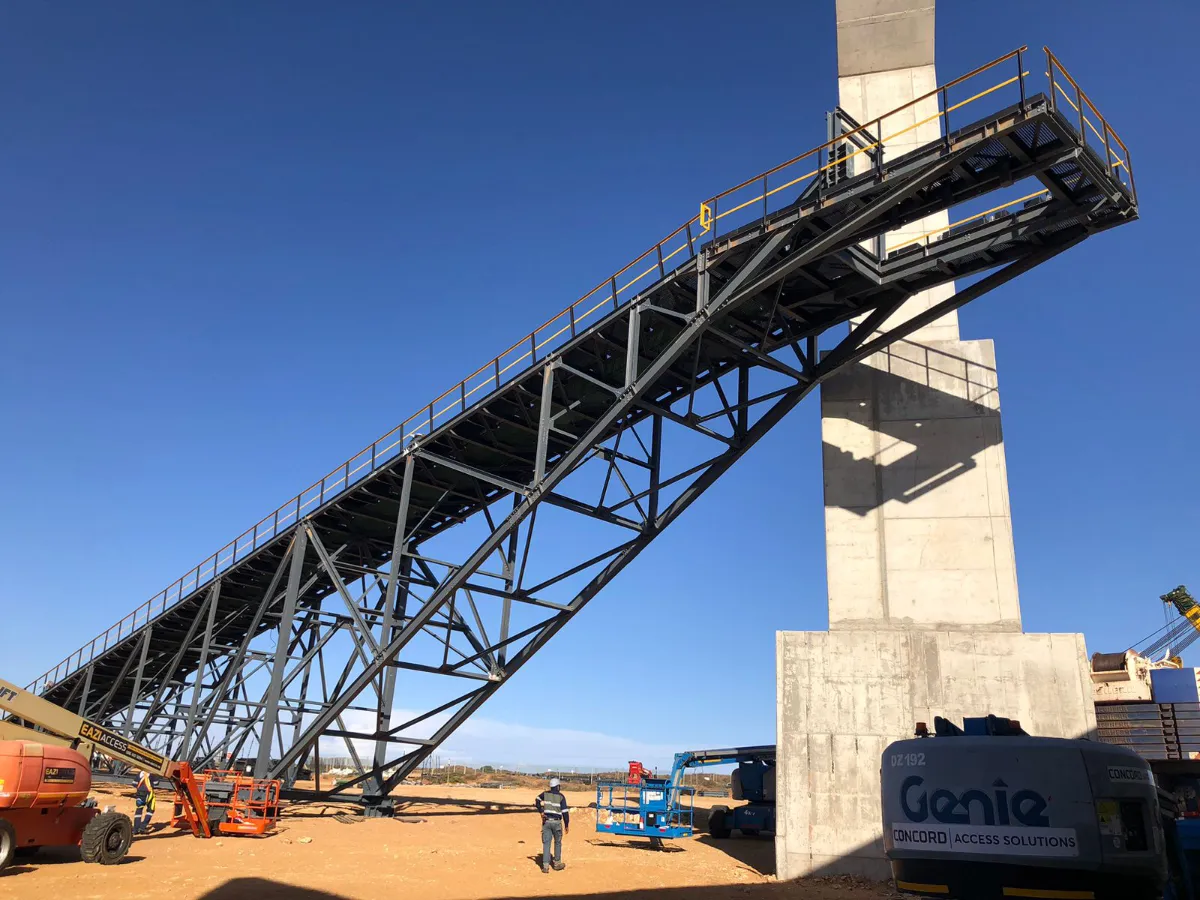
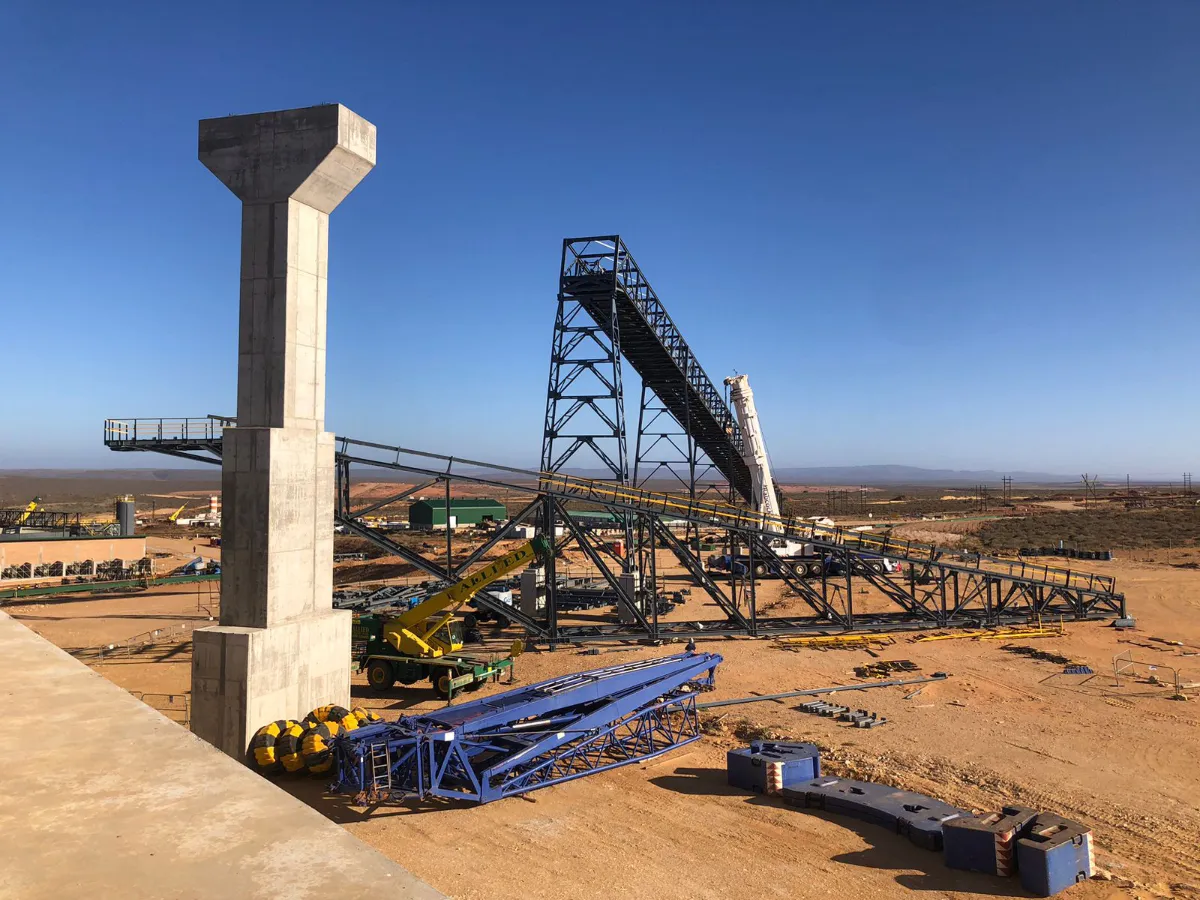
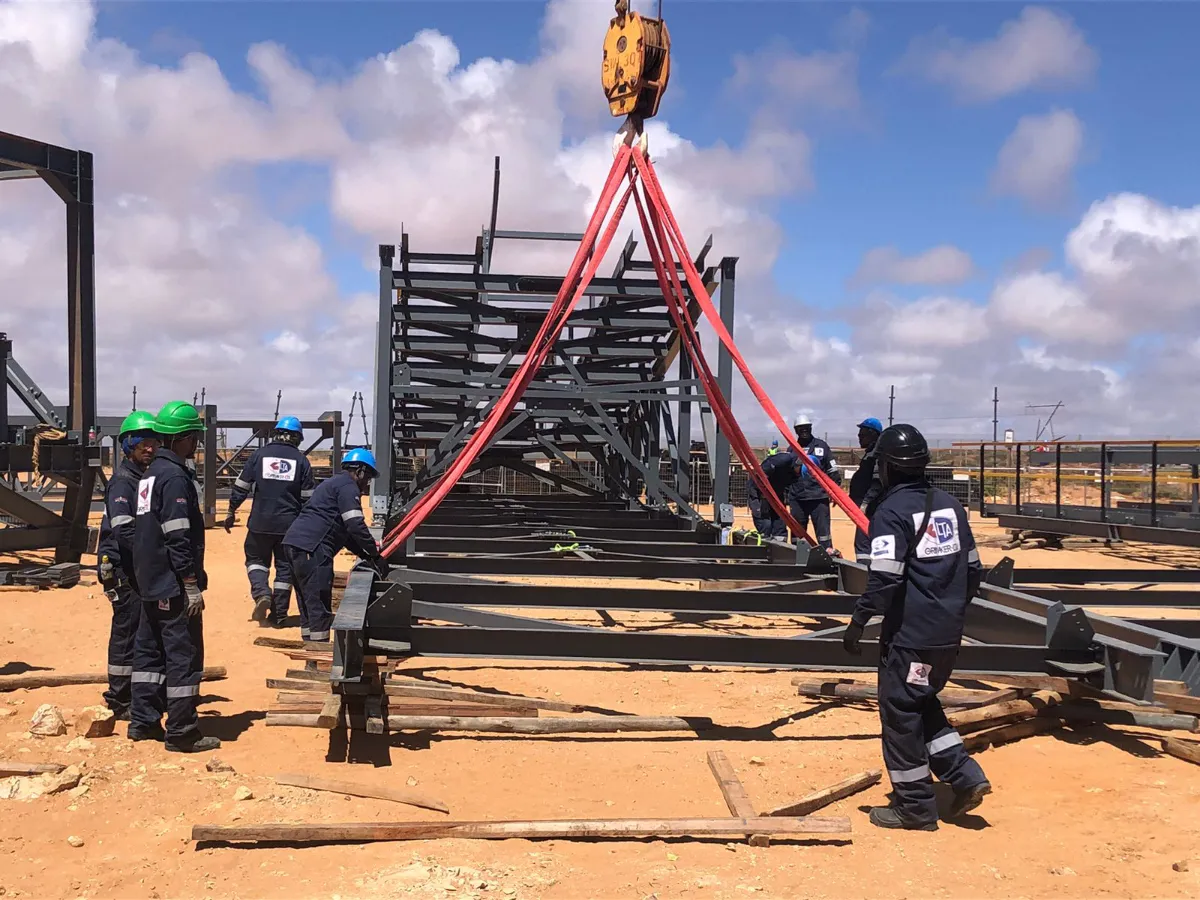
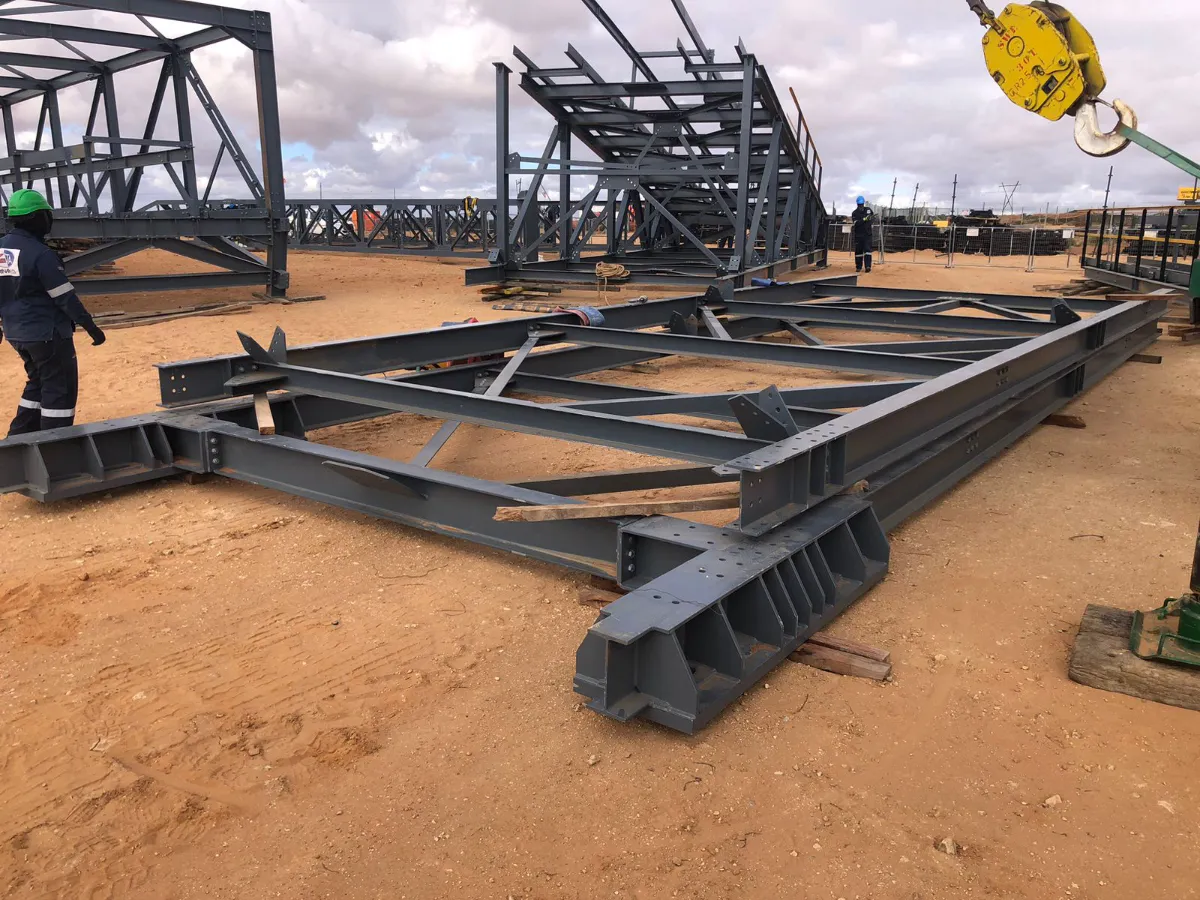
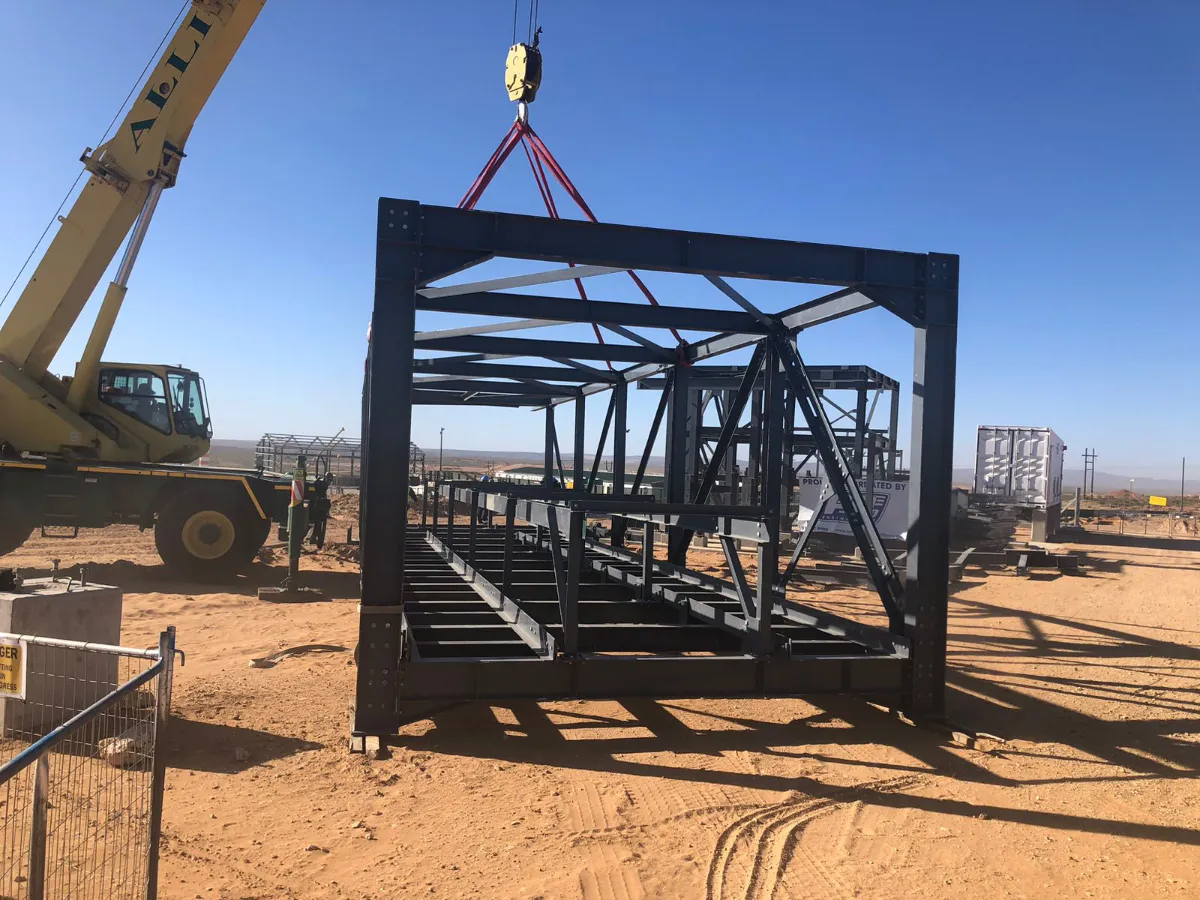
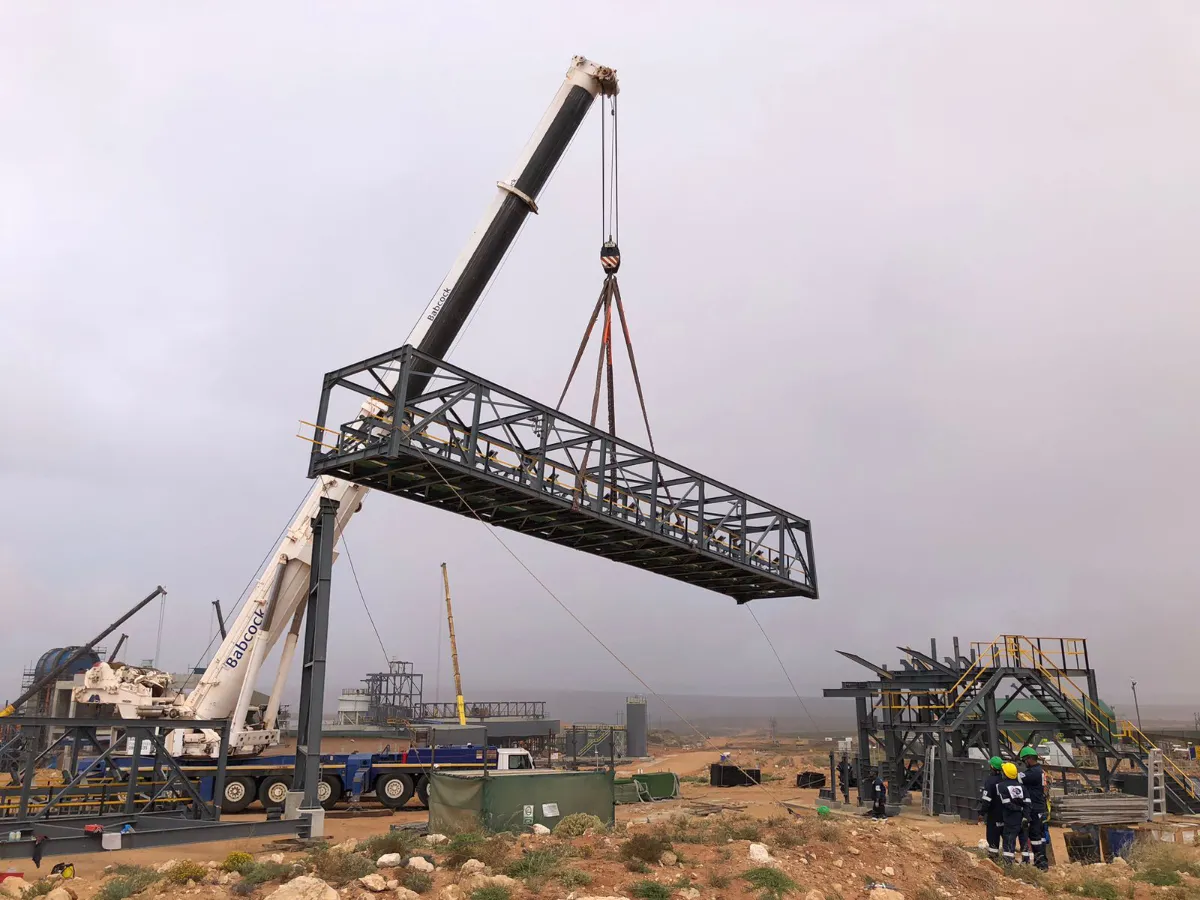
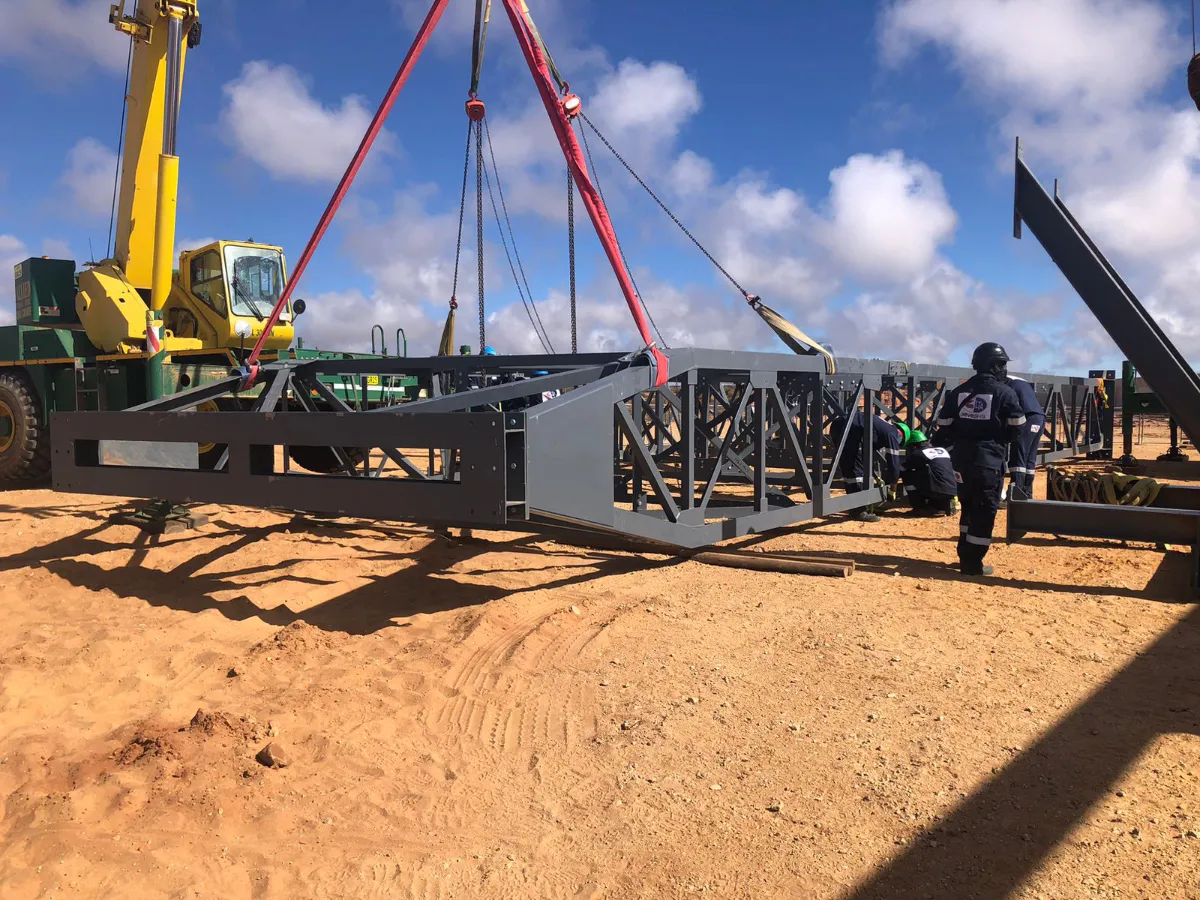
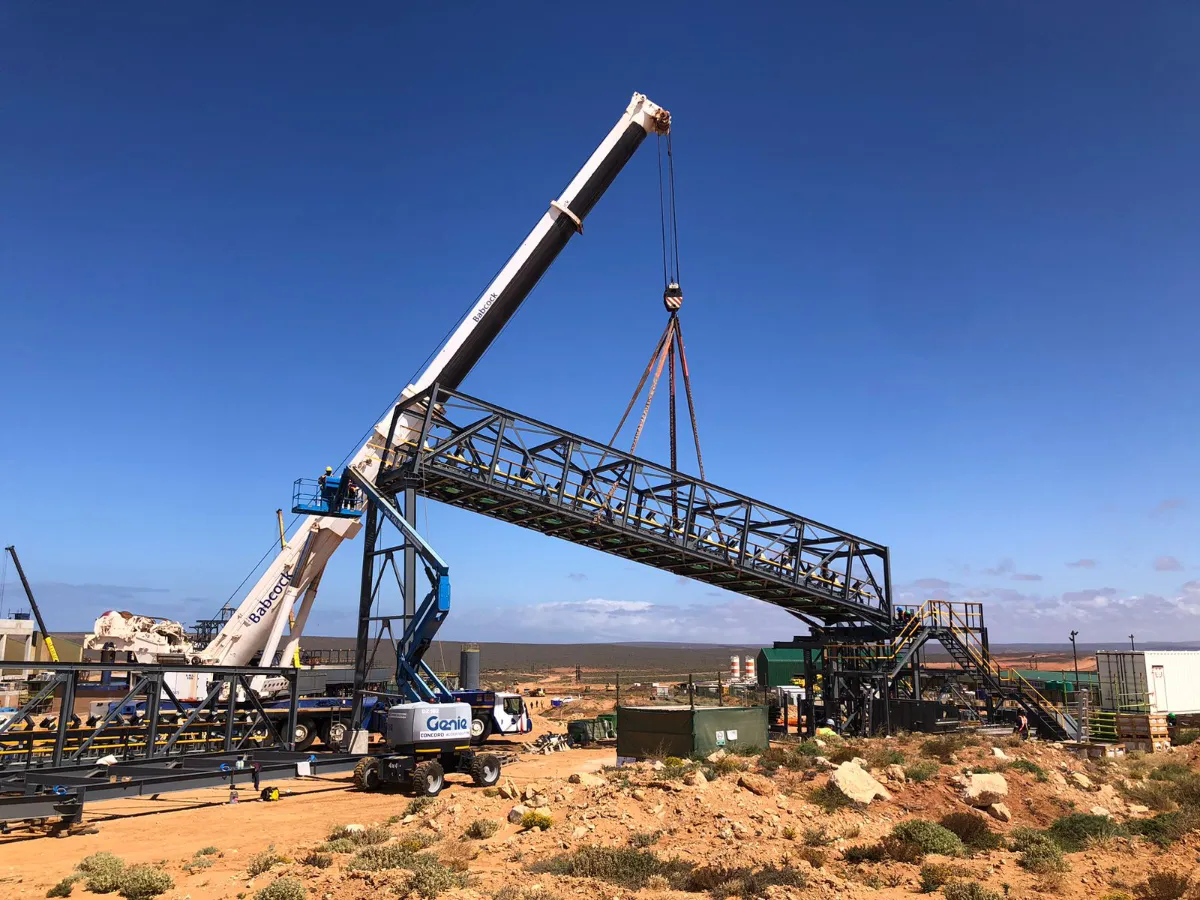
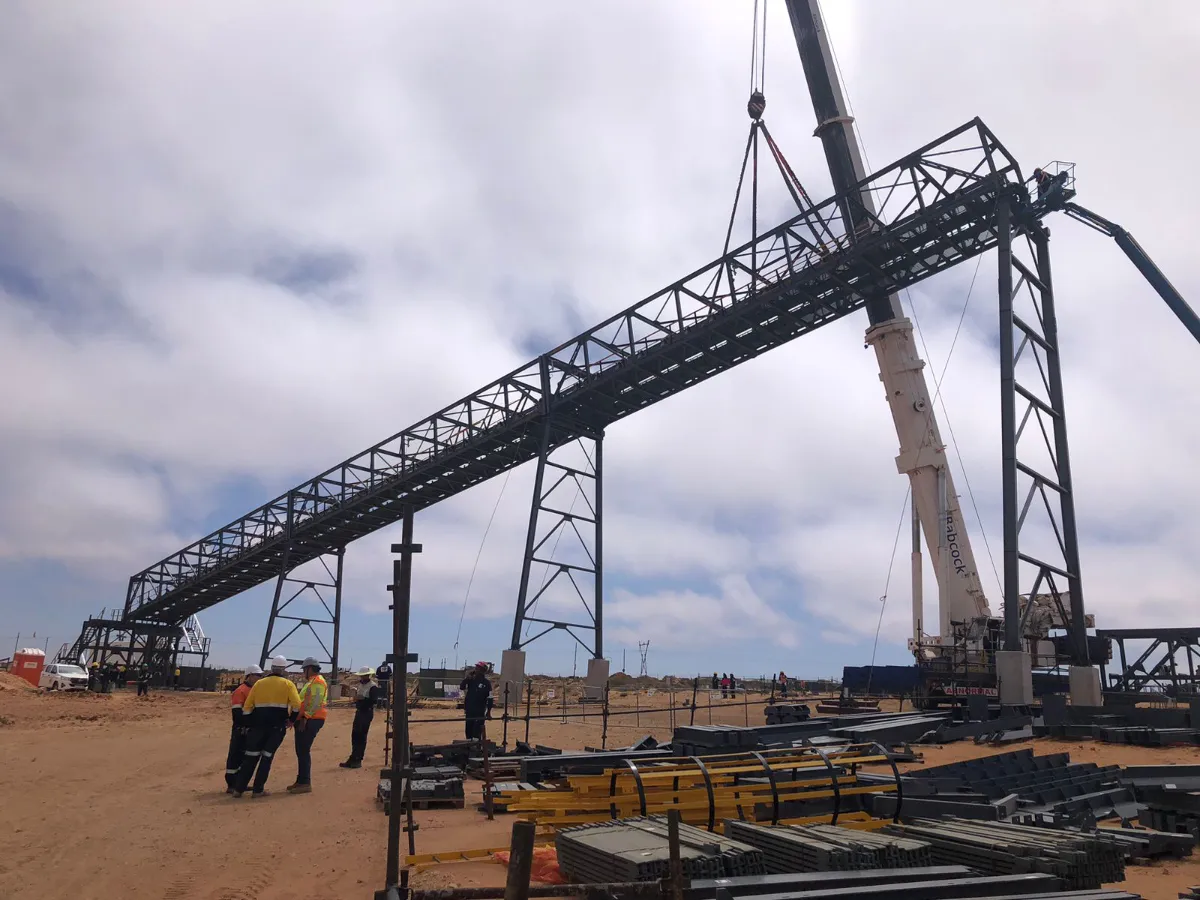
The brief for the structure is as follows: Elevate a 1050mm wide conveyor belt to an approximate height of 39m. Allow for a 20m cantilever on the head-end, which must accommodate the maximum stockpile dimensions that will peformed by the conveyor discharge. The structure must clear the maximum stockpile, at minimum angle of repose (i.e. cantilever slope must be sufficient to prevent the structure from being buried in material, later inducing draw-down loads). The centre-of-gravity of the head-end structure must fall within the support points of the main gantry to allow for pre-assembly of a stable structure. The head-end belt tensions must be transferred through the entire structure to the ground-level drive station, preventing any of this loading being transferred to the primary concrete trestle support, which would already be significantly loaded by the stockpile itself and therefore cannot accommodate the additional bending loads from the conveyor. Each structural element of the conveyor (especially the large head-end gantry) must be of a reasonable mass, such that each element can be pre-assembled on the ground and lifted into position at significant height using conventional mobile cranes.
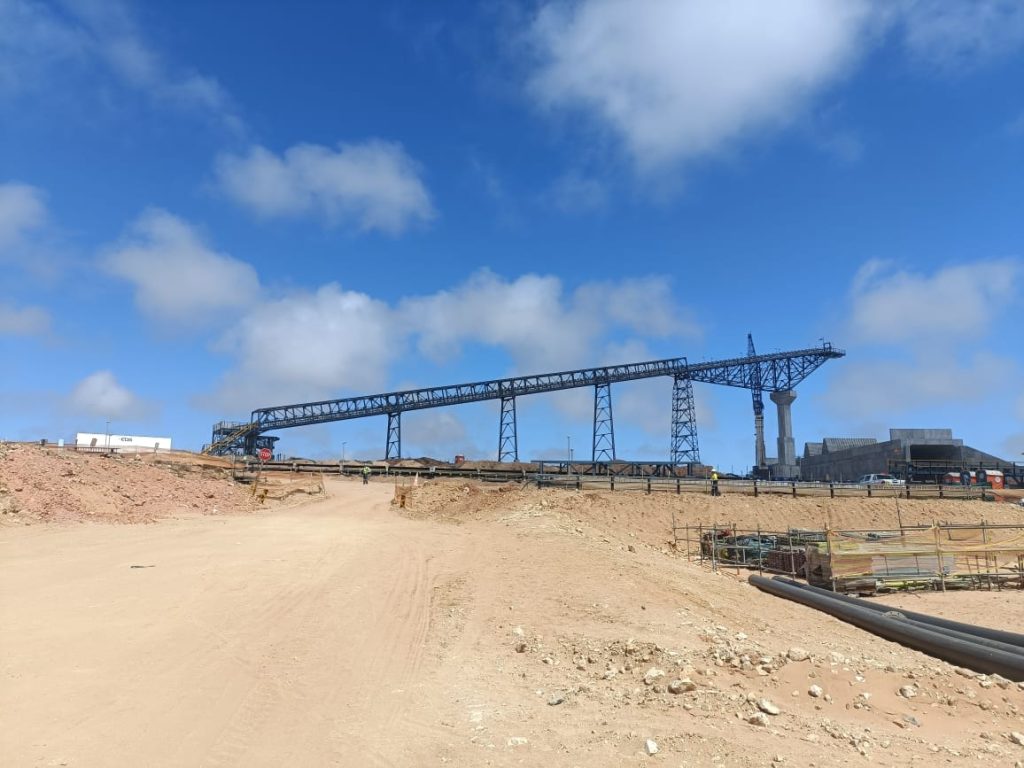
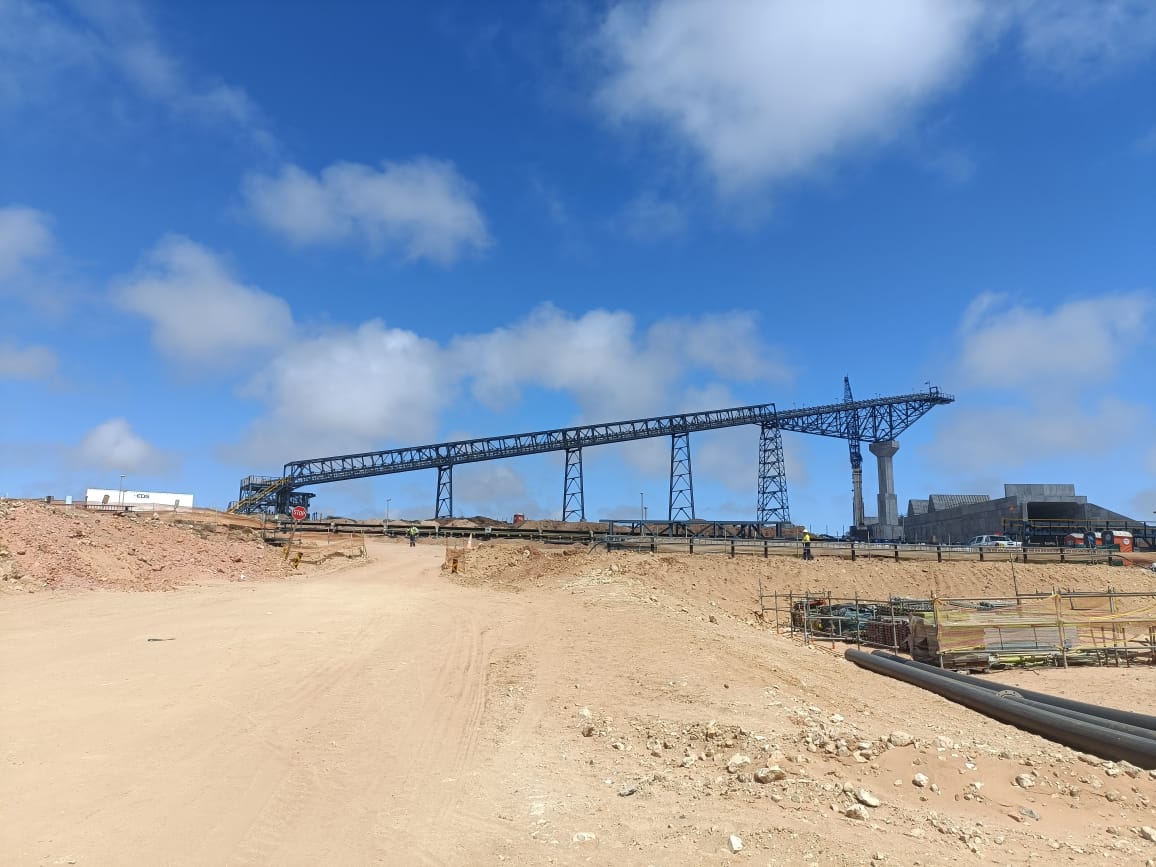
This results in an efficient construction process. The main purpose of the rom stockpile feed conveyor is to convey run of mine material to a stockpile that provides a constant feed of material into the production plant.
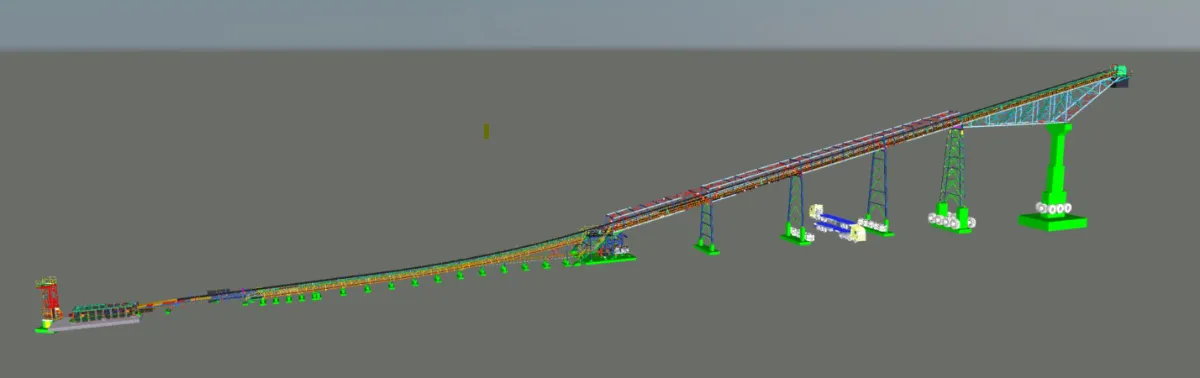
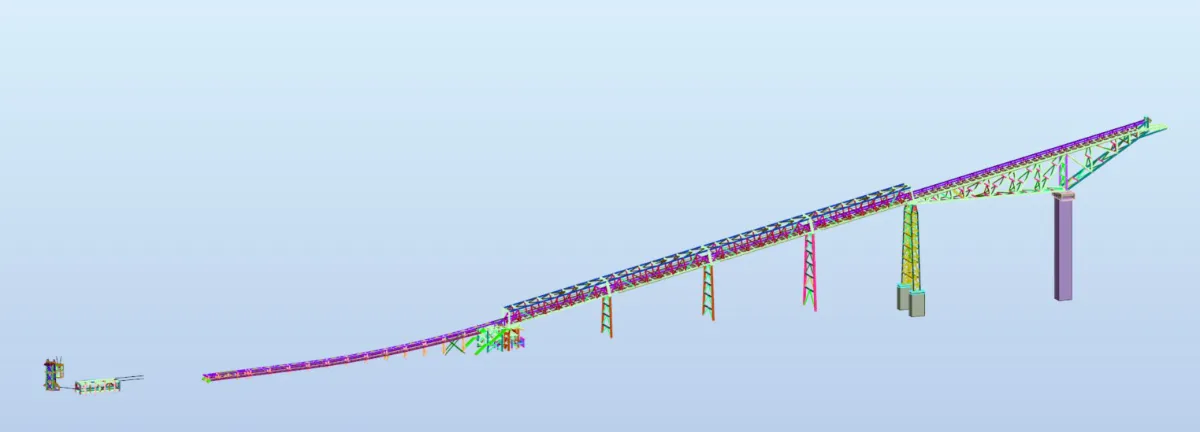
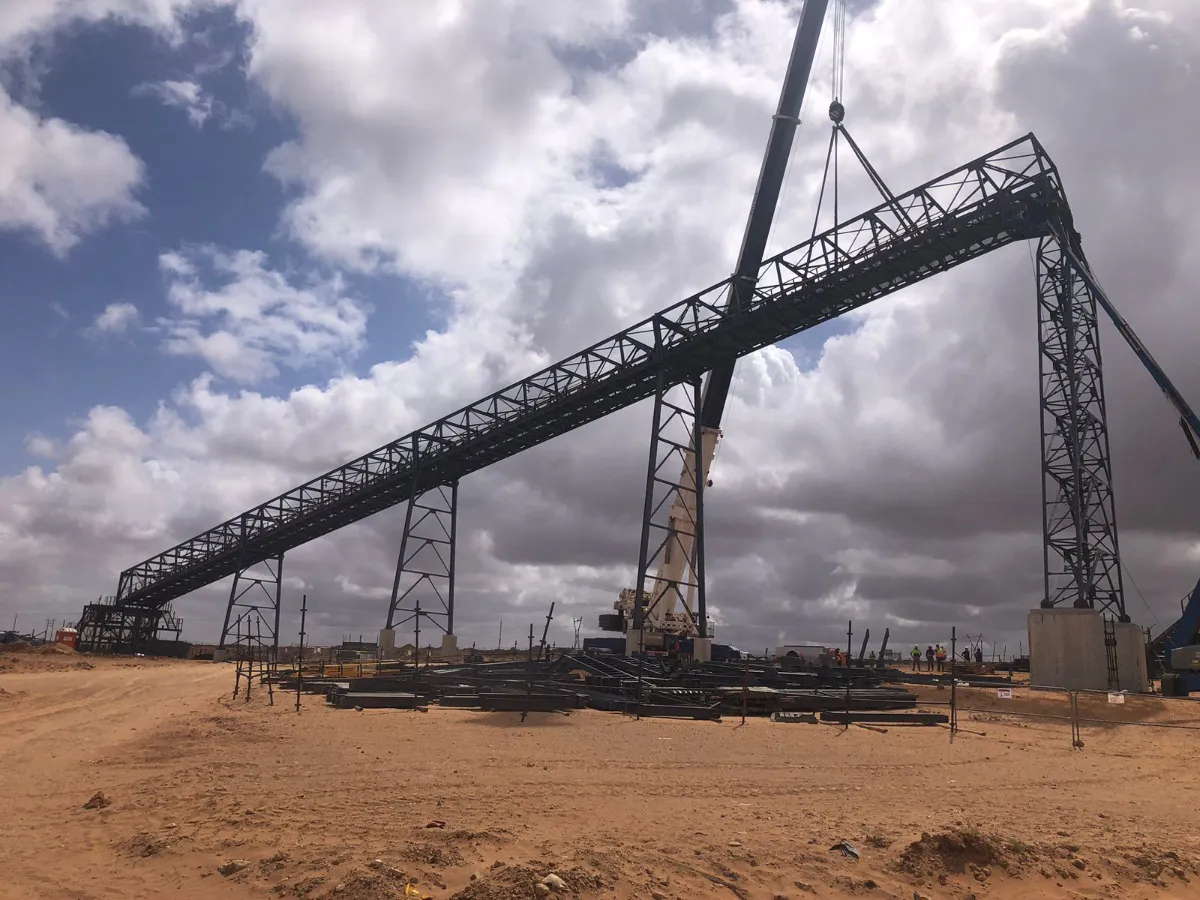
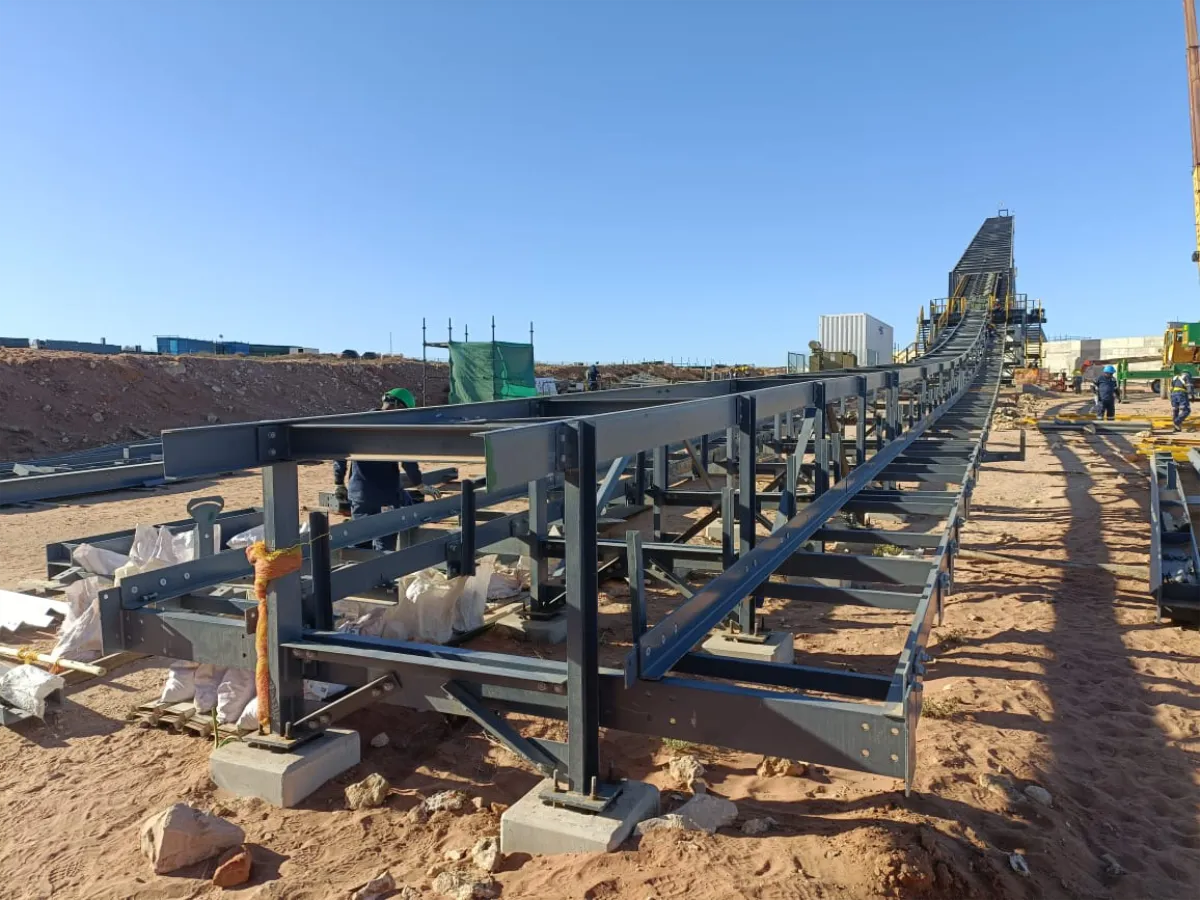
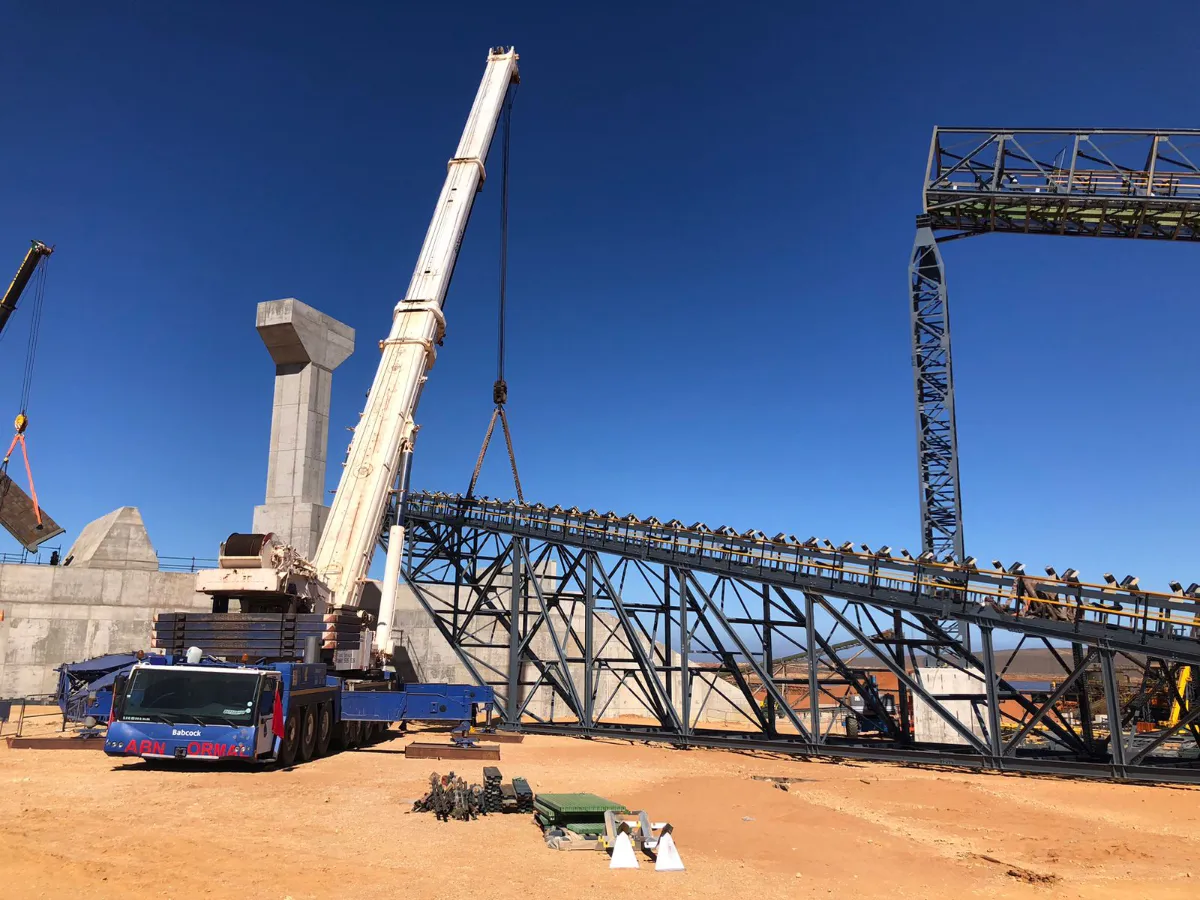
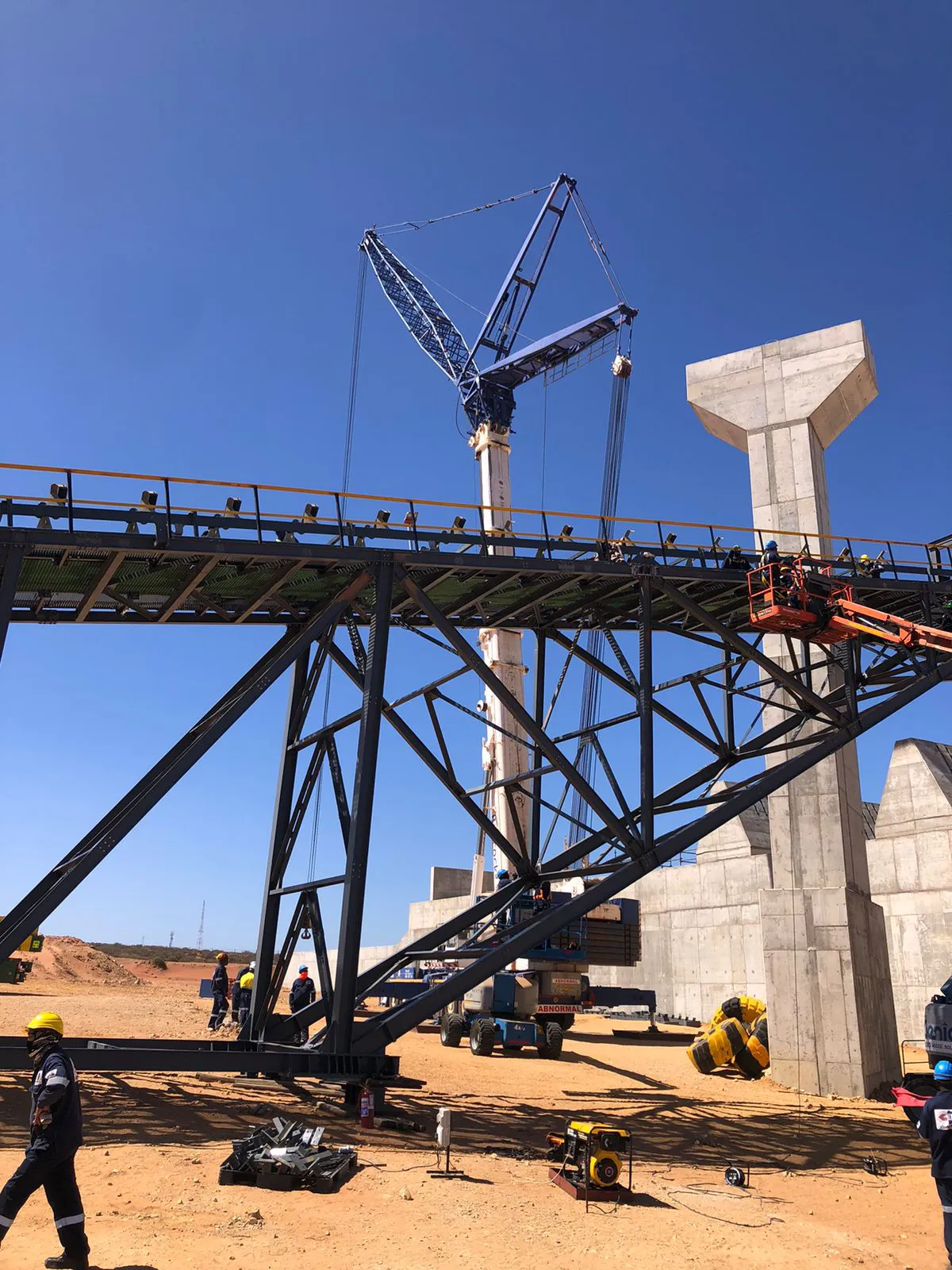
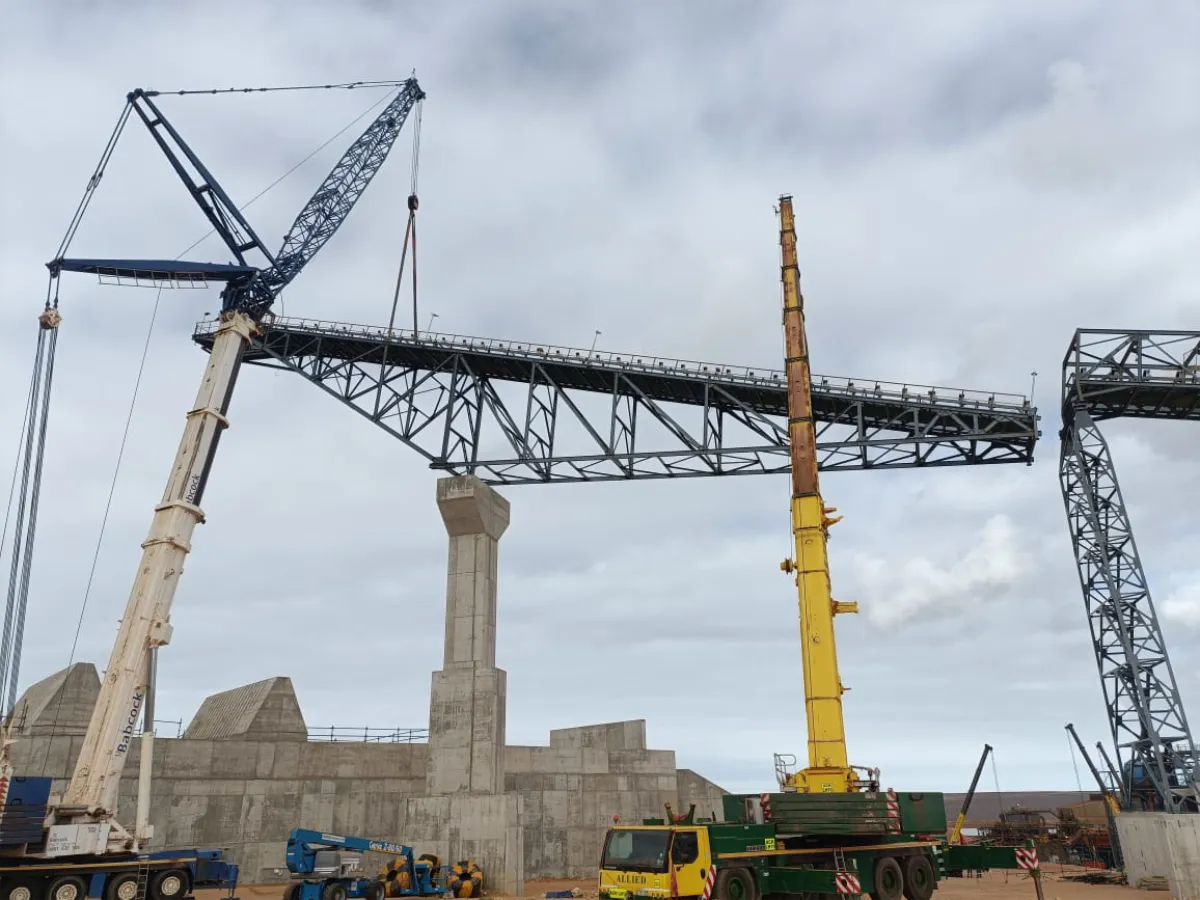
The conveyor starts with overland modules on the ground, as the height of the conveyor increases above ground level it changes to elevate sections and then becomes more economical to switch to 24m free spanning gantries supported on trestles. Once the conveyor extends over the stockpile its span increases to 35m and then cantilevers 24m to the centre of the stockpile. This portion of the gantry is an inverted box truss gantry that is supported on a concrete column that extends through the active stockpile to a concrete foundation below the stockpile.