Project Type

Project Overview

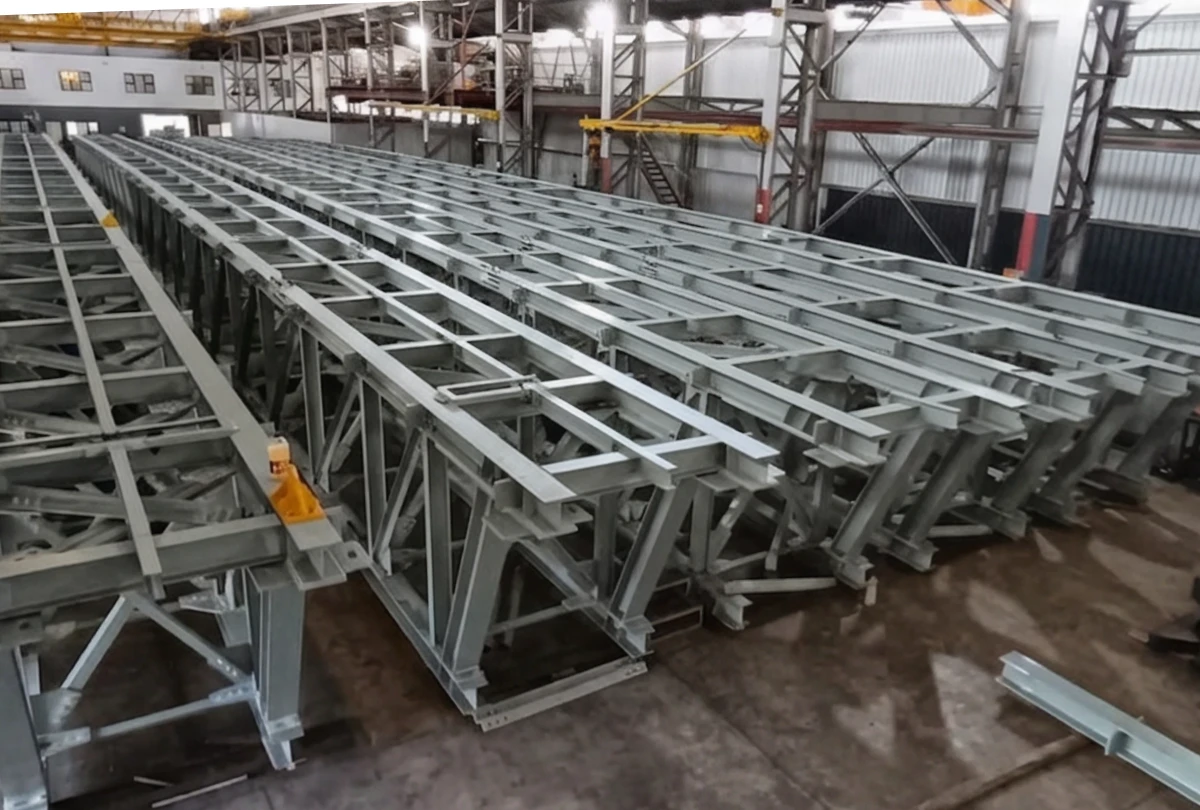
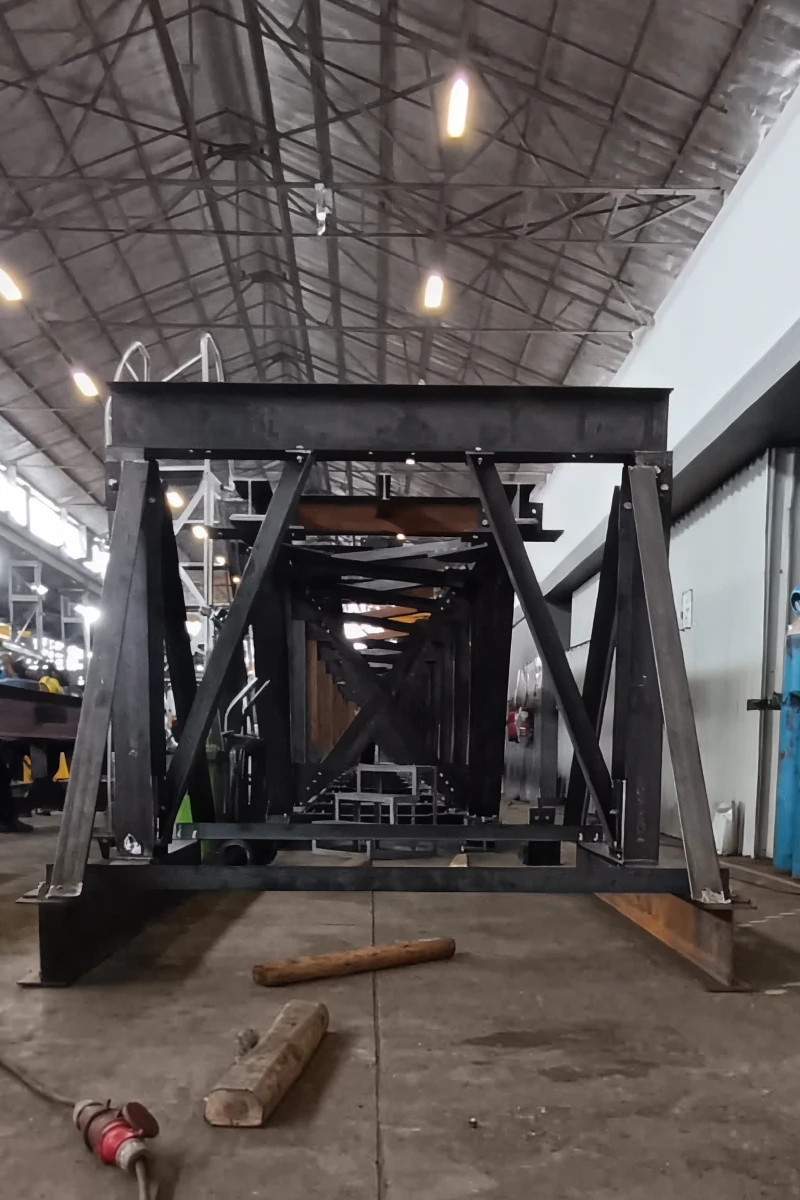
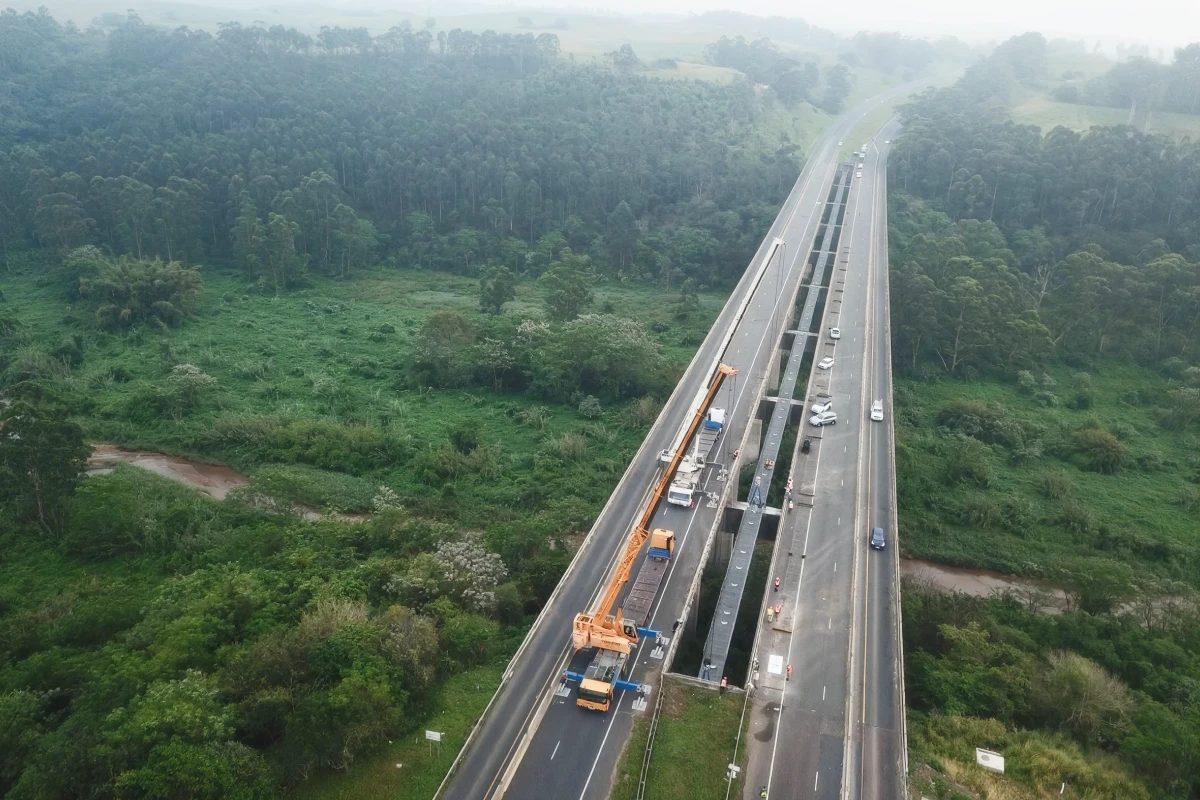
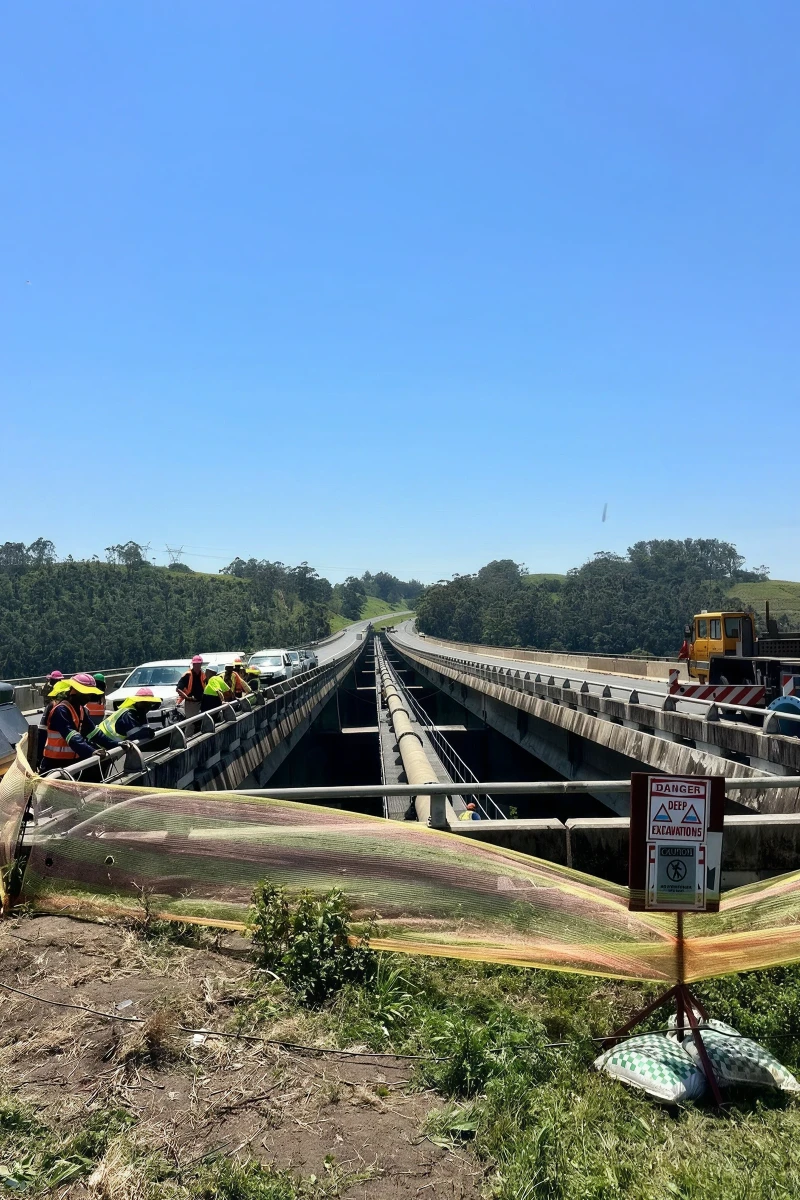
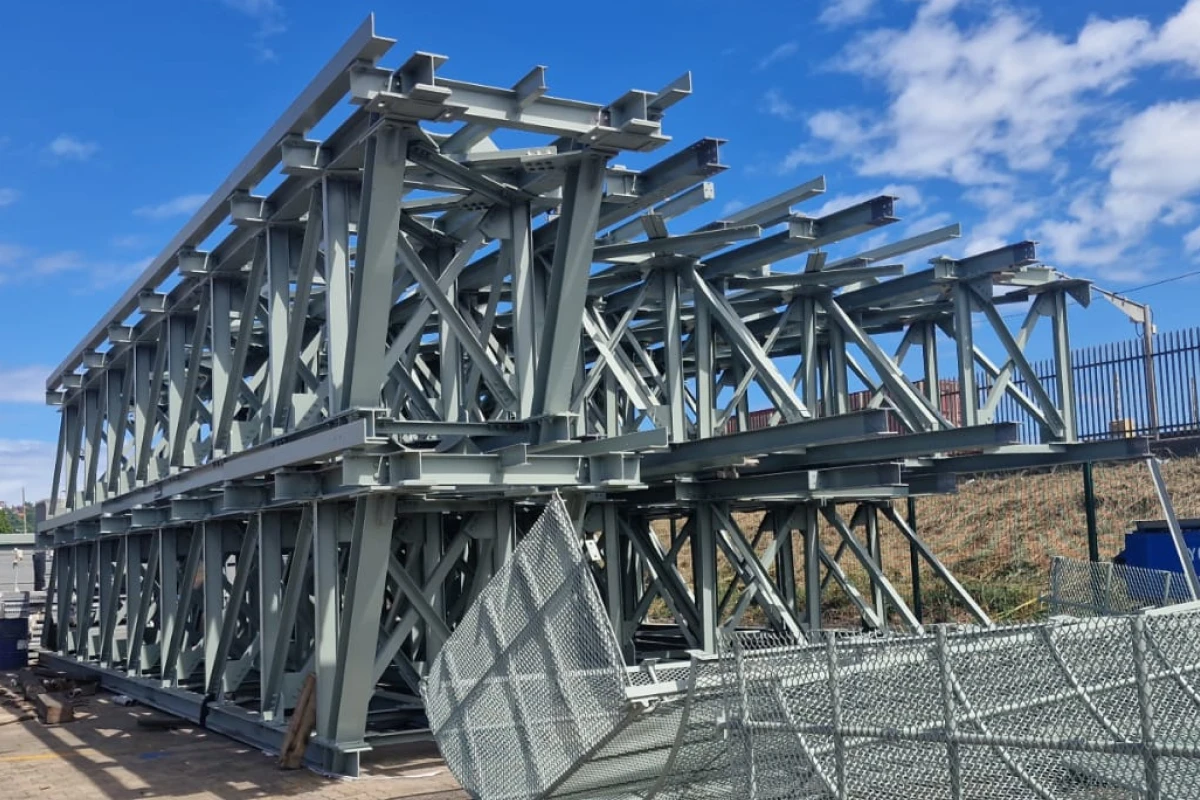
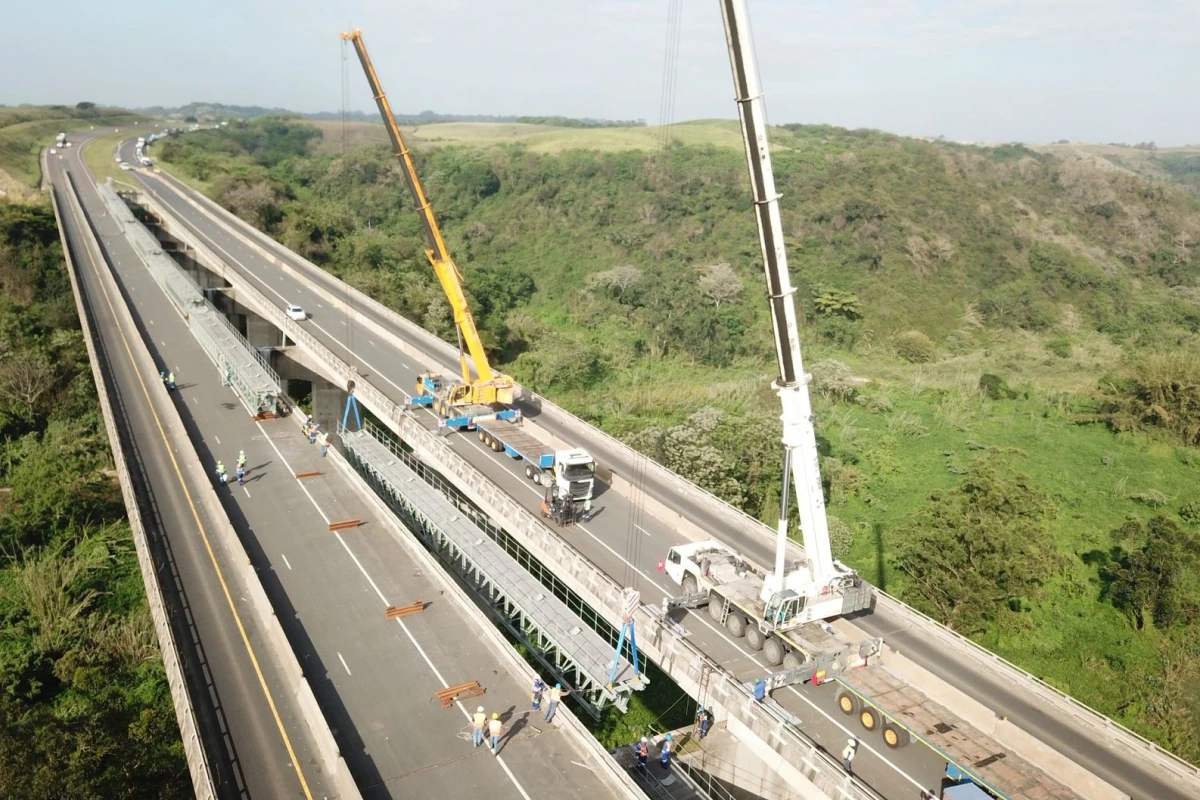
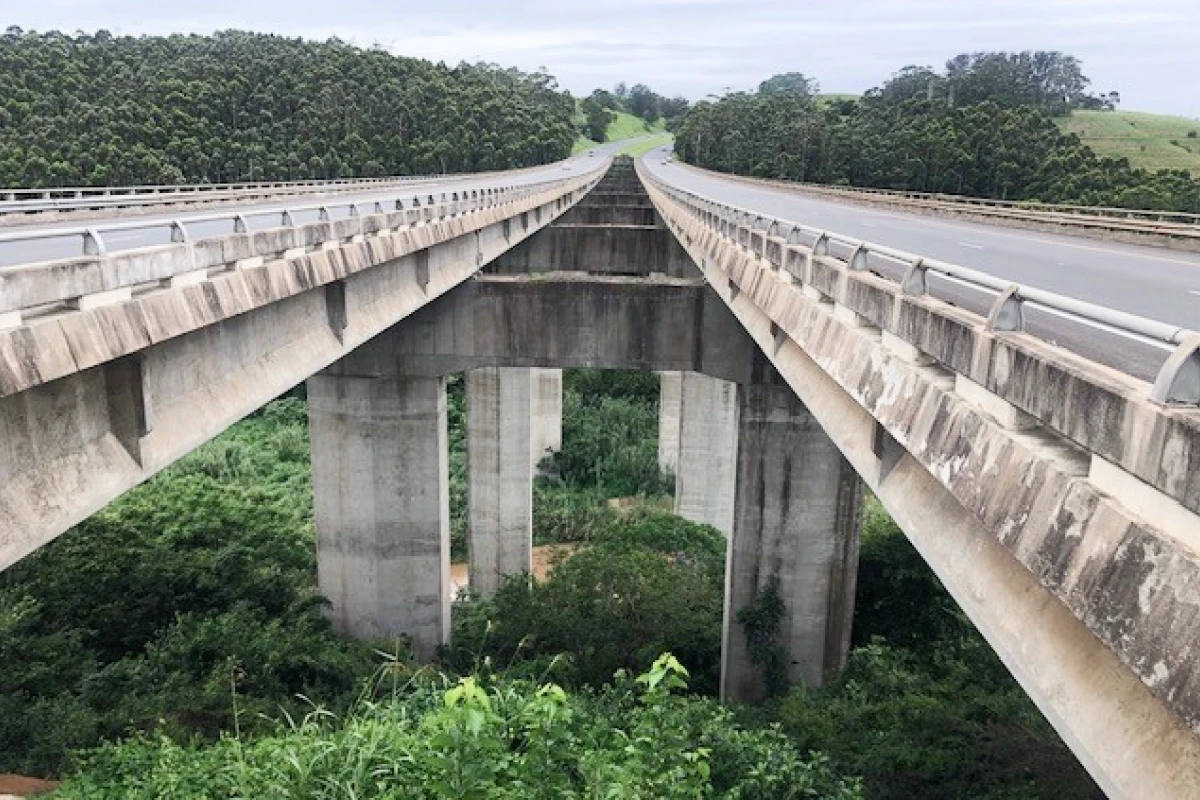
The Umzinto Pipe Bridge is a 490m structural steel pipe bridge on the N2 south of Durban, spanning the Umzinto River. A SANRAL initiative undertaken with Umgeni Water and local municipalities, the bridge carries a large-diameter (800mm) water pipe and other services to communities and towns on both sides, and is critical for growth along the KwaZulu-Natal south coast corridor. The structure comprises nine equal-length spans. Each span is built around a large box section that carries the predominant load from the water pipe on top of the bridge. Constructed from heavy universal sections and braced to limit the movement and deflection that could damage the pipe, the design lent itself to off-site trial assembly, delivery and rapid installation. The entire bridge was fabricated piece-small and fully bolted so that every component could fit inside the galvanising tank, then hot-dip galvanised and finished with three coats of epoxy paint for heavy coastal corrosion protection. The steel solution allowed the nine sections to be erected over a short on-site programme using a dual-crane lift, minimising disruption to the national road and the surrounding community.
Steel Profiles Used

  • Date of Steelwork Completion
    2026-02-01
  • Tonnage
    245
  • Hot Rolled Structural Sections
    IPE Sections, Equal Angles, H-columns
  • Grating Hand Railing and Expanded Metal
    Hand Railings, Anti-vandal Cages, Access Cages, Cat Ladders

Project Details

Fabrication was carried out entirely in the Cousins Steel International workshop. The design featured a high degree of repetition: of the nine spans, all but the two end sections were effectively identical, which streamlined production. The Tekla/Trimble model was completed by the in-house team for approval by the project engineer, helping the team anticipate fabrication and connection challenges early. The whole bridge was detailed piece-small and fully bolted so that every component could fit inside the galvanising tank. After hot-dip galvanising, the steel received three coats of epoxy paint, with finished film thicknesses of 450 to 600 microns. One galvanising consideration was the thin 5mm webs of the IPE sections, which drew around 75 microns of zinc against roughly 120 microns on the heavier flanges, requiring careful checking before painting. Each span was trial-assembled in the shop, set with a 150mm camber at mid-span, and trial-lifted using a dual-crane arrangement to confirm there was no deflection. All bolts were torqued in the workshop; when the sections were broken down for transport, new friction-grip bolts were installed on the splices on site. Strict quality control was applied throughout.
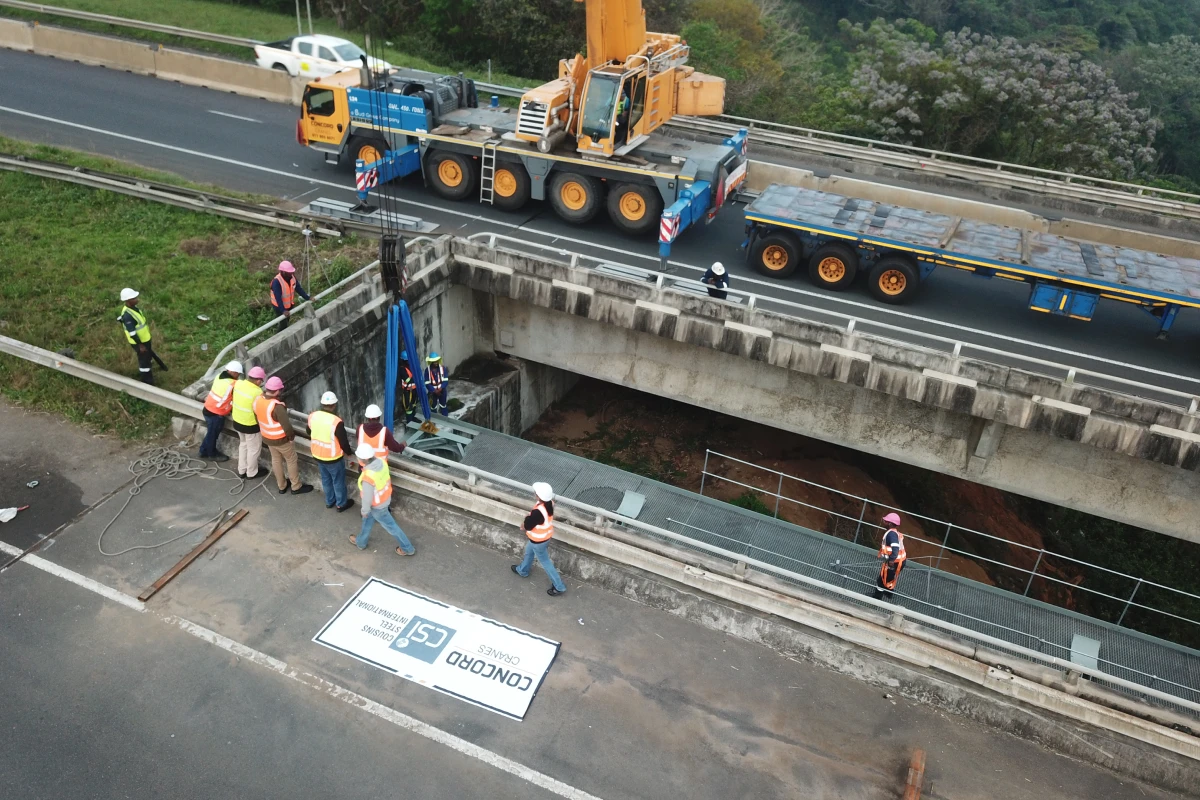
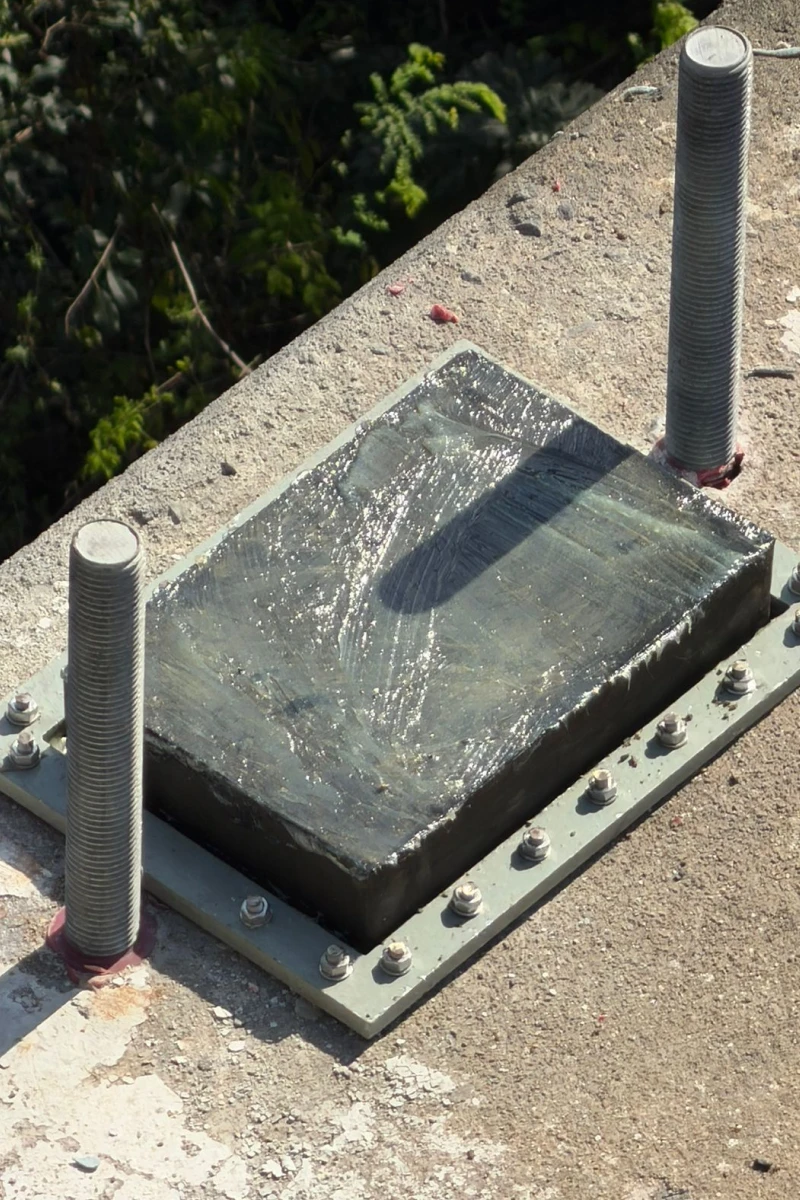
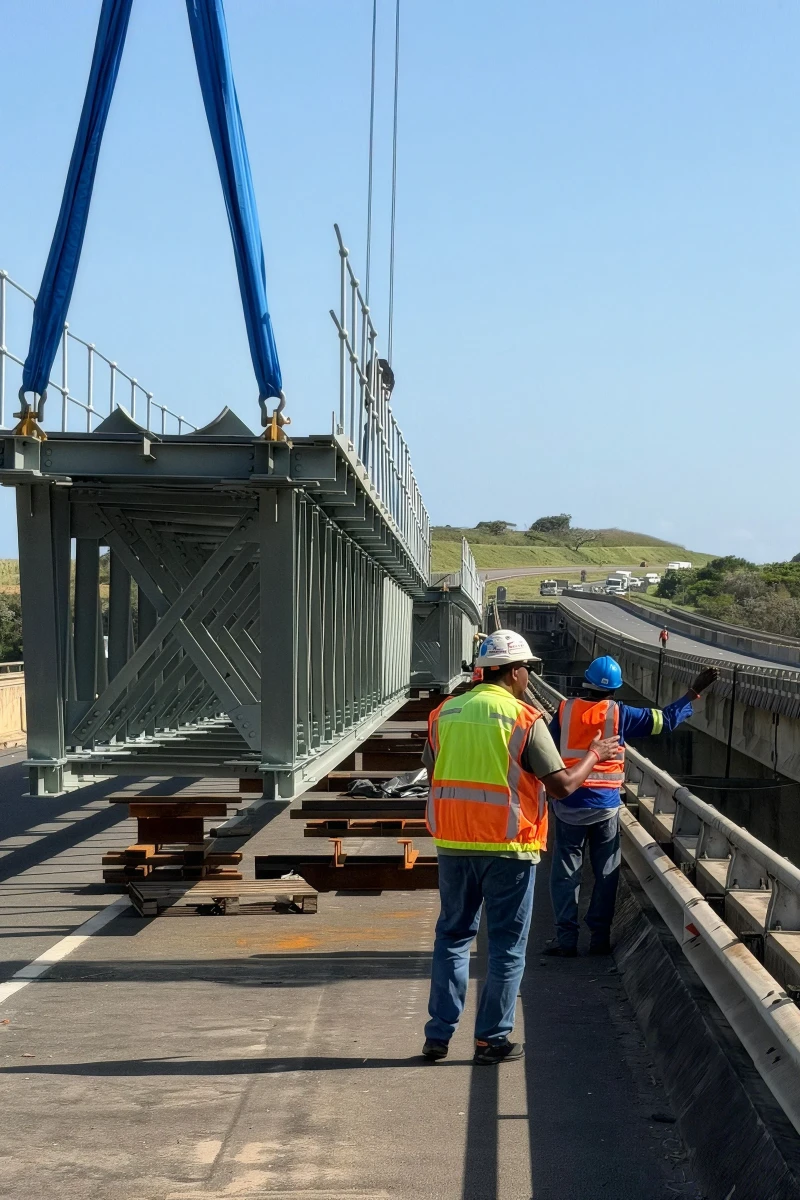
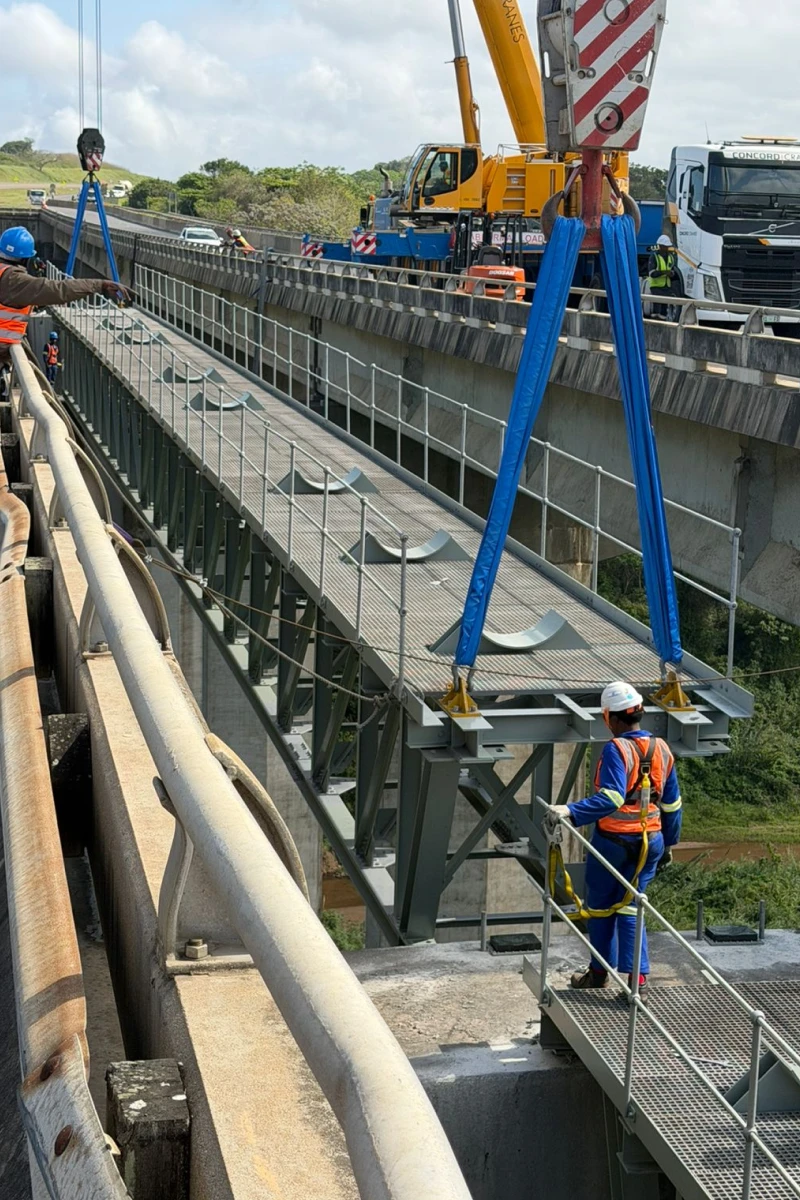
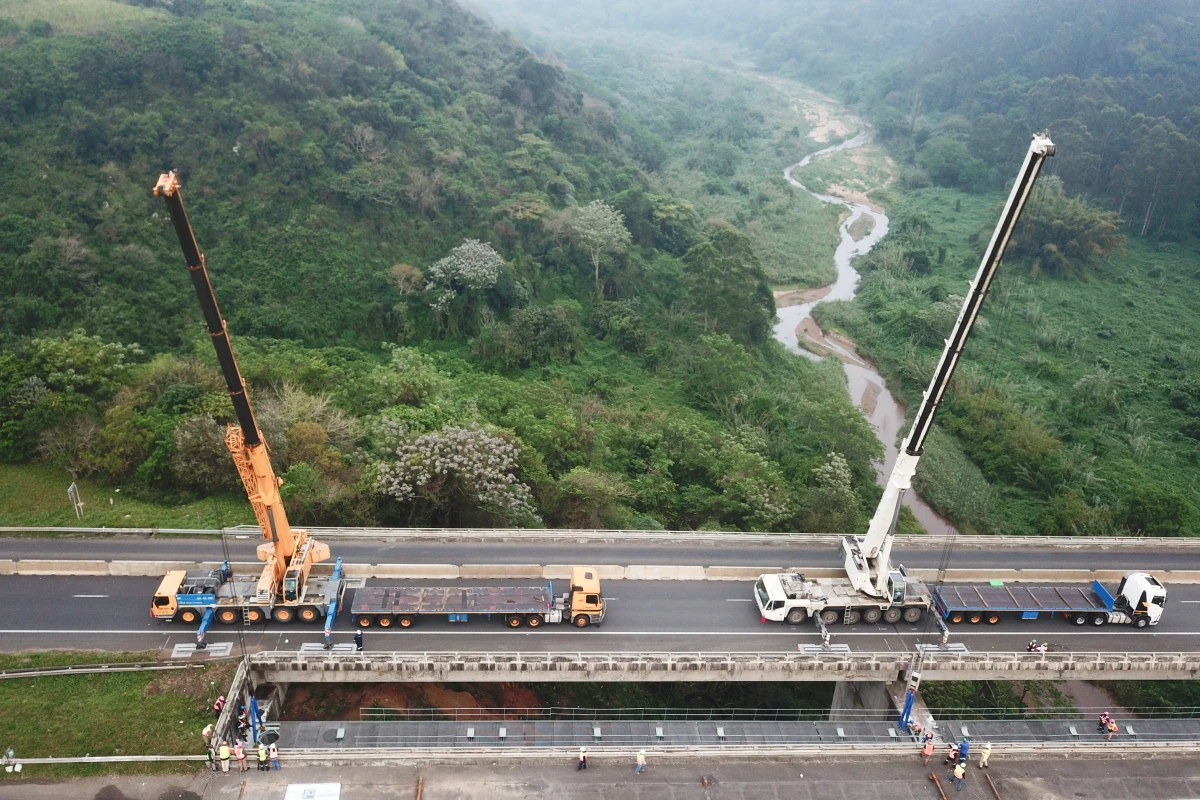
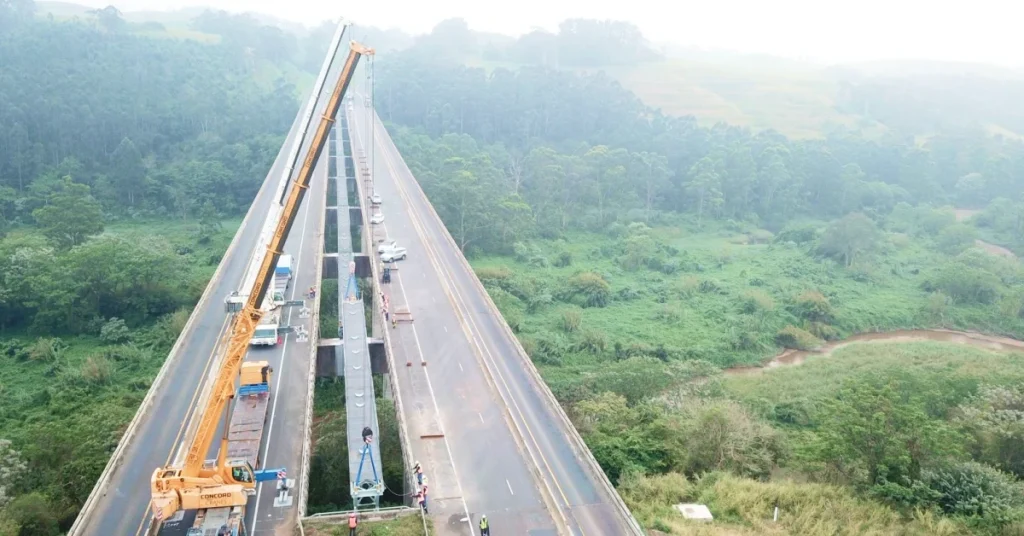
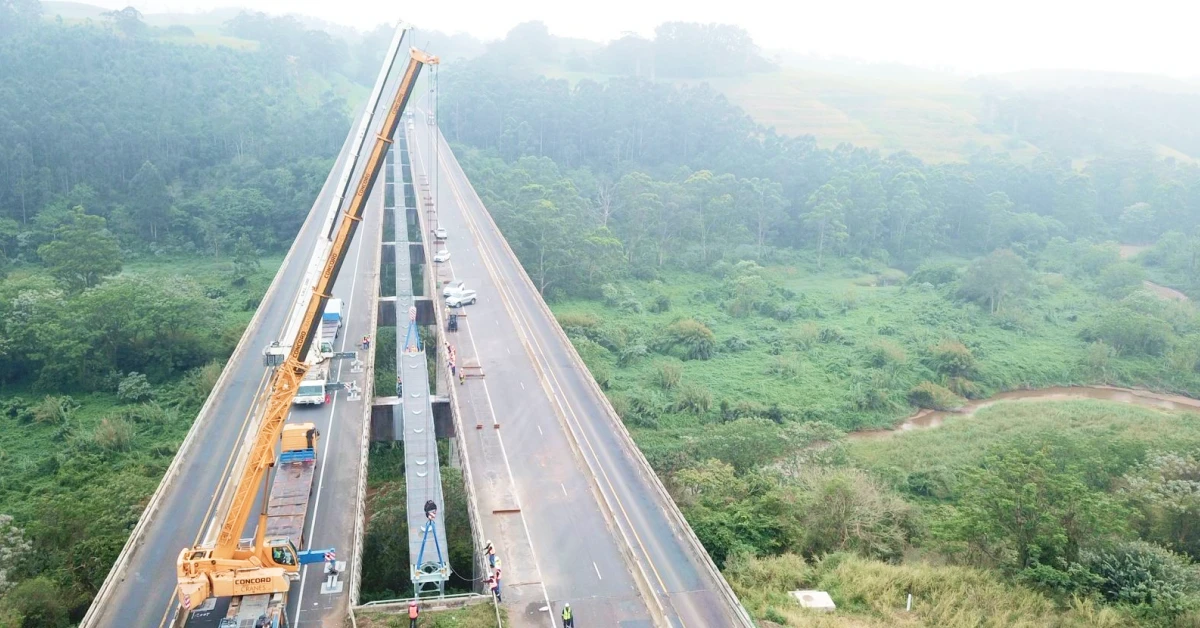
Erection was a dual-crane operation using two 350-tonne cranes, lifting each span from its ends into position. Rigging was coordinated by the Cousins Steel site and projects team with RS Rigging Services and Concord Cranes. Because the work was over a live national road, the in-house engineering team checked the existing bridge to establish safety factors and crane positions before any loading, and a full-time consulting engineer verified crane positions before every lift. Special 25mm outrigger mats, roughly 1.5m square, were made to spread the crane loads. Each span weighed about 35 tonnes and was lifted within 15 to 20 minute road closures; on the best day three spans were placed in a single day, and the bridges were erected in less time than allowed. Set-out of the M30 holding-down bolts, four per abutment, was surveyed and proved exceptionally accurate, with the cranes dropping the girders straight onto the bolts. The final abutment opening was found to be about 300mm wider than the others, so an extension plate was prepared to suit. The seaside traffic lane stayed open throughout, and anti-vandal cages were fitted to the bridge ends.
The single greatest challenge was not technical but logistical: storing the nine completed spans between fabrication and erection. SANRAL approvals for road closures took far longer than expected, delaying erection by roughly a full year from the point the bridges were complete, with the available windows further constrained by school-holiday restrictions on the national road. The completed sections were therefore stored off site for several months, then power-washed and given their final coat of paint only once released to site. On the corrosion-protection side, the wide variation in coating thickness between the heavy flanges and the thin 5mm IPE webs had to be carefully measured and managed during painting. During set-out, the final abutment opening was found to be around 300mm wider than the rest, which was solved by fabricating a bespoke extension plate to hold the bridge on that abutment. Working over a busy national road also demanded close coordination with the traffic authorities; the local traffic police assisted well, road closures were kept to 15 to 20 minutes per lift, and a consulting engineer confirmed crane positions before each lift so the existing bridge was never overloaded.

Benefits of Steel in this Application

The benefit of structural steel on this project is best demonstrated by how efficient and non-disruptive the installation was. With the bridge crossing a busy national road, any alternative such as in-situ concrete would have created significant, prolonged disruption to the N2 and the wider KwaZulu-Natal south coast road network. Steel allowed the nine spans to be fabricated, trial-assembled and load-tested off site in controlled workshop conditions, so that on-site activity was reduced to a handful of days of crane lifts rather than months of civil works. The project team noted that no other form of construction could realistically have achieved this outcome on such a constrained site. The solution carries further advantages: minimal environmental impact, material optimised for design, fabrication and installation, and a fully galvanised and painted finish engineered for the coastal environment that will last for years with little intervention. Long-term maintenance was also designed in, with access cages and cat ladders provided throughout the bridge to allow safe access to the water pipe and services.

Testimonials

The Cousins Steel team is extremely proud to have been a major roleplayer in what can only be described as a highly successful structural steel bridge project. It was a new challenge for the team as a whole, and they performed exceptionally well from the first drawing to the final bolt, delivering an extremely happy client, a grateful main contractor and no unhappy motorists. Reflecting on the erection, Gordon McNeill rated the project among the best of his career, noting it was the smoothest he has ever seen a structure fit onto its holding-down bolts: where almost every job needs a base plate tapped into position, here the cranes dropped the girders straight onto the bolts with no problem. From the detailing side, Tim described it as a great experience, citing the interesting staggered-splice connections and an excellent set of drawings and a strong project team that made for smooth running.