
Project Type
Project Team Interview Case Study
Location
Steel Profiles Used
  • Date of Steelwork Completion
    2025-03-10
  • Tonnage
    1600
  • Hot Rolled Structural Sections
    Universal Beams (I Sections), IPE Sections, Universal Columns (H Sections), Tapered Flange Channels, Equal Angles, Unequal Angles
  • Plates
    High Strength and Special Structural Plates
Metal Cladding and Roofing Overview
  • Date of Cladding Completion
    2025-04-30
  • Material Used
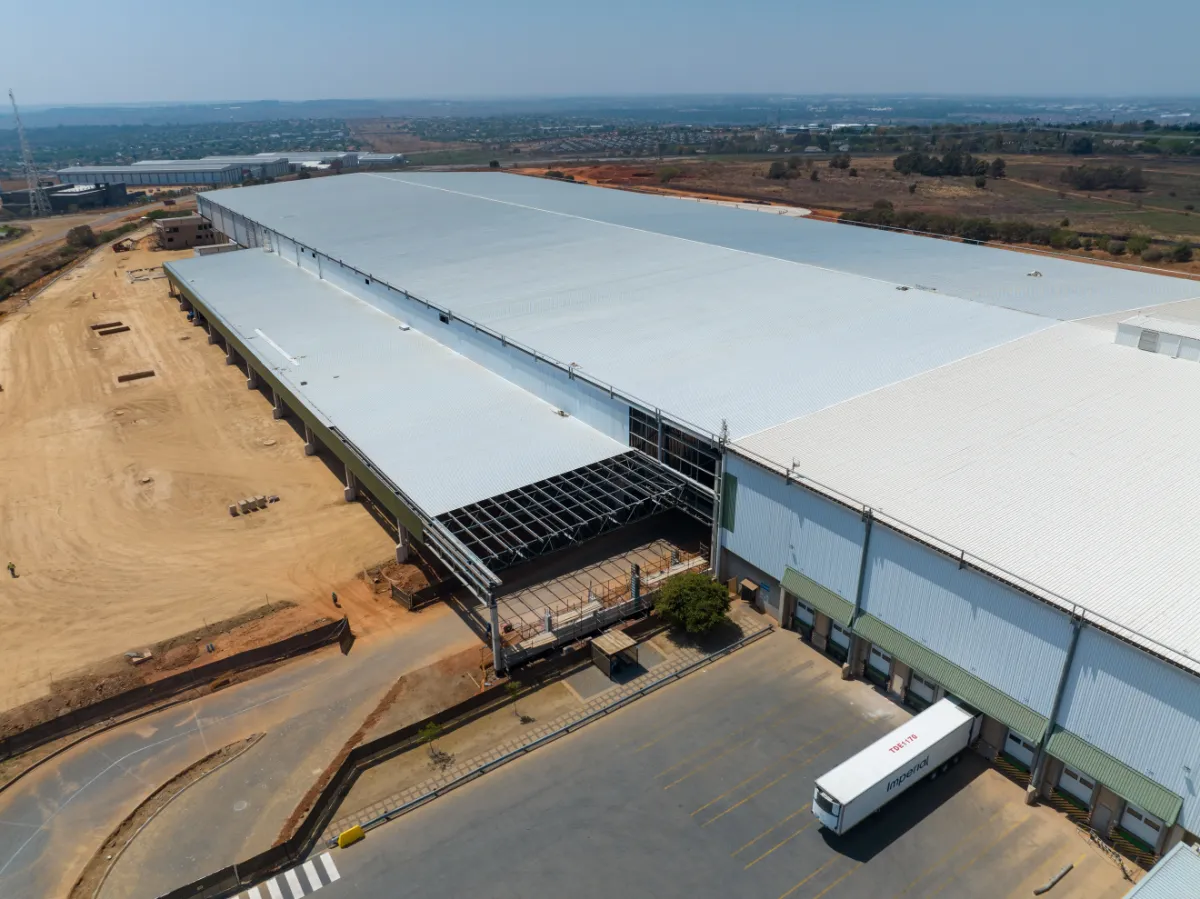
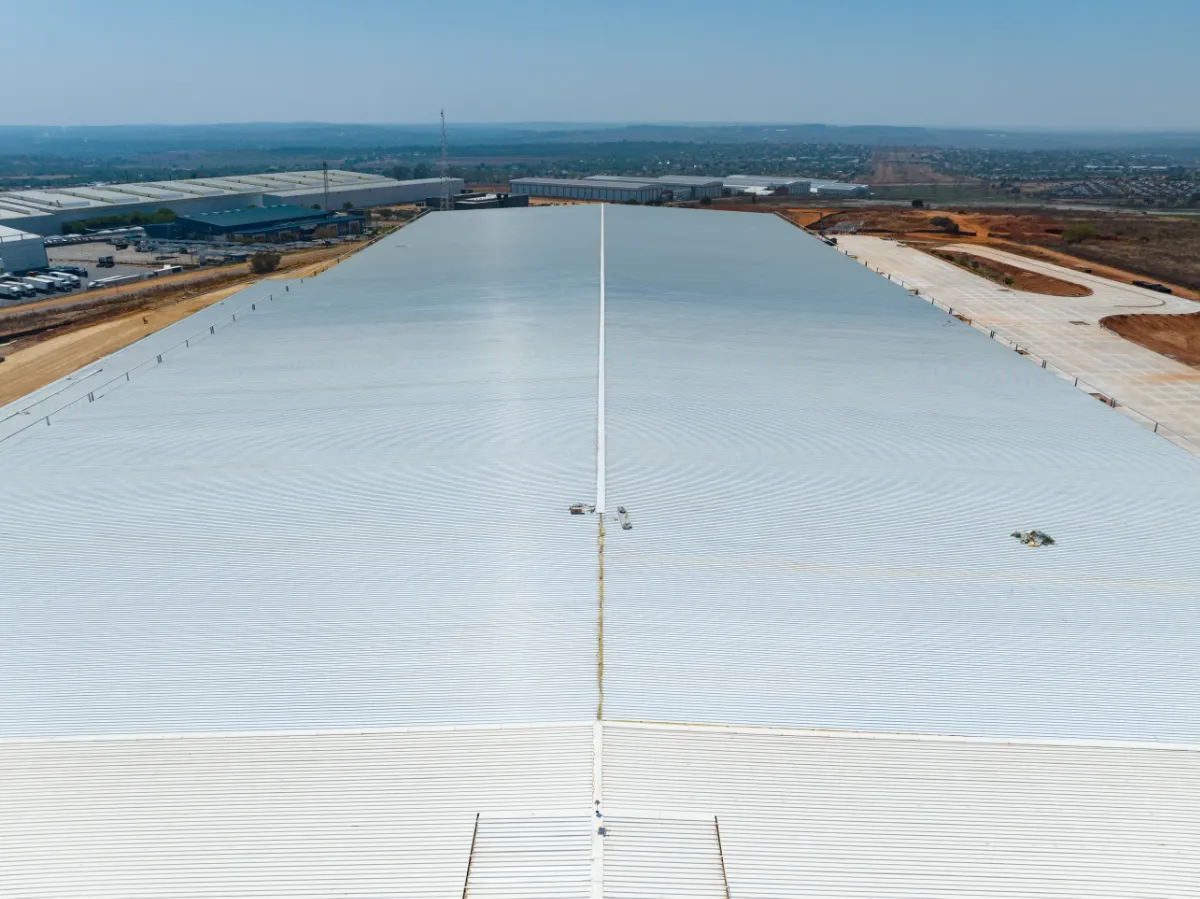
    Roof - 0.53mm thick Safal® AZ150 Colorplus® Klip-Tite™, Sides - 0.47mm thick Safal® AZ150 Colorplus® IBR 686
  • Cladding Tonnage
    449
  • Cladding Area Coverage (m2)
    12368
Project Overview

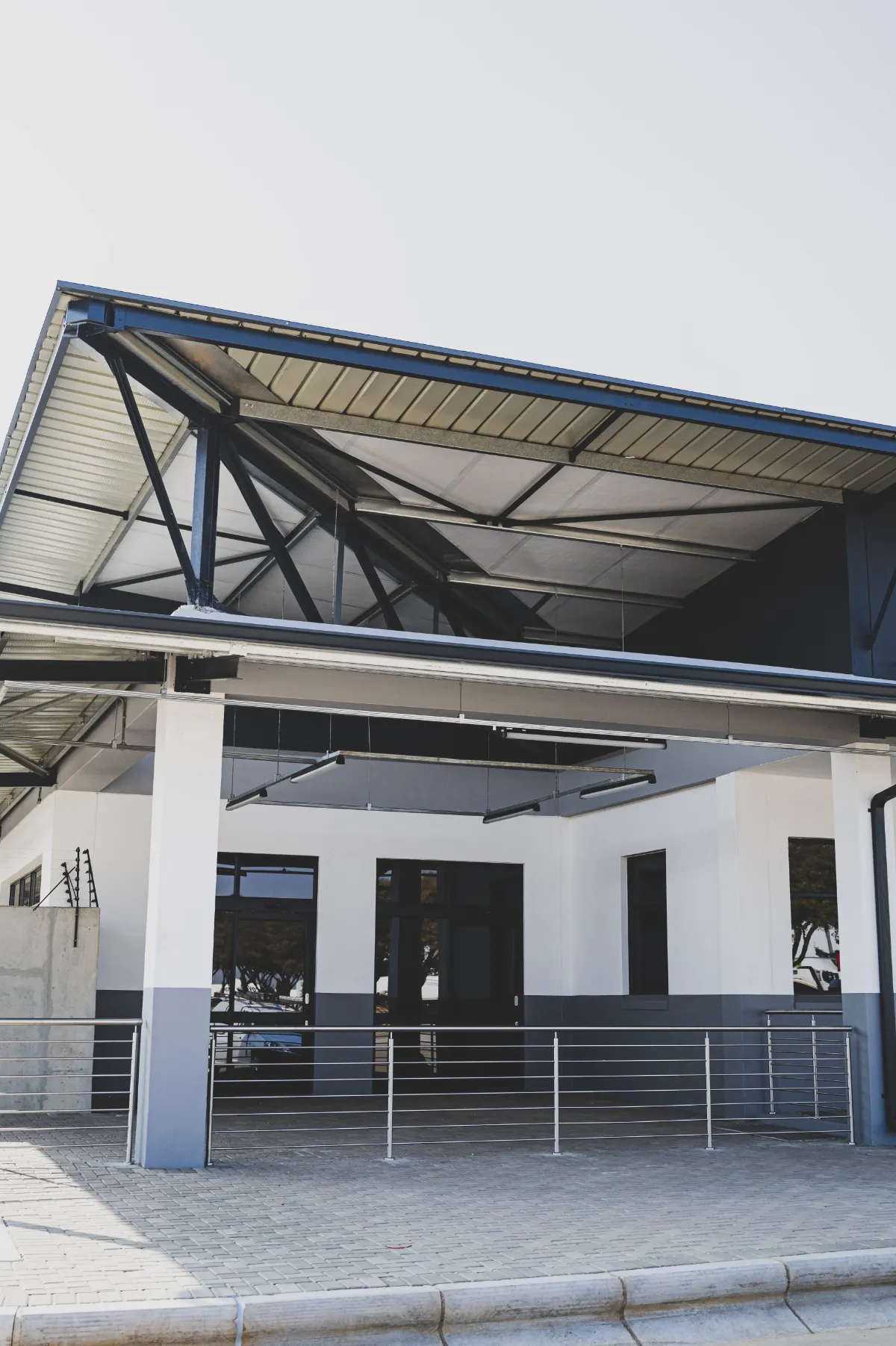
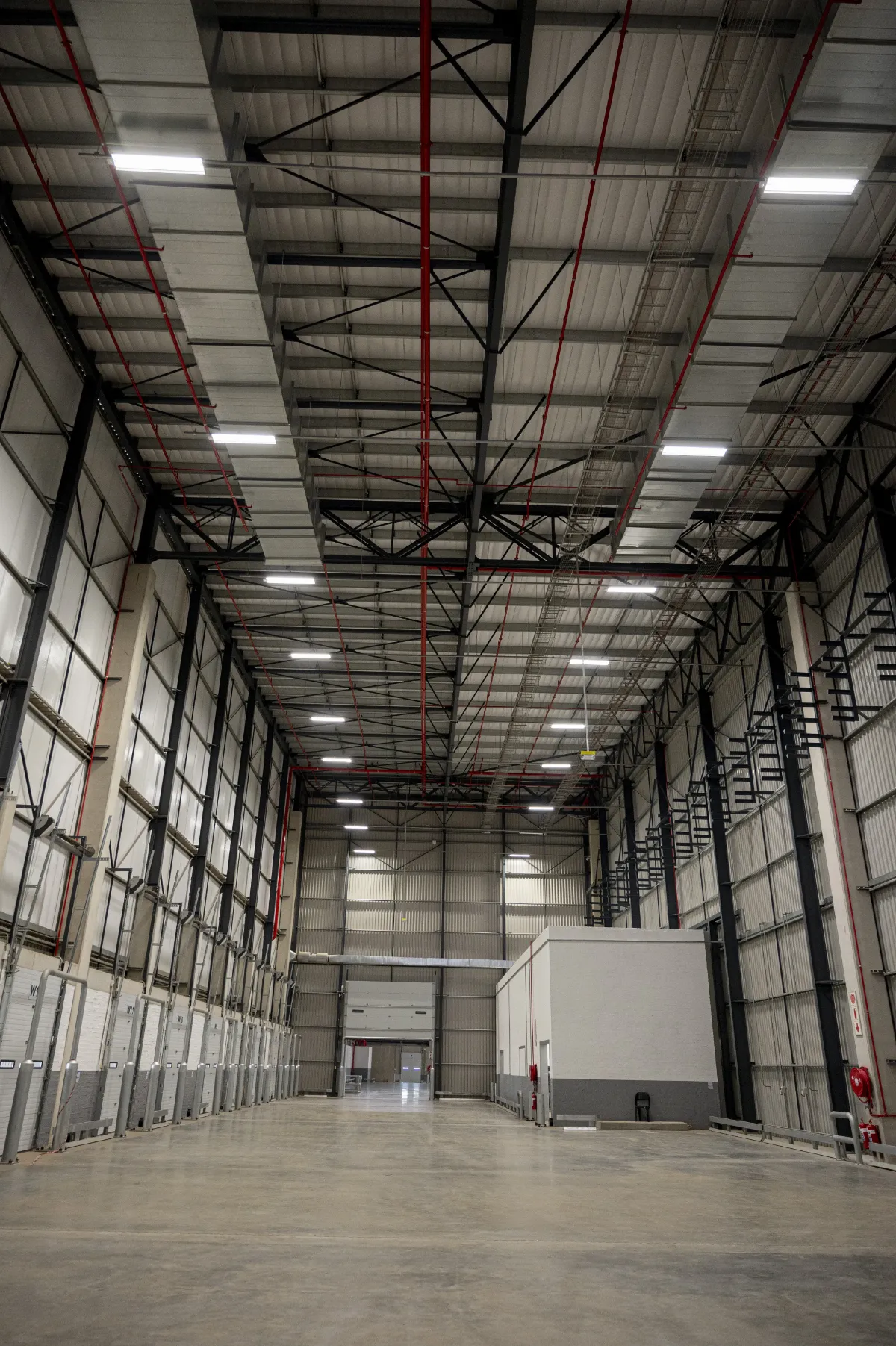
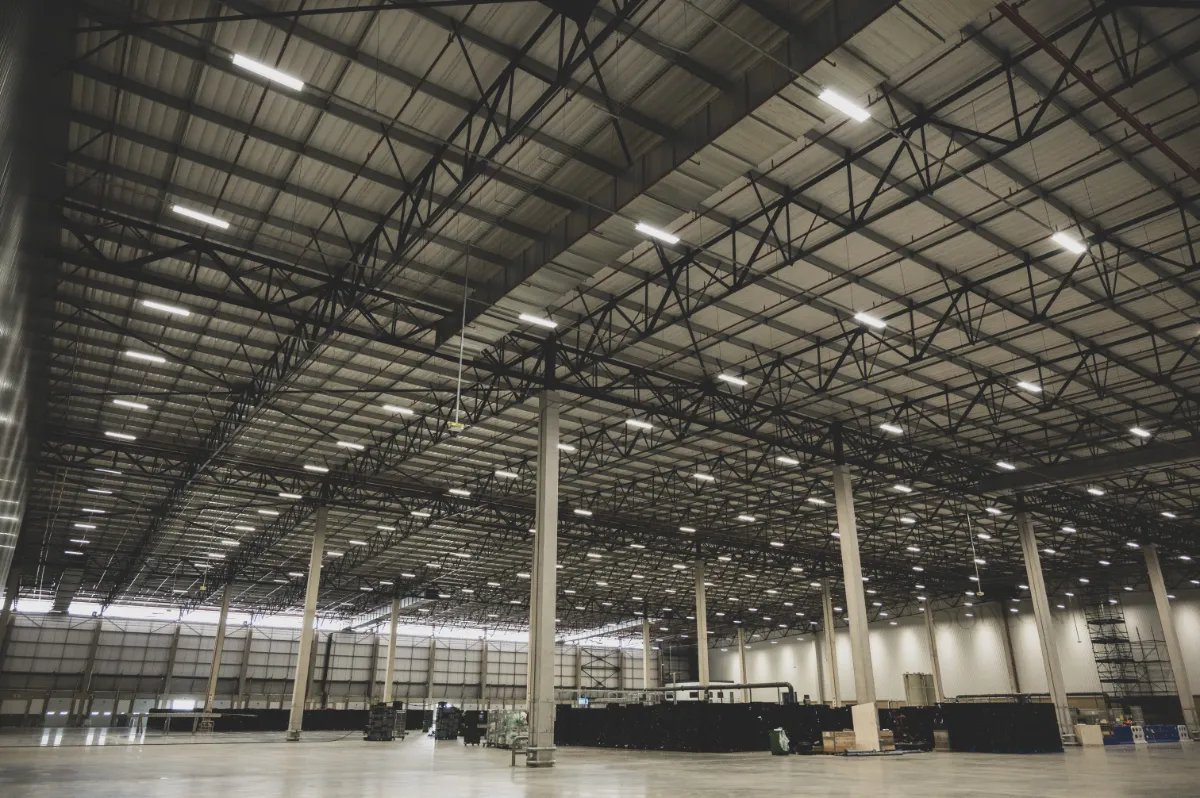
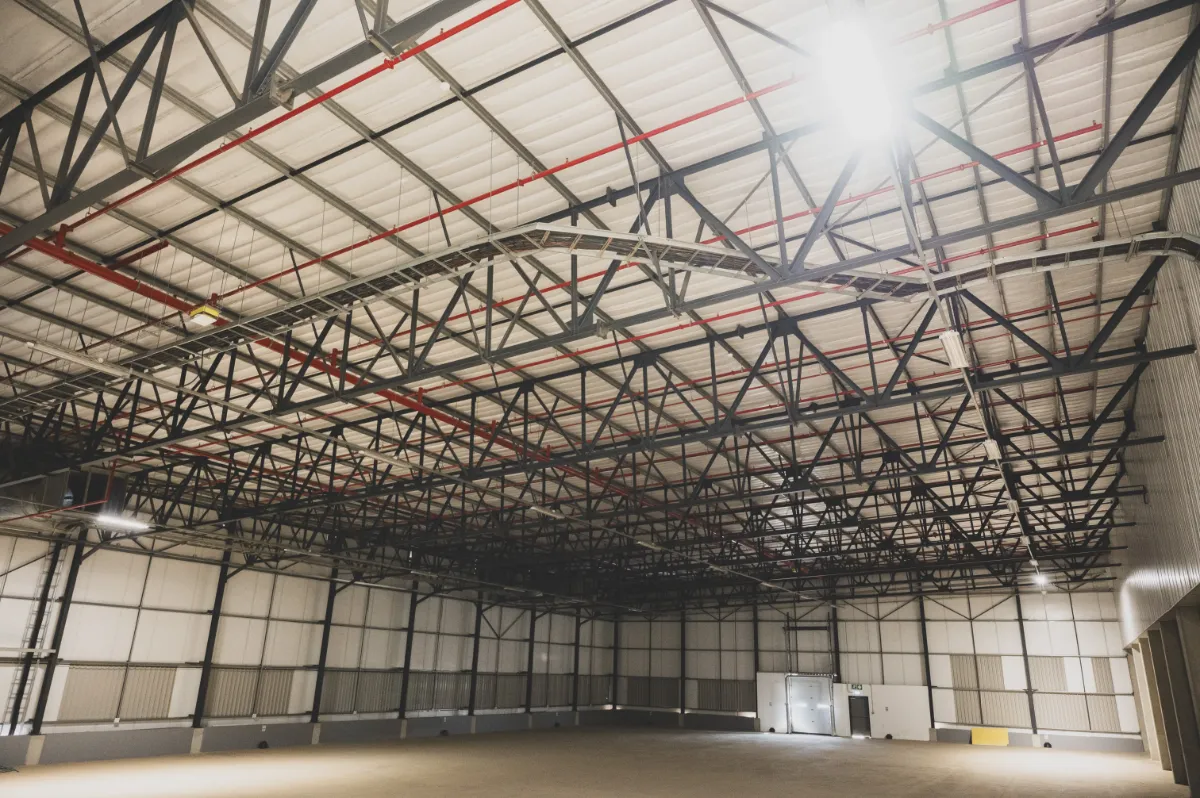
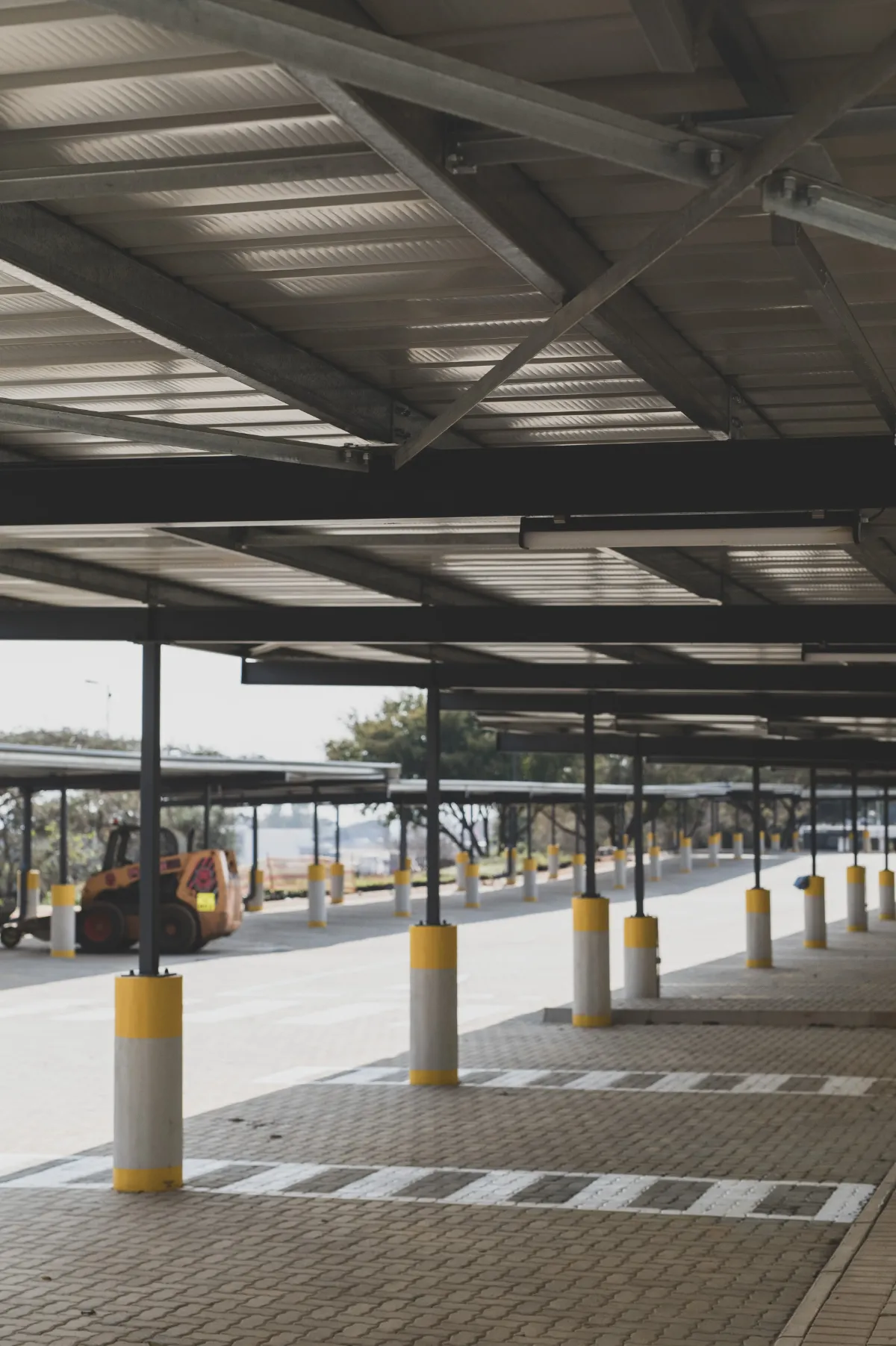
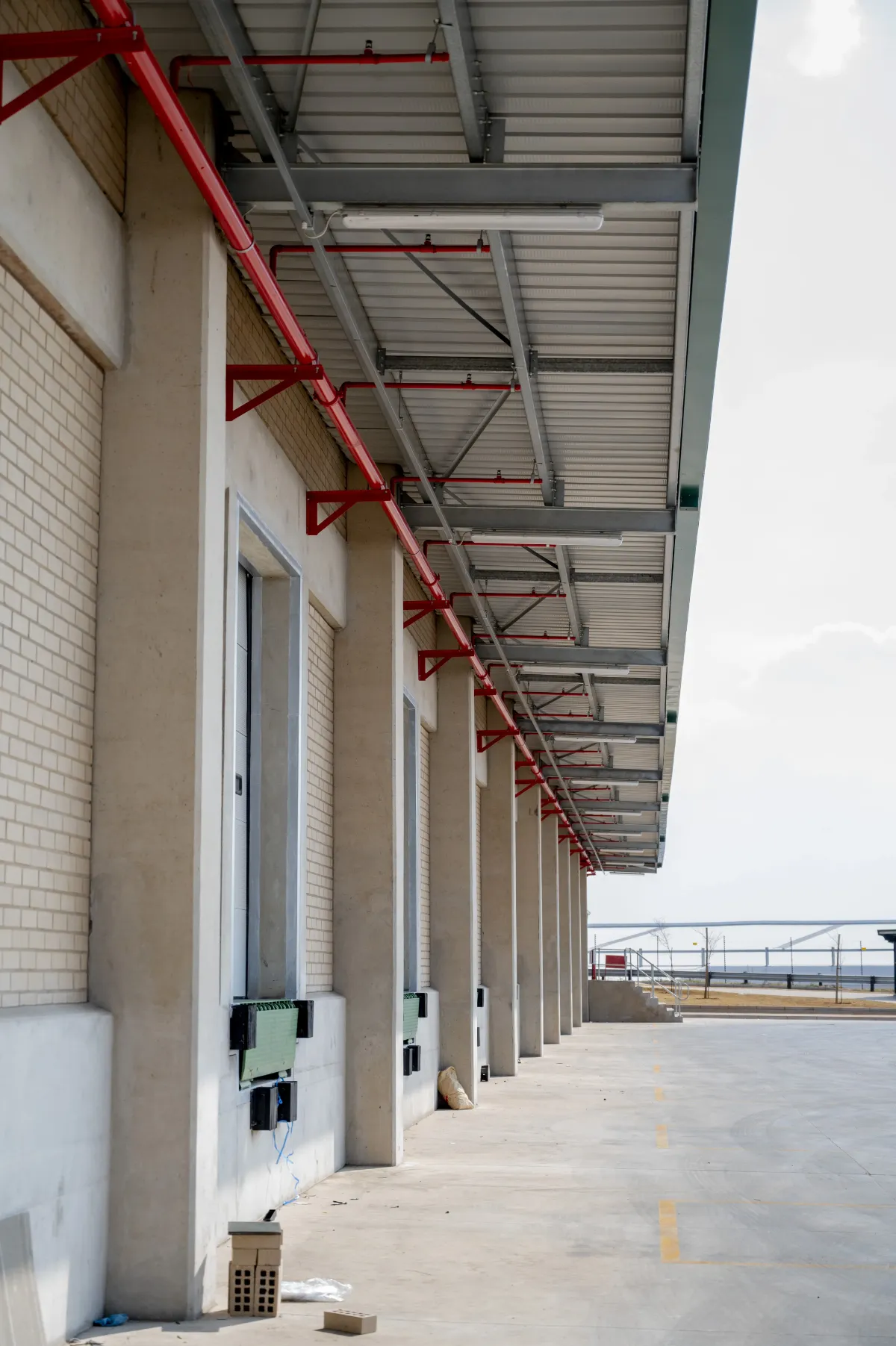
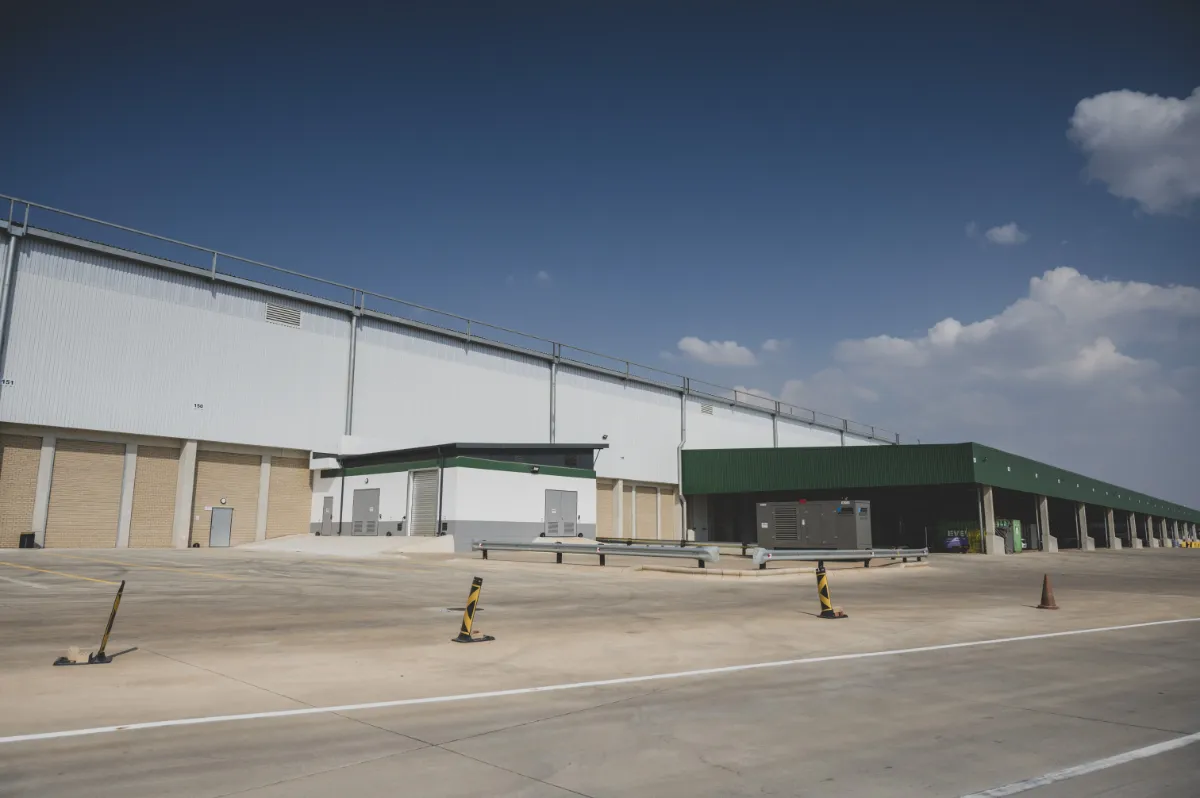
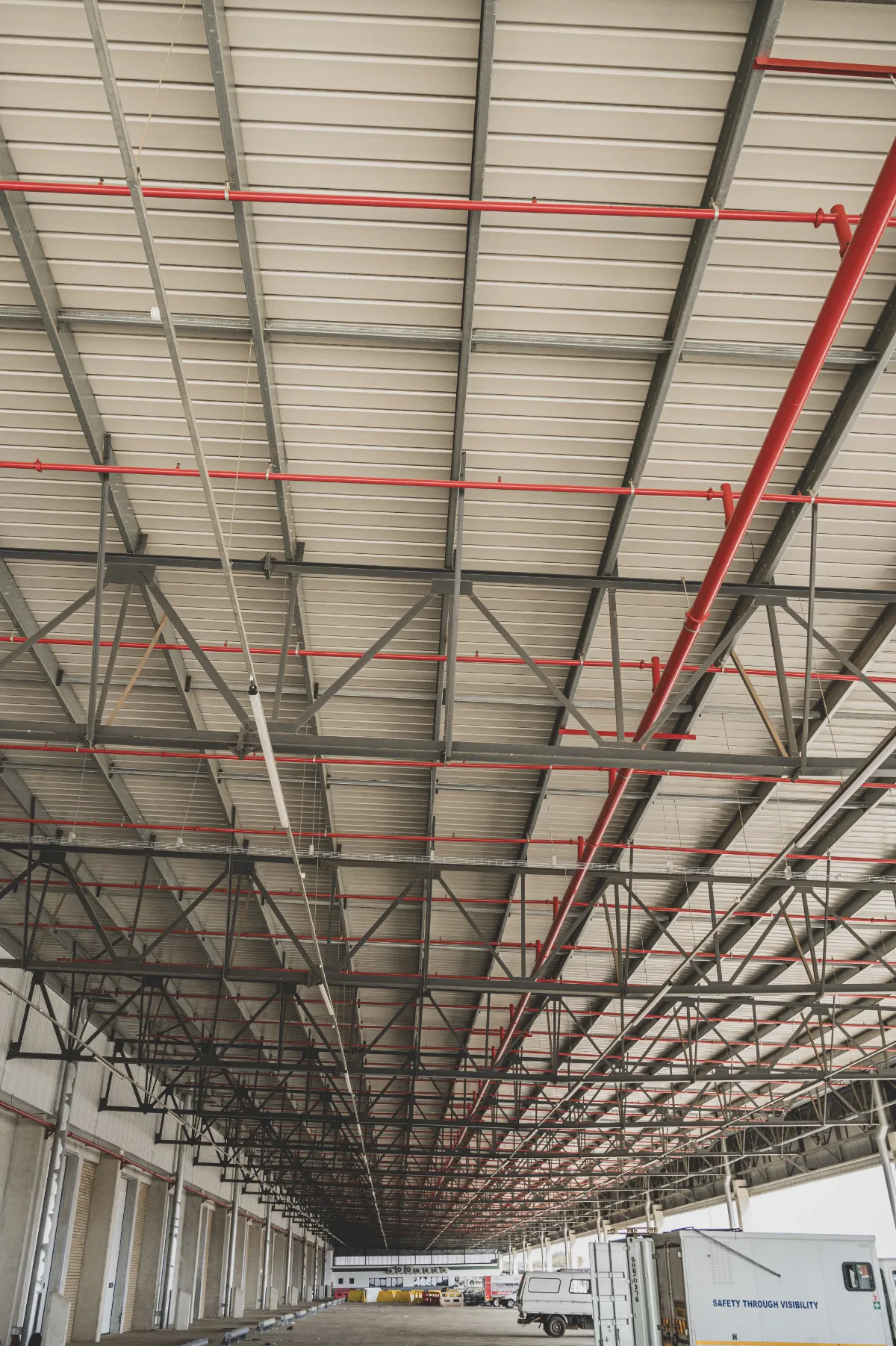
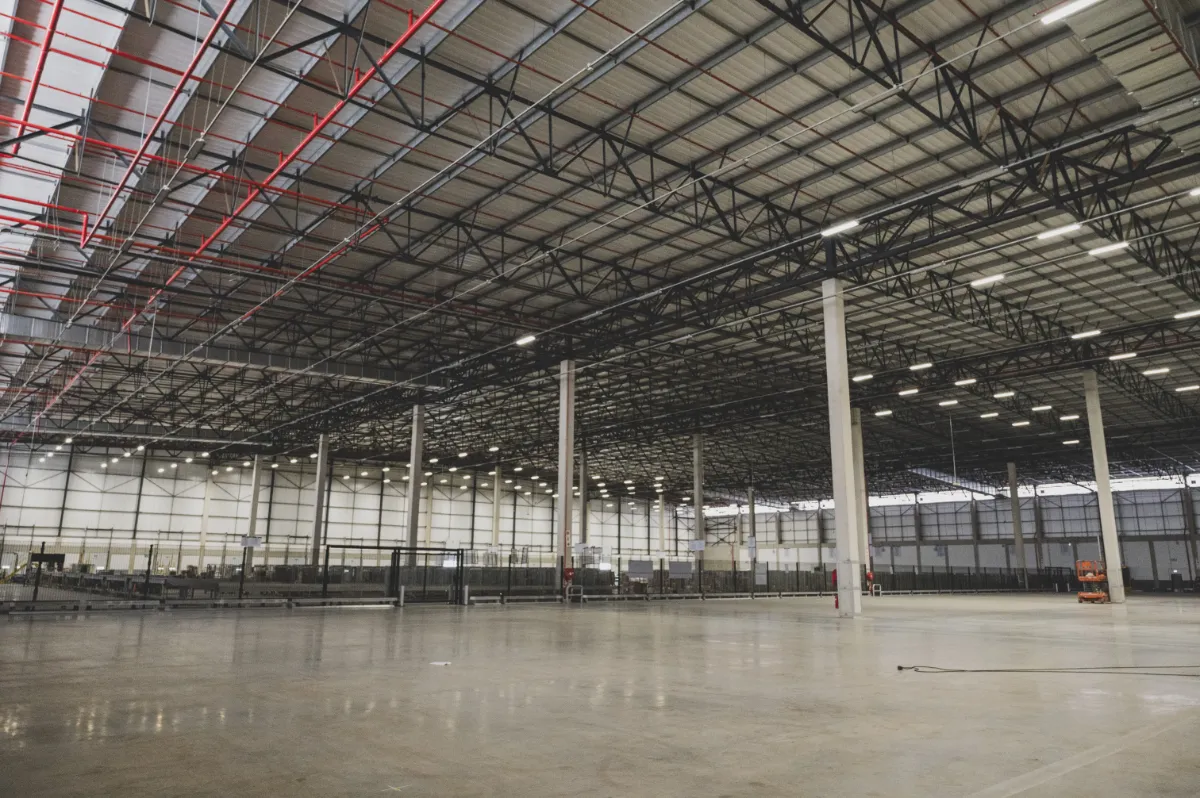
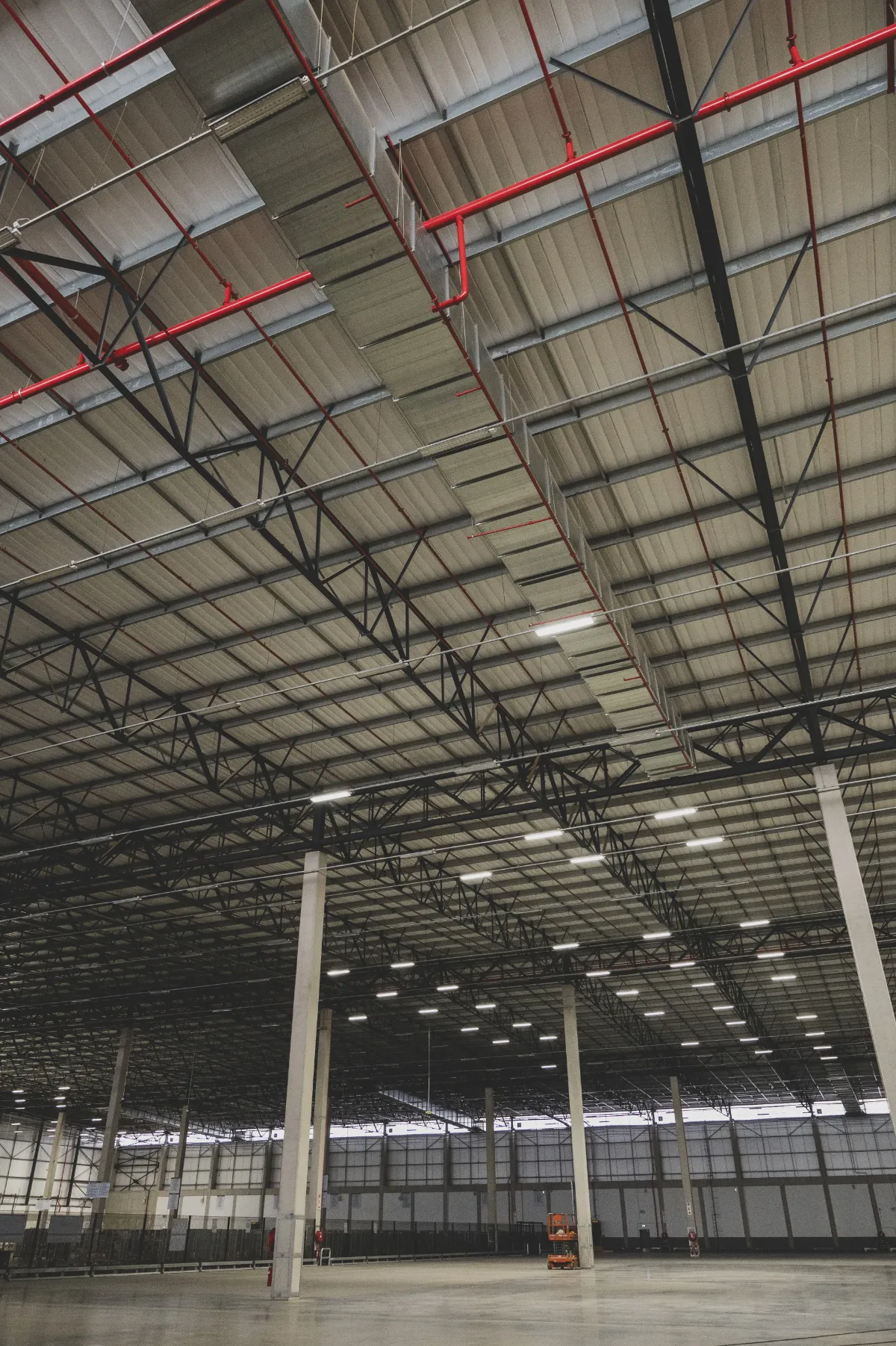
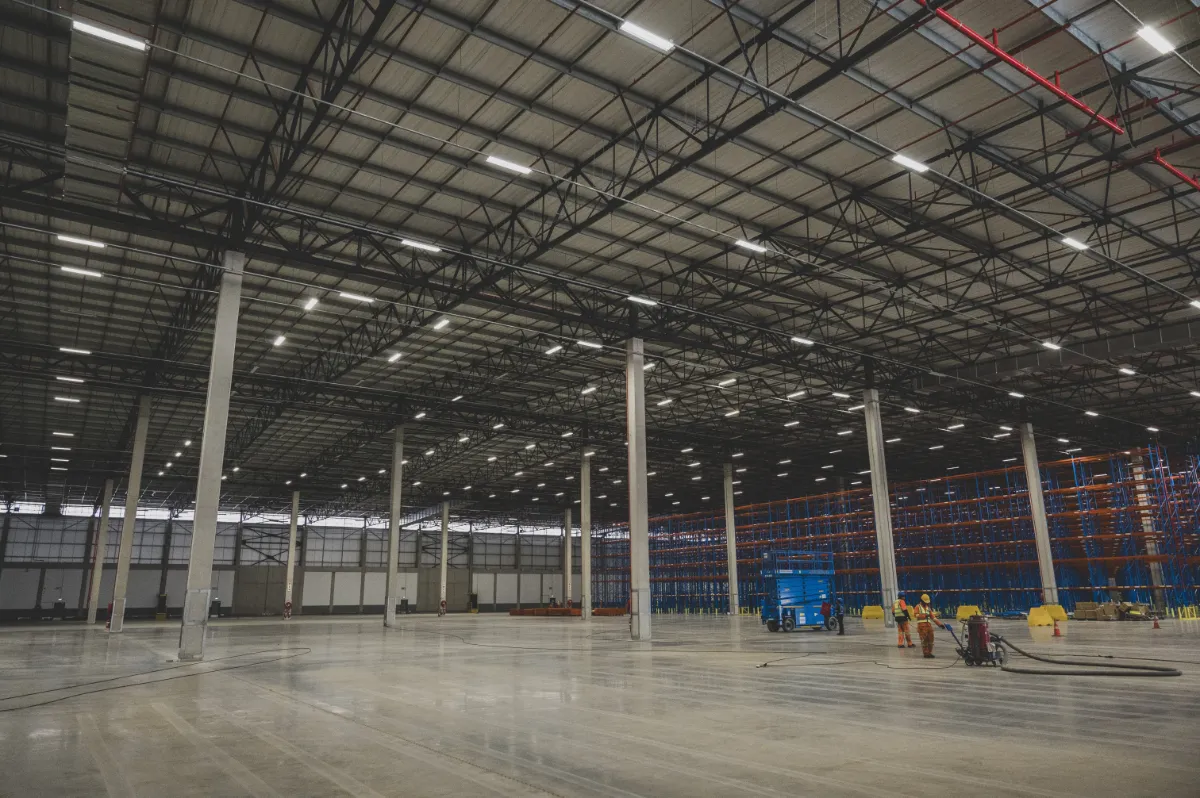
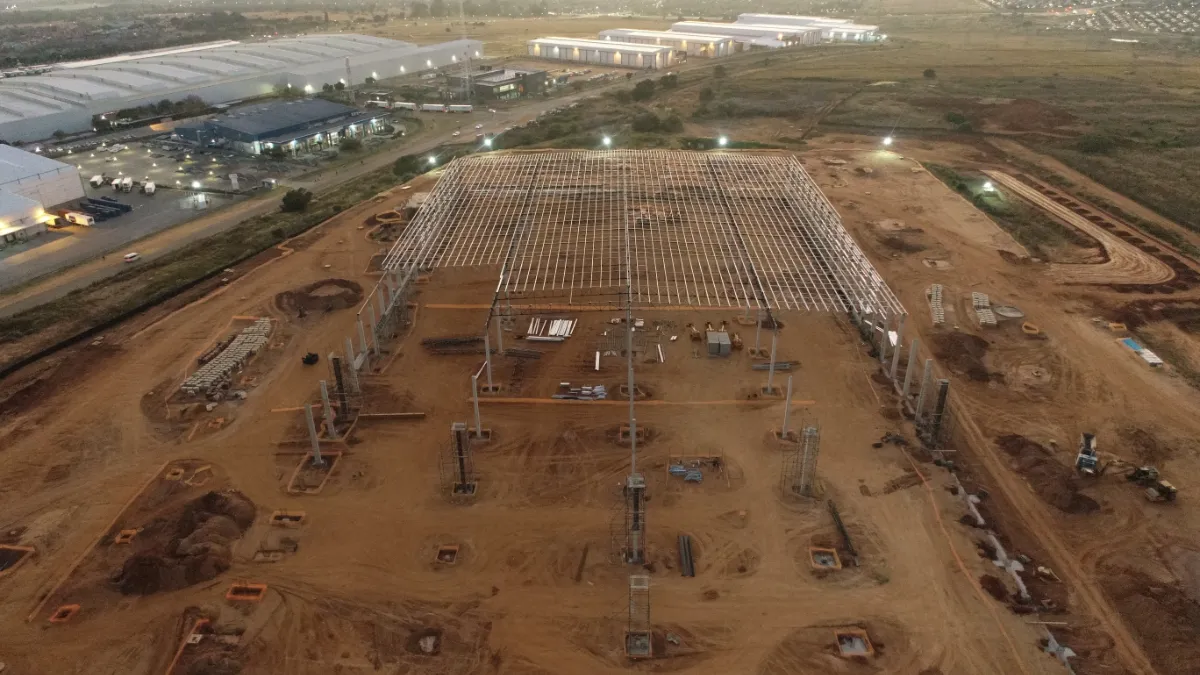
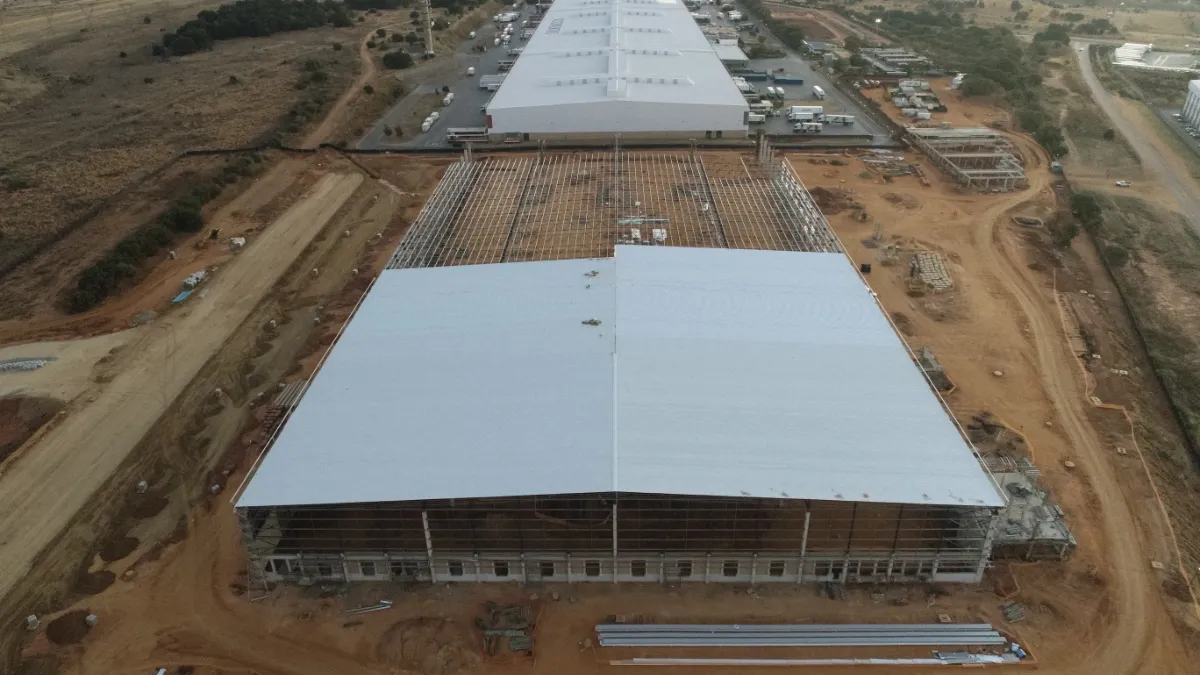
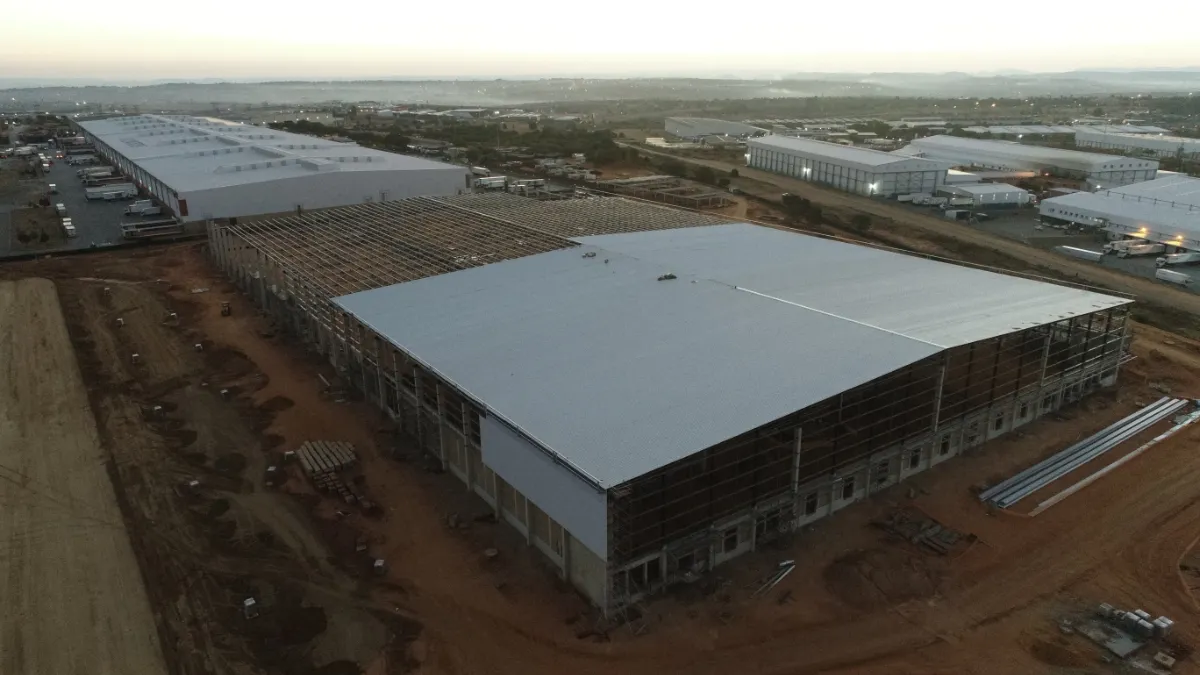
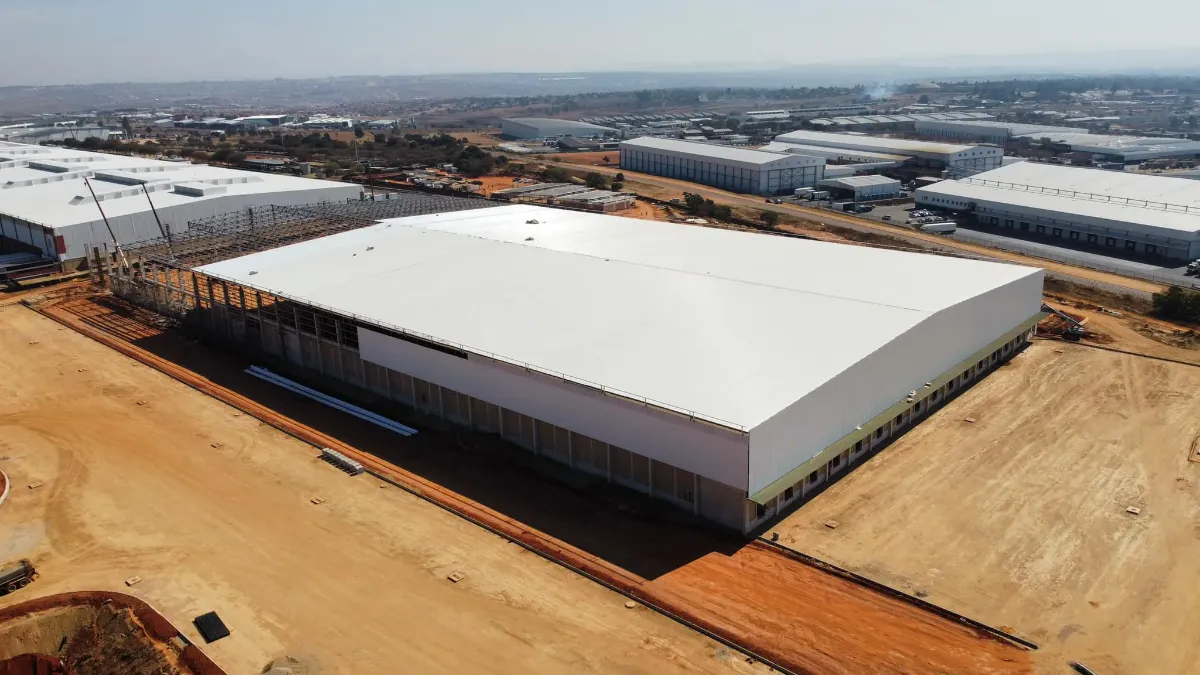
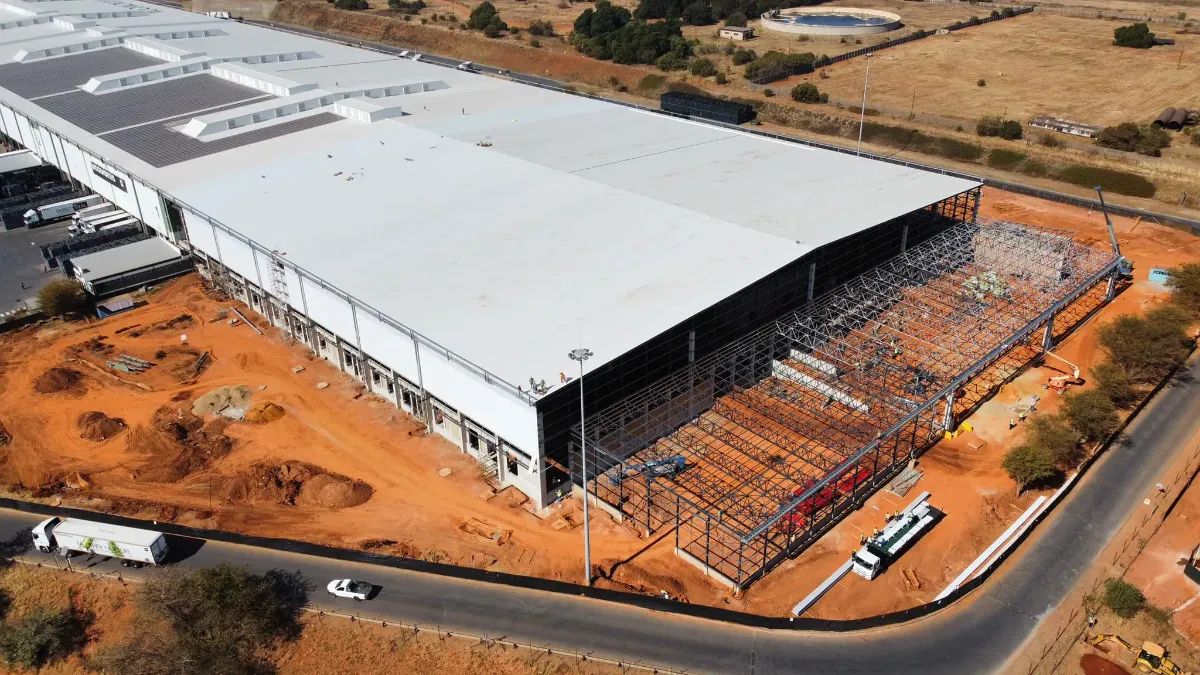
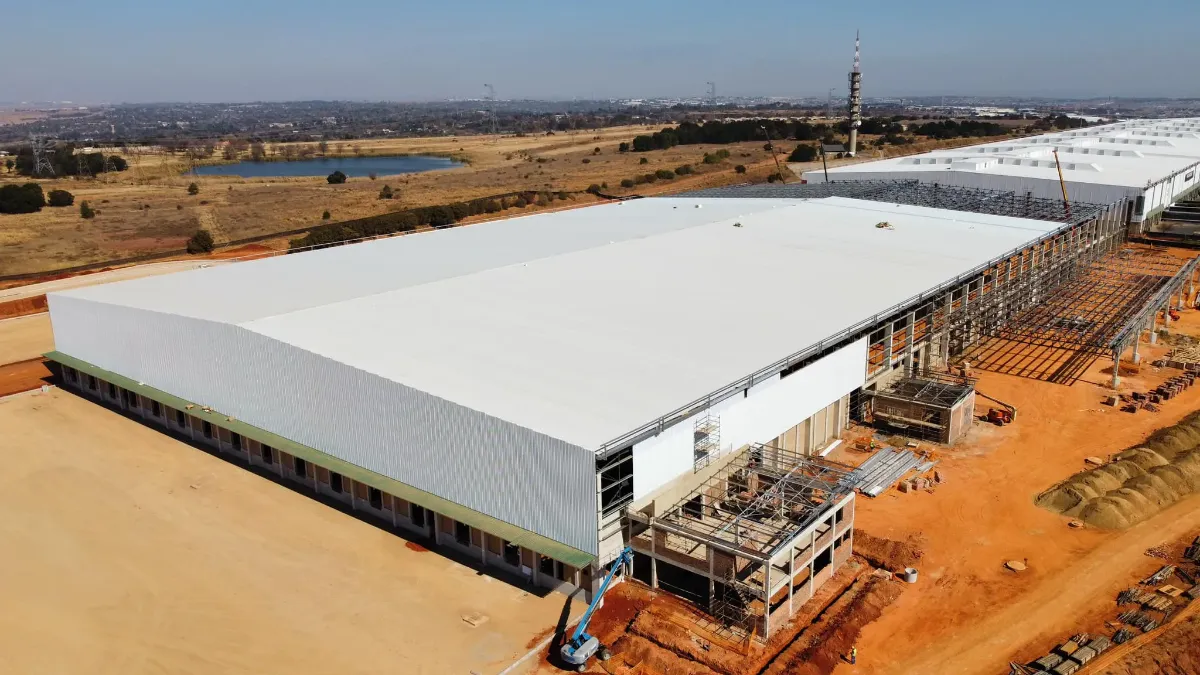
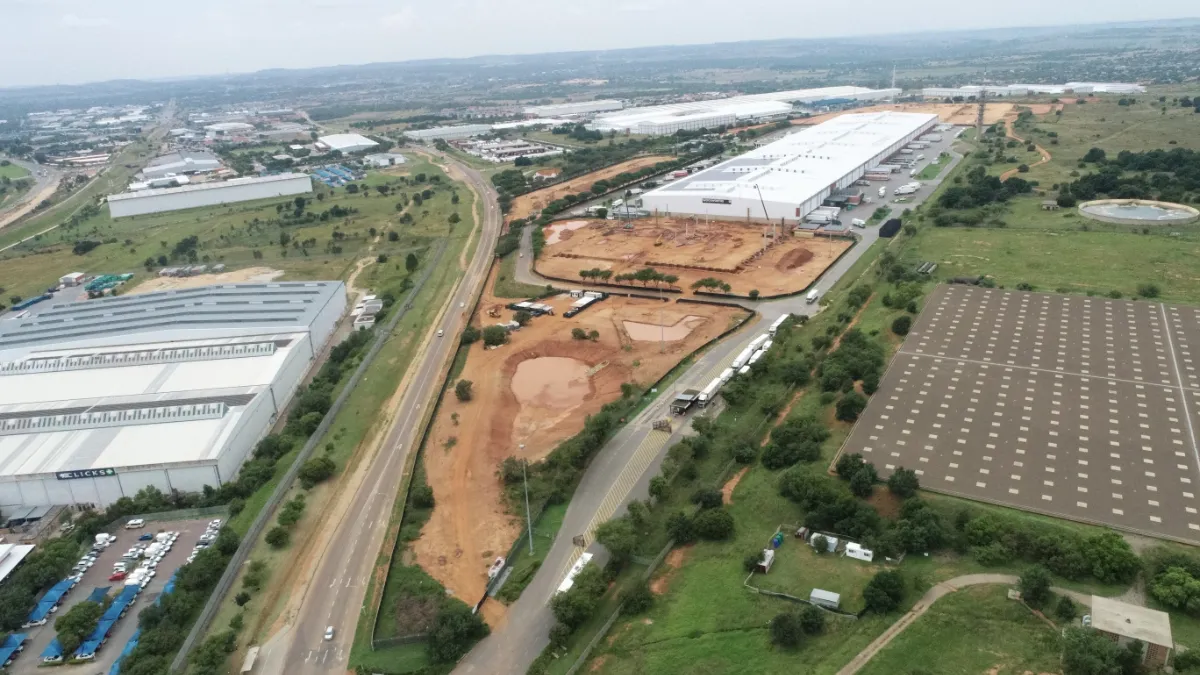
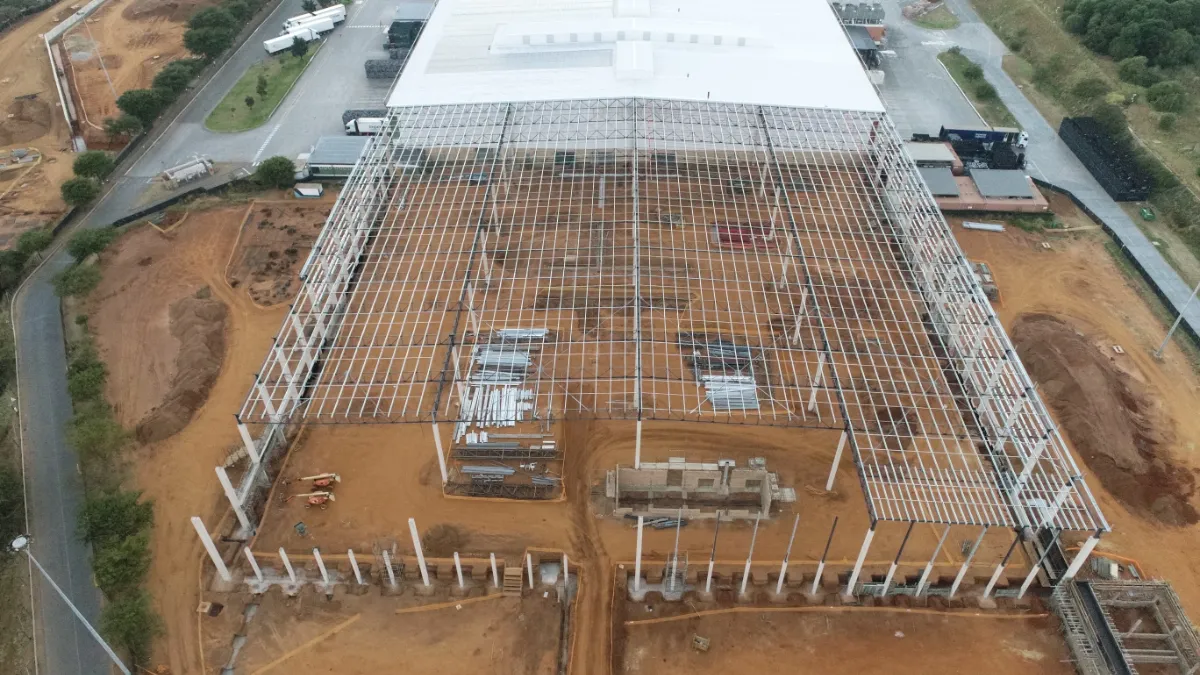
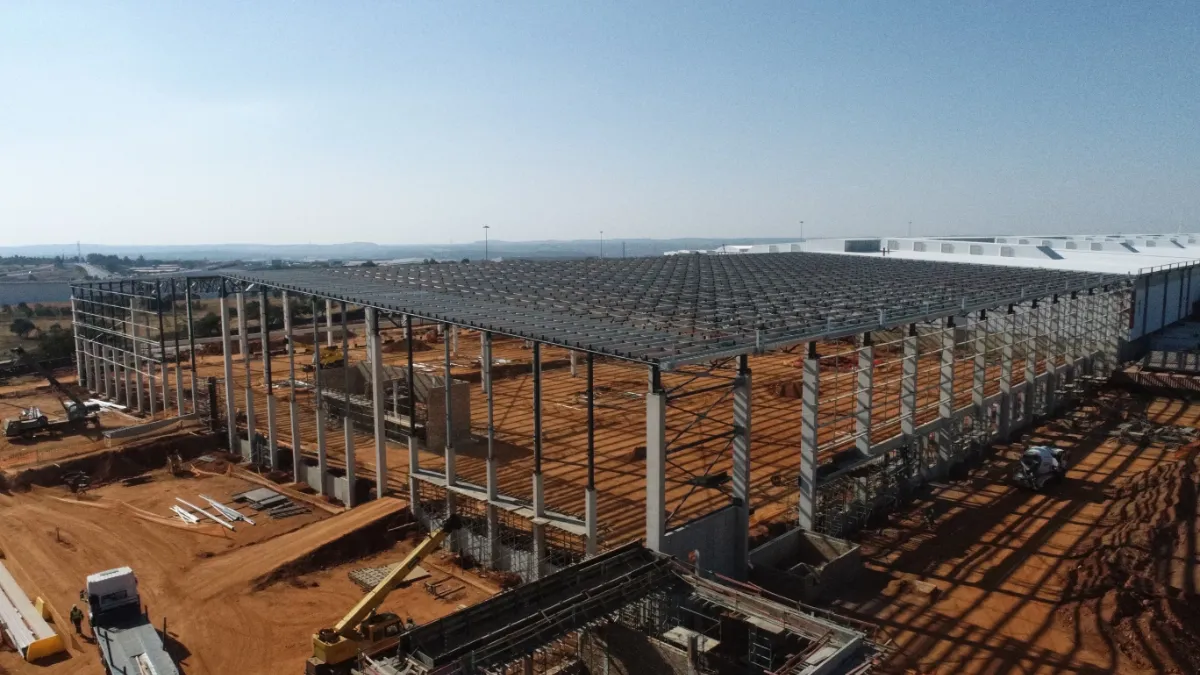
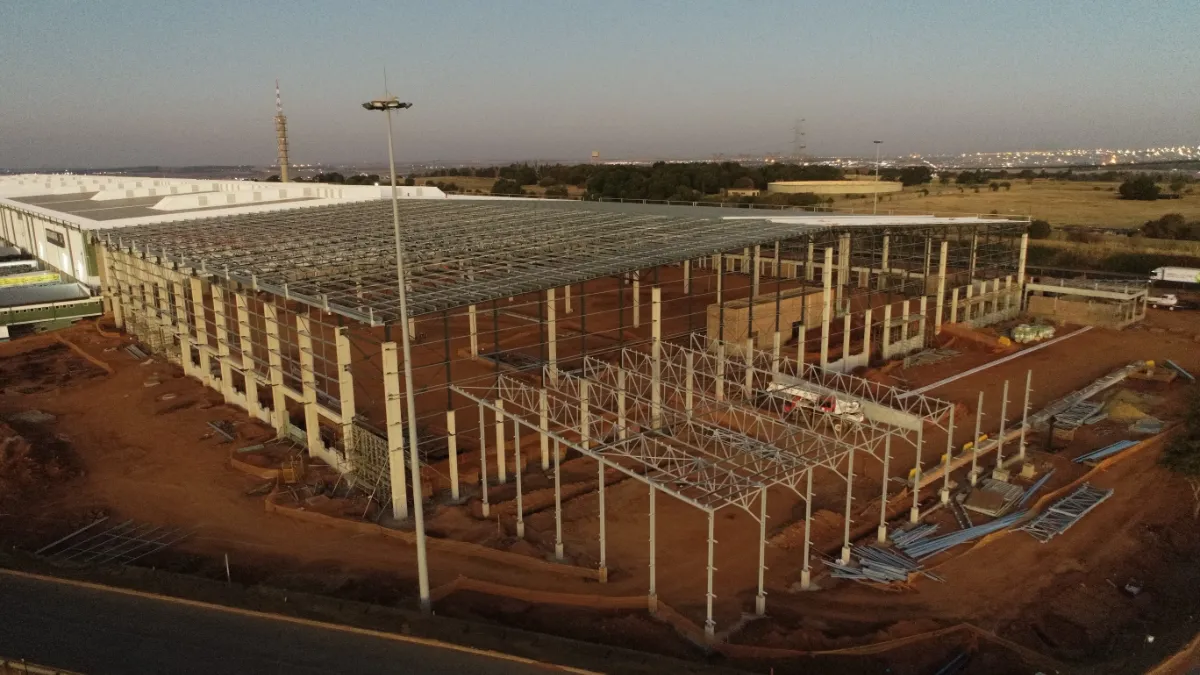
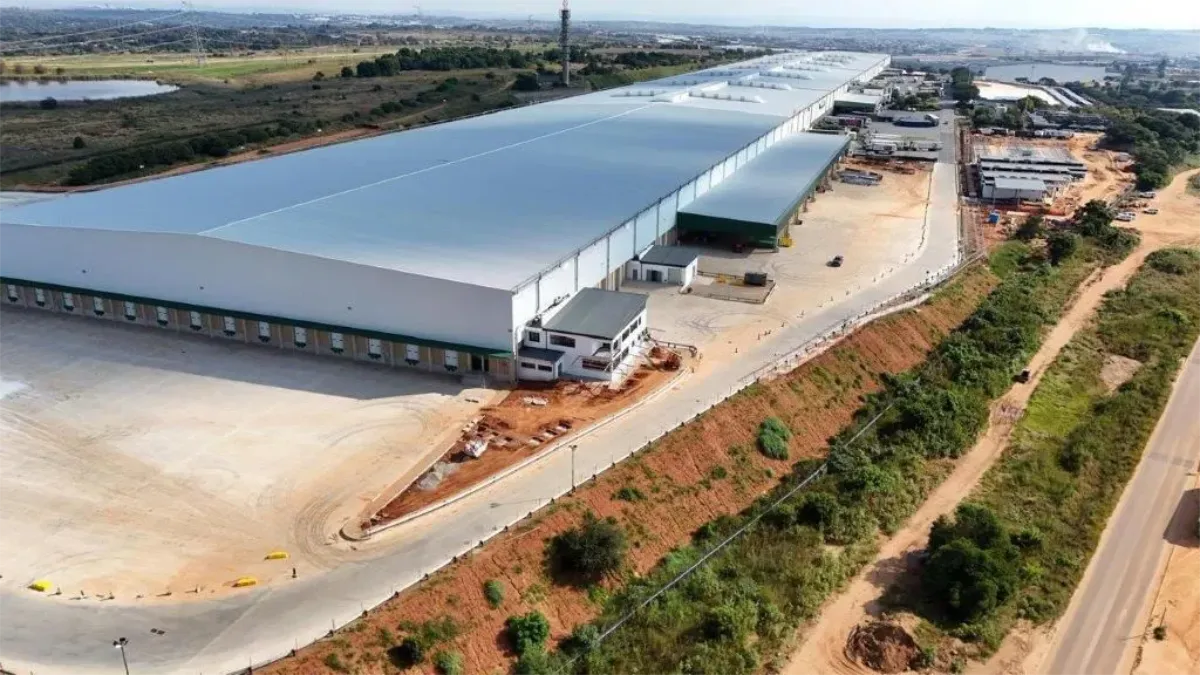
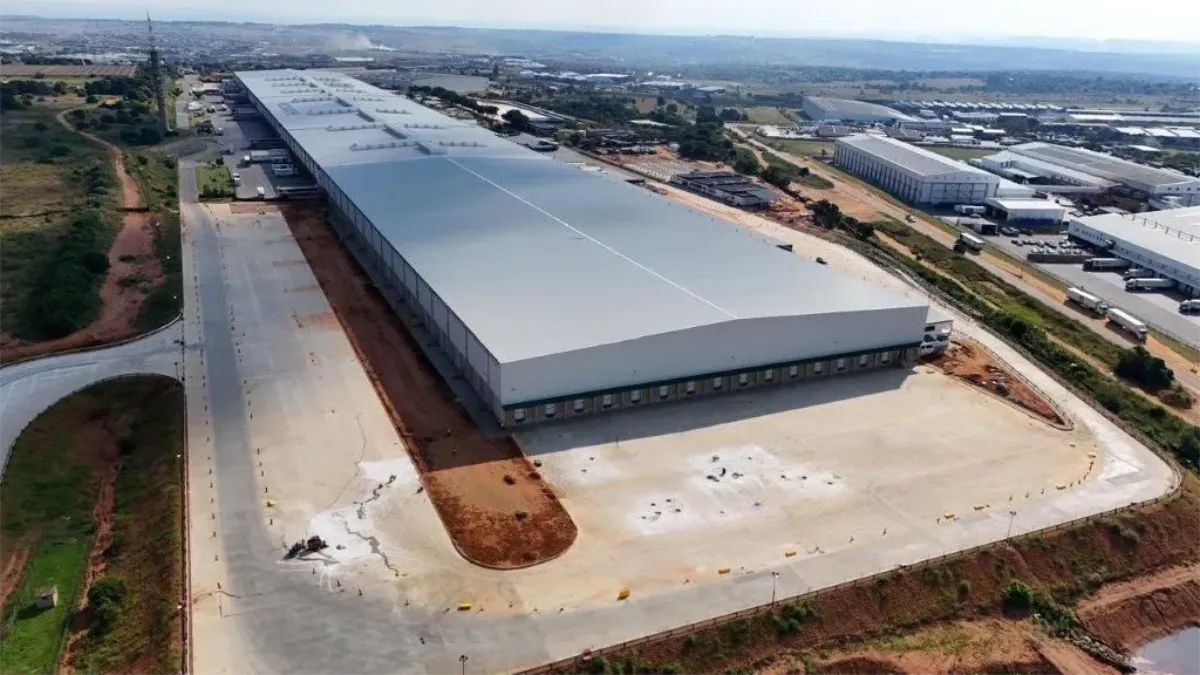
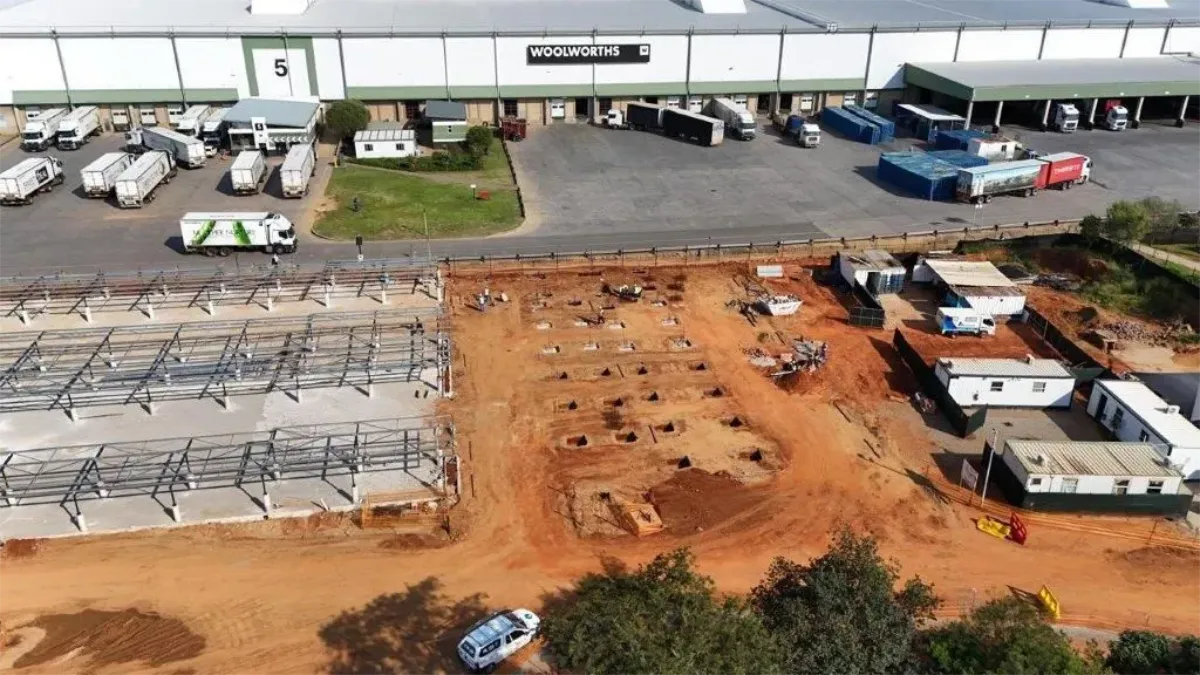
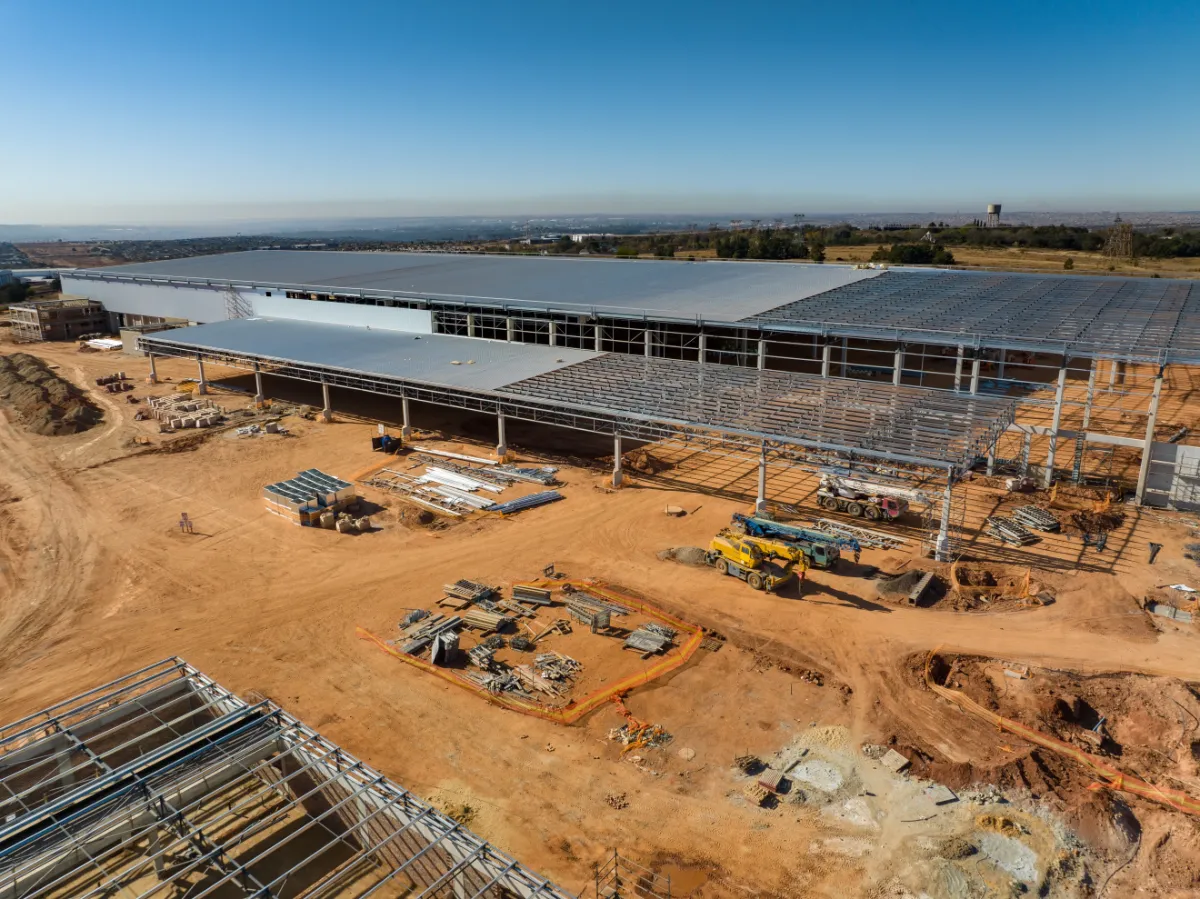
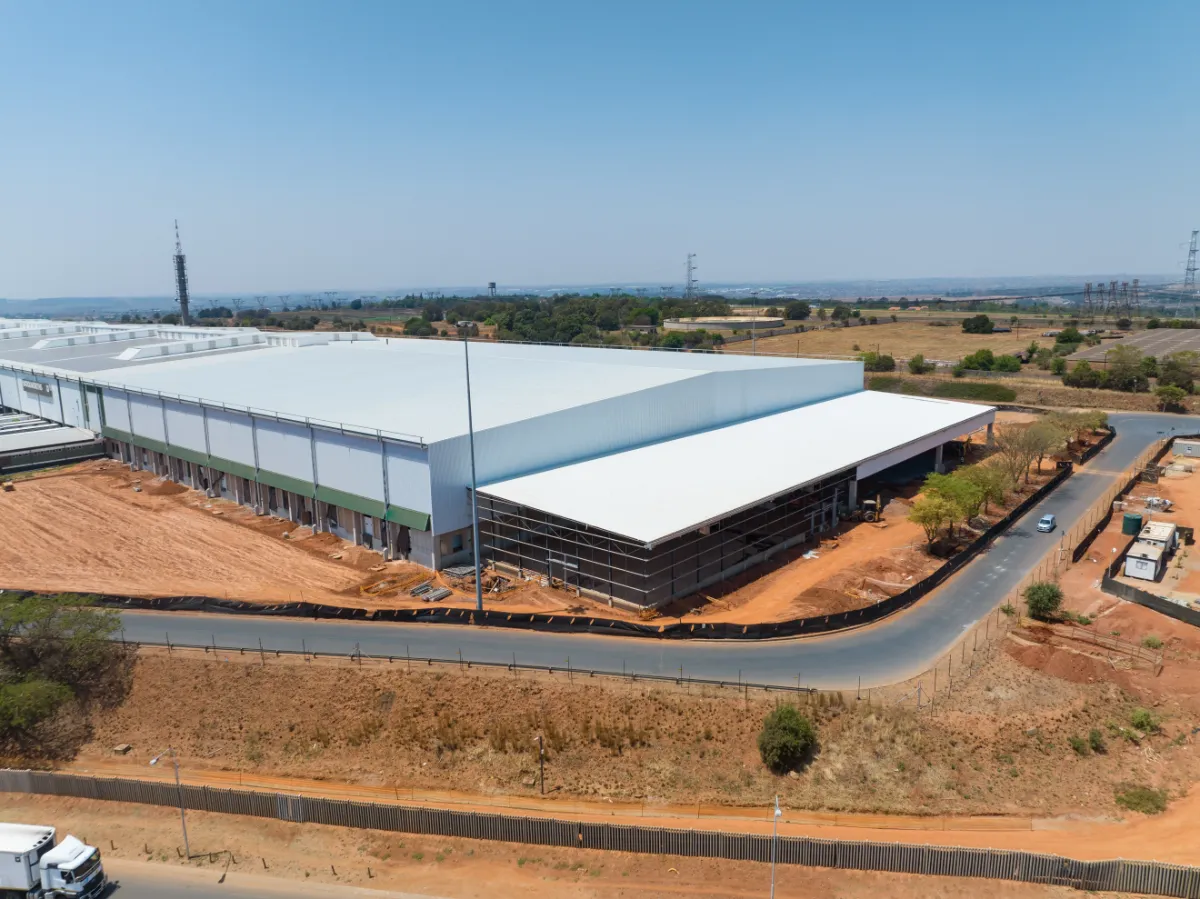
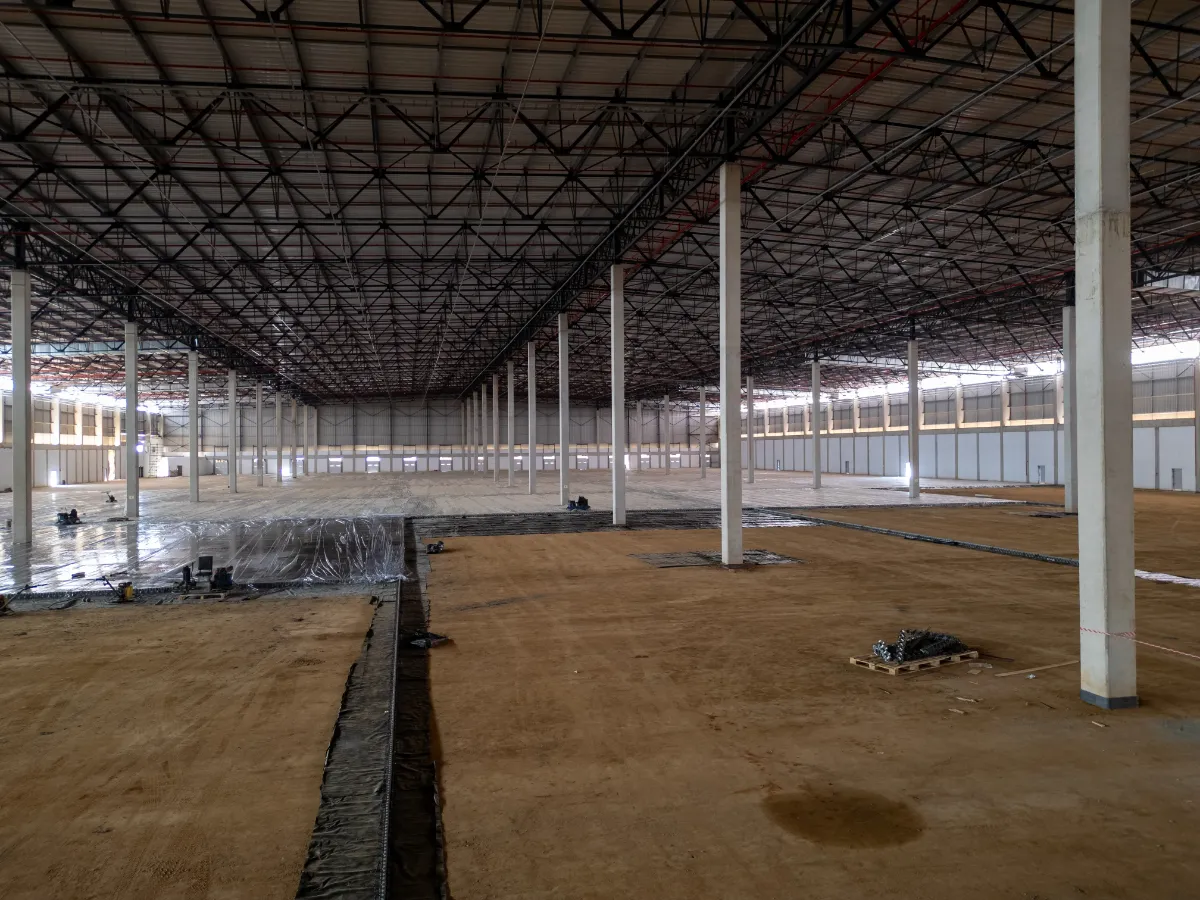
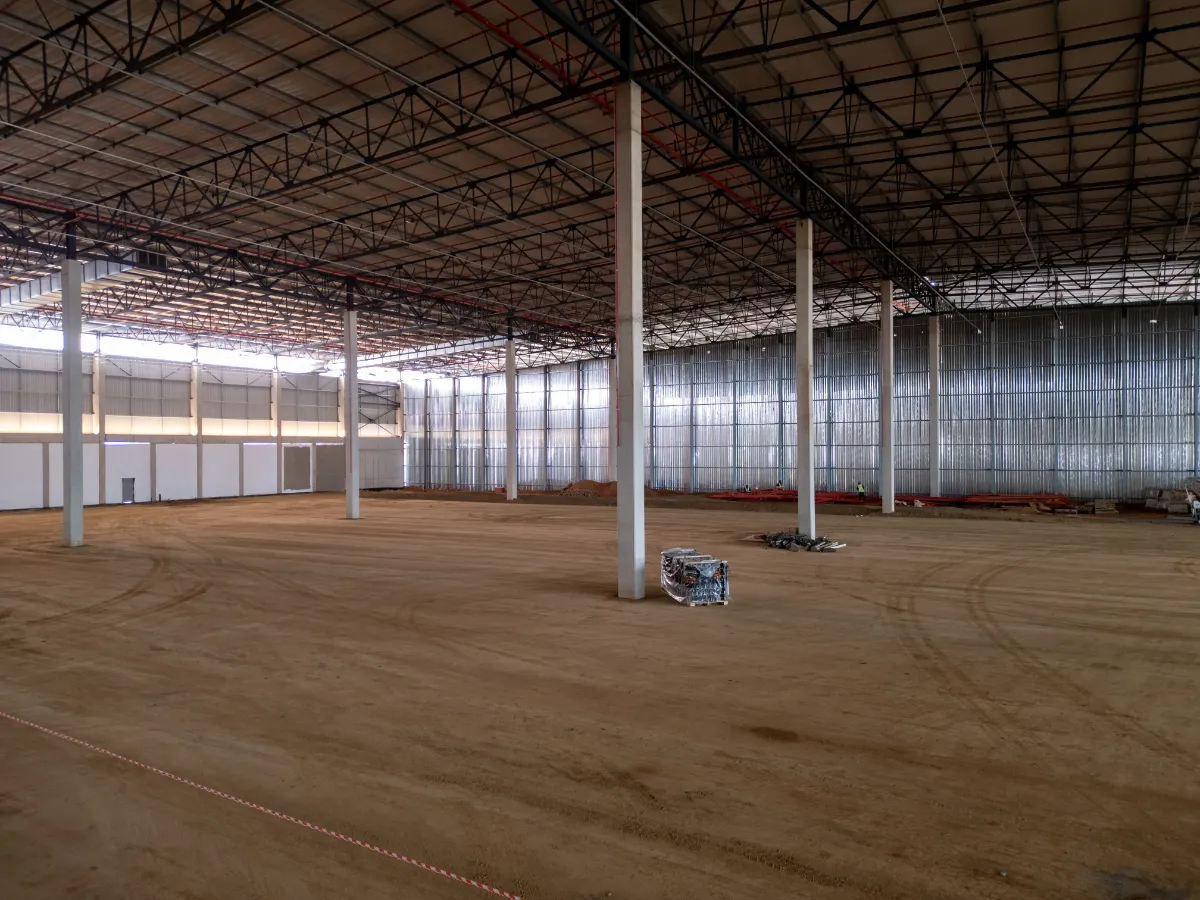
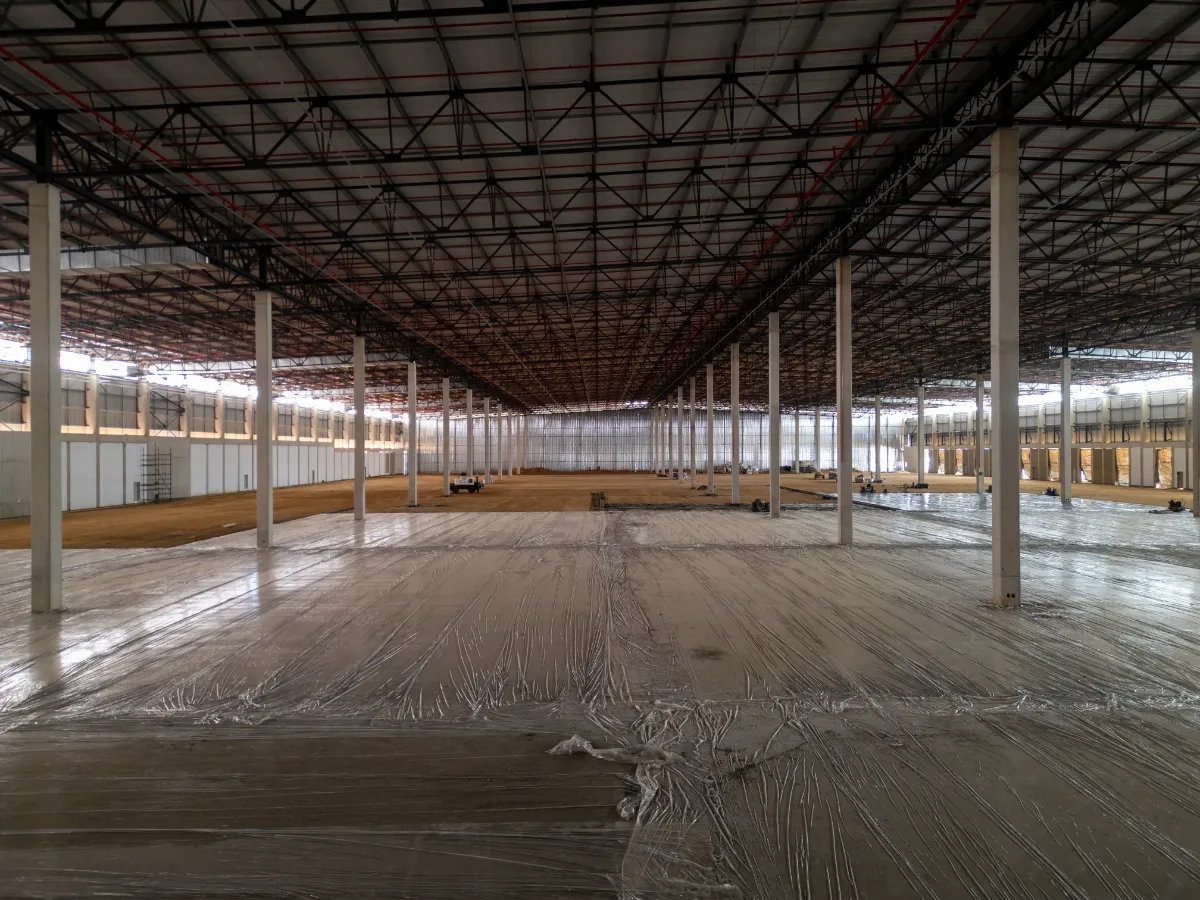
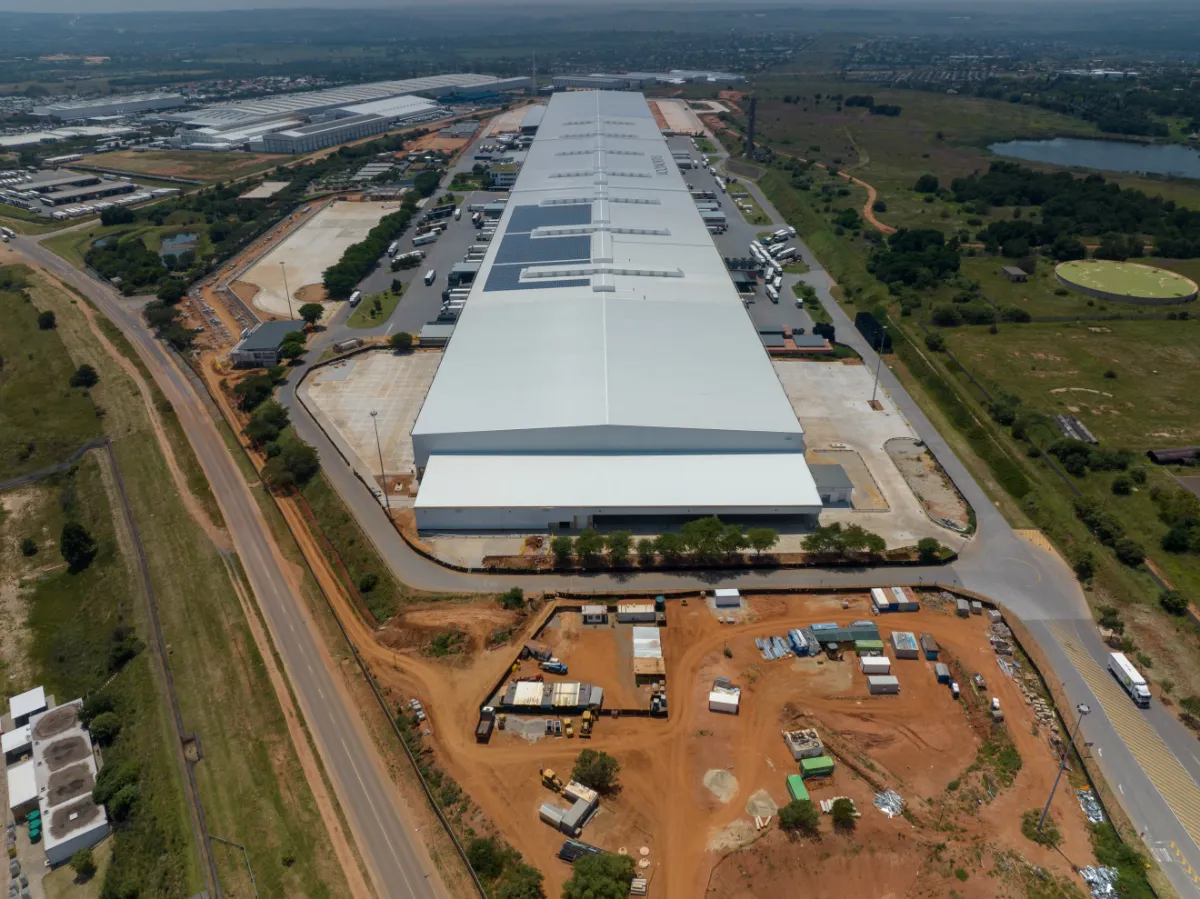
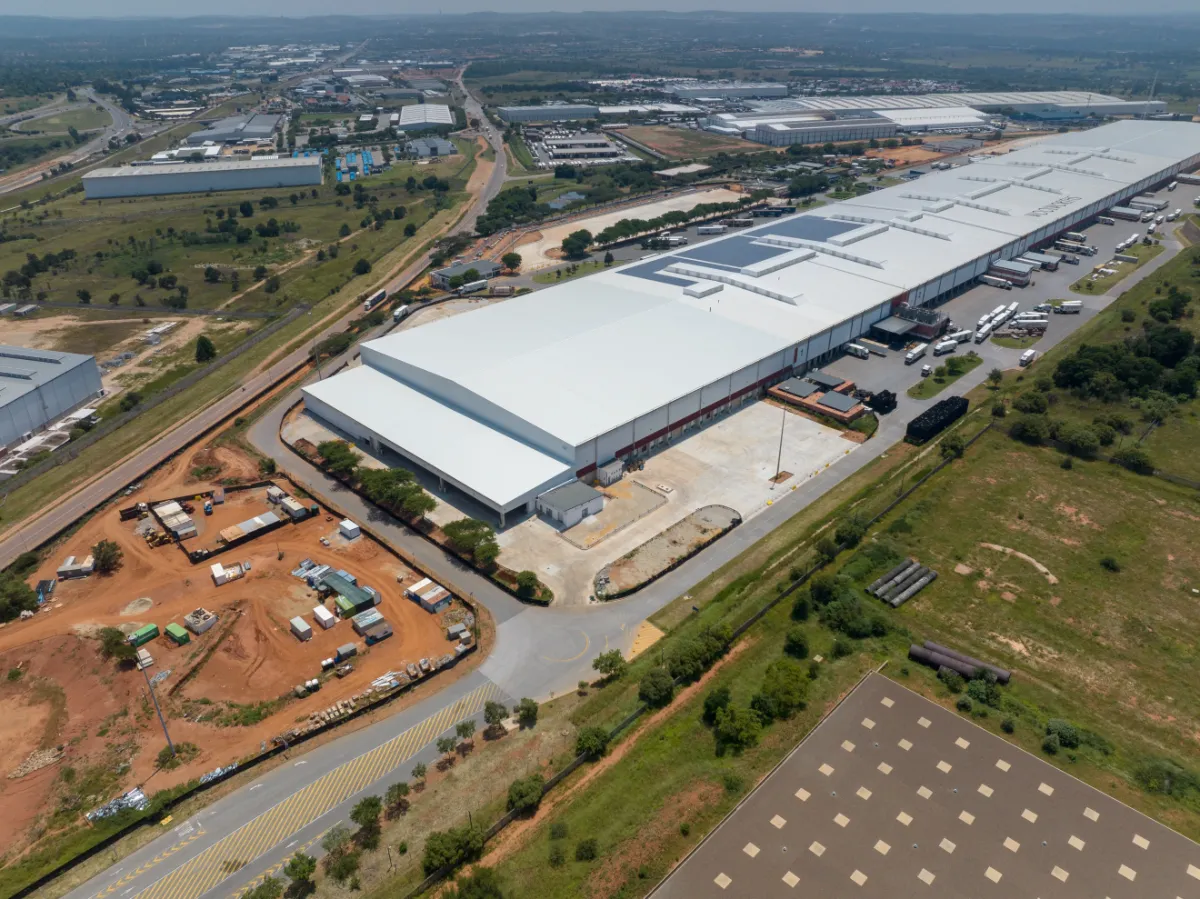
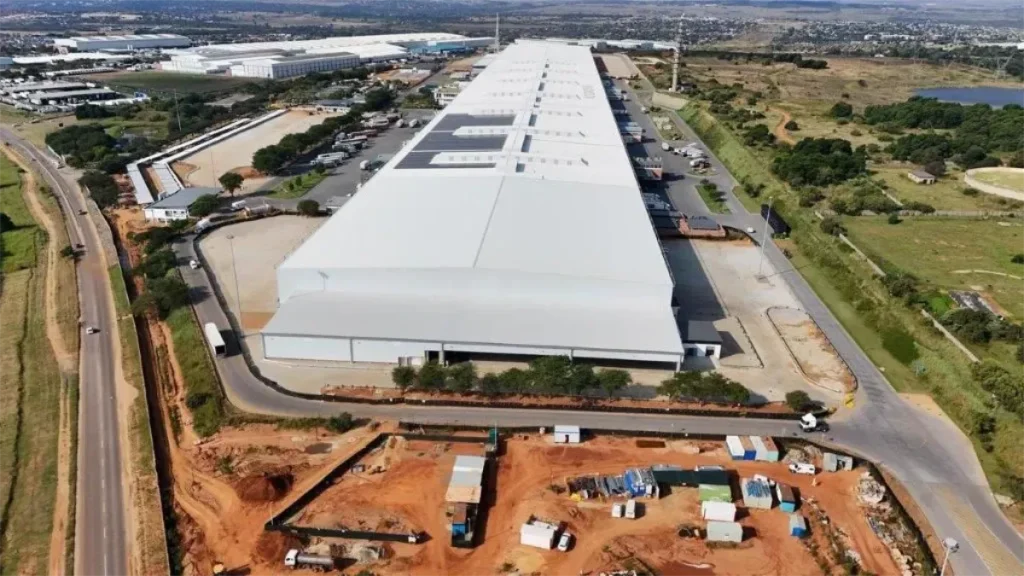
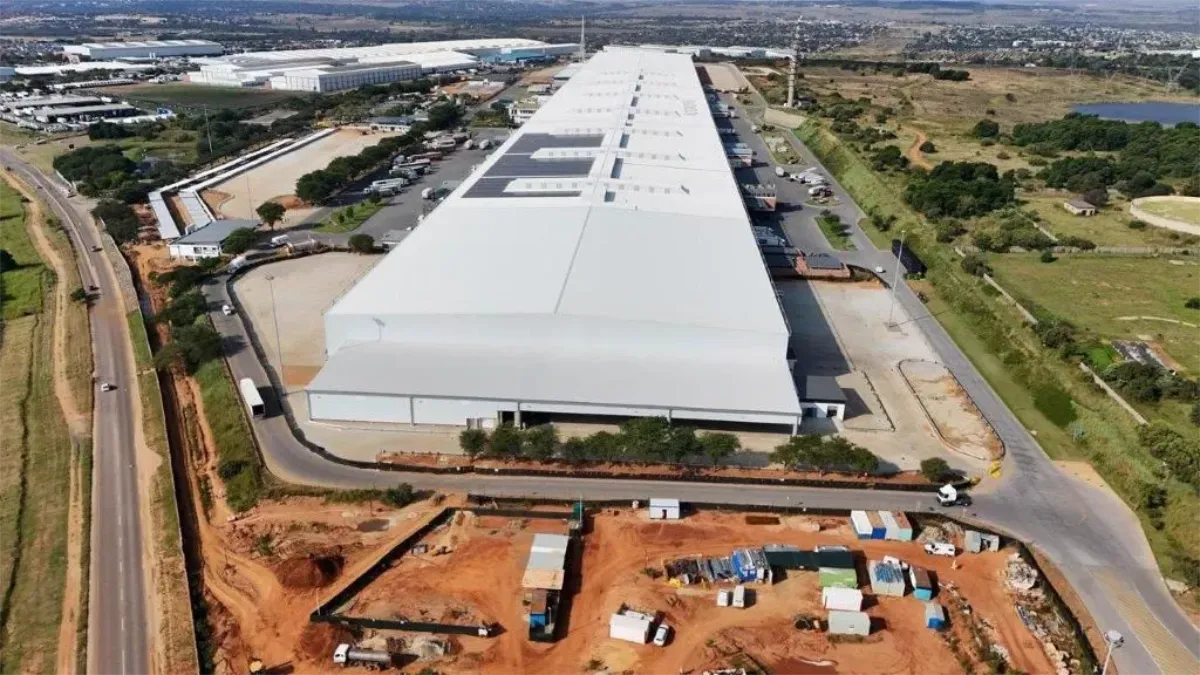
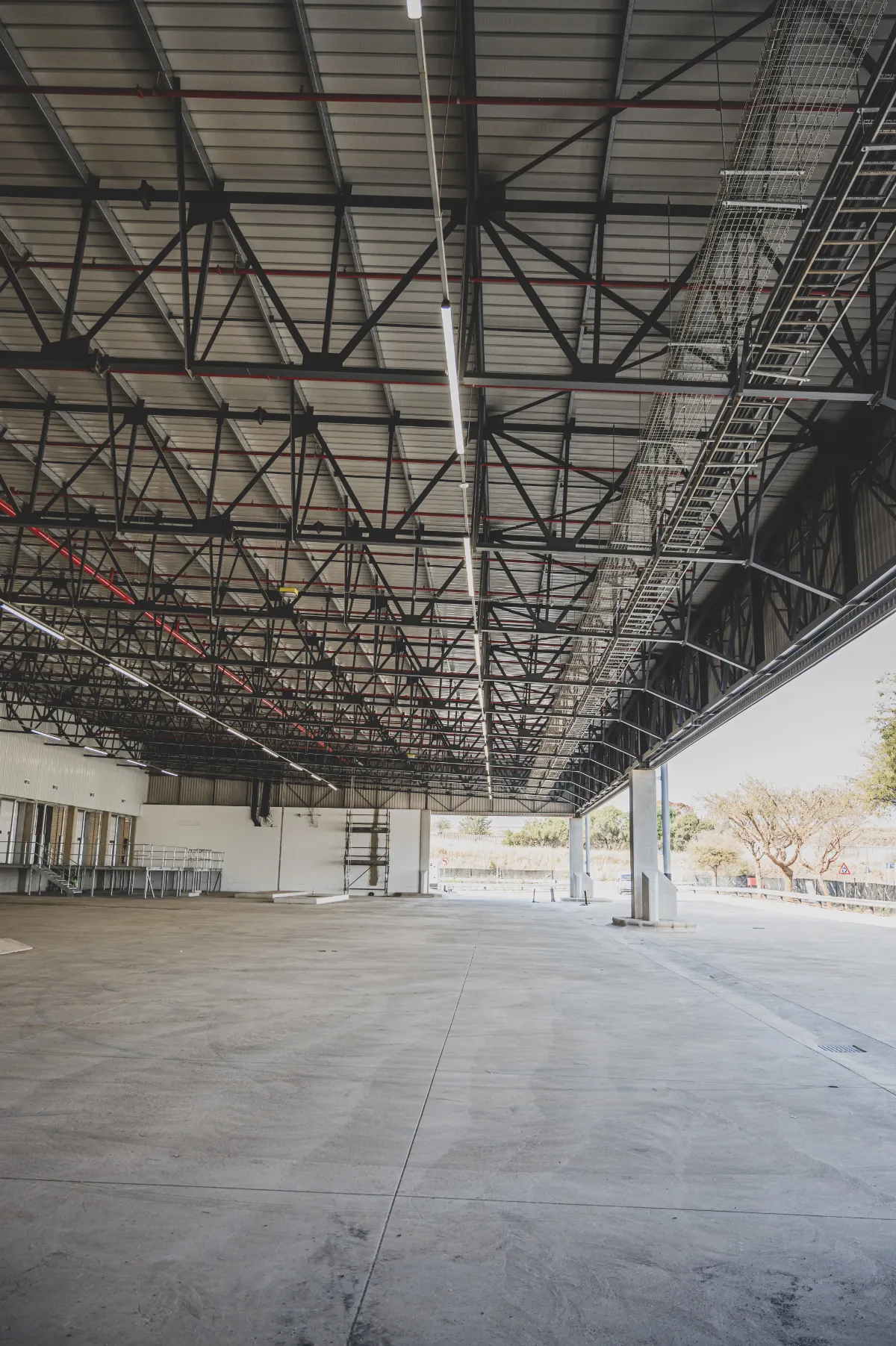
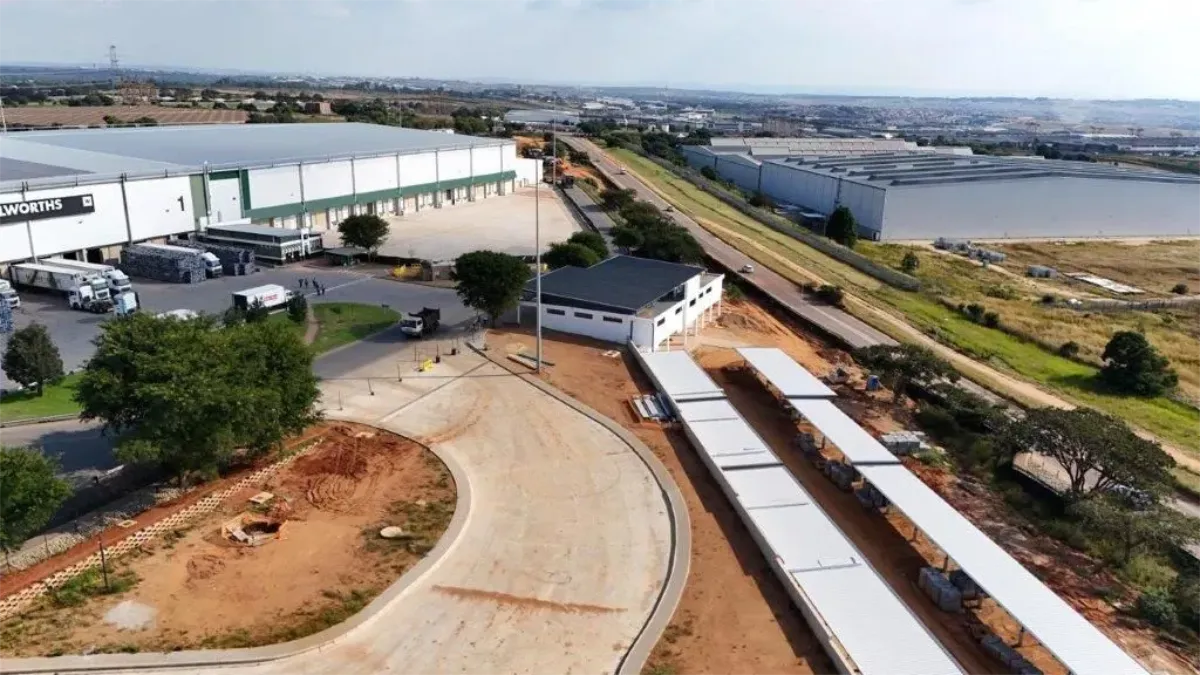
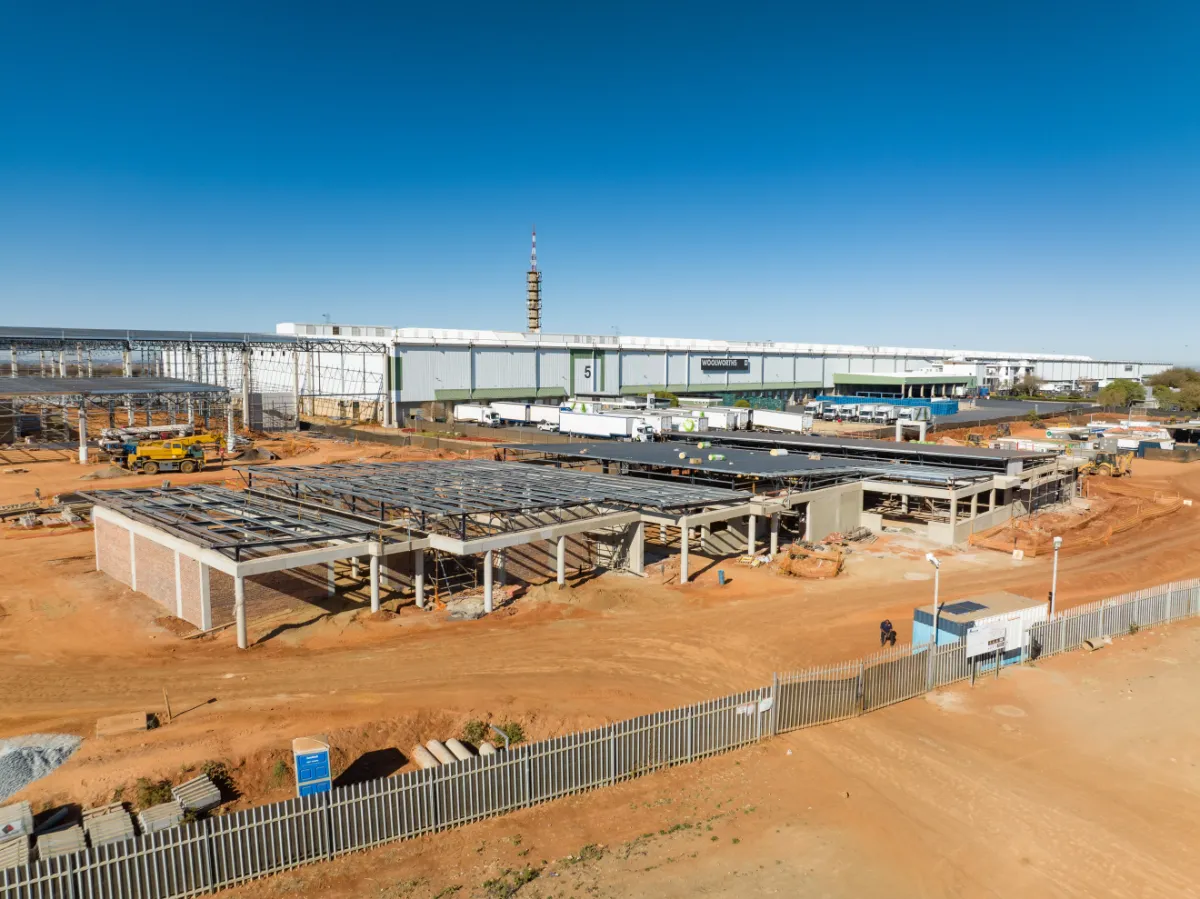
The brief was to create the most economical and robust warehousing facility that could facilitate the distribution of a whole range of goods from receiving them to being transported onto retail store shelving. The architectural vision was to create a high-performance logistics facility that could adapt to future needs. The main warehouse structure comprises full-height reinforced concrete columns, spaced at 8.55 meters centre-to-centre along the eave ends, and between 5 to 7.5 meters at the gable ends to accommodate varying structural demands. Each 8.55-meter truss frame functions as a large portal frame, designed to resist lateral forces through its outer faces. Internally, girders provide support for the trusses and contribute to lateral stability along the longitudinal axis of the building.

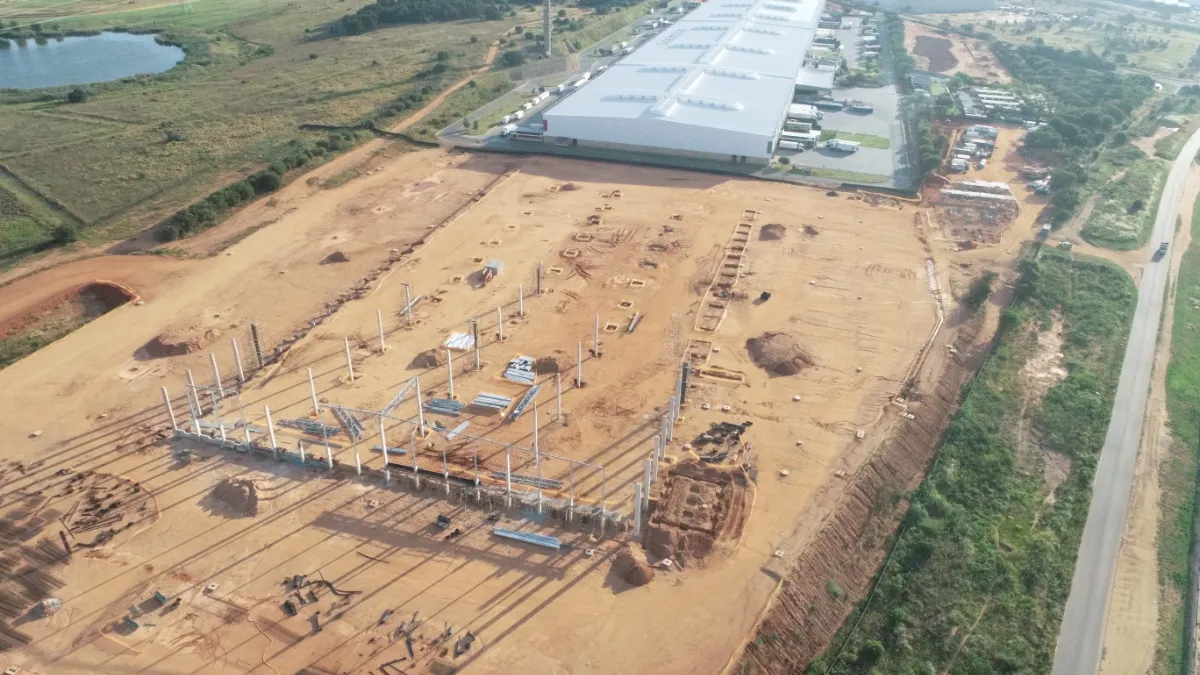
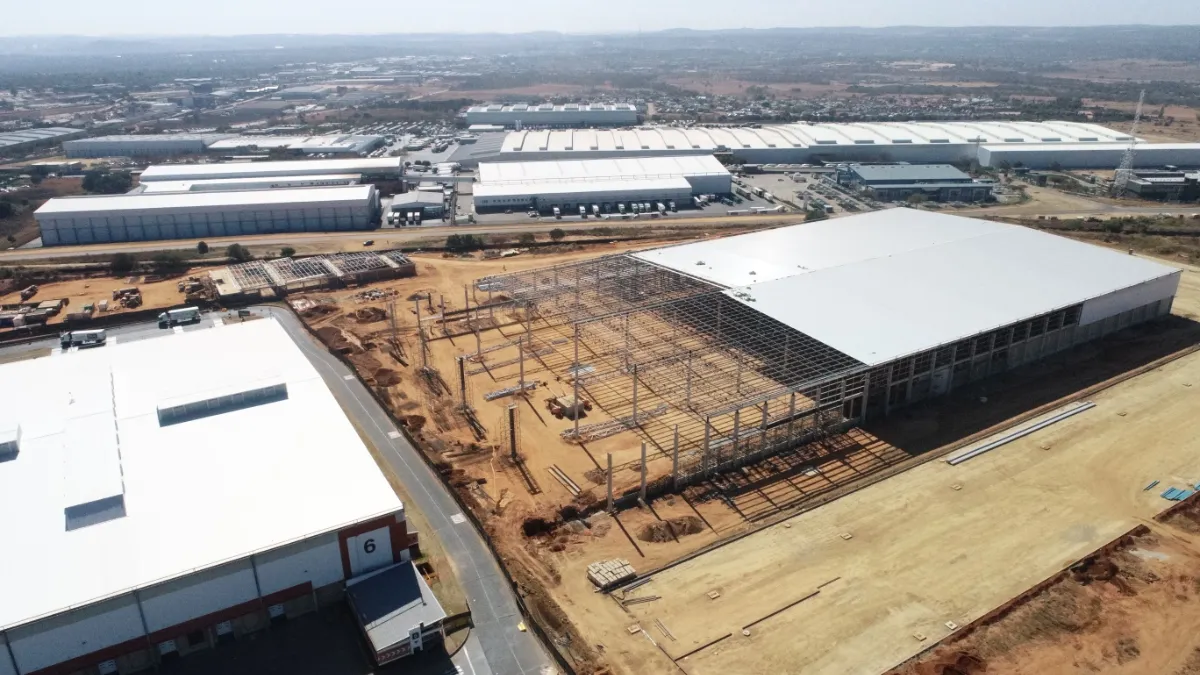
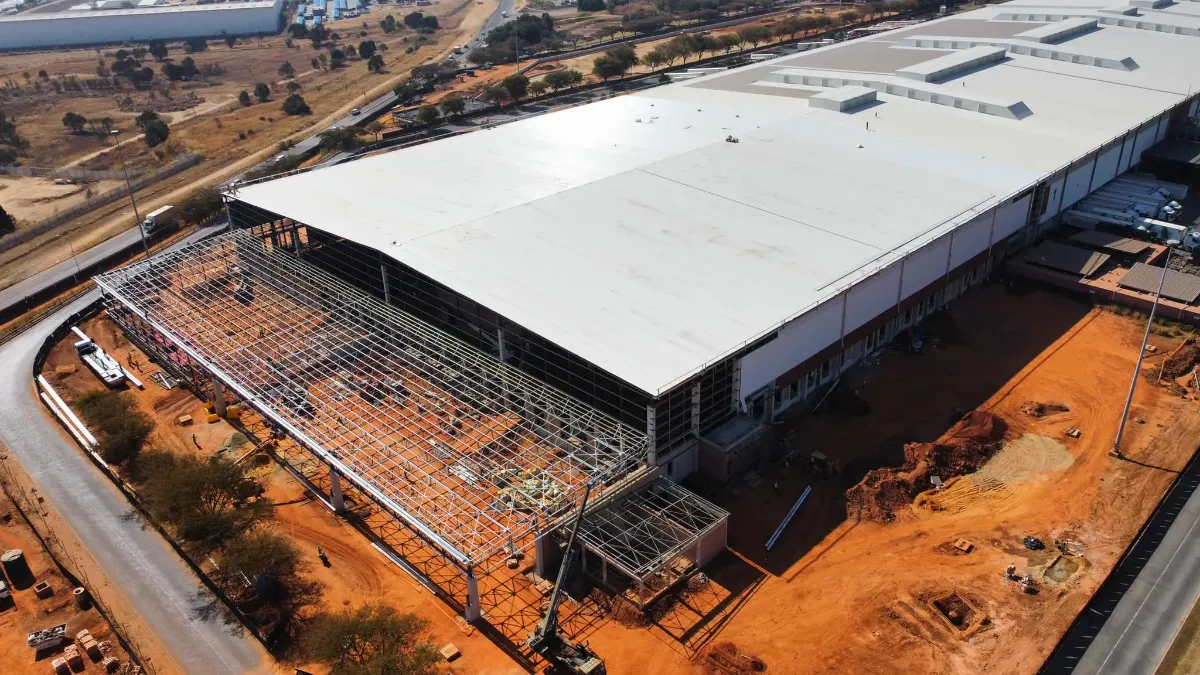
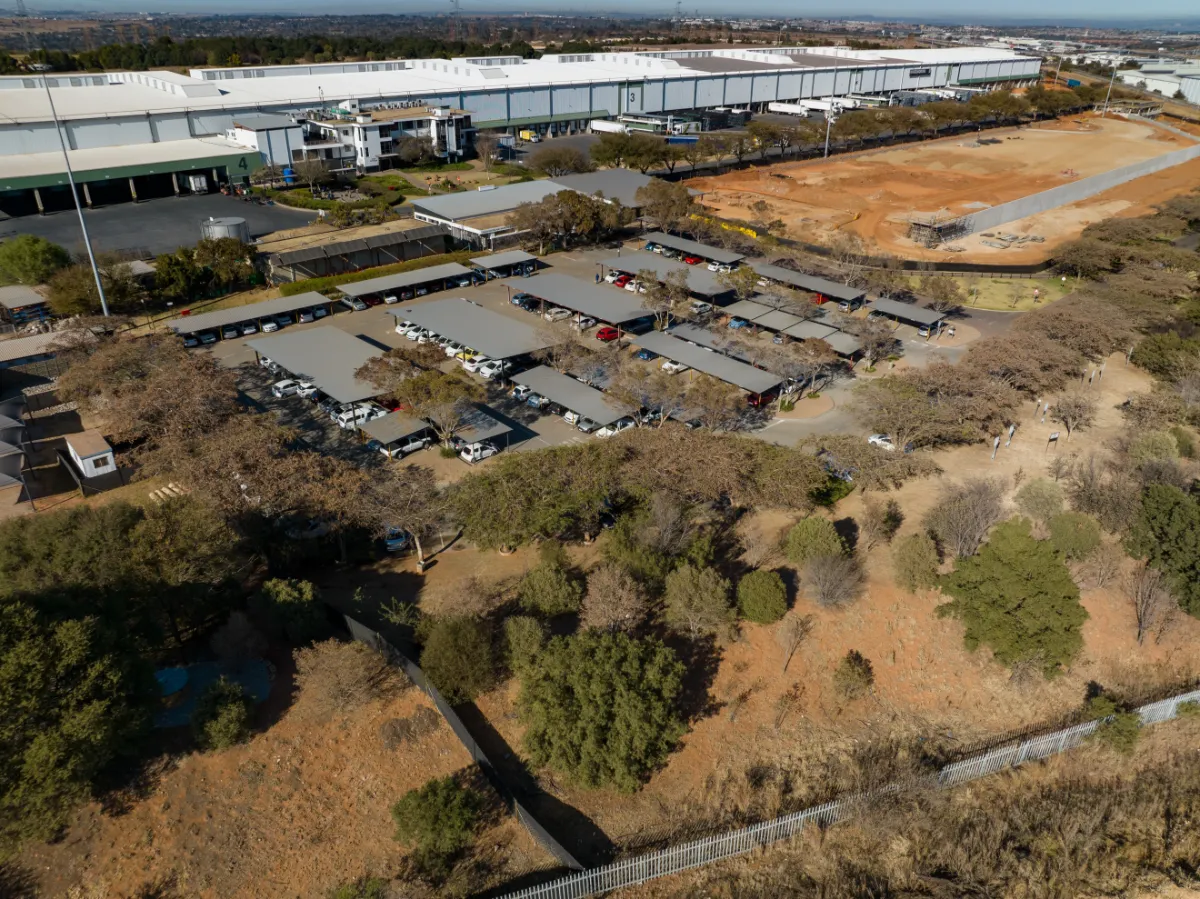
As this warehouse extension adjoins an existing structure, separation joints were incorporated to isolate the new portion. To maintain structural compatibility, the new section employs a bracing system—both vertical and horizontal—mirroring that of the existing warehouse. This approach ensures effective structural independence while preserving overall integrity.

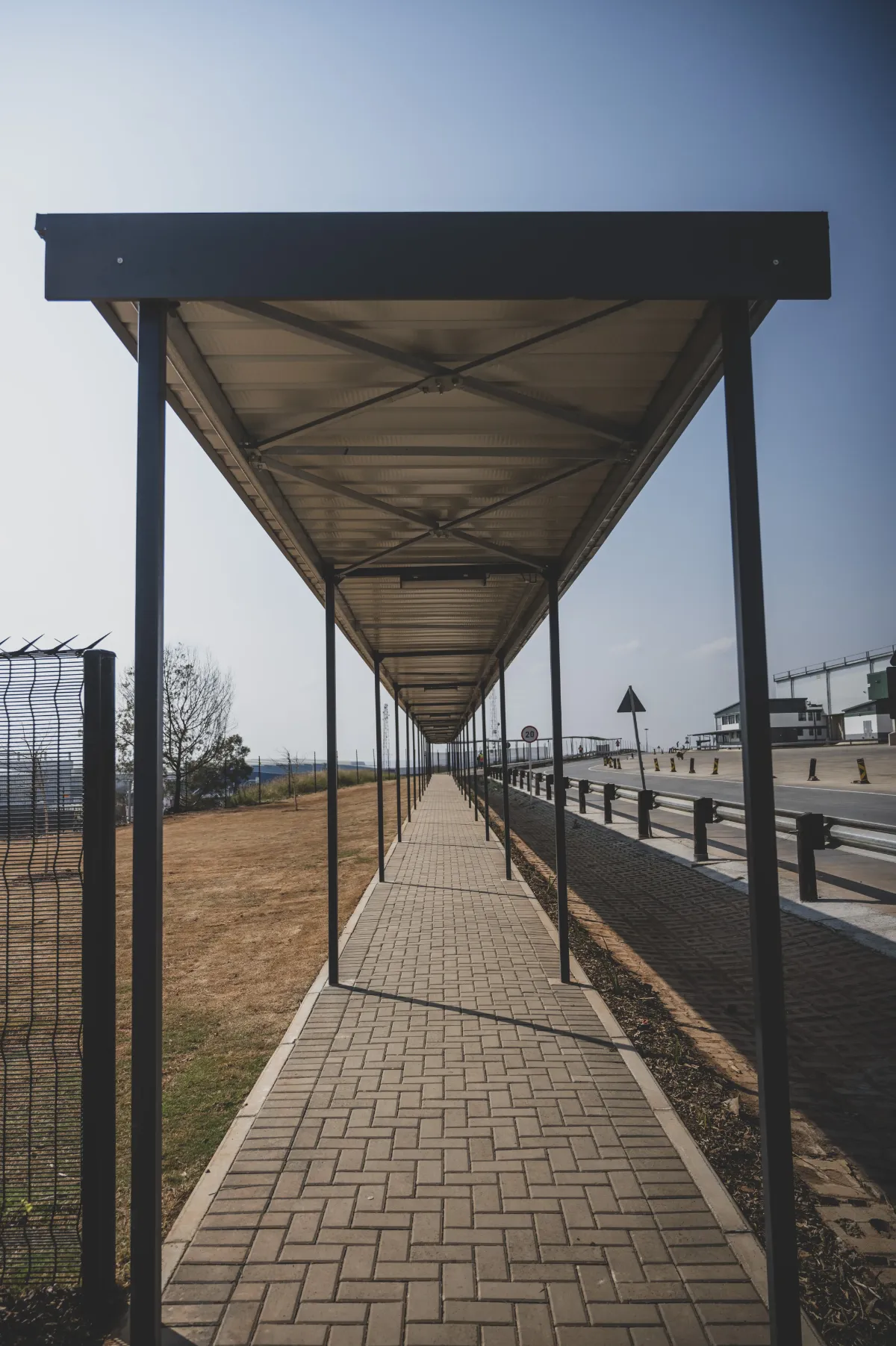
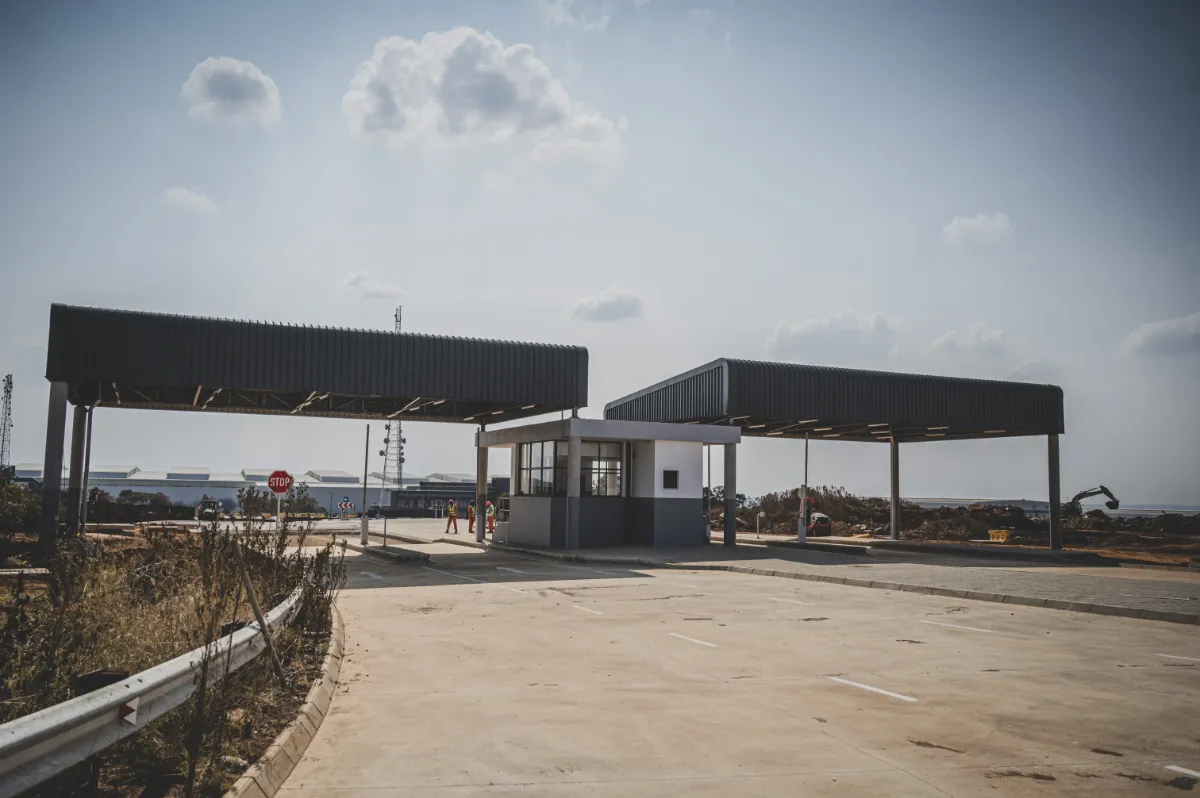
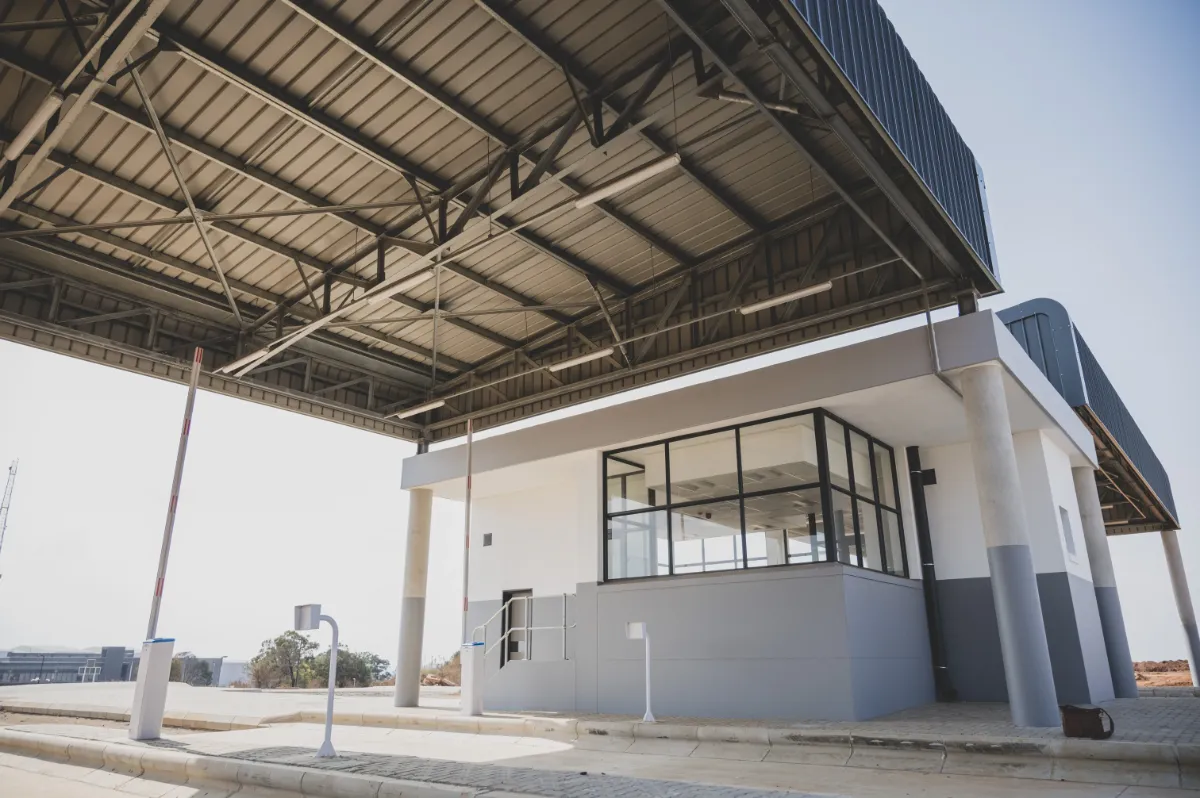
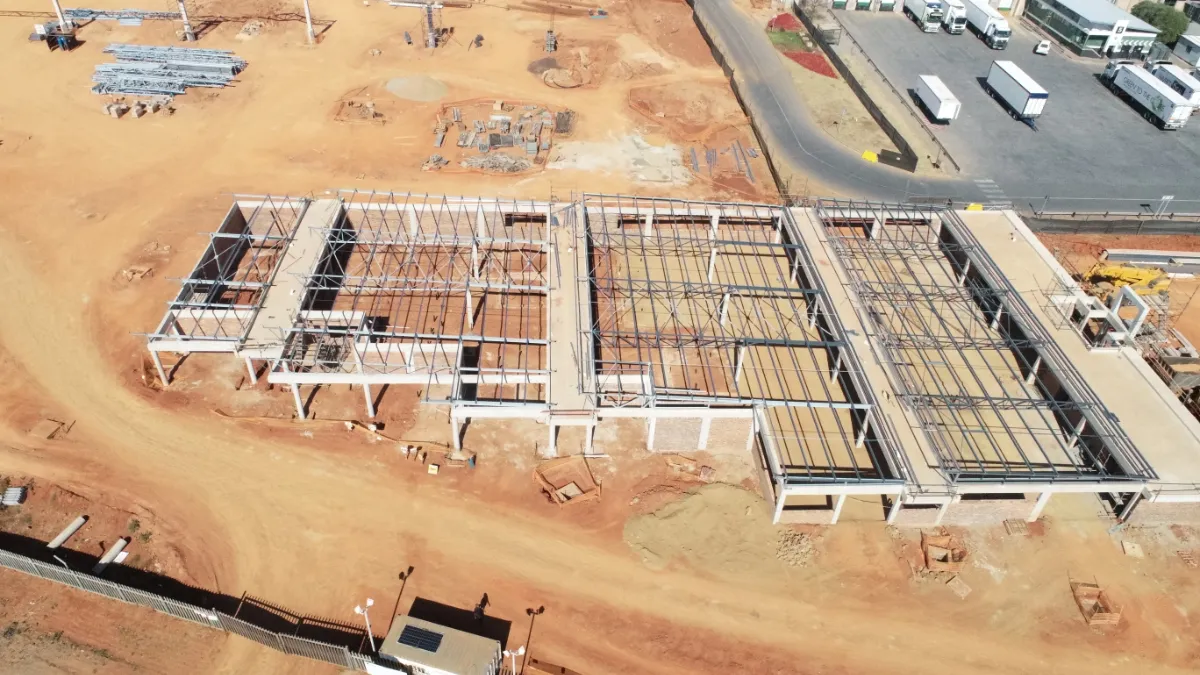
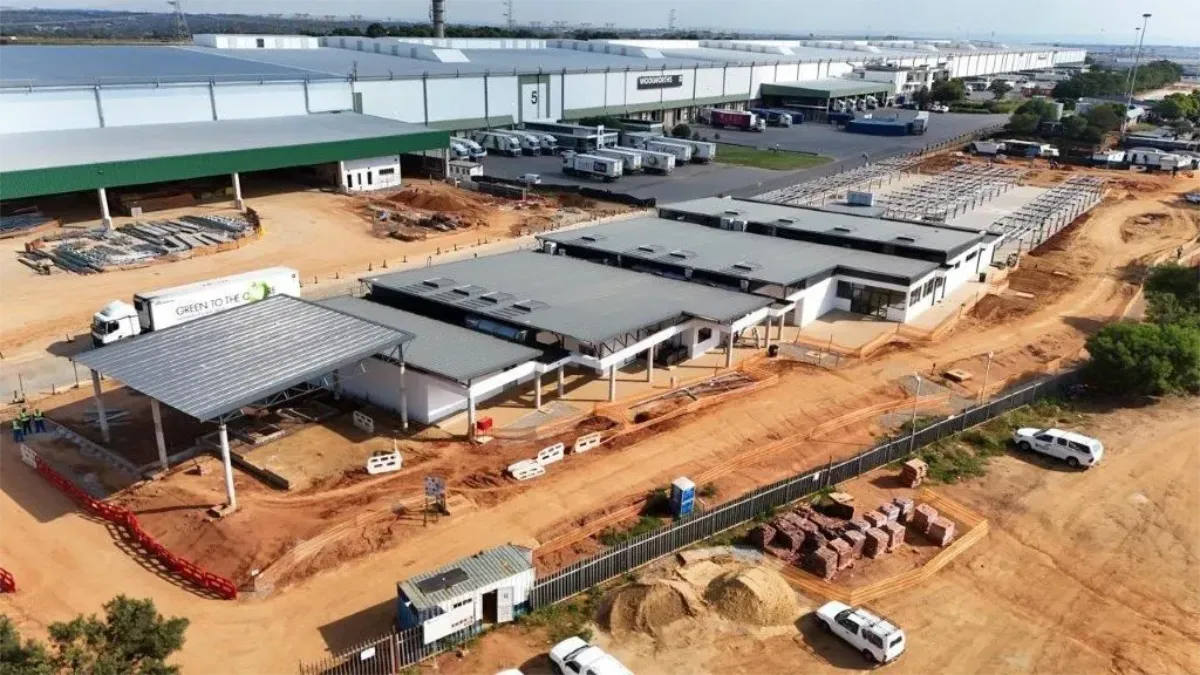
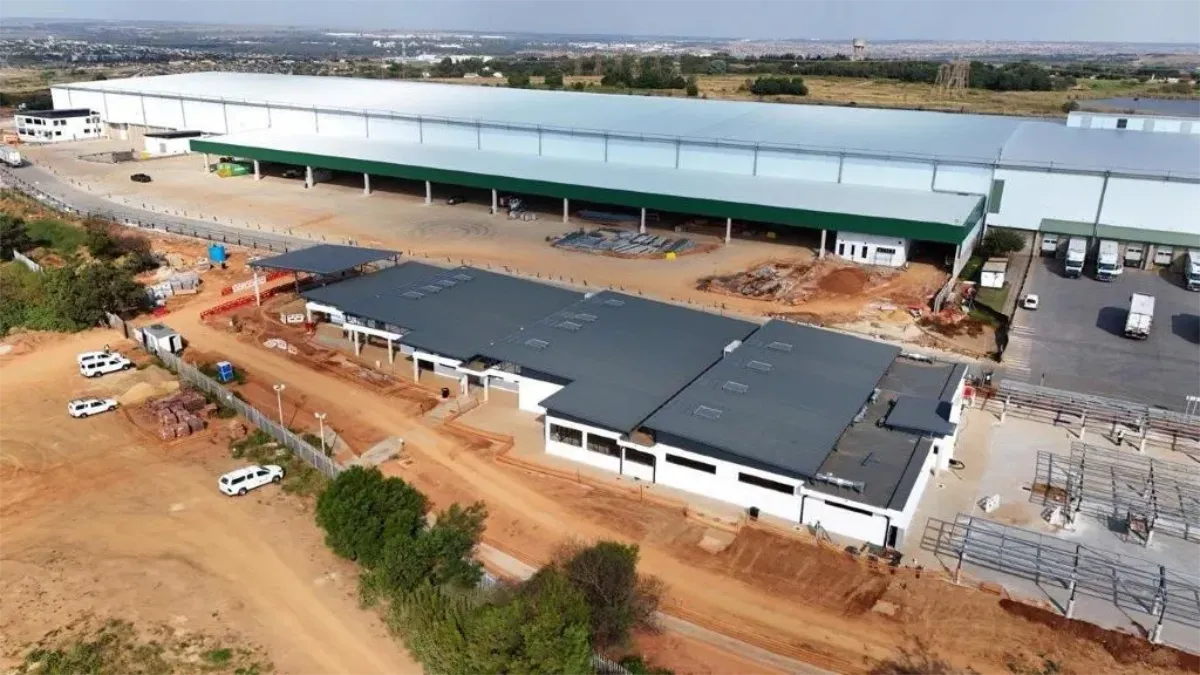
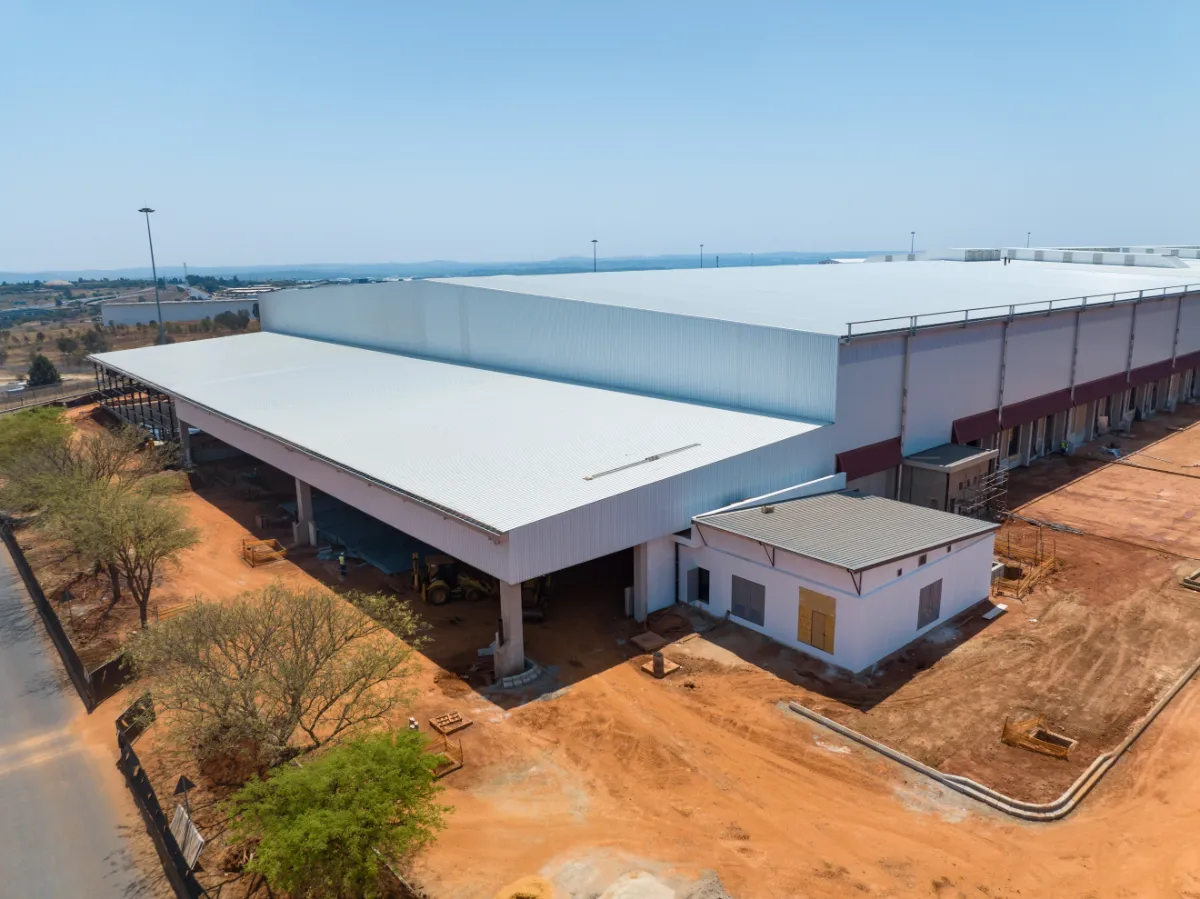
Smaller buildings on the site utilise a hybrid structural system: reinforced concrete is used for lower-level components, while steel elements are employed at roof level. These include stub columns mounted on the roof slab, as well as bracing, purlins, trusses, and girders, which collectively support the roof structure.
Project Details
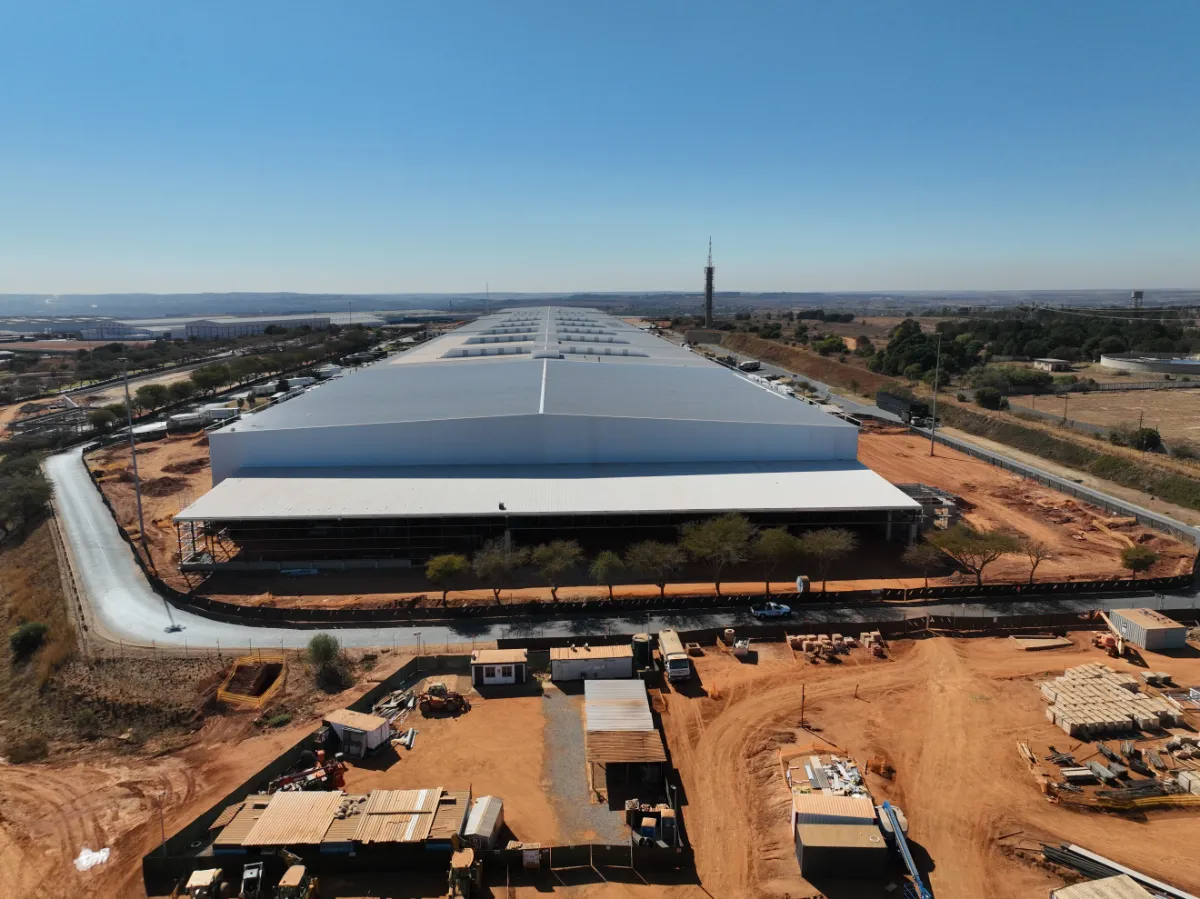
Coordination challenges are inherent when modifying existing buildings, particularly due to unforeseen conditions that may not be captured during preliminary surveys or site inspections. These include previously installed elements or undocumented structural components that can interfere with planned works. To address this, the structural design was approached modularly. This allowed for flexibility in adapting to site conditions, enabling quick adjustments to avoid clashes without compromising the overall design intent. The modular strategy ensured that changes could be implemented efficiently, with minimal disruption to the construction sequence. As the site was fully operational throughout the construction period, numerous constraints had to be carefully managed. The movement of goods via forklifts and trucks posed safety risks to both construction personnel. Additionally, the installation and modification of structural elements within the warehouse introduced potential hazards to employees during active operations. Effective management of these risks required active collaboration among all stakeholders, including the client, consultants, and the contractor. Extensive consultations were conducted to identify areas requiring modification and assess their impact on logistics and workflow. This ensured that construction activities were planned and executed with minimal interference to ongoing operations. Minimising disruption to daily activities was a top priority. Creative solutions were developed to enable structural modifications while maintaining operational continuity.
Benefits of Steel in this Application

The primary function of a warehouse is to provide a large, unobstructed space for the storage and organisation of goods, while maintaining flexibility for future expansion. To achieve spans of nearly 120 meters across the width of the warehouse, steel was selected over suspended reinforced concrete due to its superior span capabilities and reduced foundation requirements, resulting from its lower self-weight. Steel construction also facilitates future modifications, as structural strengthening is more feasible compared to concrete. Additionally, the use of bolted connections allows for the disassembly and reuse of components elsewhere within the facility or in new developments. This approach supports sustainability by minimising waste, and avoiding the demolition of concrete elements, which are not typically reusable.