


For many years, steel quality was largely treated as a technical matter — addressed through specifications, testing, standards and professional oversight.
Those things remain fundamental. But the consequences of getting quality wrong now reach far beyond the engineer’s desk or fabrication workshop.
Steel quality is a business risk.
It affects project certainty, construction timelines, lifecycle costs, contractual exposure, infrastructure performance and, ultimately, the reputations of the organisations responsible for delivering and owning those assets.
As South Africa’s steel supply market undergoes a significant transition, quality is also becoming an economic and infrastructure imperative. It underpins confidence that safety-critical public infrastructure will perform as intended, that private investors can commit capital to South African projects, and that locally produced and supplied steel can compete in international markets.
QUALITY PROTECTS BOTH PUBLIC AND COMMERCIAL VALUE
The importance of quality becomes particularly clear when we consider where structural steel is used.
Our bridges, transmission infrastructure, industrial facilities, mines, logistics networks, commercial developments and other critical assets depend on materials performing according to specification.
For public infrastructure, this is fundamentally a matter of public good. Quality directly supports safety, durability and the responsible use of public funds.
For private-sector projects, it is equally a commercial issue. Developers, contractors, financiers, insurers and asset owners need certainty that the materials incorporated into an asset will perform as required throughout its intended life.
THE REAL COST OF THE LOWEST PRICE
Cost will always matter in procurement. In a constrained economy, project teams are under considerable pressure to manage budgets while balancing availability, programme requirements and technical specifications.
But the lowest price at procurement can become an expensive decision over the life of a project if material does not perform as expected.
The cost of a quality problem rarely stops at replacing the steel itself.
It can include independent testing, halted fabrication or construction, rework, engineering reassessment, project delays, contractual disputes and increased maintenance. Where material has already been fabricated or installed, the commercial consequences can multiply rapidly.
SAISC has previously shared real industry experiences demonstrating precisely this point. When material that appeared compliant later failed independent testing, the cost was not simply the original material value. Testing, delays, inspection and remedial work became part of the true cost of the quality failure.
That is why quality cannot be separated from commercial risk.
For developers, asset owners, contractors, financiers and insurers, confidence in the material forming part of an infrastructure asset is ultimately confidence in the asset itself.
The lowest procurement price is therefore not necessarily the lowest project cost. Quality failures ultimately transfer risk — and cost — further down the value chain.
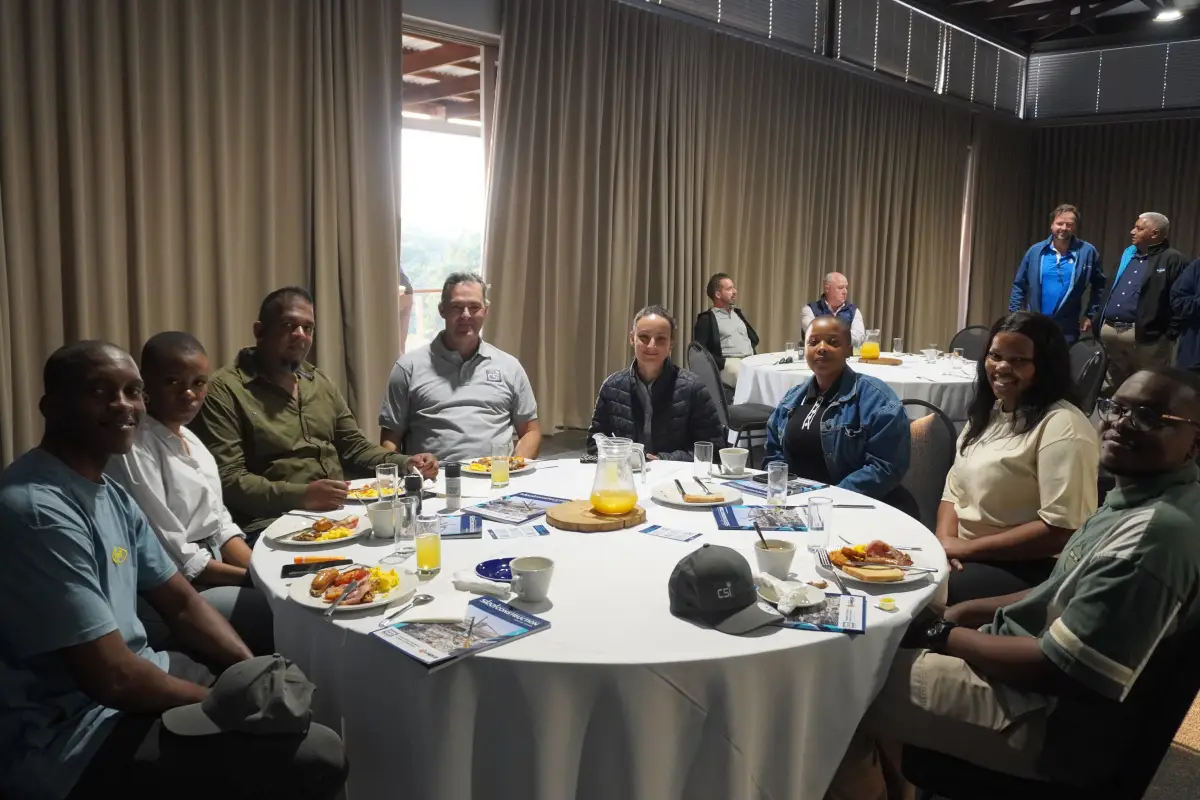
KwaZulu-Natal Breakfast Talk



SOUTH AFRICA’S STEEL SUPPLY MARKET IS CHANGING
This discussion has become particularly important because South Africa’s steel supply environment is undergoing a significant structural transition.
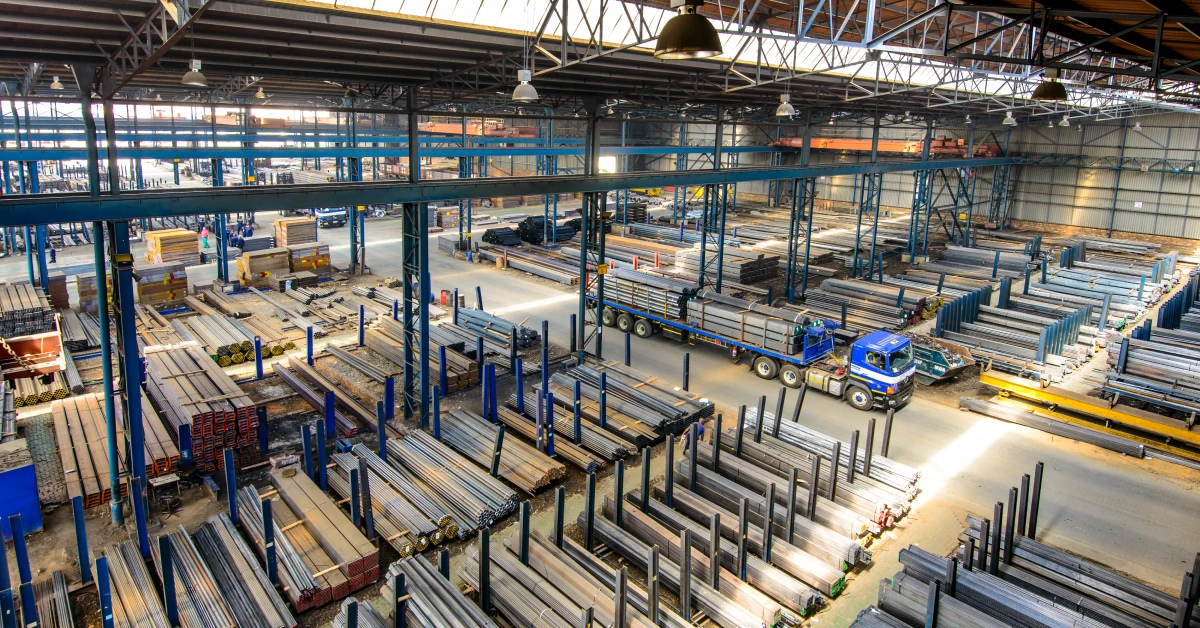
Historically, the domestic structural steel market was substantially supported by a dominant, ore-based integrated steel producer. The market emerging today is more diversified, with an increasing mix of scrap-based domestic steel production alongside imported material and established local supply channels.
Diversification can create important opportunities. It can strengthen competition, introduce new participants, expand supply options and support the development of new South African steelmaking capacity.
But a more diverse market also requires a stronger and more consistent quality framework.
As new producers, suppliers and sources of material enter the market, engineers, fabricators, merchants, contractors and clients need confidence that the same fundamental quality expectations apply irrespective of where the steel originates or who supplies it.
This is not an argument for established producers over new entrants, or for local steel over imports. It is an argument for a level playing field.
A LEVEL PLAYING FIELD BUILT ON QUALITY
South Africa needs both its established steel companies and new market entrants to succeed.
Established businesses that have invested over many years in systems, testing, certification, technical capability and quality assurance should not be commercially disadvantaged by material entering the market without equivalent scrutiny.
At the same time, emerging South African producers and suppliers need a clear pathway to understanding and achieving the standards expected by engineers, project owners and international markets.
A rigorous quality programme should therefore not function as a barrier to entry. It should help credible companies enter the market, improve their systems and demonstrate that they can compete according to recognised global standards.
This is where an independent technical industry body becomes particularly important.
For 70 years, the Southern African Institute of Steel Construction has built technical knowledge and relationships across the steel construction value chain. Today, SAISC occupies a unique position as a specialist technical institute in Africa able to bring together mills, merchants, fabricators, engineers, contractors, clients and other stakeholders around common technical and quality principles.
As the market transitions, our role is not to determine who should participate. Our role is to help ensure that everyone who does participate understands the standard expected of them.
FROM MATERIAL DELIVERY TO MATERIAL CONFIDENCE
Modern steel supply chains are increasingly complex.
Material may move through several stages and organisations before it reaches a completed structure. As that ecosystem becomes more diverse, traceability and verification become increasingly important.
Project teams need to know what material they are receiving, where it originates, whether it complies with the required standard and whether that information can be reliably traced through the supply chain.
This applies regardless of origin.
Whether steel is locally manufactured or imported, recognised standards, consistent quality and credible traceability must remain fundamental to market confidence.
The issue is therefore not local versus imported steel. Nor should quality become an argument about individual suppliers.
It is about creating an environment in which everyone across the value chain understands the standard expected of them and has confidence in the material being supplied, specified, fabricated and ultimately built into our infrastructure.
SAISC is also advancing the Material Quality Certification Programme (MQCP) as part of its wider work to support greater assurance around material quality, compliance and traceability.
The objective is bigger than certification alone.
It is about creating a transparent and credible quality environment that protects responsible industry participants while helping new entrants develop the systems and capabilities required to meet recognised standards.
Cape Town Breakfast Talk


QUALITY, INVESTMENT AND SOUTH AFRICA’S INTERNATIONAL REPUTATION
There is another reason why this work needs to be highly visible. South Africa competes internationally for investment.
Major infrastructure, energy, mining, industrial and commercial projects require substantial long-term capital. Investors assessing these opportunities consider far more than initial project costs. They consider execution risk, supply-chain reliability, regulatory certainty, technical capability and whether local industries can consistently deliver to the standards required.
A visible, credible quality assurance environment sends an important message: South Africa takes the integrity of its infrastructure and industrial supply chain seriously.
That matters for protecting existing investment and supporting future foreign direct investment into the country.
It also matters for exports.
South Africa has significant engineering, fabrication and construction capability, and our companies participate in projects well beyond our borders. Maintaining and growing that export capability depends on international clients continuing to trust South African technical expertise, materials, fabrication and quality systems.
Quality assurance should therefore not be regarded simply as a compliance cost.
Done properly, it is a competitive advantage.
It can reduce lifecycle risk, protect project certainty, strengthen procurement confidence and help South African companies demonstrate credibility in local and international markets.
Quality is therefore part of South Africa’s competitive proposition.
AN INDUSTRY CONVERSATION ACROSS THE COUNTRY
This need for shared responsibility has also been evident through SAISC’s Steel Forward 2026 regional breakfast series.
Over the course of the year, the series has brought the conversation to Johannesburg, Cape Town and KwaZulu-Natal, creating opportunities for engineers, fabricators, merchants, mills and other stakeholders across the steel value chain to engage directly around supply, quality, traceability and the changing conditions facing the sector.
Importantly, these conversations allow the industry to hear different perspectives.
An engineer’s quality concern may look different from that of a fabricator dealing with material in a workshop. A merchant faces different supply pressures from a mill, while developers and clients must manage programme, cost and long-term asset risk.
Bringing those perspectives together matters because quality is not the responsibility of one organisation or one point in the supply chain.
It is a shared responsibility.
South Africa needs a steel industry that is diverse, competitive and capable of evolving — without compromising the standards on which safe infrastructure and investor confidence depend.
TRUST IS PART OF THE INFRASTRUCTURE
This is also why trusted industry networks matter.
SAISC’s member network brings together professionals and organisations from across the steel construction value chain, connected through technical knowledge, industry engagement, a Code of Ethics and a shared commitment to professional and responsible practice.
No membership badge can replace appropriate engineering, procurement or quality-control processes. But a stronger professional ecosystem — one in which organisations participate in recognised industry structures, share knowledge and remain accountable to common principles — contributes to confidence across the sector.
As we celebrate SAISC’s 70th year, our industry is operating in a very different environment from the one in which the Institute was founded in 1956.
But one principle has not changed.
Infrastructure confidence depends on trust.
Trust in standards. Trust in supply chains. Trust in quality. And trust in the people and organisations responsible for delivering it.
Steel quality is therefore not simply an engineering requirement. It is a public safeguard, a business imperative and an important part of protecting South Africa’s industrial competitiveness and investment future.
Featured Image Details
From specification to practical application: SAISC’s MQCP technical committee conducts hands-on steel verification testing with the support of Tass Engineering, helping to develop practical, accessible approaches to material quality and traceability.