
As 2026 begins, the Southern African Institute of Steel Construction (SAISC) marks 70 years of service. Reflecting on this anniversary requires a review of a global steel industry landscape that has been fundamentally reshaped.
In a recent discussion, SAISC CEO Amanuel Gebremeskel outlined his perspective on the changes including global shifts, local resilience, and a return to the “human” side of steel construction.
China as the Primary Manufacturer for the World
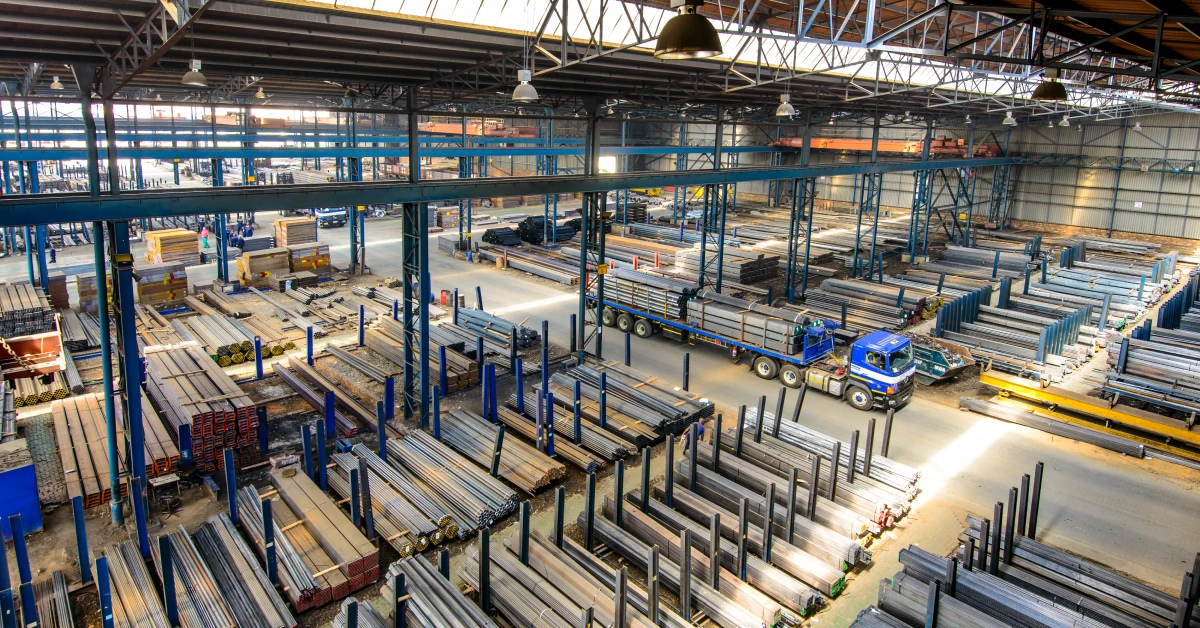
The single most significant driver of change across the last seven decades is the emergence of China as a global industrial superpower. At the inception of the SAISC in the 1950s, the market was dominated by Western powers and local primary production. Today, the reality is very different. China has risen from a minor player to the primary manufacturer for the world, producing half or more of almost everything used globally including the steel that forms the backbone of construction and infrastructure projects around the world.
As Amanuel puts it, the rise of China from “essentially zero” has forced a massive rethink. For South Africa, the days of local primary mills dictating the pace of the steel industry are behind us. The “value” has migrated downstream. This includes the engineers designing the structures, the fabricators in the workshops, and the project managers on site.
For an emerging market like South Africa, the challenge isn’t stopping this global wave, but learning to ride it. “The effect of that on us in general here has been that it has gone from a mill-dominated environment to more of a downstream-dominated environment, because the mills now have to compete with China,” Gebremeskel explained.
While this is no easy task for local primary producers, it has highlighted the fact that the true resilience of the South African steel industry now lies in our technical capabilities and the ingenuity of the makers.
While the rise of global manufacturing has forced a rethink of local production, it has also tested the grit and adaptability of the local steel industry.
South African Resilience in a Fragmented World
The world in 2026 feels more fragmented than ever. Supply chains are tangled, mining often happens in volatile zones, and we’re frequently working with new partners and unfamiliar products. While that sounds daunting, Amanuel sees it as a hidden advantage for South Africans.
“In a very odd way, South Africans are among the most ready people in the world for this,” he notes. We’ve spent decades navigating complexity and overcoming adversity. Our resilience is our most valuable export.
For South Africa, this change strengthens the case for the local steel industry. This new landscape depends on professionals who can navigate adversity effectively. Gebremeskel believes South Africans are uniquely prepared for this environment.
This inherent resilience is best fostered through collaboration, which is why the Institute is prioritising face-to-face events this year.
Reconnecting the People Who Build South Africa
The SAISC is hitting the road this year with breakfast events in Johannesburg, Durban, and Cape Town.
Gebremeskel believes that while we live in an era of rapid digital growth and AI, you simply cannot “download” trust. When we build structures, we are taking responsibility for the safety of the people who will use them. You can’t build the confidence required for that over an email or a Zoom call. It happens when you look someone in the eye, shake their hand, and realise you’re on the same team.
The breakfast events will be a fantastic chance to:
Reconnect with the Community: Get out of your inbox and back into the “spirit” of the industry.
Share “real talk”: As Amanuel says, we are “people who build stuff.” Our best ideas usually come when we’re sharing a coffee and having a laugh together.
Strengthen our Credibility: Meeting face-to-face keeps the industry grounded and honest.
Reconnecting as a community is a great reminder of shared goals, specifically the need to uphold the quality standards that define South African steel on the world stage.
Enhancing Industry Credibility through the Quality Programme
The SAISC believes that local steel must be defined by its adherence to rigorous standards, which is a matter of credibility and in many ways a strategic advantage.
The Institute is focused on raising the reputation of South African steel. By leading with excellence, South African steel producers, fabricators, and downstream members will provide the certainty necessary to win the confidence of African and global developers.
The Quality Programme has been in development for more than two years. While this is a long-term journey, the initiative focuses on three key areas:
Setting the Standard: Establishing a unified standard to ensure a “level playing field” for all industry participants.
Capacity Building: Supporting local suppliers and new suppliers in meeting these standards by sharing best practices and providing support to those currently underperforming.
Communicating Quality to Clients: This involves demonstrating that a rigorous programme is in place, so we can provide assurance that our products are a safe and high-quality investment.
South Africa sources steel from across the globe, and while the design and construction remain local, supply chains have become incredibly diversified. Without a standardised quality programme, maintaining technical competence and work quality is increasingly difficult. As an institute, the SAISC fills a unique and essential role to define what that standard for steel is and actively help the steel industry meet it.
“This programme is how we verify quality, and the prospect is very exciting,” Gebremeskel notes. “In fact, many of our sister institutes around the world already have similar programmes in place, so in that regard, we are currently catching up. However, this is a critical time to do so because we are entering a period of highly diversified project deliveries and material supply. We will be discussing this extensively throughout the year and are aiming for a mid-2026 launch.”
By establishing these rigorous standards, the SAISC is laying the foundation for a bold new chapter.
Looking to the Future
As the SAISC celebrates 70 years, the focus remains firmly on the future. The Institute invites its members and the wider industry to join the initiatives currently underway to showcase South African capabilities to the world. As Gebremeskel puts it: “This is our time. For smaller players like us, we can really punch well above our weight and be very visible.”
The mission for 2026 is clear: it is time to demonstrate our expertise and go out and build the world.