Innovation in steel construction is often associated with ambitious structural design, new construction methods or increasingly complex engineering. But some of the most consequential innovation happens much earlier, at material level.
As sponsor of the Innovation and Sustainability Category at the SAISC Steel Awards 2026, Safal Steel believes meaningful innovation should ultimately solve a real problem and create measurable value. In the building envelope, that means materials that perform better for longer, respond appropriately to their environment and reduce the maintenance, replacement and resources required throughout a building’s life.
For Safal Steel, this is particularly relevant in Africa, where materials may need to contend with intense UV exposure, coastal corrosion, humidity, industrial pollutants and demanding installation environments. Advances in coating systems, substrate quality, surface finishes and forming performance can therefore have an impact extending far beyond the initial construction phase.

Innovation beneath the surface
Coating technology provides a good example of how material innovation can translate into practical building performance.
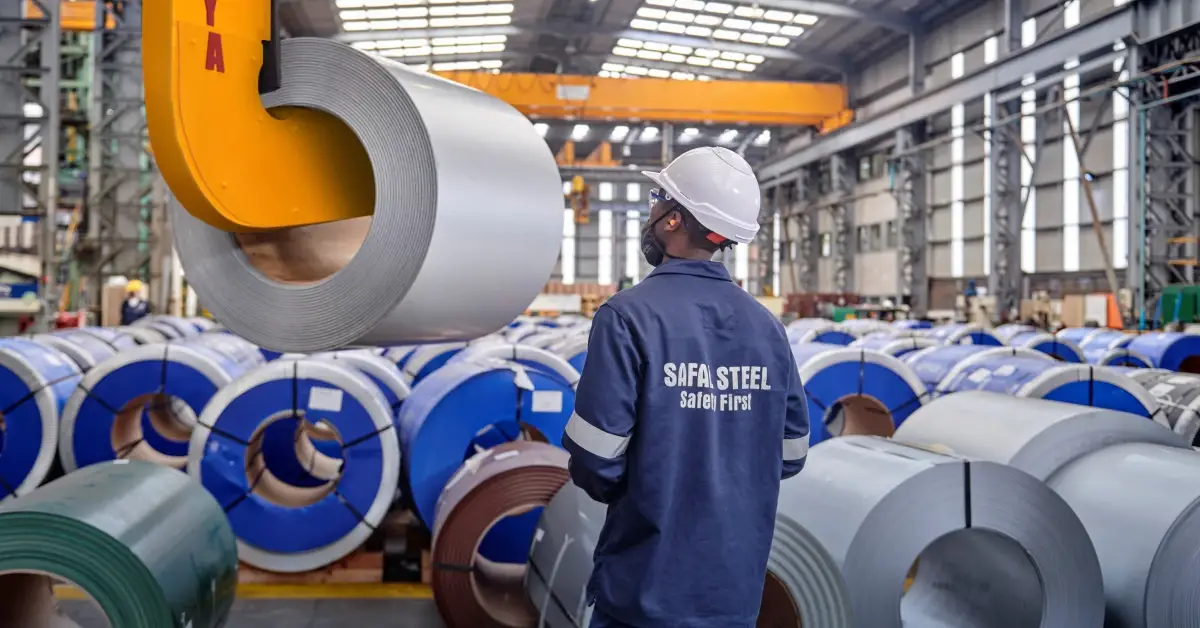
Safal Steel’s ZINCAL® and COLORPLUS® products combine a steel substrate with aluminium-zinc alloy coatings, with COLORPLUS® incorporating advanced paint systems. These technologies are designed to improve corrosion resistance and extend service life, while advances in paint chemistry, adhesion, formability, colour retention and UV resistance help pre-painted steel retain both its appearance and protective performance over time.
Importantly, different coating masses, finishes, paint systems and colours can be matched to different environments and applications.
This shifts coating technology from being viewed simply as a protective layer to becoming part of the specification and design process.
It also reinforces the importance of considering the full lifecycle of a material rather than its purchase price alone.
Initial cost represents only one part of the true cost of a building material. A product requiring more frequent maintenance, remedial work or premature replacement can ultimately cost considerably more over the building’s life.
Safal Steel advocates a value-over-time approach that considers durability, maintenance, environmental exposure, installation quality, warranties and long-term risk when materials are specified.
Durability as a sustainability strategy
That lifecycle approach also changes the sustainability conversation.
Coated steel is lightweight, strong and recyclable, but Safal Steel believes its environmental performance should be considered across its full lifecycle — from manufacturing and resource use through to performance in service and eventual recyclability.
How efficiently a material is used, how long it remains in service and how much maintenance or replacement it requires all form part of that equation.
Durability, in this context, becomes an important sustainability measure in its own right.
Extending the life of a building envelope can avoid not only replacement costs, but also the additional manufacturing, transport, installation, waste disposal and disruption associated with replacing materials prematurely.
Correct specification is therefore critical. Matching the coating system to the exposure environment, and ensuring the product is correctly handled and installed, allows coated steel to provide long-term protection against corrosion and weathering.
In practical terms, making buildings last longer can be one of the clearest ways material choice contributes to sustainability.
Responsible manufacturing matters too
Performance in service is only one part of the lifecycle.
Safal Steel approaches responsible manufacturing as a process of continuous improvement, with priorities including efficient raw-material use, process-waste reduction, improved energy efficiency, responsible material handling and environmental awareness among employees.
Its Environmental Management Plan provides a framework for identifying impacts, managing environmental risks and improving operational performance, aligned with the Safal Group’s broader purpose of building Africa with pride.
The result is a broader understanding of sustainability in which material performance, manufacturing and long-term building outcomes cannot be considered in isolation.
Giving designers greater freedom
Material performance does not have to come at the expense of architectural expression.
Advances in coatings, finishes and colour technology are allowing architects to use steel increasingly as a design material, combining technical protection with distinctive façades, roofscapes and integrated building envelopes.
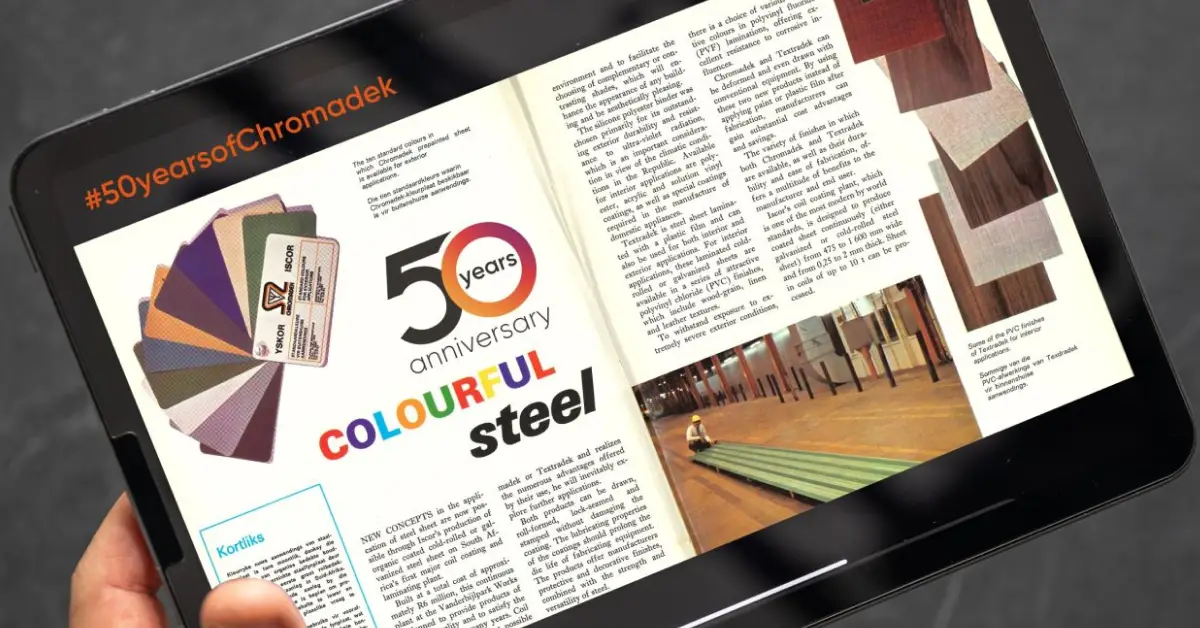
Products such as COLORPLUS® offer a broad colour palette while maintaining corrosion resistance, UV stability and coating performance. Colour, texture and finish can therefore respond to climate and context as well as brand identity or architectural vision.
Safal Steel sees further opportunity for innovation specifically suited to Southern African conditions. This includes improved corrosion resistance for coastal and aggressive environments, broader coating and finish choices, and roofing and cladding solutions that enable faster, safer and more efficient construction.
But the company also sees an important opportunity beyond the product itself.
Technical support, specification guidance, CPD education and closer collaboration between manufacturers, architects, engineers, contractors and roll formers will be increasingly important. Material technology only creates value when it can be translated effectively into better-performing buildings.

Innovation with purpose
This philosophy sits at the heart of Safal Steel’s sponsorship of the Innovation and Sustainability Category at the SAISC Steel Awards 2026.
For Safal Steel, meaningful innovation should earn its place on a project.
It is not novelty for novelty’s sake, but the application of materials, systems, processes and partnerships to solve genuine challenges. Innovation should reduce risk, improve quality, extend building life, contribute to better environmental outcomes or make design, specification and construction more efficient.
If it does not improve building performance or create meaningful value for the people who design, build, own and use the building, its impact is ultimately limited.
As SAISC celebrates 70 years in 2026, this practical approach to innovation will become increasingly important as Southern Africa’s built environment is challenged to deliver infrastructure that is more resilient, efficient and environmentally responsible.
Safal Steel believes the next chapter will depend on collaboration across the steel value chain. Manufacturers, designers, engineers, contractors, installers and industry bodies all have a role to play in raising standards, while advances in material technology help buildings perform better and last longer and manufacturing continues to reduce its environmental impact.
It is a future in which steel remains central to Southern Africa’s growth — locally relevant, globally competitive, adaptable, enduring and built with pride.